Net Zero Homes and HVAC Design
Net zero homes need a high-efficiency heat pump, airtight envelope, energy-recovery ventilation, and solar. This guide covers costs, safety, and tools to plan your upgrade.
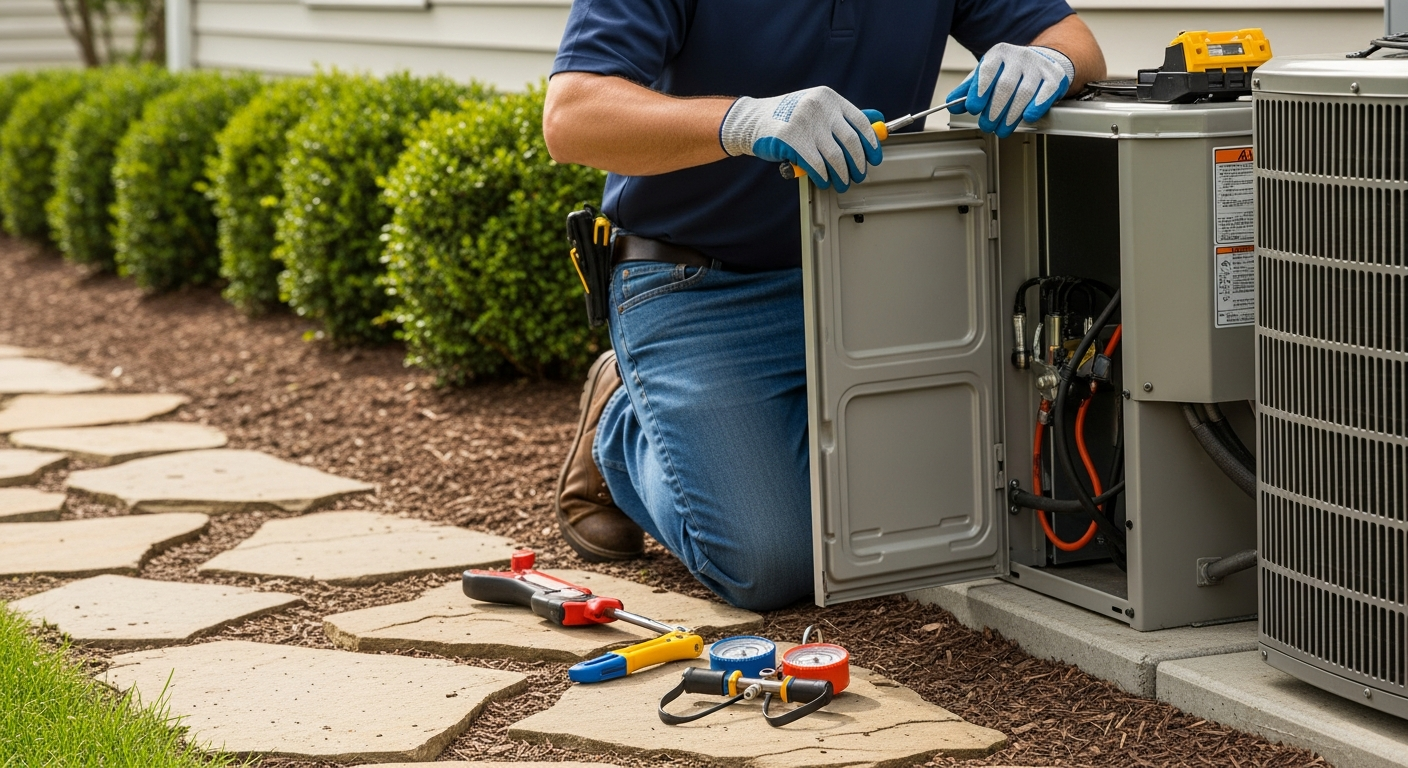
Heat Pumps + Envelope Upgrades Are the Foundation
For most U.S. climates, an electric cold-climate heat pump paired with aggressive air sealing and insulation is the core of a net zero home. Solar and an ERV complete the system.
What Matters Most
- 1. Envelope efficiency reduces equipment size and cost.
- 2. Heat pumps are the electrified solution—no fossil fuels.
- 3. Mechanical ventilation is mandatory in tight homes.
- 4. Solar makes the energy balance possible.
- 5. Right-sizing via Manual J prevents short-cycling and inefficiency.
Strengths
- Eliminates carbon emissions from heating and cooling
- Locks in low operating costs for decades
- Improves indoor air quality with continuous ventilation
- Qualifies for federal tax credits and local rebates
Weaknesses
- High first cost for envelope upgrades and solar
- Requires skilled contractors for proper integration
- May need backup heat in extreme cold climates
- Regular ERV filter and core maintenance required
Net Zero HVAC Decision Guide
| Scenario | Usually do | Why |
|---|---|---|
| Existing home with high energy bills | Get a blower-door-directed air sealing audit, then upgrade insulation | Reduces load 20-40% first, making a smaller heat pump viable. |
| Replacing an old gas furnace | Install a cold-climate variable-speed heat pump | Eliminates gas line and can run on solar, cut emissions. |
| New construction aiming for net zero | Specify high-SEER2 heat pump, ERV, and solar-ready design | Lowers lifetime cost and ensures compliance with codes. |
| Adding solar later | Pre-wire and reinforce roof structure now | Simplifies future installation and avoids rework. |
| Concerned about cold-weather performance | Choose a heat pump rated for -5°F or below with backup heat strips | Modern units deliver full capacity below 0°F, but backup ensures comfort. |
Net zero homes produce as much energy as they consume annually. Achieving this requires a high-efficiency heat pump, a super-tight envelope, energy recovery ventilation, and usually solar panels. The key is right-sizing and integrating these elements—not just picking a high-SEER unit. This guide gives you cost ranges, decision thresholds, and a contractor checklist to move forward with confidence.
Quick Answer: The Net Zero HVAC Stack
For most climates, a net zero home needs: a variable-speed cold-climate heat pump (air-source or geothermal), an energy or heat recovery ventilator (ERV/HRV), a smart thermostat with remote sensors, and a rooftop solar array sized to offset annual consumption. Pair these with air sealing and insulation upgrades to hit performance targets.
The Four Pillars of Net Zero HVAC Design
1. High-Efficiency Heat Pumps: SEER2 & HSPF2
Electric heat pumps move heat rather than generating it, making them 2–4 times more efficient than fossil-fuel systems. For net zero, look for cold-climate models rated down to -5°F or lower. Learn how to read your HVAC energy label to compare models. Check the unit’s HSPF2 (heating) and SEER2 (cooling) ratings; higher numbers mean lower operating cost.
Heat pump type vs. climate:
| Climate | Recommended Heat Pump | Typical HSPF2 Range |
|---|---|---|
| Colder (Zone 5-7) | Cold-climate inverter (e.g., -5°F models) | 8.5–11+ |
| Mixed/humid (Zone 3-4) | Standard inverter or 2-stage | 8.0–10 |
| Hot/dry or hot/humid (Zone 1-2) | High-SEER2 inverter | 8.5–10 (cooling SEER2 20+) |
2. Airtightness and Insulation: The Envelope First Rule
You can’t net-zero a leaky home. Start with a professional home energy audit to find leaks and thermal bridges. After air sealing, learn how to seal air leaks and add blown-in insulation to walls and attic. A properly sealed house can reduce heating and cooling loads by 30–50%, allowing a smaller, cheaper heat pump. Target a blower door score of 1.0 ACH50 or lower.
3. Mechanical Ventilation: ERV vs. HRV
When a house is that tight, it needs controlled fresh air. An Energy Recovery Ventilator (ERV) transfers both heat and moisture, ideal for humid or dry climates. A Heat Recovery Ventilator (HRV) transfers heat only, best for cold climates where indoor humidity is low. Both pre-condition incoming air using the energy of outgoing stale air, saving 60–80% of that energy.
4. Solar Integration and Smart Controls
Once your heat pump and ERV are sized, install enough solar panels to offset the annual electricity use. Use a smart thermostat that learns schedules and integrates solar production forecasting. For air conditioners specifically, see our guide to solar-powered air conditioning explained. Pair with variable-speed air handlers for consistent temperatures and silent operation.
Safety Boundaries: What Homeowners Can and Can’t Do
Safe homeowner checks: replace air filters monthly, inspect visible ductwork for gaps, clear debris from outdoor units, verify thermostat operation, and schedule annual professional maintenance. Professional-only work: refrigerant handling, electrical panel upgrades, gas line modifications, compressor repairs, capacitor/contactor replacement, and control board diagnostics. Never attempt to add or remove refrigerant; it requires EPA certification and specialized tools. Use our repair or replace calculator to decide if a failing system is worth fixing.
Decision Rules: Is a Net Zero Upgrade Right for You?
Use this table to assess your situation:
| If you… | Then… | Because… |
|---|---|---|
| Plan to stay in the home 10+ years | Invest in full envelope + heat pump + solar | Payback via eliminated utility bills |
| Have a newer home (2000s+) with decent insulation | Start with heat pump and ERV; add solar later | Envelope may already be moderate; target low-hanging fruit |
| Live in a very cold climate (frequent below -10°F) | Choose a cold-climate heat pump with electric backup or keep high-efficiency gas as dual-fuel | Extreme cold can strain air-source units; backup ensures comfort |
| Have roof shading or strict HOA rules | Consider community solar or ground-mount panels | On-site solar may not be feasible; offsets still possible |
| Budget is limited | Prioritize envelope sealing and a smart thermostat first | Cheapest gains in comfort and load reduction; heat pump later |
What Will It Cost? (Editorial Estimates)
These are typical ranges based on project complexity and region. Use our HVAC cost estimator for a personalized ballpark.
| Upgrade | Typical Cost Range | Notes |
|---|---|---|
| Home energy audit + air sealing | $300–$800 (audit often subsidized) | Leak sealing can be DIY or pro; pro sealing adds $1,000–$3,500 |
| Attic insulation upgrade | $1,500–$3,500 (cellulose or spray foam) | R-49 or higher recommended for cold climates |
| Heat pump system (cold-climate, installed) | $10,000–$20,000 | Variable-speed inverter, includes air handler; ducts extra |
| ERV or HRV unit installed | $3,000–$6,000 | Includes duct connections; size depends on home square footage |
| Solar PV system (6-10 kW) | $12,000–$18,000 after incentives | Net cost after federal tax credit; varies by region and installer |
Always get three quotes and compare using our quote checker tool. Many local utilities and states offer additional rebates—check our rebate finder.
Tools to Plan Your Net Zero Upgrade
- How to get a home energy audit – Learn what to expect and find auditors.
- Energy usage calculator – Estimate your home’s kWh consumption.
- BTU calculator – Rough size a heat pump for your room-by-room loads.
- Rebate finder – Locate utility, state, and federal incentives.
- HVAC cost estimator – Get tailored price ranges for equipment and installation.
- Repair or replace calculator – Decide whether to fix your old system or invest in net zero.
- Solar-powered AC explained – Understand solar integration with HVAC.
How to Find and Vet a Net Zero HVAC Contractor
Ask these questions before hiring:
- “Will you perform a Manual J load calculation and provide the report?” (Correct answer: yes, and they’ll explain it.)
- “What experience do you have with cold-climate heat pumps and ERV/HRV installations?” (Look for specific projects.)
- “How do you coordinate with insulation and solar contractors?” (They should have a network or be willing to collaborate.)
- “Do you offer commissioning reports and verify airflow and refrigerant charge after install?” (Critical for efficiency.)
- “Can you provide a thermal imaging scan or blower door test as part of your scope?” (Ensures envelope isn’t overlooked.)
Start your search on our contractor directory and use our contractor comparison tool to evaluate quotes.
Methodology
Our recommendations are based on building science principles (ASHRAE, ENERGY STAR, DOE Zero Energy Ready Home standards), anonymized project cost databases, and weather data across U.S. climate zones. Cost ranges represent mid-2025 editorial estimates and are not guaranteed quotes. Always verify with local contractors.
Frequently Asked Questions
Can my existing home become net zero?
Yes, but the path depends on your home’s age and condition. Most homes can reach net zero with aggressive envelope upgrades, a heat pump, and enough solar. Older homes may need extensive air sealing and insulation; a blower door test will guide you.
Do heat pumps work in extremely cold weather?
Modern cold-climate heat pumps can provide full heating capacity down to -5°F or lower. For areas that experience regular -10°F, choose a unit with a higher HSPF2 and electric resistance backup. Dual-fuel (heat pump with gas backup) is another option if you prefer.
What is the payback period for a net zero HVAC system?
Payback depends on local utility rates, climate, and incentives. With solar and federal tax credits (30% for solar, up to $2,000 for heat pumps), many homeowners see payback in 7–12 years. Use our tools to run your numbers.
How tight should my home be for net zero?
Target an air leakage rate of 1.0 ACH50 (air changes per hour at 50 Pascals) or better. Many net zero homes achieve 0.6 ACH50 or lower. A blower door test will measure this; your auditor will help you identify fixes.
Is solar absolutely necessary for net zero?
Strictly, net zero means on-site generation equals consumption. If your roof can't host panels, community solar or off-site renewables can still offset your grid electricity, but the home itself may be “zero energy ready” rather than true net zero. Prioritize efficiency first, then explore solar options.
Related articles
Connect this page to adjacent guides so readers keep moving deeper into the topic cluster.

How Utility Demand Response Programs Use Smart Thermostats
Enrolling your smart thermostat in a demand response program can earn you up to $150/year while keeping you comfortable. Learn if it's right for your home and how to maximize benefits.
Heating Industry Trends to Watch
Smart thermostats and heat pumps headline heating industry changes. But which trends deliver real savings? Use our decision guide, cost ranges, and contractor checklist to plan your upgrade.

How Gas Bans Are Affecting Heating Choices
Gas bans in new construction and retrofit codes are pushing homeowners toward electric heat pumps. Understand your options, costs, and available incentives before you replace your furnace.