How to Inspect Your HVAC System Before Calling a Pro
Perform a basic HVAC inspection to identify simple fixes like a dirty filter or tripped breaker. Know exactly when to call a professional with our step-by-step guide.
Best next step
Use the article decision rules, then compare a written quote when professional work is required.
What Matters Most
- Check safe basics first.
- Use cost ranges to sanity-check quotes.
- Call a qualified pro for refrigerant, gas, combustion, and electrical work.
Strengths
- Clearer next step.
- Better quote comparison.
Weaknesses
- Final pricing depends on local conditions.
- Some problems require in-person diagnosis.
Decision summary
| Scenario | Usually do | Why |
|---|---|---|
| Minor, safe homeowner issue | Check basics first | Filters, settings, and blocked vents can be resolved safely. |
| Mechanical, refrigerant, gas, or electrical issue | Call a qualified technician | These areas carry safety, code, and warranty risk. |
Why a Pre-Service Inspection Saves You Money
Before you call an HVAC technician and spend $80–$200 just for a visit, take 30 minutes to inspect your system. Simple issues like a tripped breaker, dead thermostat batteries, or a clogged filter cause roughly one in three no-heat/no-cool calls. A systematic walkthrough can fix the problem yourself or give the technician precise information, speeding repairs and cutting costs. This guide shows you exactly what to check—safely.
Quick Answer: Your 4-Step Pre-Call HVAC Checklist
- Power & Thermostat: Replace batteries, confirm settings, check breakers.
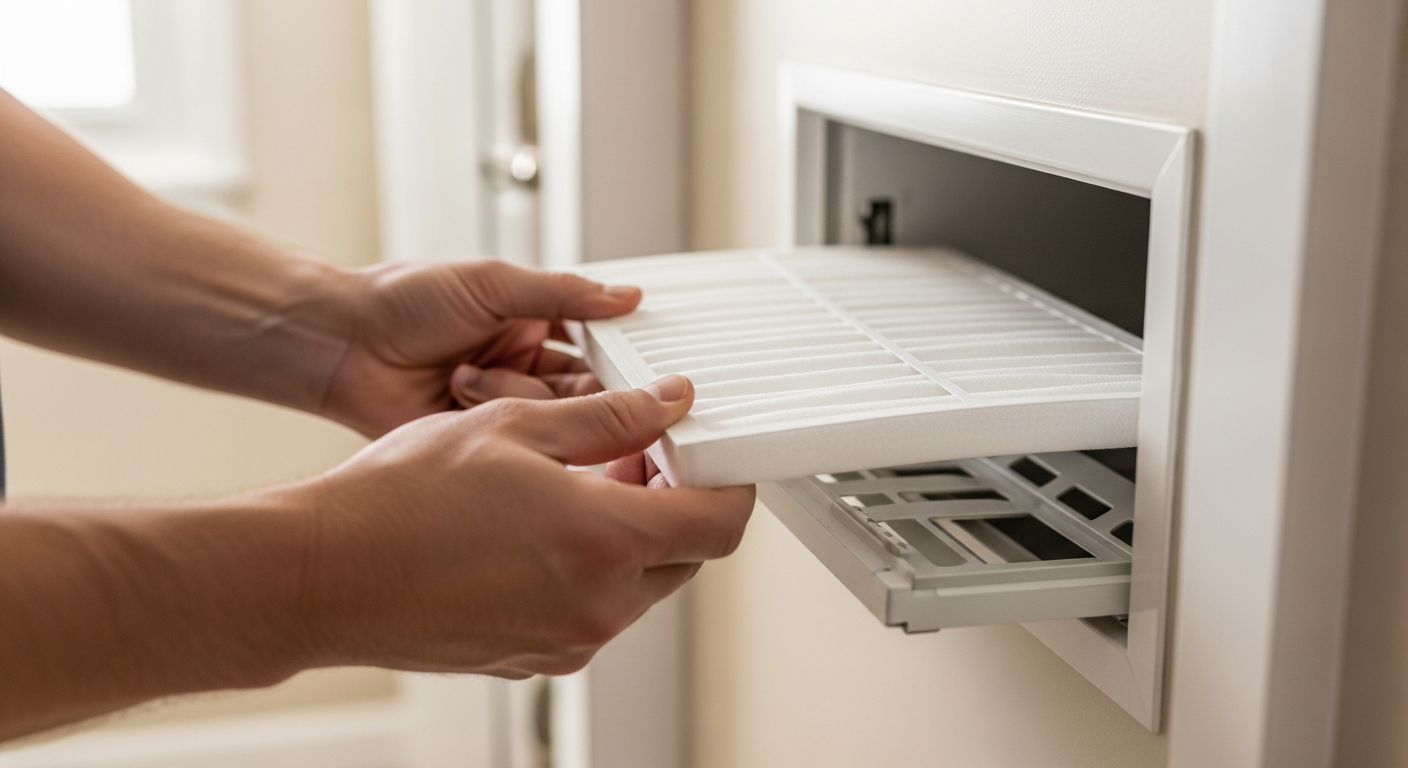
- Air Filter: Hold it to light; if you can't see through, replace it.
- Outdoor Unit: Clear 2-foot radius of debris, listen for grinding or squealing.
- Indoor Unit: Check for water leaks, closed vents, or disconnected ducts.
If these checks don't solve the issue, check the symptom table below to decide your next move.
Common HVAC Symptoms & What to Do
| Symptom | Safe DIY Checks | Likely Cause | Action |
|---|---|---|---|
| No power to thermostat (blank screen) | Replace batteries, check breaker | Dead batteries or tripped breaker | DIY fix; if persists, call pro |
| System runs but doesn't cool/heat | Check filter, vent obstructions, outdoor unit clearance | Restricted airflow or dirty coils | DIY if filter/blockage; else call pro |
| Odd noises (grinding, banging, screeching) | Shut system off; visually inspect outdoor unit for debris | Motor or fan failure, loose part | Call pro immediately |
| Water pooling around indoor unit | Check condensate drain for clogs, flush with water if accessible | Clogged drain line or frozen coil | Try clearing drain; if no improvement, call pro |
| Ice on outdoor unit lines | Turn off cooling mode, fan only to thaw; check filter | Low refrigerant or airflow problem | Call pro—refrigerant issues require licensing |
| Short cycling (turns on/off frequently) | Check thermostat location (away from heat sources), filter | Dirty filter, oversized unit, or thermostat issue | Replace filter first; if persists, call pro |
Safety Boundaries: What You Should Never Touch
DIY inspection is safe and encouraged, but certain components are off-limits. Attempting these can cause injury, void warranties, or violate local codes. Always leave these to a licensed HVAC professional:
- Refrigerant lines or charging: Requires EPA certification.
- Gas connections or combustion parts: Risk of fire or carbon monoxide.
- Electrical components: Capacitors, contactors, control boards, or high-voltage wiring.
- Compressor or sealed system repairs: Specialized tools needed.
- Bypassing safety switches or sensors.
If any of these are suspected, find a verified contractor immediately.
Decision Tree: Wait, Fix Yourself, or Call Now?
Use these concrete thresholds to decide your urgency:
- No heat when outdoor temp below 40°F (cold regions): If simple checks fail, call for same-day service to prevent frozen pipes.
- No cooling when indoor temp above 85°F (hot regions) and vulnerable occupants: Call emergency service.
- Water actively leaking or electrical burning smell: Shut system off at breaker, call pro immediately.
- Strange noise that starts suddenly: Turn off system, schedule service within 24 hours.
- System runs but air isn't as cold/warm as usual, no urgent comfort need: Replace filter, clear vents, monitor for 24 hours; if no change, schedule routine service.
Pro tip: Use our Repair or Replace Calculator if your system is over 10 years old and facing a major repair.
Use These Free HVACDatabase Tools
Before calling a contractor, get informed with our interactive tools:
- HVAC Cost Estimator – See typical repair costs in your area (editorial estimates).
- Quote Checker – Upload a contractor quote for feedback on pricing and scope.
- Repair or Replace Calculator – Age, repair cost, and efficiency factors decide the best path.
- System Age Decoder – Decode serial numbers to find manufacture date.
- BTU Calculator – See if your system is properly sized.
- Rebate Finder – Check for utility discounts on high-efficiency upgrades.
Contractor Questions to Ask Before Booking
When your inspection points to a needed pro, use this checklist to vet technicians:
- Licensing & Insurance: “Are you licensed in this state and carry liability insurance?”
- Diagnostic fee: “What is your trip or diagnostic charge, and is it applied to the repair?” – Expect $80–$200.
- Flat-rate vs hourly: “Do you quote repairs by the job or by the hour?”
- Warranty: “What warranty do you offer on parts and labor?”
- References: “Can you provide recent references from my neighborhood?”
- Permits: “Will you handle any required permits?”
- After-hours: “What are your emergency service rates?”
Use our contractor comparison tool to evaluate multiple quotes.
Inspection Tips by Climate
- Hot, dry climates (e.g., Phoenix): Check outdoor coil for bent fins and debris; dirty coils spike energy bills. Find Phoenix AC repair pros.
- Humid climates (e.g., Southeast): Inspect drain line and pan for algae; consider a float switch. A clogged drain can shut down your system fast.
- Cold climates (e.g., Chicago): Ensure outdoor unit isn't buried in snow; check for ice on heat pump. Heating contractors in Chicago.
- Coastal areas: Look for corrosion on outdoor unit fins and electrical connections due to salt air.
- Older homes: Check ductwork in attic/basement for disconnects or rodent damage; consider adding return air if rooms are uneven.
How We Develop Our Recommendations
HVACDatabase's editorial team combines field research, contractor surveys, and analysis of repair data from across the U.S. Our cost estimates are editorial ranges based on typical market averages and are not guaranteed. Always obtain multiple quotes for your specific situation. We update this content periodically to reflect current practices and prices.
Frequently Asked Questions
What if my thermostat is blank but the breaker is fine?
Check if the furnace/air handler switch near the unit is turned off. Some systems have a separate power switch that resembles a light switch. If that's on and still blank, there may be a transformer or control board issue—call a pro.
How often should I replace my HVAC filter?
Standard 1-inch filters: every 1–3 months. High-MERV or 4-inch media filters: every 6–12 months. In homes with pets, allergies, or dusty conditions, check monthly. See our maintenance checklist for a full schedule.
Can I clean my outdoor AC unit with a garden hose?
Yes, gently spraying from the inside out can remove surface debris. But avoid high pressure that bends fins. Do not use chemical cleaners without knowing the proper type. For a deeper clean, a professional coil cleaning is safer.
What does it mean if my outside unit is buzzing but the fan isn't spinning?
This often indicates a failed capacitor or a seized motor. Immediately turn off the system at the thermostat and breaker to prevent further damage. Have a technician replace the capacitor or motor. Do not attempt capacitor replacement yourself—risk of electric shock.
Is it worth investing in a maintenance plan?
Regular professional maintenance (typically $150–$500/year) can catch small issues before they become costly repairs and may keep your warranty valid. Weigh the cost against the age of your system: for units under 5 years old, a plan can be a good investment; for older units, you might put that money toward a replacement. See our repair or replace calculator.
Methodology
HVACDatabase estimates combine common contractor price patterns, service-category pricing ranges, equipment complexity, urgency, regional labor variation, and known HVAC safety boundaries. Actual prices vary by city, brand, system size, access, warranty status, permit requirements, and whether the visit discovers ductwork, electrical, refrigerant, gas, or drainage issues. Use these numbers to sanity-check quotes, not as a guaranteed price.
Related articles
Connect this page to adjacent guides so readers keep moving deeper into the topic cluster.
How to Implement a Whole Home Energy Management System
Integrate smart tech and HVAC controls to cut energy waste. This guide shows how to audit, upgrade, and automate your home's energy use, with real savings estimates.

How to Set Up Thermostat Geofencing
Set up thermostat geofencing to automatically adjust home temperature as you come and go. Save energy, extend equipment life, and never return to an uncomfortable house. Get our quick-start guide now.

How to Troubleshoot Smart Thermostat WiFi Issues
Your smart thermostat offline? Most WiFi drops can be fixed with power checks, router adjustments, and simple restarts. Follow our step-by-step guide to regain remote control and energy savings.