How to Protect Your HVAC From Lightning Strikes
Protect your HVAC from lightning damage with our decision-focused guide. Compare surge protection options, learn safe pre-storm and post-strike steps, and use our tools to estimate repair costs or schedule a contractor review.
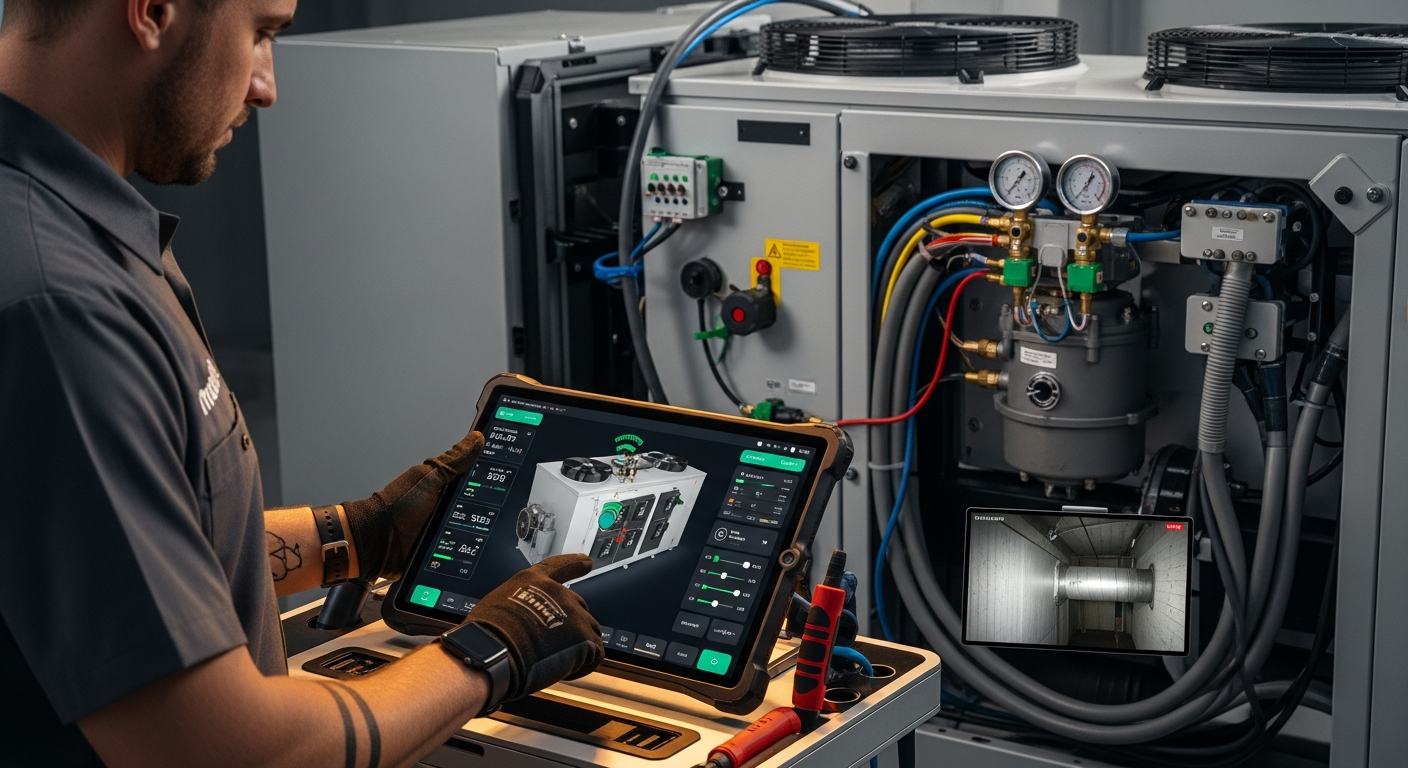
Layered Surge Defense Is the Only Reliable Protection
The article recommends a minimum of HVAC-specific and whole-house surge protection, combined with proper grounding and pre‑storm shutdown habits. This stance prioritizes preventing costly PCB and compressor failures over relying solely on insurance or manufacturer warranties.
What Matters Most
- Install at least one dedicated HVAC surge protector at the outdoor disconnect.
- Combine with whole-house protection for a defensive cascade.
- Always have grounding inspected before adding surge devices.
- Turn off the system during severe lightning; a simple breaker flip can save thousands.
- Use HVACDatabase tools to benchmark repair costs if damage occurs.
Strengths
- Significantly reduces risk of $1,000+ lightning‑related repairs.
- Layered approach guards against both direct and indirect surges.
- Hardware costs are often lower than insurance deductibles.
- Actionable pre‑storm steps require no tools or technical skill.
- Contractor checklist empowers homeowners to hire competent pros.
Weaknesses
- Upfront cost for whole-house protection plus HVAC unit can exceed $1,000 in some markets.
- No surge protector can guarantee 100% protection against a direct lightning strike to the home.
- Older homes may need expensive grounding upgrades before surge protection becomes effective.
- Surge protectors degrade over time and must be inspected or replaced after major events.
- Turning off the breaker during a storm means no climate control if the storm lasts several hours.
Decision Summary: Choosing Your Surge Protection Approach
| Scenario | Usually Do | Why |
|---|---|---|
| Your area has frequent lightning storms (Florida, Gulf Coast) | Install whole-house + HVAC-specific protectors; verify grounding every 2 years | Highest risk justifies maximum protection to avoid repeated damage. |
| You live in a region with occasional thunderstorms but no direct hit history | Install at least an HVAC-specific protector; whole-house is recommended if budget allows | Even distant strikes can induce damaging spikes on power lines. |
| Your home was built before 1970 and has original electrical panel | Upgrade grounding and panel first, then install whole-house and HVAC protectors | Surge protectors can’t function without a low-resistance path to earth. |
| You already have a whole-house protector but not an HVAC-specific unit | Add a Type 2 protector at the AC disconnect as a secondary defense | Whole-house devices often let through smaller surges that can still harm sensitive electronics. |
| Your system suffered a lightning strike and needs repair | Use Repair or Replace tool; if over 10 years old and repair >50% of replacement cost, consider replacing | Avoid pouring money into an aging system that may have hidden cumulative damage. |
Quick Answer: Protecting Your HVAC from Lightning Strikes
The most effective way to guard your air conditioner and furnace against lightning is a layered defense: (1) install a dedicated HVAC surge protector at the outdoor disconnect, (2) add whole-house surge protection at the main panel, and (3) ensure proper grounding. During an approaching storm, turn the system off at the thermostat and, for severe electrical storms, flip the breaker. After a nearby strike, visually inspect for damage before resetting. This guide helps you decide when to invest in hardware, when to call a pro, and how much you can expect to spend.
Why Lightning Poses a Real Risk to Your HVAC Investment
Modern HVAC systems contain sensitive control boards, variable-speed motors, and communication modules that can be destroyed by a single surge—even from a strike hundreds of feet away. Because lightning-induced damage is often classified as an “act of God,” standard manufacturer warranties may not cover it, leaving you with a repair bill that can range from $500 for a circuit board to over $4,000 for a compressor. Beyond immediate failure, cumulative surges can weaken electronics, causing mysterious intermittent problems months later.
| Symptom After a Storm | Likely Cause | Action to Take |
|---|---|---|
| System won’t start; no display on thermostat | Blown control board or transformer | Check breakers; call pro for diagnosis |
| Humming or buzzing, but fan/compressor won’t run | Damaged compressor windings or capacitor | Shut off immediately; pro inspection needed |
| Burning smell or visible scorch marks near outdoor unit | Arc damage from direct hit | Do not reset; call emergency service |
| System runs but cooling/heating is weak | Partially fried sensors or reversing valve | Schedule diagnostic; check for error codes |
Your Storm Protection Plan: Before, During, and After
Before Storm Season: Hardware and Professional Checks
- Install an HVAC-specific surge protector: A heavy-duty device mounted at the AC disconnect box diverts spikes directly to ground. Typical editorial estimate: $200–$600 installed, depending on unit rating and electrician labor.
- Add whole-house surge protection: Installed at the main electrical panel, this secondary layer catches surges that enter through power or cable lines. Editorial estimate: $300–$800 installed, often combined with panel upgrades.
- Verify proper grounding: A surge protector is useless without a low-resistance path to earth. Have an electrician test your grounding system—older homes may need upgrades (estimate: $500–$2,000+).
- Schedule a maintenance inspection: Use our HVACDatabase contractor search to find a pro who can check for loose connections that might arc during a surge.
During a Storm: Immediate Actions (No Tools Required)
- Turn off the HVAC system at the thermostat.
- For severe lightning, shut off the dedicated breaker for your AC and furnace. (Label your breakers ahead of time so you can act quickly.)
- Unplug any smart thermostats, Wi‑Fi hubs, or air purifiers connected to the HVAC system—these can act as pathways for induced surges.
After a Lightning Strike: Safe Inspection Protocol
- Visually check the outdoor unit for scorch marks, melted wires, or a strong burnt smell. Do not touch electrical components.
- Inspect your main electrical panel for tripped breakers. If the HVAC breaker is tripped, leave it off.
- Look for other signs of a direct strike: roof damage, fried electronics, or a tree strike nearby.
- If everything looks normal, you may cautiously turn the breaker back on and then set the thermostat to “off.” Wait 30 minutes before restarting the system so internal electronics can stabilize. If you hear any unusual noise or the system doesn’t start, shut it down immediately and call a contractor.
- Use our post‑outage reset guide for safe restart steps.
Safety Boundaries: What You Can Do vs. What a Pro Must Handle
Safe for Homeowners
- Turn system on/off at thermostat or breaker.
- Visually inspect equipment for obvious damage.
- Replace standard air filters (see filter replacement guide).
- Clear debris around the outdoor unit after the storm.
- Schedule professional surges and grounding assessments.
Requires a Licensed HVAC Technician or Electrician
- Installing, testing, or replacing surge protectors (involves high‑voltage connections).
- Inspecting or repairing control boards, compressors, capacitors, or refrigerant lines.
- Diagnosing or repairing electrical faults inside the unit.
- Performing any work that requires opening the electrical panel or handling refrigerant.
Decision Tree: Reset, Invest, or Replace?
Use these rules to decide your next move after a suspected surge:
- System runs normally after a manual reset: You likely avoided major damage. Still, consider having a professional inspect for weakened components.
- System trips the breaker immediately when turned on: Do not attempt another reset. A short or ground fault is present—call a pro.
- Repair estimate exceeds 50% of the system’s value AND the unit is over 10 years old: Use our Repair or Replace Calculator to compare long‑term costs.
- You notice a burning smell or visible damage: Leave the system off and call for emergency service. Use our Emergency Cost Tool to understand typical pricing for after‑hours visits.
Contractor Checklist: Questions to Ask Before Approving Lightning Protection Work
- “Are you licensed and insured for both HVAC and electrical work? (If not, will you coordinate with an electrician?)”
- “What Type 1 vs. Type 2 surge protector do you recommend for my setup, and why?”
- “Can you show me the clamping voltage and surge current rating of the protector you’ll install?”
- “Will you test my grounding system before and after installation? What if it needs upgrading?”
- “Does this work require a permit, and will you handle the permitting process?”
- “Do you provide a warranty on the surge protector itself and on any connected equipment that might be damaged despite it?”
Local Market Considerations
- Lightning‑prone regions (Florida, Gulf Coast, Midwest): Whole‑house protection is nearly mandatory. Consider cascading protectors at the meter base, main panel, and AC disconnect.
- Coastal areas with salt air: Corrosion accelerates grounding rod decay. Have rods and clamps inspected every 2–3 years.
- Older homes (pre‑1970): May lack a dedicated ground or have outdated two‑wire systems. Budget for a full grounding upgrade before installing surge protection.
- Cold climates: Furnace control boards are equally vulnerable. Apply the same protection strategy; a whole‑house protector covers both heating and cooling.
Cost & Decision Tools
Before hiring a contractor, use these free tools to get a baseline:
- Emergency HVAC Cost Tool – See typical diagnostic and repair pricing after a surge.
- Repair or Replace Calculator – Compares fix‑vs‑new costs based on age, repair price, and efficiency.
- HVAC Cost Estimator – Get ballpark replacement system prices if damage is catastrophic.
- Quote Checker – Upload your contractor’s surge‑protection quote and flag overcharges.
All cost figures in this article are editorial estimates derived from aggregated contractor pricing data, not guaranteed quotes. Your final price depends on local labor rates, system specifics, and site conditions.
Frequently Asked Questions
1. Will a power strip surge protector protect my HVAC?
No. Power strips are designed for low‑amp electronics, not the high inrush currents of an AC compressor or furnace blower. You need a heavy‑duty Type 1 or Type 2 surge protective device rated for HVAC loads (typically 50+ kA surge current). Installing one requires a licensed electrician or HVAC technician.
2. My homeowner’s insurance covers lightning damage. Do I still need surge protection?
Yes. Even with insurance, deductibles often range from $1,000–$2,500, and a claim could raise your premiums. The upfront cost of surge protection ($500–$1,400 for both whole‑house and HVAC‑specific devices) is usually less than a single insurance deductible, and it prevents the inconvenience of a breakdown during extreme weather.
3. Can I install a surge protector myself?
We do not recommend DIY installation. Surge protectors must be wired into your home’s high‑voltage lines, which requires working inside live panels or disconnects. Improper installation can create a fire hazard or fail to ground surges. Always hire a qualified electrician or HVAC contractor experienced with surge protection.
4. How do I know if my existing surge protector is still working?
Many units have indicator lights that show protection status. If the light is out, the device may have sacrificed itself during a past surge and needs replacement. However, not all failures are visible. Have a technician test the protector’s ground path during your annual maintenance visit.
5. What’s the difference between a power outage surge and a lightning surge?
A power outage surge often comes from the grid when electricity is restored, causing a brief spike. Lightning surges are far more powerful and carry millions of volts in microseconds. Standard surge protectors may not handle a direct lightning strike, but a layered defense (whole‑house + point‑of‑use) dramatically reduces the risk of catastrophic damage.
Methodology
The cost ranges in this article are editorial estimates based on typical data from HVAC contractor pricing surveys, industry reports, and regional labor rates as of early 2025. They represent what consumers might expect to pay in most U.S. markets before taxes, permits, or emergency surcharges. Actual quotes will vary by location, system complexity, and technician availability. Recommendations follow national electrical code guidelines and manufacturer best practices, but always consult local codes for your specific installation.
Related articles
Connect this page to adjacent guides so readers keep moving deeper into the topic cluster.
How to Implement a Whole Home Energy Management System
Integrate smart tech and HVAC controls to cut energy waste. This guide shows how to audit, upgrade, and automate your home's energy use, with real savings estimates.

How to Set Up Thermostat Geofencing
Set up thermostat geofencing to automatically adjust home temperature as you come and go. Save energy, extend equipment life, and never return to an uncomfortable house. Get our quick-start guide now.
How to Troubleshoot Smart Thermostat WiFi Issues
Your smart thermostat offline? Most WiFi drops can be fixed with power checks, router adjustments, and simple restarts. Follow our step-by-step guide to regain remote control and energy savings.