How to Use a Zoning System with Central AC
Zoning divides your home into separate temperature zones using dampers and thermostats. This guide helps you decide if it's right for your central AC, with cost estimates and pro tips.
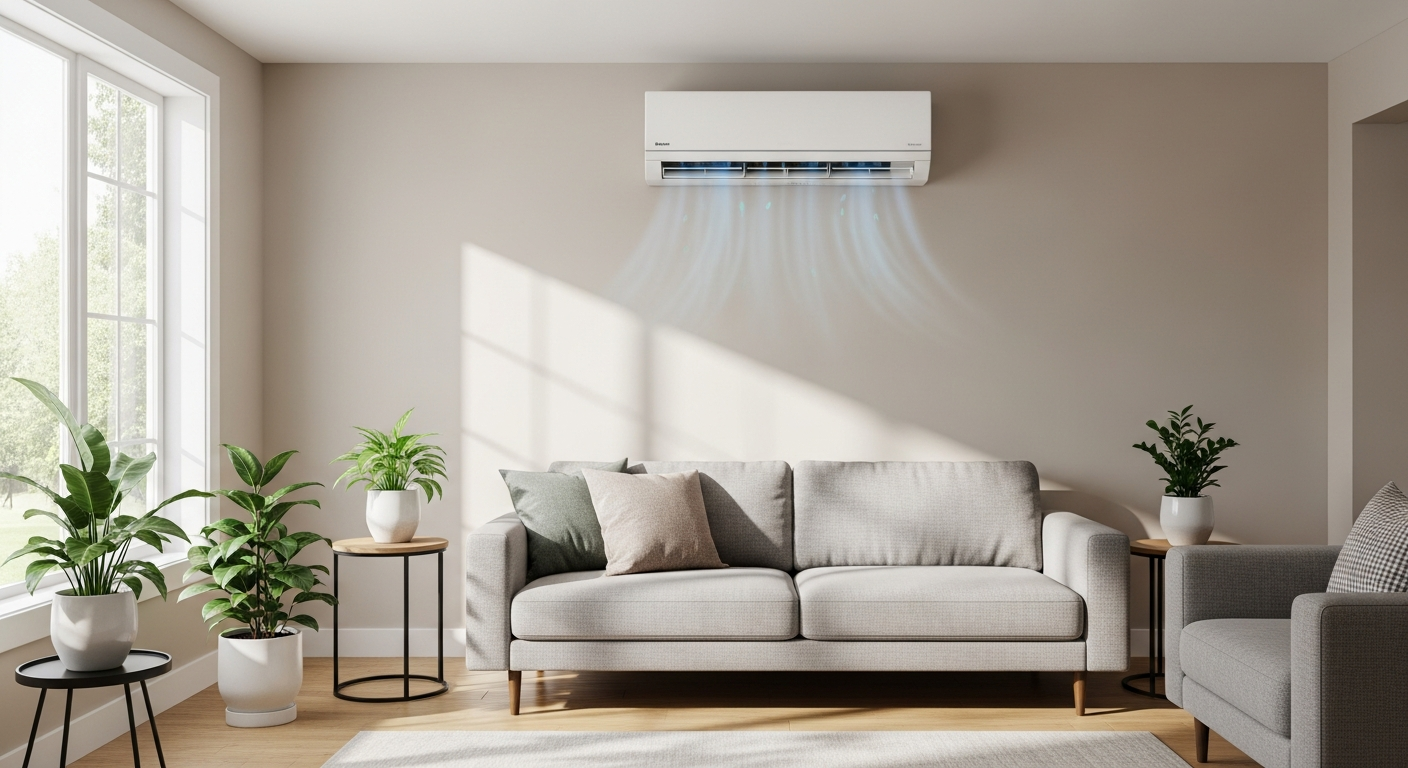
Zoning is a high-value upgrade for multi-story homes with consistent uneven temperatures, especially if your AC is under 10 years old and ductwork is accessibl
It delivers targeted comfort, reduces energy waste, and extends equipment life when professionally installed and operated correctly.
What Matters Most
- Prioritize zoning if upstairs/downstairs temperature differences exceed 5°F.
- Get a Manual D duct design and static pressure test from your contractor.
- Close interior doors and keep dampers unobstructed for best performance.
- Use programmable thermostats with schedules tailored to each zone.
- Always hire a licensed pro—zoning installation is not a DIY job.
Strengths
- Custom comfort in every room
- Demonstrated energy savings (20–30% cooling reduction)
- Extends HVAC equipment lifespan by reducing overuse
- Works with existing ductwork in many homes
- Integrates with smart-home platforms for effortless control
Weaknesses
- Higher upfront cost ($2,500–$7,000+ for retrofit)
- Not suitable for all homes (e.g., very small or poorly ducted)
- May require duct modifications that add expense and disruption
- Improper design can create static pressure issues that damage the blower
- Additional components mean more potential maintenance points
Zoning vs. Alternatives at a Glance
| Scenario | Usually do | Why |
|---|---|---|
| Multi-story home with >5°F variation | Install zoned central AC | Tackles stack effect, saves energy |
| Small single-story (under 2,000 sq ft) | Balance existing ducts; if budget allows, mini-splits | May not justify duct zoning cost |
| Open floor plan with hot spots | Inspect and seal ducts first; add zoning if needed | Often air leakage, not necessarily zoning issue |
| Old AC unit (15+ years) | Replace with new zoned system | Zoning retrofit on old unit risky; combine replacement with zoning |
Quick Answer
Zoning lets you set different temperatures in different areas (zones) of your home using motorized dampers inside your ductwork. When professionally designed and installed, it can cut cooling costs 20–30% by conditioning only occupied spaces, improves comfort in multi-story or open-plan homes, and extends equipment life. Retrofits are possible on many existing systems, but not all. Use our decision rules below to see if your home is a good candidate.
How Central AC Zoning Works
In a standard system, one thermostat controls the entire house. Zoning adds a control panel, zone dampers, and multiple thermostats so that each zone operates independently. When a zone calls for cooling, its damper opens while others stay closed or partially closed, directing air only where needed. Key components:
- Control panel – Communicates between thermostats, the AC unit, and dampers.
- Motorized dampers – Installed inside ducts; open/close to regulate airflow.
- Multiple thermostats – One per zone, sensing local temperature.
Zoning vs. Standard Central AC
| Feature | Standard AC | Zoned AC | Impact |
|---|---|---|---|
| Comfort | Whole-house, single setpoint | Room-by-room control | Eliminates hot/cold spots |
| Energy Use | Cool entire home regardless of occupancy | Cool only occupied zones | 20–30% cooling savings typical |
| Equipment Strain | Longer cycles to satisfy single thermostat | Shorter, targeted cycles | Reduced wear, longer lifespan |
| Noise | Air rushes to all vents | Reduced airflow through unused zones | Lower background noise |
| Control | One thermostat | Individual zone thermostats; often smart-home compatible | Custom schedules per zone |
Is Zoning Right for Your Home? Decision Rules
Answer yes to three or more of the following, and zoning likely pays off:
- Home has multiple stories
- Temperature difference between floors consistently exceeds 5°F
- Rooms with large windows, vaulted ceilings, or skylights overheat
- You frequently close doors or vents to manage comfort
- Your current AC is under 10 years old and in good condition
- Ductwork is accessible and in decent shape
If your home is small (under 2,000 sq ft), single-story, and well-insulated, first try basic AC maintenance and duct balancing. For targeted room control without ducts, a mini-split system may be a simpler alternative.
What Does Zoning Cost?
Costs vary widely by home size, number of zones, duct accessibility, and whether you retrofit or replace the entire system. These are editorial estimate ranges based on national averages as of 2025:
| Project | Editorial Cost Estimate |
|---|---|
| Retrofit 2–3 zone kit (existing ductwork, compatible AC) | $2,500 – $5,000 |
| New AC with integrated zoning (4 zones, variable-speed) | $8,000 – $15,000+ |
| Additional zone thermostat (installed) | $150 – $400 per zone |
| Zone damper and wiring (per damper) | $200 – $600 per damper |
| Labor for duct modification / static pressure testing | $500 – $2,000 |
Exact pricing depends on regional labor, permits, equipment brand, and urgency. Use the HVAC cost estimator to get a personalized estimate, and always get at least three contractor quotes.
Safety Boundaries: What You Can and Must Leave to Pros
Safe Homeowner Checks
- Change or clean air filters every 1–3 months during cooling season
- Listen for abnormal hissing, rattling, or banging from ducts and dampers
- Keep supply and return registers unobstructed by furniture or drapes
- Close interior doors between zones to maintain temperature boundaries
- Program thermostats with reasonable setbacks (no more than 4°F between zones)
Pro-Only Work – Do Not Attempt
- Installing, wiring, or moving zone dampers, control panels, or thermostats
- Cutting into ductwork or modifying plenums
- Adjusting refrigerant charge or handling refrigerant lines
- Any work inside the air handler, blower cabinet, or compressor unit
- Replacing or wiring contactors, capacitors, or circuit boards
- Bypassing any safety switch or limit control
Improper damper installation can cause high static pressure that destroys your blower motor. Always hire a licensed HVAC contractor for any zoning work.
Tools to Estimate Savings and Decide
- HVAC cost estimator – Ballpark installation and retrofit pricing
- Quote checker – Validate contractor bids for fairness
- Repair or replace calculator – See if zoning is worth it on an older unit
- System age decoder – Determine your AC’s manufacture date
- BTU calculator – Check if your unit is sized correctly for zoning
- Rebate finder – Find utility incentives for efficient zoned systems
How to Operate a Zoned System Efficiently
- Set zone temperatures within 4°F of each other to avoid short cycling and air migration.
- Program schedules: cool living areas during the day, bedrooms at night.
- Keep interior doors closed to define zone boundaries; treat each zone as a separate “room.”
- Do not close more than 20% of supply registers manually if no bypass damper is installed—excess back pressure harms the blower.
- If your zoning panel supports a bypass damper, have it checked annually to ensure proper modulation.
- Use clean condenser coils and proper refrigerant charge for optimal efficiency across all zones.
Contractor Checklist: Questions to Ask Before You Hire
- Are you licensed and insured in this state? (Ask for license number.)
- How many zoned system retrofits have you completed? Can you provide references?
- Will you perform a Manual J load calculation and Manual D duct design, or is this a rule-of-thumb estimate?
- What type of dampers do you recommend (motorized vs. manual) and why?
- Can you provide a written estimate that separates equipment, labor, and any duct modification?
- How will you test and report static pressure before and after installation?
- What warranty do you offer on parts and labor? Is there an annual maintenance plan?
- Have you worked with homes like mine (e.g., older, multi-story, coastal)?
Use our contractor comparison tool to evaluate multiple bids side-by-side. For local pros, search by zip code.
Climate and Home-Specific Considerations
- Hot, sunny climates (e.g., Phoenix): Upstairs zones often need separate control. Phoenix AC contractors frequently recommend two-zone setups.
- Humid regions (e.g., Houston): Oversized zones can short-cycle, reducing dehumidification. Insist on proper sizing and consider a whole-home dehumidifier.
- Cold climates (e.g., Chicago): Zoning also improves heating. If you have a heat pump, zoning can work, but cold-climate variable-speed units perform best. Chicago heating contractors can advise.
- Older homes: Retrofitting zoning may require opening walls or ceilings to access ducts. Get a detailed scope of work.
- Coastal or multi-story open-plan homes: Sunrooms or great rooms often need dedicated zones to prevent overheating.
How We Develop Our Recommendations
HVACDatabase editors analyze manufacturer specifications, ENERGY STAR guidelines, ASHRAE standards, and real contractor feedback. Cost ranges reflect national averages adjusted for 2025 inflation and typical regional labor rates. Decision rules are derived from field experience and best practices. All estimates are editorial and not guaranteed—always verify with local licensed professionals.
Frequently Asked Questions
Can I add zoning to any central AC system?
Most single-stage and two-stage systems can be retrofitted if ductwork is adequate. Variable-speed (communicating) systems often require proprietary zoning controls. A pro must assess your blower’s ability to handle reduced airflow and ensure static pressure stays within safe limits.
Will zoning really lower my energy bills?
Yes. By cooling only rooms you use, you avoid wasting energy on unoccupied spaces. Typical savings range 20–30% on cooling costs, though results depend on climate, house size, and thermostat settings. Use programmable schedules to maximize gains.
How many zones do I need?
For most homes, 2–3 zones work well: upstairs, downstairs, and possibly a basement or sunroom. More than 4 zones can complicate design and increase cost without proportional comfort gains. A professional load calculation will determine the optimal number.
Do I need special thermostats for zoning?
Many standard programmable thermostats are compatible, but smart thermostats offer easier scheduling and remote control across all zones. Check that your chosen model works with the zoning panel’s communication protocol.
Can I install a zoning system myself?
No. Installing dampers, control panels, and wiring is complex and risks damaging your AC, voiding warranties, and creating safety hazards. This is strictly a professional installation. Use our contractor search to find qualified installers.
Take the Next Step
If your home suffers from persistent hot or cold spots and you answered yes to multiple decision-rule questions, zoning is likely a smart investment. Use the repair-or-replace calculator if your AC is older, gather at least three quotes from licensed contractors, and don’t skip the static pressure test. Ready to find a pro? Search local HVAC contractors now.
Methodology
HVACDatabase estimates combine common contractor price patterns, service-category pricing ranges, equipment complexity, urgency, regional labor variation, and known HVAC safety boundaries. Actual prices vary by city, brand, system size, access, warranty status, permit requirements, and whether the visit discovers ductwork, electrical, refrigerant, gas, or drainage issues. Use these numbers to sanity-check quotes, not as a guaranteed price.
Related articles
Connect this page to adjacent guides so readers keep moving deeper into the topic cluster.
How to Implement a Whole Home Energy Management System
Integrate smart tech and HVAC controls to cut energy waste. This guide shows how to audit, upgrade, and automate your home's energy use, with real savings estimates.

How to Set Up Thermostat Geofencing
Set up thermostat geofencing to automatically adjust home temperature as you come and go. Save energy, extend equipment life, and never return to an uncomfortable house. Get our quick-start guide now.
How to Troubleshoot Smart Thermostat WiFi Issues
Your smart thermostat offline? Most WiFi drops can be fixed with power checks, router adjustments, and simple restarts. Follow our step-by-step guide to regain remote control and energy savings.