Best WiFi Thermostats for Older HVAC Systems
Upgrade your older HVAC with a WiFi thermostat for remote control, energy savings, and smart features without replacing your whole system. Learn compatibility checks and top picks.
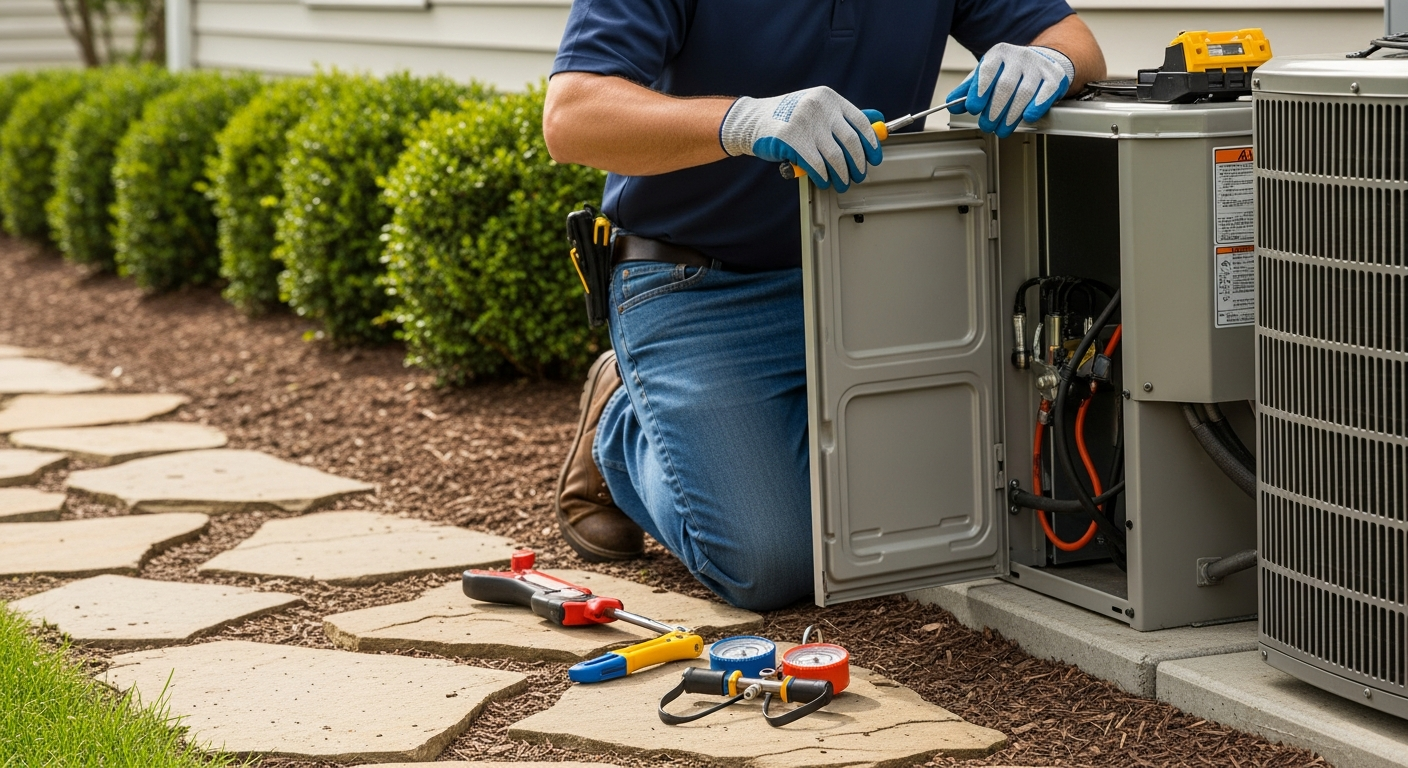
Choose Ecobee with PEK as the Safest Bet for Most Older 24V Systems
The Ecobee Smart Thermostat Premium includes a reliable Power Extender Kit that avoids power-stealing risks. It’s the top editorial pick for legacy HVAC unless you have line-voltage heat.
What Matters Most
- Always verify system voltage—24V or line-voltage—before buying
- Missing C-wire doesn’t mean you can’t go smart; PEK or power connectors are proven solutions
- Smart thermostats can extend older system life through better cycling and humidity control
- Budget $150–$450 for professional installation depending on wiring complexity
- Use HVACDatabase tools to estimate costs and find pre-screened contractors
Strengths
- PEK-based models (Ecobee, Honeywell) are well-tested in older homes
- Room sensors help solve uneven temperature problems without ductwork changes
- Upfront cost is low compared to full HVAC replacement
- Energy savings often pay back the cost in under two years
Weaknesses
- Line-voltage systems require completely different hardware
- Older control boards can still be incompatible; professional verification is essential
- Some models rely on cloud connectivity, which may be a privacy concern
- Installation in homes with plaster walls or no spare wires can be invasive
Decision Summary
| Scenario | Usually do | Why |
|---|---|---|
| Missing C-wire, 24V system | Ecobee with PEK or Nest with Power Connector | Reliable power without rewiring; avoids power-stealing |
| Line-voltage (120V/240V) baseboards | Purchase a Mysa or Stelpro smart thermostat | Standard 24V thermostats are unsafe and won't work |
| System over 15 years, needing repairs | Run repair-or-replace calculator first | A new smart thermostat may not justify cost if a major repair is looming |
| Uneven room temperatures | Ecobee or T9 with room sensors | Sensors help balance temps without ductwork modifications |
| Very old wiring (pre-1990, cloth-covered) | Hire pro to run new thermostat cable | Old wiring may be fragile and lack extra conductors |
Understanding Your Older HVAC System's Wiring
Many homeowners with furnaces or AC units installed before 2000 assume they can't use a smart thermostat. Actually, most 24V systems can be upgraded, but the main hurdle is the C-wire. If you're tired of manual adjustments or want to cut energy bills, a WiFi thermostat is a cost-effective upgrade that avoids a full HVAC replacement. However, older wiring, voltage mismatches, and lack of a common wire require careful selection. We'll cover the top models with built-in workarounds, safety steps, and when to call a pro. You'll also learn how to use HVACDatabase's cost estimator and contractor search to budget and hire safely. By the end, you'll know exactly which thermostat works and how to get it installed right.
Quick Answer: Which WiFi Thermostat Is Best for Your Older System?
If you have a 24V system and are missing a C-wire, the Ecobee Smart Thermostat Premium with its included Power Extender Kit (PEK) is the safest bet for most older setups. It avoids power-stealing issues that can damage sensitive furnace control boards. For Google Home users, the Nest Thermostat with an optional Nest Power Connector also works reliably. In homes with uneven heating or cooling, the Honeywell Home T9 adds remote room sensors to balance temperatures. First, always verify your system voltage—line-voltage systems (110V/220V) require entirely different smart thermostats. Use our repair-or-replace calculator if your equipment is near the end of its lifespan.
Compatibility Check: Voltage and Wiring
Before shopping, turn off power to your HVAC at the breaker. Remove the thermostat faceplate and note the number of wires and terminal labels. Look for a wire connected to the “C” terminal—if present, installation is straightforward. If not, you'll need a workaround. Also, check your current thermostat for a label stating “Line Voltage” or “for use with 24V AC only.” The table below compares top picks and their C-wire solutions. All three require a 24V system; never use them on line-voltage.
| Thermostat Model | C-Wire Workaround | Compatible Voltage | Unique Feature |
|---|---|---|---|
| Ecobee Smart Thermostat Premium | PEK (included) installs at furnace | 24V AC only | SmartSensor for room balancing |
| Google Nest Thermostat | Nest Power Connector (sold separately) | 24V AC only | Battery backup, sleek design |
| Honeywell Home T9 | C-wire adapter (included) | 24V AC only | Robust app, remote sensors |
If you see a “high voltage” warning or have baseboard heaters, skip these models. Look for line-voltage smart thermostats like Mysa or Stelpro instead.
Safety Boundaries: What You Can Check vs. Pro-Only Work
Homeowners can safely perform these checks:
- Turn off power at the breaker and confirm the thermostat is offline.
- Remove the faceplate, take a photo of the wiring, and count wires.
- Inspect the thermostat label for voltage and system type.
- Note if a C-wire is present and its color.
Do not:
- Open the furnace or air handler access panel—this exposes live wiring and moving parts.
- Touch the control board, capacitor, contactor, or any high-voltage connections.
- Attempt to install a PEK or power connector yourself unless you are certain the circuit is fully de-energized and you follow manufacturer instructions precisely. If uncertain, hire a pro.
- Work on gas lines, refrigerant lines, or combustion components.
If your thermostat has more than four wires or the wiring looks aged and brittle, it's safer to bring in a licensed HVAC technician. Find one through our contractor directory.
Use HVACDatabase Tools to Plan Your Upgrade
Before committing, run the numbers:
- HVAC Cost Estimator: Get an editorial estimate range for thermostat installation in your area. Simple swaps average $150–$300; adding a C-wire or PEK may run $200–$450.
- Repair or Replace Calculator: If your system is over 15 years old, weigh a $300 thermostat upgrade against investing in a high-efficiency replacement.
- Quote Checker: Compare multiple bids to avoid overpaying.
- System Age Decoder: Decode your equipment's serial number to know its exact age.
These tools provide editorial estimates based on national averages, not guaranteed prices—your local market will vary.
Decision Guide: Upgrade Thermostat or Replace the Whole System?
Use these rules to decide:
- System age < 10 years and running well: Upgrade to a smart thermostat. The savings are solid, and installation is straightforward.
- System age 10–15 years, minor issues: Install a compatible thermostat but have a technician inspect the system. A professional wiring check may be needed.
- System age > 15 years or needs major repair (compressor, heat exchanger): Run the repair-or-replace calculator. If repair costs exceed 50% of a new system, replacement often makes sense.
- You have line-voltage (120V/240V) heat: Choose a purpose-built smart thermostat (e.g., Mysa, Stelpro) and have an electrician install it. Budget $100–$200 for the thermostat plus installation.
- Uneven room temperatures: A thermostat with room sensors (Ecobee, T9) can help, but severely unbalanced systems may need zoning dampers—a larger project.
Contractor Checklist: Questions to Ask Before You Hire
When interviewing technicians (via our comparison tool), ask these questions:
- “Are you familiar with installing Power Extender Kits or Nest Power Connectors on older systems?”
- “Will you mount the adapter at the furnace, and how do you ensure safe wiring inside the equipment?”
- “What is your diagnostic fee if my system requires extra work? Can you provide a written estimate?” (Expect $80–$200 for a service call.)
- “Does your quote include re-patching drywall if new wiring needs to be fished?”
- “Can you test the thermostat with my specific furnace/AC model to guarantee compatibility before final payment?”
- “Are you licensed, insured, and do you have experience with my brand of equipment?”
Get at least three quotes, and use our quote checker to spot outliers.
Local Factors That Affect Your Choice
Hot, humid climates (e.g., Southeast, Arizona): Choose a thermostat that controls humidity, like the Ecobee with its dehumidification settings. In Phoenix, a reliable AC is critical—link to Phoenix AC contractors.
Cold climates (e.g., Chicago, Northeast): Ensure the thermostat has frost protection and can handle two-stage heating if you have a dual-fuel system. Our Chicago heating contractors can advise.
Older homes (pre-1990): Wiring may be cloth-covered or low on spare conductors. Upgrading to new thermostat cable may be required. Learn more about connecting older wiring to WiFi.
Coastal areas: Salt air corrodes electronics faster. Consider a thermostat with a sealed enclosure or keep spare batteries on hand.
Methodology: How We Picked These Thermostats
Our recommendations are based on an editorial review of:
- Manufacturer compatibility documentation and HVAC professional forums.
- Real-world feedback from technicians who install in older homes.
- Assessment of C-wire workaround reliability—avoiding power-stealing methods that can cause control board failures.
- Feature sets that extend system life, such as adjustable differentials and humidity control.
- Price ranges and warranty coverage.
No manufacturer paid for placement. Our cost estimates are editorial and sourced from national survey data; actual prices vary by region, season, and contractor.
FAQs: Best WiFi Thermostats for Older HVAC
1. Can I install a WiFi thermostat without a C-wire?
Yes. Models like the Ecobee include a PEK that creates a virtual C-wire at the furnace. Google’s Nest Power Connector does the same. Alternatively, the basic Nest Thermostat can run on internal batteries, though in some older systems it may need the connector. Always check manufacturer compatibility before purchasing.
2. What if I have electric baseboard or wall heaters (line-voltage)?
You cannot use standard 24V smart thermostats. Instead, choose a line-voltage smart thermostat such as Mysa or Stelpro. These are designed for 120V/240V and can be installed by an electrician. Expect to pay $100–$200 for the device plus installation.
3. Is it worth putting a smart thermostat on a 20-year-old furnace?
It can be worthwhile if the system is currently reliable and you intend to keep it running for several more years. A smart thermostat’s precise scheduling reduces wear and tear, potentially extending its life. However, if your old system requires expensive repairs soon, the money might be better spent on a high-efficiency replacement. Use our repair-or-replace calculator to evaluate costs over the next five years.
4. How much does professional installation cost?
For a straightforward swap with a C-wire present, installation averages $150–$300. Adding a PEK or running new wire typically runs $200–$450. Get a detailed quote, and check our cost estimator for your area.
5. Will a smart thermostat really save me money on my old system?
Yes. Better control reduces runtime, avoids short-cycling, and allows away-from-home adjustments. Most homeowners see 8–15% savings on heating and cooling costs, which can recoup the thermostat price within 1–2 years. For tips on vacation mode, see our guide on AC tips for vacations.
Related articles
Connect this page to adjacent guides so readers keep moving deeper into the topic cluster.

Tips for Choosing a Smart Thermostat for a Heat Pump
Learn which smart thermostat features prevent expensive auxiliary heat mistakes, how to verify compatibility, and when to call a pro.

Understanding C Wire Adapters for Smart Thermostats
Missing the C wire for your smart thermostat? C wire adapters solve power issues without pulling new wiring. Compare types, costs, and installation options.

Best Smart Thermostats for Multi Zone Homes
Discover which smart thermostats deliver accurate zoning, remote sensors, and energy savings for homes with multiple HVAC zones. Our guide helps you pick the right model and avoid costly compatibility mistakes.