Boiler Replacement Cost Guide
Discover boiler replacement costs, from $4,000 standard installs to high-efficiency systems. Learn how to choose, save with rebates, and hire the right contractor.
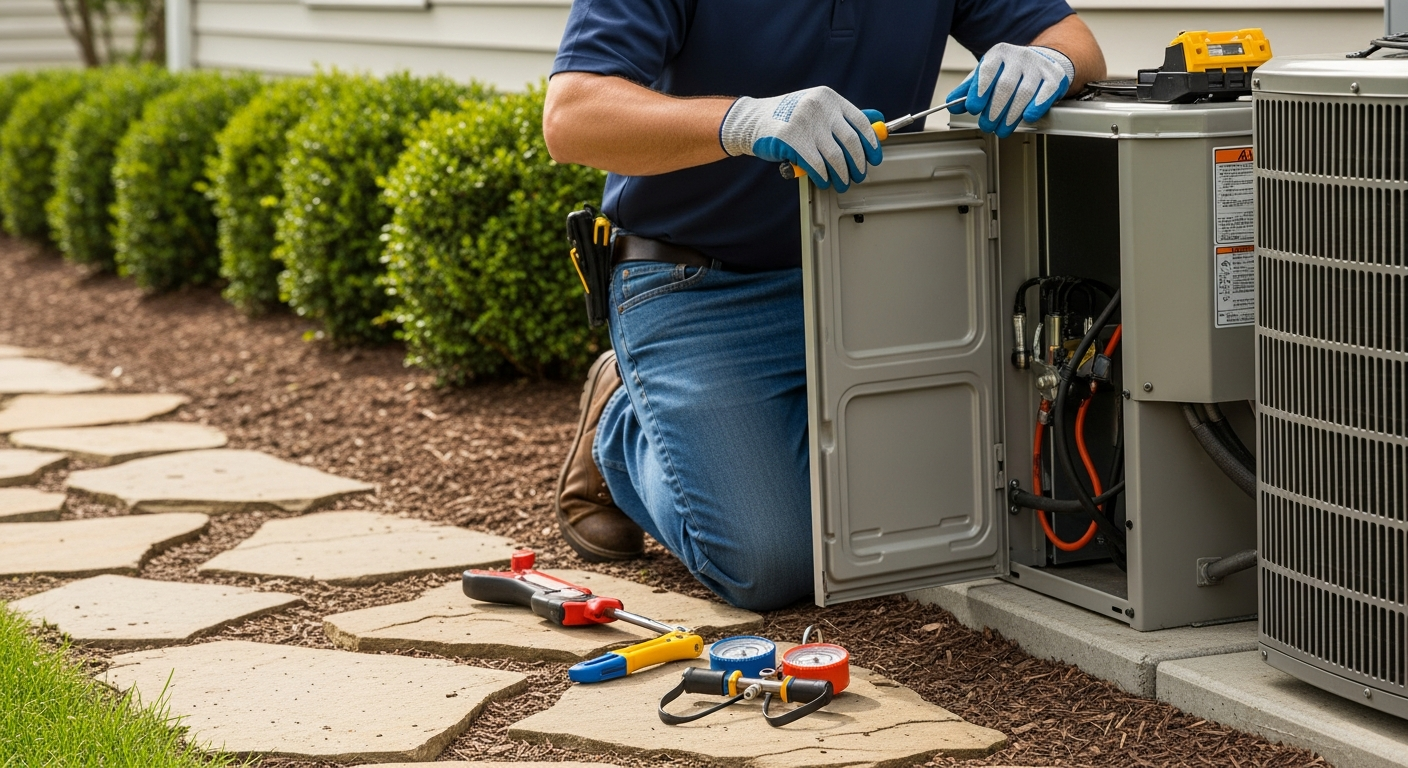
Prioritize high-efficiency condensing boilers for long-term savings
A modern high-efficiency boiler is the smart long-term choice for most homes, but upfront cost can be offset by rebates and fuel savings. Prioritize condensing models if you plan to stay in your home over 5 years.
What Matters Most
- Always get multiple quotes and verify load calculations (Manual J).
- Factor in permit costs and potential venting upgrades—they add $500–$3,000+.
- Check for utility rebates to reduce net cost by $300–$1,000.
- Never DIY gas, electrical, or combustion work; hire licensed pros.
- Use our tools to financially compare repair vs. replace scenarios.
Strengths
- High-efficiency boilers can save $200–$400 annually on fuel bills.
- Combi units free up floor space by eliminating a separate water tank.
- New boilers are quieter and offer smart thermostat compatibility.
Weaknesses
- Upfront costs are significant; payback may take 5–8 years.
- Condensing boilers require a drain and PVC venting, not always present in older homes.
- Converting from oil to gas can add $2,000–$5,000 for new supply lines.
Boiler Type Decision Summary
| Scenario | Usually do | Why |
|---|---|---|
| Small home (1–2 bathrooms) | Combi boiler | Space-saving, on-demand hot water, lower install cost |
| Large home (3+ bathrooms) | System boiler + indirect tank | High hot water demand; more storage |
| Oil to gas conversion | High-efficiency condensing gas boiler | Maximize long-term savings, eligible for rebates |
| Budget-constrained replacement | Standard cast-iron gas boiler | Lower upfront cost, simpler install |
Quick Answer: How Much Does a Boiler Replacement Cost?
For a standard single-family home, a boiler replacement costs $4,000–$12,000, including equipment and labor. High-efficiency models or complex retrofits can push costs to $15,000 or more. Most jobs take 1–3 days. The final price depends on boiler type, fuel, venting, and local labor rates.
Use our HVAC Cost Estimator to get a personalized range based on your home and location.
Boiler Replacement Cost Breakdown
| Cost Component | Typical Range | Notes |
|---|---|---|
| Standard Gas Boiler (80% AFUE) | $2,500–$5,000 | Cast-iron, atmospheric draft |
| High-Efficiency Condensing Boiler (90%+ AFUE) | $4,500–$9,000 | Requires PVC venting & condensate drain |
| Combi Boiler (heat + on-demand hot water) | $3,500–$7,500 | Saves space; best for 1–2 bathrooms |
| Oil Boiler | $3,500–$8,000 | Common in Northeast; higher fuel costs |
| Labor (1–2 days) | $1,500–$4,000 | 30–50% of total; includes piping, electrical, venting |
| Permits & Inspection | $100–$500 | Required by most municipalities |
| Extras (fuel line conversion, chimney liner, etc.) | $500–$3,000+ | Add if switching fuels or updating old flue |
Editorial note: Prices are estimated national averages for 2025. Actual quotes vary by region, home size, and contractor. Always get 3–5 written estimates.
Decision Tree: Repair or Replace Your Boiler?
Answer these questions to decide:
- Is your boiler over 15 years old? → Yes: Replacement likely more cost-effective.
- Did a repair tech find a cracked heat exchanger or major corrosion? → Yes: Replace.
- Are you spending $500+ per year on repairs? → Yes: Consider replacement.
- Is your AFUE rating below 80%? → Yes: A modern boiler can cut fuel bills by 20%+.
- Do you want to switch from oil to natural gas? → Yes: Replacement is your chance; factor in gas line installation.
- Is the boiler undersized or oversized? → Yes: Proper sizing improves comfort and efficiency. Use our BTU Calculator to check.
If you answered yes to 2+ questions, start planning replacement. Use the Repair or Replace Calculator for a financial analysis.
Safety Boundaries: What Homeowners Can (and Cannot) Do
Safe Homeowner Checks
- Check thermostat operation and batteries.
- Bleed radiators to remove trapped air (see How to Bleed a Radiator).
- Inspect visible pipes for leaks or corrosion.
- Ensure no vents or air intakes are blocked.
- Test carbon monoxide detectors monthly.
Pro-Only Work – Never DIY
- Gas line connections or leak repairs: Risk of fire or explosion.
- Combustion adjustments: Improper tuning can release carbon monoxide.
- Electrical wiring of boiler controls: High voltage inside panels.
- Refrigerant handling: Only approved for certain heat pump boilers; requires EPA certification.
- Replacing any sealed components (heat exchanger, pump motor, gas valve).
If you smell gas, evacuate immediately and call the gas company. For boiler repairs, use our contractor search to find licensed professionals.
Contractor Checklist: 8 Questions to Ask Before You Hire
- Are you licensed and insured in my state? (Ask for proof.)
- Will you pull a permit? (Never skip permits; it’s a red flag.)
- How did you size the boiler? (Expect a Manual J load calculation, not rule-of-thumb.)
- What’s included in your quote? (Removal of old unit, disposal, piping, venting, commissioning.)
- Can you provide a written, itemized estimate? (Breakdown of equipment and labor.)
- What warranties do you offer on parts and labor? (Minimum 1 year labor, 5–10 years parts.)
- Do you have local references or recent boiler replacement photos?
- What is the payment schedule? (Never pay 100% upfront; final payment after inspection.)
Compare multiple quotes with our contractor comparison tool.
Local Market Adjustments
Prices shift depending on your climate and home type:
- Cold climates (Northeast, Midwest): Higher demand for high-efficiency condensing boilers; rebates often available. Oil-to-gas conversions common.
- Mild climates (Pacific Northwest, Mid-Atlantic): Combi boilers are popular for space-saving; installation season is year-round.
- Older homes (pre-1960): Updating steam systems to hot water can add $2,000–$5,000. Radiators may need replacement.
- Coastal areas: Corrosion-resistant units and stainless-steel venting may be needed.
- Hot, humid regions (South): Boilers are less common but used for radiant floors. Ensure proper insulation.
Check for local rebates with our Rebate Finder.
Methodology: How We Estimate These Costs
Our editorial team collects data from several thousand HVAC contractor quotes submitted through our platform, aggregated with public project databases, material pricing, and manufacturer published list prices. We blend these with regional labor rate indices and permit fee schedules. Adjustments are made for typical home sizes (1500–3000 sq ft). These are estimates, not quotes. Final pricing depends on site conditions, contractor overhead, and market demand at the time of service.
Frequently Asked Questions
How long does a boiler replacement take?
For a like-for-like swap (same fuel, same location), a professional crew can complete the job in 1 day. Adding new venting, fuel lines, or switching heat distribution (steam to hot water) typically requires 2–3 days.
Can I replace just the heat exchanger instead of the whole boiler?
Rarely cost-effective. A heat exchanger replacement can cost $2,000–$4,000, often 50–70% of a new boiler. If the unit is over 10 years old, full replacement is usually recommended due to encroaching part failures.
What’s the most efficient boiler type?
Condensing boilers with AFUE ratings of 90–98% are the most efficient. They capture extra heat from exhaust gases. In many cold climates, the payback period vs. a standard 80% boiler is 5–8 years through fuel savings.
Do I need to upgrade my radiators when replacing a boiler?
Not always. Modern boilers work with existing radiators, but older steam radiators may need valves or traps serviced. If you’re switching from steam to hot water, you’ll need new radiators or baseboard heaters. Consult a pro to assess.
Are there tax credits for boiler replacements?
Federal tax credits for high-efficiency gas boilers (ENERGY STAR certified) expired for 2024; check for 2025 updates. Local utilities and state programs often offer rebates of $300–$1,000. Use our Rebate Finder to see what’s available in your area.
Next Steps
Ready to compare quotes? Use our Cost Estimator and then search for local boiler contractors vetted by our team.
Related articles
Connect this page to adjacent guides so readers keep moving deeper into the topic cluster.

Cost to Install Multiple Smart Thermostats
Get a clear cost breakdown for installing 2–4+ smart thermostats. Includes equipment, labor, zoning upgrades, and how to save with utility rebates. Practical checks and contractor questions inside.
Duct Booster Fan Installation Cost
Uneven room temps? Duct booster fan installation costs: register fans $30–$100 DIY, inline fans $500–$800+ with pro. Learn when a booster works and when you need a bigger fix.
Makeup Air Unit Installation Cost Guide
Expect to pay $1,500–$4,500 for a pro-installed makeup air unit. Discover passive vs. tempered options, code triggers, and money-saving decision rules.