Federal Tax Credits for Heating Upgrades
Federal tax credits can slash the cost of a new heating system. Learn what qualifies, how to claim your credit, and how to choose a contractor who gets it right.
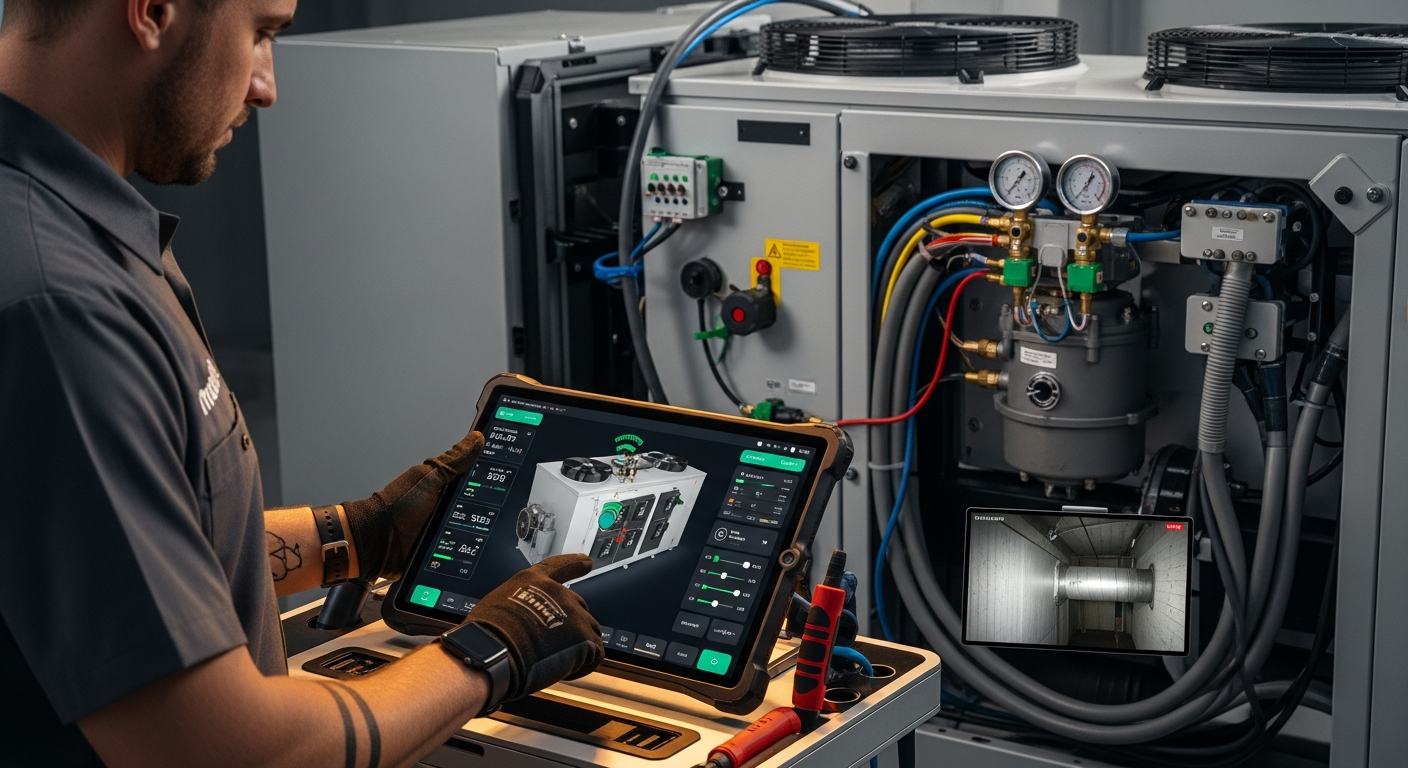
Clear recommendation: Prioritize heat pumps for the largest credit and year‑round efficiency, but verify cold‑climate suitability with a load calculation.
Heat pumps deliver the most federal tax credit—up to $2,000—and act as both furnace and air conditioner. If your home can accommodate one, it’s the financial and environmental winner. For those in extreme climates or with specific infrastructure constraints, a high‑efficiency gas furnace still earns a $600 credit.
What Matters Most
- Heat pumps earn 30% credit up to $2,000; high‑efficiency furnaces and boilers earn up to $600.
- Credit is non‑refundable and applies only to your primary residence.
- Combine the federal credit with state and utility rebates for maximum savings.
- Proper professional installation is essential—DIY installs may void eligibility.
- Use HVACDatabase tools to estimate costs, find rebates, and compare contractors.
Strengths
- Immediate tax savings reduce the effective price of high‑efficiency equipment.
- Heat pumps can cut heating energy use by 50% or more compared to electric resistance.
- One system provides both heating and cooling, simplifying maintenance.
- Stacking incentives can bring premium systems within a mid‑range budget.
Weaknesses
- Upfront cost of cold‑climate heat pumps can still be $8,000–$15,000 before incentives.
- Older homes may need electrical panel upgrades ($1,500–$4,000) for a heat pump.
- Credit is non‑refundable; households with low tax liability may not capture the full amount.
- Gas furnace credit is relatively small, and the required 97% AFUE model costs more than an 80% unit.
Decision summary
| Scenario | Usually do | Why |
|---|---|---|
| Replacing an old furnace in a cold‑climate home without duct leaks | Cold‑climate heat pump (or dual‑fuel with gas backup) | Maximizes the $2,000 credit; dual‑fuel uses gas only on the coldest days, keeping operating costs low |
| Home with no ductwork (boiler, radiant, or baseboard heat) | Ductless mini‑split heat pump | No ductwork needed; high credit; zoned comfort; avoids basement duct losses |
| Tight budget and existing natural gas line | 97% AFUE gas furnace | Upfront cost is lower than a heat pump; $600 credit helps; simple drop‑in replacement |
| Upgrading a working but inefficient system now to lock in the credit | Heat pump if AC is also old; furnace if only heating matters | Credits are available through 2032, but replacing before a breakdown allows planning and cost comparison |
Introduction
Replacing your heating system is a major expense, but federal tax credits can cut your net cost significantly. Through 2032, the Inflation Reduction Act offers a 30% credit (up to $2,000) for qualifying heat pumps and heat pump water heaters, and up to $600 for high‑efficiency furnaces, boilers, and certain other improvements. This guide shows exactly which equipment qualifies, how to combine incentives, and the contractor questions that protect your savings.
Quick Answer
- Heat pumps (air‑source, ductless, and heat‑pump water heaters): 30% of project cost, capped at $2,000 per year.
- Furnaces and boilers (gas, oil, propane): up to $600 for models meeting 97% AFUE (furnaces) or 95% AFUE (boilers).
- Residential biomass stoves/boilers: 30% capped at $2,000.
- Credit is non‑refundable, applies to existing primary residences only, and new construction doesn't qualify.
- File IRS Form 5695 with your tax return; keep the Manufacturer’s Certification Statement and receipts.
Eligible Equipment & Credit Amounts
| Equipment Type | Minimum Efficiency | Maximum Credit | Notes |
|---|---|---|---|
| Air‑Source Heat Pump (ducted) | Energy Star; HSPF2 ≥ 8.5, SEER2 ≥ 15.2 for split systems | 30% of cost, up to $2,000 | Covers heating and cooling; cold‑climate models available |
| Ductless Mini‑Split Heat Pump | Energy Star; HSPF2 ≥ 8.5, SEER2 ≥ 16.0 | 30% of cost, up to $2,000 | Ideal for homes without ductwork |
| Heat Pump Water Heater | Energy Star; UEF ≥ 3.30/3.70 depending on tank size | 30% of cost, up to $2,000 | Shared annual cap with other heat pump credits |
| Natural Gas Furnace | Energy Star; AFUE ≥ 97% | Up to $600 | Must be a condensing model |
| Oil or Propane Furnace | Energy Star; AFUE ≥ 97% | Up to $600 | Check fuel availability and prices |
| Gas, Oil, Propane Boiler | Energy Star; AFUE ≥ 95% | Up to $600 | Hydronic systems only |
| Residential Biomass Stove/Boiler | Thermal efficiency ≥ 75% | 30% of cost, up to $2,000 | Must meet EPA emissions standards |
Table: Qualifying heating equipment and 2025 federal tax credits. Always verify current criteria at EnergyStar.gov and IRS.gov.
Decision Rules: Which System Should You Choose?
- If you need both heating and cooling: A heat pump is the clear winner—one system does both, and the credit is highest.
- If you only need heating and live in a cold climate: A cold‑climate heat pump may still work and earn the $2,000 credit; alternatively, a high‑efficiency gas furnace gets $600 and offers robust performance below −20°F.
- If you have radiant heat: A condensing boiler (95%+ AFUE) qualifies for $600. Biomass boilers earn 30% up to $2,000 but require fuel storage and more labor.
- If your electrical panel is near capacity: A heat pump may require an upgrade (not covered by the heating credit, but other credits for panel upgrades may apply). A gas furnace often uses a standard 120‑volt circuit.
- If your home has old, leaky ducts: A ductless mini‑split heat pump avoids duct losses and earns the full 30% credit.
Interactive Decision Tools
Use HVACDatabase’s free calculators to sharpen your estimate:
Rebate Finder – stack federal credits with local utility rebates.
HVAC Cost Estimator – get an installed‑price range for your ZIP code.
Repair or Replace Calculator – see whether fixing your old unit or upgrading saves more once credits are factored in.
HVAC Cost Guide Hub – compare typical prices for furnaces, heat pumps, and boilers.
Safety Boundaries: What Homeowners Can (and Cannot) Do
- You can safely: replace standard 1‑inch air filters, check thermostat settings, ensure supply and return vents are open, clear debris around outdoor units, and schedule annual professional maintenance.
- Leave to licensed professionals: refrigerant handling, gas piping, combustion venting, electrical wiring inside the unit, compressor or capacitor replacement, heat‑exchanger inspection, and any work that opens the sealed refrigeration circuit.
- Why it matters for your credit: A DIY install rarely meets the manufacturer’s efficiency rating and may void the warranty. The Manufacturer’s Certification Statement typically lists the contractor as the installer, and a tax preparer may flag a self‑installed system.
Contractor Checklist: Questions to Ask Before Signing
- “Do you provide the Manufacturer’s Certification Statement for the exact model you’re installing?”
- “Will you perform a Manual J load calculation, and can you share the report?”
- “Does the quoted price include any necessary electrical, duct, or venting modifications?”
- “Are you licensed, insured, and bonded in this municipality? May I see your license number?”
- “Do you pull all required permits, and will you handle the inspection scheduling?”
- “What local utility rebates can you help me apply for alongside the federal credit?”
- “What is your warranty policy for parts, labor, and the installation workmanship?”
Find pre‑vetted professionals in your area through HVACDatabase Contractor Search and compare quotes using the Contractor Comparison tool.
Local Climate Considerations
- Cold climates (e.g., Chicago, Minneapolis): Choose a cold‑climate heat pump rated to −13°F or better, or pair a standard heat pump with a gas furnace (dual‑fuel) for extreme days. High‑efficiency gas furnaces remain a strong $600‑credit choice. See Chicago heating contractors.
- Hot, humid climates (e.g., Phoenix, Houston): Heat pumps excel because they provide efficient air conditioning and dehumidification. A ductless mini‑split can zone hard‑to‑cool rooms. See Phoenix AC contractors.
- Older homes: Before upgrading, consider envelope improvements (insulation, air sealing) which also qualify for a separate 30% credit up to $1,200. Check the BTU Calculator to avoid oversizing.
- Coastal areas: Salt air corrodes outdoor coils; insist on models with coated coils and ask contractors about corrosion‑resistant installations.
How To Claim Your Credit
- At installation, obtain the Manufacturer’s Certification Statement and itemized invoice showing the equipment model and total project cost.
- File IRS Form 5695 with your federal tax return for the year the system was placed in service.
- Keep all documents for at least three years in case of audit.
Methodology
The information in this article is based on the Inflation Reduction Act of 2022, IRS guidance, and Energy Star program requirements in effect for 2025. Cost ranges are editorial estimates drawn from HVACDatabase’s aggregated project data (actual prices vary by region, system size, and labor rates). Recommendations balance maximum credit value, long‑term energy savings, and climatic suitability, but your specific home may require a professional assessment.
Frequently Asked Questions
Can I claim the credit on a rental property?
No. The credit is only for an existing home that is your primary residence. Second homes and rental properties do not qualify.
Is there an income limit for the credit?
No, there is no income cap. However, the credit is non‑refundable, meaning it can reduce your tax liability to zero but won't generate a refund beyond what you owe.
Can I combine this credit with utility rebates?
Yes, and you should. State and utility rebates stack with the federal credit. For example, a $10,000 heat pump could get $2,000 federal credit + $1,000 utility rebate, reducing your net cost to $7,000.
What if I install a qualifying system but don’t have enough tax liability to use the full credit?
The credit cannot be carried forward for heating equipment. If your tax liability is only $1,500 in the year of installation, you lose the remaining $500. Plan your timing accordingly.
How do I know if a specific model qualifies?
Check the Energy Star website for a list of qualifying models, or ask your contractor for the Manufacturer’s Certification Statement before installation. The statement must reference the exact model number and confirm it meets the tax‑credit criteria.
Related articles
Connect this page to adjacent guides so readers keep moving deeper into the topic cluster.

How Utility Demand Response Programs Use Smart Thermostats
Enrolling your smart thermostat in a demand response program can earn you up to $150/year while keeping you comfortable. Learn if it's right for your home and how to maximize benefits.
Heating Industry Trends to Watch
Smart thermostats and heat pumps headline heating industry changes. But which trends deliver real savings? Use our decision guide, cost ranges, and contractor checklist to plan your upgrade.

How Gas Bans Are Affecting Heating Choices
Gas bans in new construction and retrofit codes are pushing homeowners toward electric heat pumps. Understand your options, costs, and available incentives before you replace your furnace.