Heat Pump Installation Cost Breakdown
Understand real heat pump installation costs from $4,000–$18,000+. Compare types, labor, hidden fees, and long-term savings with our decision guide and tools.
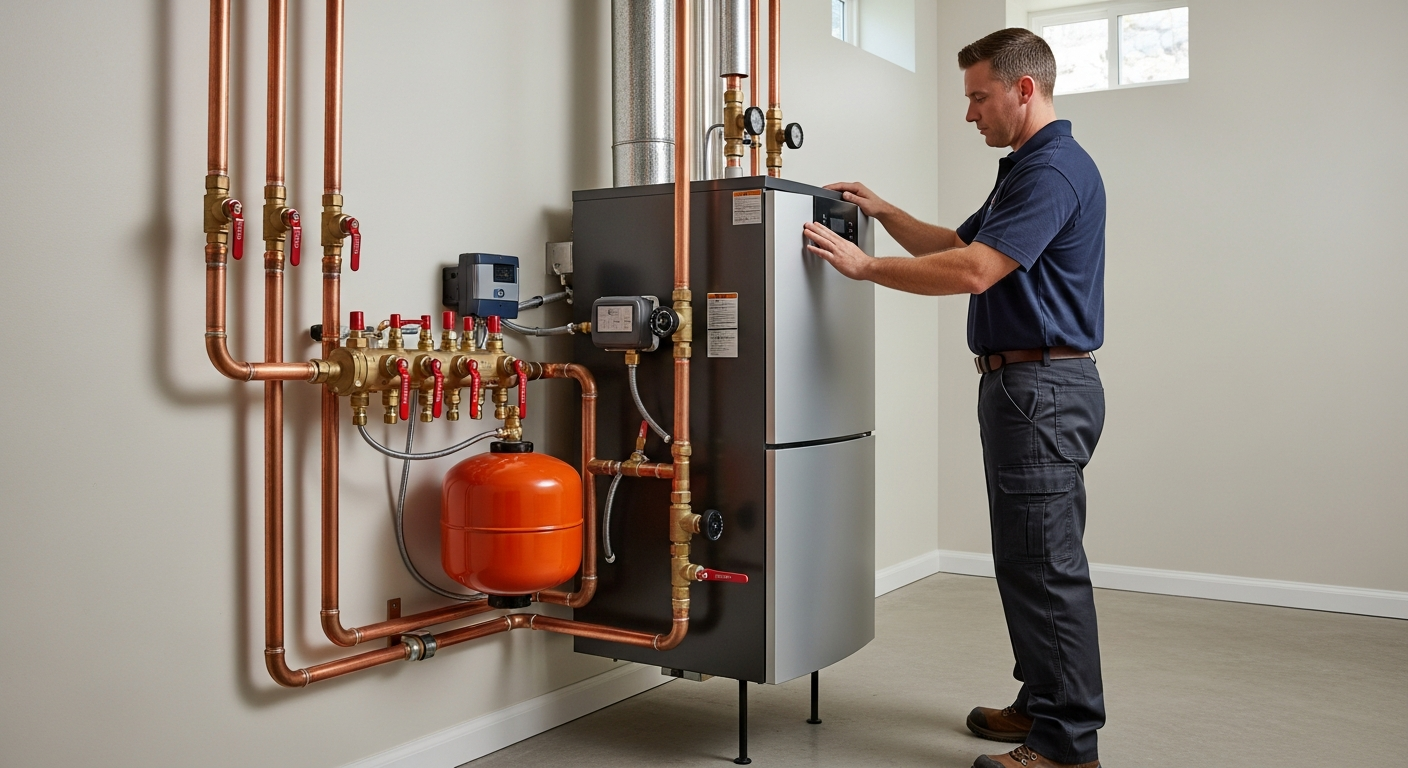
clear recommendation
We recommend getting at least three itemized quotes and using our tools to verify fair pricing and rebates. A properly sized, cold-climate-ready heat pump often delivers the best long-term value for most homeowners.
What Matters Most
- Heat pump installation costs $7,000–$18,000+ for central air-source, with ductless and geothermal at higher and lower extremes
- Always demand a Manual J load calculation from any contractor
- Combine federal tax credits and local rebates to cut upfront cost by up to 30%
- Climate and home age drastically influence the right system choice and hidden upgrade costs
- Use our cost estimator and quote checker before signing a contract to avoid overpaying
Strengths
- Provides year-round heating and cooling in one unit
- Can reduce energy bills by 30–50% compared to electric resistance or older AC
- Eligible for significant government incentives
- Modern cold-climate models work in sub-zero temperatures
- Long-term maintenance is simpler than separate furnace and AC
Weaknesses
- Higher upfront cost than basic AC or furnace replacement
- May require electrical panel upgrade in older homes
- Efficiency drops in extreme cold, sometimes needing backup heat
- Refrigerant handling requires EPA-certified techs
Heat Pump vs. Alternatives: Quick Decision
| Scenario | Usually do | Why |
|---|---|---|
| Replacing old AC + furnace, have ducts | Install air-source heat pump | Single unit replaces both; lower lifetime cost and maintenance |
| New addition or home without ducts | Install ductless mini-split | Avoids expensive ductwork installation; zonal control saves energy |
| Live in very cold climate, natural gas cheap | Consider dual-fuel (heat pump + gas furnace) | Best efficiency with gas backup for sub-zero days; compare fuel costs |
| Upfront budget under $5,000 | Repair existing system or consider financing/rebates | Quality installs rarely cost less; cheap quotes risk future repairs |
| Want ultimate efficiency and long-term investment, have land | Explore geothermal | Highest efficiency; 25+ year lifespan; expensive but big rebates |
Understanding actual heat pump installation costs helps you avoid overpaying and choose the right system. Our guide uses editorial estimates from contractor data and government sources to show real-world prices, hidden fees, and savings opportunities.
Quick Answer: What Does a Heat Pump Installation Really Cost?
Editorial estimate range: $7,000–$18,000+ for a central air-source heat pump; $3,000–$8,000+ per zone for ductless; $15,000–$30,000+ for geothermal. Final price depends on system type, capacity, efficiency, ductwork, and labor. Use our HVAC cost estimator for a personalized estimate.
Heat Pump Installation Cost Factors
| Cost Factor | How It Affects Price | Typical Range |
|---|---|---|
| System type | Air-source least expensive; geothermal most | $4,000–$30,000+ |
| Capacity (tons) | Larger homes need higher tonnage, raising equipment cost | 2-ton: $4,000–$8,000; 5-ton: $8,000–$15,000+ |
| Efficiency (SEER2/HSPF2) | Higher ratings cost more upfront but lower bills | 14–18 SEER: baseline cost; 20+ SEER: add $2,000–$5,000+ |
| Labor & installation complexity | Difficult access, electrical upgrades, ductwork modifications increase labor | Labor: $2,500–$8,000+ |
| Ductwork condition | Repairs or new ducts add $1,000–$5,000+ | Sealing: $500–$2,000; new ducts: $3,000–$8,000+ |
| Electrical panel upgrade | Older homes may need 200-amp upgrade | $1,500–$4,000 |
| Permits & inspections | Varies by city; usually included in quote but ask | $150–$800 |
Safety Boundaries: What Homeowners Can (and Can’t) Do
You can safely: clean/replace air filters, clear outdoor unit debris, check thermostat settings, verify breakers. Call a licensed pro for: refrigerant handling, electrical wiring, compressor work, gas connections, duct modifications, and any task that requires opening the sealed refrigeration circuit. Never attempt to recharge refrigerant or replace capacitors, contactors, or control boards—these involve high voltage or chemical risks.
Tools to Estimate Your Heat Pump Cost & Savings
- HVAC Cost Estimator: Get a personalized installation range based on your home details.
- Heat Pump Savings Calculator: Compare annual energy costs vs. a furnace or AC.
- Rebate Finder: Find local utility and federal incentives that can cut thousands off your project.
- Quote Checker: Verify if a contractor quote is fair for your area.
Decision Rules: Is a Heat Pump Right for You?
Ask yourself:
- If your current furnace or AC is over 12 years old and needs major repair (>50% of replacement cost), replacing with a heat pump often makes financial sense. Use our repair vs replace calculator.
- If you live in a moderate climate (winter lows above 25°F), an air-source heat pump can efficiently handle heating and cooling without backup heat strips.
- If your home lacks ductwork, a ductless mini-split is often cheaper than installing central ducts.
- If you plan to stay in the home for 5+ years, the higher upfront cost of a high-efficiency unit is usually recouped through energy savings.
- In very cold climates (below 0°F regularly), a cold-climate heat pump or dual-fuel system may be needed; consult our cost estimator for cold-climate options.
Contractor Questions to Ask Before Hiring
Use our contractor comparison tool to vet bids. Ask each:
- “Will you perform a Manual J load calculation to size the unit?” (If they say square footage alone, walk away.)
- “What’s included in the quoted price? Permits, electrical, ductwork, old unit disposal?”
- “Is the equipment AHRI-matched and eligible for federal tax credits and utility rebates?”
- “Can you provide a written warranty on labor and a copy of the manufacturer warranty?”
- “How do you handle refrigerant line set flushing or replacement?”
- “What’s your planned static pressure test to ensure airflow is correct?”
How Your Climate and Region Change the Cost
Hot/humid (e.g., Houston, Orlando): Focus on high-SEER cooling efficiency and humidity control. Ductwork must be sealed to prevent moisture issues. Geothermal often not worth extra cost. Cold (e.g., Minneapolis, Denver): Choose a cold-climate heat pump with HSPF2 ≥ 8.5 or dual-fuel with gas backup. Electrical upgrades are common. Coastal (e.g., San Diego, Seattle): Salt air corrosion protection for outdoor unit is important. Mild climate allows lower upfront cost for mid-efficiency units. Older homes (pre-1980): Expect to upgrade electrical panel and possibly replace ductwork. Asbestos or knob-and-tube wiring may complicate installation. Urban areas: Labor rates are higher; get multiple quotes via our contractor search to compare.
Methodology: How We Estimate Costs
Our editorial estimates are based on aggregated data from contractor surveys, U.S. Department of Energy documentation, and real project data (when available). Ranges reflect common scenarios and assume licensed, insured installation in a typical single-family home. Actual bids vary by region, season, and home specifics. Use our Quote Checker to validate your estimate. We do not provide appraisals or guarantees; always get at least three written quotes.
Frequently Asked Questions
How long does heat pump installation take?
A standard air-source replacement with existing ductwork takes 1–2 days. Ductless systems can be installed in 1 day per zone. Geothermal requires 3–5 days due to ground loop excavation.
Are heat pumps more expensive to run than gas furnaces?
It depends on local utility rates. In areas with cheap natural gas, a high-efficiency furnace may have lower monthly bills. But heat pumps deliver 2–4x more heat energy than the electricity they consume, often making them competitive. Use our Heat Pump Savings Calculator to compare.
What is the lifespan of a heat pump?
Air-source units last 12–15 years with proper maintenance. Geothermal indoor components last 25+ years, ground loops 50+ years. Regular filter changes and annual inspections extend life.
Do I need backup heat with a heat pump?
Modern cold-climate heat pumps can handle temperatures as low as -15°F, but many installations include electric resistance backup (heat strips) for extreme cold snaps. In mild climates, backup may not be needed. Discuss your local design temperature with a contractor.
Are there any tax credits for heat pumps in 2025?
Yes. The federal Energy Efficient Home Improvement Credit offers up to 30% of the project cost (max $2,000) for qualifying heat pumps through 2032. Many states and utilities add rebates. Check our Rebate Finder for local programs.
Related articles
Connect this page to adjacent guides so readers keep moving deeper into the topic cluster.

Cost to Install Multiple Smart Thermostats
Get a clear cost breakdown for installing 2–4+ smart thermostats. Includes equipment, labor, zoning upgrades, and how to save with utility rebates. Practical checks and contractor questions inside.
Duct Booster Fan Installation Cost
Uneven room temps? Duct booster fan installation costs: register fans $30–$100 DIY, inline fans $500–$800+ with pro. Learn when a booster works and when you need a bigger fix.
Makeup Air Unit Installation Cost Guide
Expect to pay $1,500–$4,500 for a pro-installed makeup air unit. Discover passive vs. tempered options, code triggers, and money-saving decision rules.