How to Adjust Gas Furnace Air Fuel Mixture
A balanced air-fuel mix is critical for furnace safety and efficiency. Learn the signs of a bad mixture, what pros do, and how to avoid carbon monoxide risks—no DIY gas adjustments.
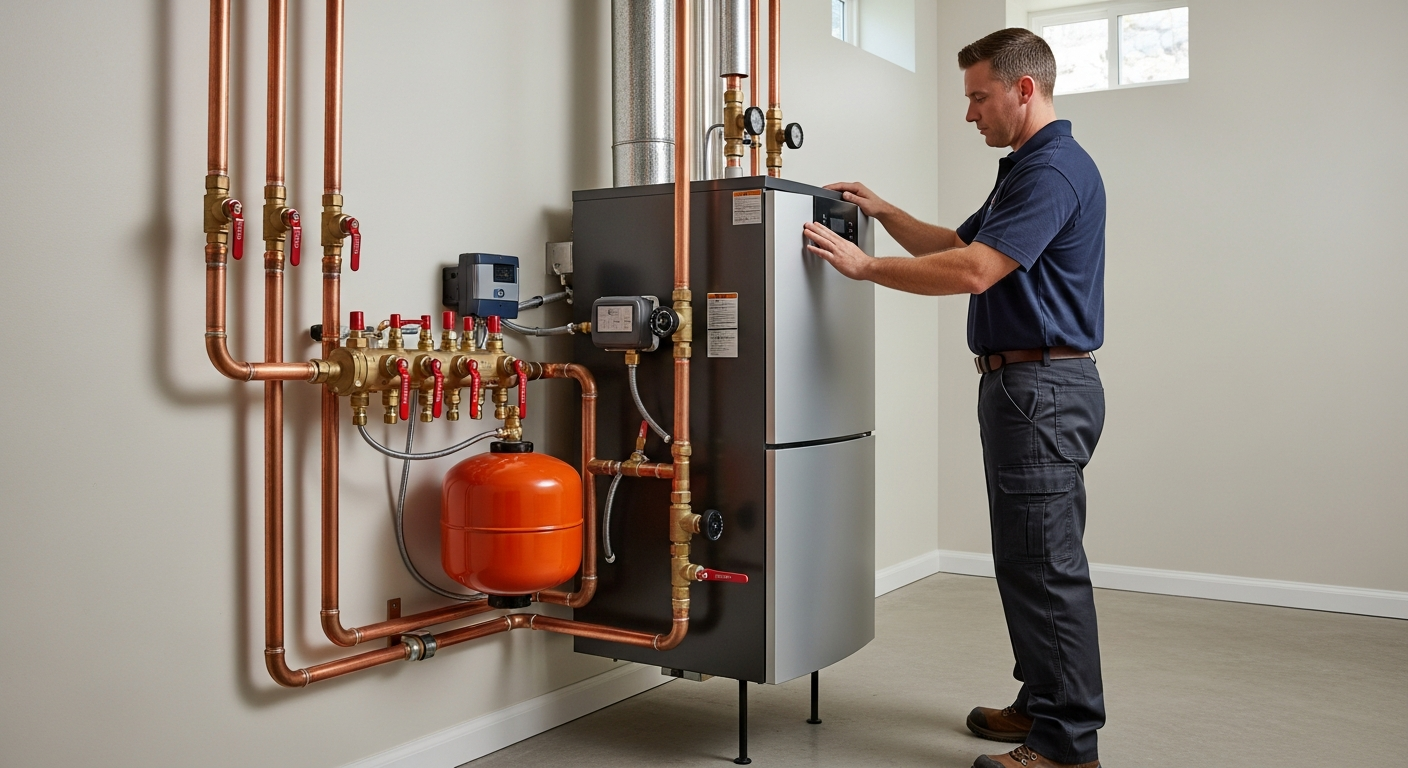
Leave Air-Fuel Adjustment to the Pros
Homeowners should never attempt to adjust a gas furnace’s air-fuel mixture. This task requires specialized tools and training to avoid carbon monoxide poisoning; instead, learn the warning signs and hire a qualified HVAC technician.
What Matters Most
- A bad air-fuel mix can lead to carbon monoxide, soot, and inefficient heating.
- Only trained professionals should adjust gas pressure, orifices, or combustion settings.
- Homeowners can safely watch for yellow flames, soot, and strange odors.
- An annual professional tune-up with combustion analysis costs roughly $100–$300.
- Use our tools to estimate costs and find vetted contractors.
Strengths
- Prioritizes safety by forbidding DIY gas adjustments
- Provides clear symptom guide for early detection
- Empowers homeowners to make informed hiring decisions
- Links to cost calculators and contractor search for local options
Weaknesses
- Does not detail technical adjustment steps (for safety)
- Relies on professional availability, which may vary by region
- Cost estimates are editorial ranges, not guaranteed
Decision Summary: When to Call a Pro
| Scenario | Usually Do | Why |
|---|---|---|
| Flame is yellow/orange | Call a pro for combustion analysis | Indicates incomplete combustion, risk of CO |
| Soot present around burner door | Urgent inspection; do not run furnace | Carbon buildup signals dangerous mixture |
| Furnace short cycles | Schedule service within a few days | Repeated shutdowns stress system |
| Annual maintenance | Book a tune-up with combustion check | Prevents problems and keeps efficiency high |
| Smell gas/rotten eggs | Evacuate, call gas company, then furnace tech | Gas leak is immediate hazard |
Why Your Furnace’s Air-Fuel Mixture Matters
Your gas furnace burns a precise blend of fuel and oxygen to produce heat. When that balance is off—too much gas (rich) or too little (lean)—efficiency plummets, soot clogs components, and carbon monoxide (CO) can leak into your home. This guide helps homeowners understand what the mixture does, how to spot trouble, and exactly how to hire a qualified technician. Never attempt to adjust gas pressure, orifices, or combustion settings yourself. The work demands a calibrated manometer, combustion analyzer, and expert training to prevent deadly CO exposure.
Quick Answer
You cannot safely adjust an air-fuel mixture without specialized tools and certifications. Instead, watch for yellow flames, soot, or strange odors, then call a licensed HVAC pro for a combustion tune-up (usually $100–$300). Your job: keep filters clean, vents clear, and schedule annual inspections.
Safety Boundaries: What’s Safe for Homeowners
Homeowners can perform visual checks that won’t disturb gas connections or live electrical components. But any task that involves opening the burner compartment or touching gas valves crosses a red line.
| Safe Homeowner Checks | Pro-Only Work (Dangerous) |
|---|---|
| Look at flame color through the sight glass | Adjusting gas manifold pressure |
| Inspect for soot or debris around the burner door | Moving primary air shutters or orifice changes |
| Sniff for unusual odors around the furnace | Using a manometer or combustion analyzer |
| Replace air filters and ensure vents are unblocked | Adjusting the gas valve regulator |
If you see soot, persistent yellow flames, or smell gas or a sharp odor, shut down the furnace, open windows, and call a technician immediately. Do not bypass any safety switches or attempt to “tune” the burners.
Warning Signs Your Air-Fuel Mixture Is Off
| Symptom | What It Means | Action |
|---|---|---|
| Flame is yellow or orange (not steady blue) | Incomplete combustion; possible rich mixture | Stop using heat, call a pro for combustion analysis |
| Soot or black residue on burner cover | Carbon buildup from poorly tuned burners | Urgent inspection—don’t run until cleared |
| Metallic or “dirty sock” smell | Aldehydes from incomplete combustion | Ventilate and call a technician; could be dangerous |
| Furnace short-cycles or won’t stay lit | Lean mixture, failing flame sensor, or pressure issue | Schedule service to prevent repeated failures |
| Rotten-egg odor or gas smell | Possible gas leak (not mixture-related) | Evacuate, call gas utility, then HVAC after |
How Professionals Tune an Air-Fuel Mixture
When a certified technician arrives, they’ll follow strict safety protocols. Here’s an overview of what they’ll do—so you can understand the work, not attempt it yourself:
- Check inlet and outlet gas pressure with a manometer, comparing to the furnace’s rating plate.
- Insert a combustion analyzer into the flue to measure O₂, CO, CO₂, and stack temperature.
- Adjust the gas valve regulator (or primary air shutters on older atmospheric furnaces) until readings fall within manufacturer specifications (typically 7–9% CO₂, <100 ppm CO air-free).
- On modern sealed-combustion units, adjustments are often limited to verifying manifold pressure; if the mixture is off, it may signal a failing inducer motor, clogged heat exchanger, or control board fault.
Always ask for a combustion analysis printout; it’s your proof the furnace is safe and efficient.
Decision Tree: Should You Call a Pro?
Click to see when professional help is needed
- Flame is yellow or orange? Yes → Shut down, call a pro for combustion analysis.
- Soot is visible? Yes → Urgent inspection required; do not operate the furnace.
- Furnace short-cycles? Yes → Schedule service within 5 days to avoid stress on components.
- Blue flame but furnace over 15 years old? Consider a Repair or Replace evaluation—aging systems may never tune perfectly.
- Strange odors or headaches? Exit the home and call the gas company, then an HVAC tech.
Contractor Checklist: Questions to Ask Before Approving Work
- Are you NATE-certified or licensed for gas furnace work in this state?
- Will you use a calibrated combustion analyzer and provide a full printout of O₂, CO, and CO₂ levels?
- What’s the total cost: diagnostic fee plus adjustment? Is the combustion analysis separate?
- Can you show me the manufacturer’s target manifold pressure and CO/CO₂ standards?
- Will you inspect the heat exchanger, venting, and burners for safety?
- Do you carry general liability insurance and workers’ comp?
Always compare at least two contractors using our comparison tool.
Costs & Tools to Make the Right Call
Editorial estimates for combustion-related work:
- Diagnostic visit (including combustion test): $80–$200
- Full combustion tune-up with adjustments: $100–$300
- If major repairs are needed (gas valve, burner replacement): $800–$2,500+
Use our HVAC Cost Estimator to see what neighbors pay in your ZIP code. Not sure if it’s repair or replace time? Try the Repair or Replace calculator. To decode your furnace’s age from its serial number, visit the System Age Decoder.
Local Context: High Altitudes, Coastal Air & Older Homes
Your location dramatically affects air-fuel mixture needs:
- High-altitude homes (above 2,000 ft) require proper derating—reducing gas input or changing orifices to compensate for thin air. An untuned high-altitude furnace soots up fast and produces dangerous CO.
- Coastal regions with salt air can corrode air shutters and burners, altering mixture. Schedule annual autumn inspections.
- Older homes that have been tightened with insulation and new windows may starve the furnace for combustion air. A technician can test for sufficient makeup air and, if needed, recommend a fresh-air intake.
Find local pros familiar with your area’s challenges using our contractor search. For example, Phoenix AC contractors or Chicago heating specialists.
Methodology
Our guidance draws on manufacturer specifications, ASHRAE standards, and NFPA 54 (National Fuel Gas Code). Cost ranges reflect aggregated HVAC service pricing across U.S. markets from contractor surveys and project databases, presented as editorial estimates—not guaranteed quotes. Safety boundaries align with EPA recommendations and are designed to prevent carbon monoxide exposure and combustion-related hazards.
Frequently Asked Questions
- 1. Can I clean the furnace burners myself?
- You may gently dust the exterior of the burners with a soft brush after turning off the power, but do not disassemble them or disconnect gas lines. Any internal cleaning requires a pro.
- 2. How often should combustion be checked?
- Annually during a furnace tune-up. If your system is over 10 years old, consider bi-annual checks.
- 3. What’s a normal CO reading from a furnace?
- A properly tuned furnace typically produces less than 100 parts per million (ppm) of CO air-free in the flue gas. Over 100 ppm warrants immediate adjustment.
- 4. Is a yellow flame tip ever okay?
- A tiny yellow tip on LP gas flames can be normal; however, consistent yellow, orange, or flickering flames always signal a problem.
- 5. Will a dirty air filter affect the mixture?
- Yes. A severely blocked filter reduces combustion air, creating a rich mixture and possible sooting. Change filters every 1–3 months.
Related articles
Connect this page to adjacent guides so readers keep moving deeper into the topic cluster.
How to Implement a Whole Home Energy Management System
Integrate smart tech and HVAC controls to cut energy waste. This guide shows how to audit, upgrade, and automate your home's energy use, with real savings estimates.

How to Set Up Thermostat Geofencing
Set up thermostat geofencing to automatically adjust home temperature as you come and go. Save energy, extend equipment life, and never return to an uncomfortable house. Get our quick-start guide now.
How to Troubleshoot Smart Thermostat WiFi Issues
Your smart thermostat offline? Most WiFi drops can be fixed with power checks, router adjustments, and simple restarts. Follow our step-by-step guide to regain remote control and energy savings.