How to Choose Between a Local and National HVAC Company
Local or national? This guide weighs response times, costs, warranties, and service quality. Use our tools, checklist, and market-specific advice to make a confident HVAC hiring decision.
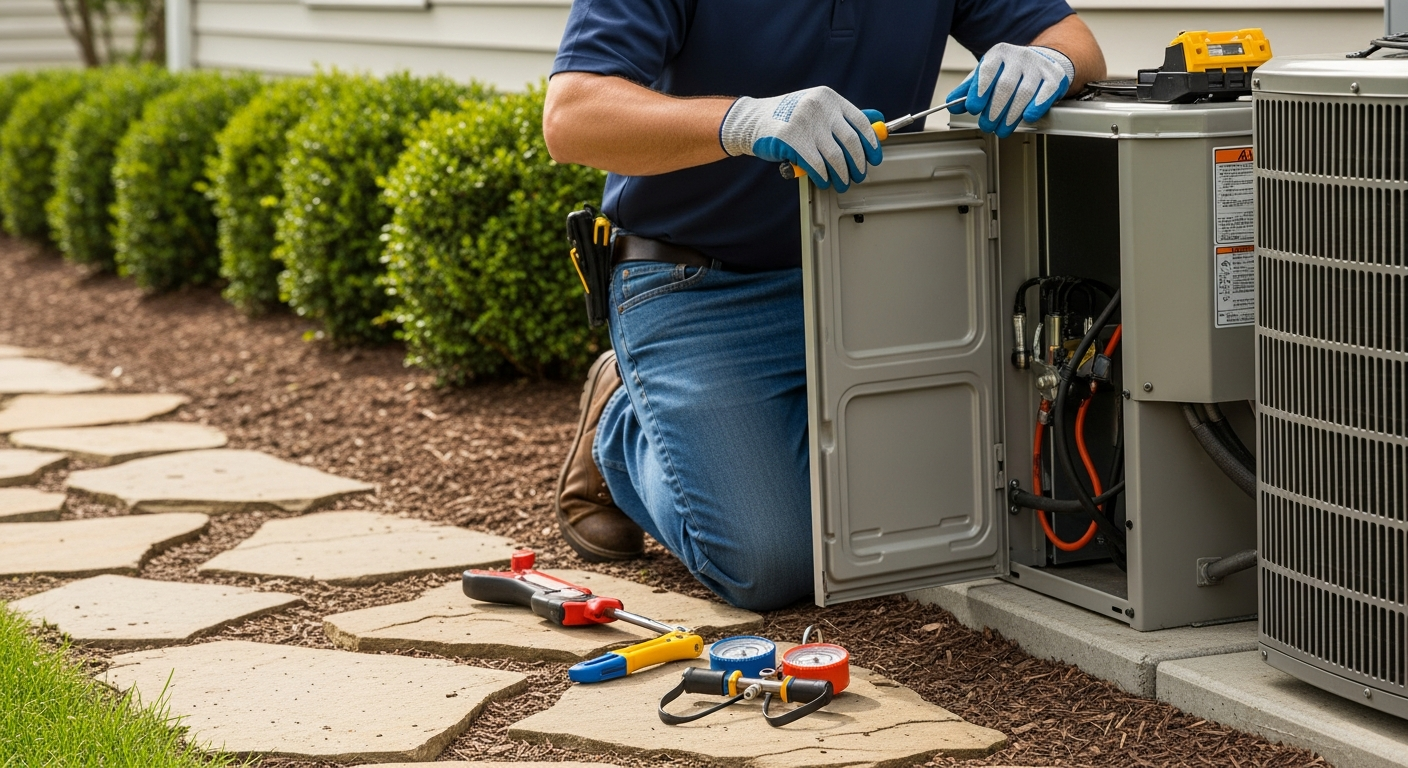
Balanced Decision: Local Personal Touch vs Big-Brand Resources
For routine work and personal relationships, a trusted local company is often best. For emergencies, financing, and multi-property management, national firms shine. Get quotes from both for major replacements.
What Matters Most
- Local companies offer personalized service and deep local knowledge but may have limited availability during peak times.
- National companies provide 24/7 emergency service, standardized warranties, and financing but may come with higher fees.
- Always verify license and insurance regardless of company type.
- Use our tools to compare costs and avoid overpaying.
- Ask about labor warranties and parts availability before committing.
Strengths
- Empowers homeowners to avoid sales pressure
- Matches company strengths to specific job demands
- Reduces risk of surprise fees or delays
Weaknesses
- Requires more upfront research time
- Not all national branches are equal; some may underperform
- Local company longevity can be uncertain in competitive markets
Decision summary
| Scenario | Usually do | Why |
|---|---|---|
| Emergency no-heat in winter | National | Larger fleet, 24/7 dispatch |
| Routine annual maintenance | Local | Builds relationship, lower cost |
| Full system replacement with financing | Compare both | Get 3 quotes; national may have 0% financing, local may beat equipment price |
| Older home with unique ductwork | Local | Better understanding of quirks and code |
| Landlord with properties across states | National | Centralized billing and standardized service |
When your AC dies on a 100°F day or the furnace rattles in January, you need a pro fast. But should you call the local shop that’s been in town for decades, or a big national brand with a 24/7 hotline? The choice affects cost, speed, work quality, and long-term peace of mind. We cut through the noise so you can decide based on your situation—not marketing. Use our decision tool, pricing benchmarks, and contractor questions to protect your home comfort investment.
Quick Answer: Local vs National HVAC Company
Go local if you value personal accountability, community reputation, and local expertise for routine maintenance and standard repairs. Choose a national company when you need 24/7 availability, fast part replacement, standardized warranties, and service across multiple properties. For complex jobs, compare both using our checklist.
Local vs National: At-a-Glance Comparison
| Factor | Local Company | National Company |
|---|---|---|
| Typical diagnostic fee | $75–$150 | $100–$250 |
| Response time (peak season) | Same-day for priority customers | Often same-day with large fleets |
| Technician expertise | Deep local climate knowledge | Standardized training, varying skills |
| Warranty reliability | Dependent on business longevity | National backing, less risk of closure |
| Customer service | Owner often oversees work | Call centers, may lack personal touch |
| Financing options | Limited or third-party | Usually in-house plans |
Pricing is editorial estimates based on typical market ranges; actual costs vary by region and job specifics.
Decision Rules: When to Pick Which
Use these concrete thresholds to guide your choice:
Choose a Local Company When…
- You need routine maintenance or a simple repair (e.g., capacitor, contactor, fan motor) and can schedule during normal business hours.
- Your home has unique characteristics (historic, unusual ductwork, local code quirks) that benefit from area-specific know-how.
- You value a long-term relationship and want the same technician visiting each time.
- You prefer competitive, negotiable pricing and can wait a day or two for service.
Choose a National Company When…
- You face an emergency after hours, on weekends, or during extreme weather when local shops are swamped.
- You need a full system replacement and want extensive financing options or bundled rebates.
- You manage rental properties across multiple states and need one point of contact.
- You require a specific brand that only a national franchise carries.
Hybrid Approach: Get Quotes from Both
For large installations (furnace/AC replacement), gather quotes from 3 contractors—at least one local and one national. Use our quote checker tool to compare them fairly. National companies may sometimes beat local pricing on equipment due to bulk purchasing, but labor costs could be higher. Use our HVAC cost estimator to understand market ranges before you solicit bids. For step-by-step guidance, read how to get multiple quotes.
Safety Boundaries: What You Can (and Shouldn’t) Handle
While deciding on a contractor, there are safe preliminary steps you can take. Attempting any repair involving electricity, gas, refrigerant, or combustion can cause injury or property damage. Always hire a licensed pro for:
- Refrigerant handling, leak detection, or adding coolant
- Gas line or burner adjustments
- Compressor, capacitor, contactor, or control board replacement
- High-voltage electrical work
Safe homeowner checks before the technician arrives:
- Replace or clean your air filter—a clogged filter is a top cause of system strain. See our guide to replacing AC filters.
- Check your circuit breakers and thermostat batteries.
- Clear debris and vegetation from around the outdoor unit (maintain 2 feet of clearance).
- Listen for unusual noises and note them; this helps the pro diagnose quickly.
Use Our Tools to Assess Costs and Contractors
Before you call anyone, arm yourself with data:
- HVAC Cost Estimator: Get ballpark estimates for repairs and replacements in your area.
- Repair or Replace Calculator: Based on system age and repair cost, see if replacement makes financial sense.
- Quote Checker: Input quotes to compare scope, warranties, and hidden fees.
- BTU Calculator: Ensure sizing is right—oversized or undersized systems kill efficiency.
- Rebate Finder: Search for local utility or federal incentives to offset equipment cost.
- Compare Contractors: Side-by-side review of verified pros in your area.
Contractor Checklist: 8 Questions to Ask Before You Hire
Whether local or national, use these questions to filter:
- Are you licensed and insured? Verify state license online via our guide.
- What warranties do you offer on labor and parts? Get it in writing; understand what’s covered and for how long.
- Can you provide a written, itemized estimate? Use our contract reading guide for red flags.
- How do you handle emergency after-hours calls? Ask about extra fees upfront.
- Do you have references from homes similar to mine? Check reviews using our review tips.
- What’s your estimated timeline for this job? Get a start and completion date.
- Do you perform a load calculation for new installations? Insist on Manual J; avoid rule-of-thumb sizing.
- What financing options are available? Compare rates; national companies may have promotional 0% terms.
Local Market Considerations
Your climate and home type shift the balance:
- Hot, humid regions (Gulf Coast, Southeast): Local knowledge of dehumidification and corrosion-resistant coils is vital. See contractors experienced with high-humidity mitigation, rust-proofing, and mold prevention. Example: Phoenix AC contractors for dry-heat expertise.
- Cold climates (Midwest, Northeast): Choose a company familiar with furnace heat exchangers cracking from freeze-thaw cycles. Emergency response for no-heat calls is critical. Example: Chicago heating specialists.
- Coastal or salt-prone areas: Corrosion from salt air requires specialized equipment coatings and maintenance. Local companies often know which brands last near the ocean.
- Older homes (pre-1970): Ductwork retrofits, electrical panel upgrades, and asbestos precautions are common. A local pro may have experience navigating historic district permits.
- Multi-property management: National firms offer centralized billing and maintenance tracking across regions—a time-saver for landlords.
How We Formulate Our Recommendations
Our guidance draws from industry cost data, contractor interviews, warranty analyses, and real homeowner reviews. We aggregate thousands of project quotes and service reports to establish the pricing ranges and service expectations cited above. The editorial estimate bands reflect common market variability; we clearly mark them as estimates, not guaranteed quotes. When you use our tools, the calculations are based on standard engineering formulas (e.g., Manual J for sizing) and regional utility rate data. We avoid bias toward local or national companies—our goal is to match you with the best fit for your specific scenario.
Frequently Asked Questions
Can I trust a local HVAC company that’s only been open a few years?
Check their license, insurance, and online reviews. A new local company may still have experienced technicians. Verify through state licensing boards, and ask for references from recent jobs. Use our license guide to ensure legitimacy.
Do national HVAC companies use subcontractors?
Some do. Always ask whether the person coming to your home is an employee or subcontractor. Verify insurance coverage for subcontractors—your liability could be at stake. A reputable franchise will be transparent.
Are national HVAC warranties really better?
National companies often back their work with corporate guarantees, meaning they’ll honor warranties even if a franchisee closes. Local shops may only offer manufacturer warranties plus a labor warranty. However, local owners may be more flexible in goodwill repairs. Always get warranty terms in writing; read our contract guide.
How much should I expect to pay for a diagnostic visit?
Standard diagnostic fees range from $80 to $200, with national brands typically at the higher end. Emergency after-hours visits can add $50–$150. Some companies waive the fee if you proceed with the repair. Use our cost estimator to get a personalized range.
Can I hire a local contractor but finance through a national program?
Yes. Many local contractors offer third-party financing (GreenSky, Synchrony) similar to national brands. Compare APRs and terms. National companies sometimes offer 0% introductory periods, but local shops can match with promotional offers. Always calculate total cost over the loan term.
Methodology
HVACDatabase estimates combine common contractor price patterns, service-category pricing ranges, equipment complexity, urgency, regional labor variation, and known HVAC safety boundaries. Actual prices vary by city, brand, system size, access, warranty status, permit requirements, and whether the visit discovers ductwork, electrical, refrigerant, gas, or drainage issues. Use these numbers to sanity-check quotes, not as a guaranteed price.
Related articles
Connect this page to adjacent guides so readers keep moving deeper into the topic cluster.
How to Implement a Whole Home Energy Management System
Integrate smart tech and HVAC controls to cut energy waste. This guide shows how to audit, upgrade, and automate your home's energy use, with real savings estimates.

How to Set Up Thermostat Geofencing
Set up thermostat geofencing to automatically adjust home temperature as you come and go. Save energy, extend equipment life, and never return to an uncomfortable house. Get our quick-start guide now.

How to Troubleshoot Smart Thermostat WiFi Issues
Your smart thermostat offline? Most WiFi drops can be fixed with power checks, router adjustments, and simple restarts. Follow our step-by-step guide to regain remote control and energy savings.