How to Choose the Right HVAC Air Filter
Learn how to pick the perfect HVAC filter: MERV ratings explained, size check, replacement costs, and a decision table to balance air quality and system health.
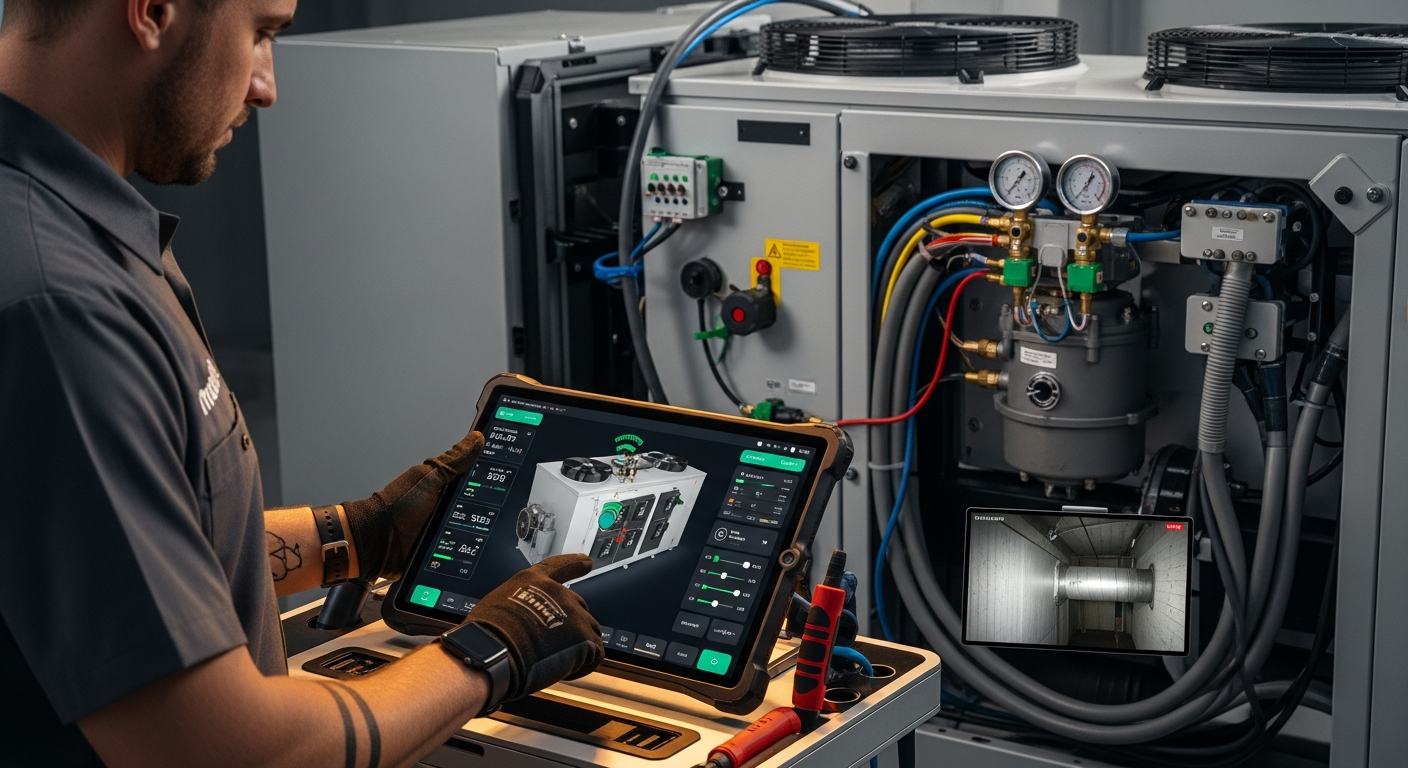
Stick with MERV 8–11 unless you have a specific need and confirmed system compatibility
For most households, a MERV 8–11 pleated filter protects equipment and meaningfully improves air quality. Jumping to MERV 13+ without verifying static pressure can choke airflow, raise energy bills, and damage the blower motor.
What Matters Most
- Buy the exact filter size printed on your existing frame—undersized or oversized both fail.
- Replace 1‑inch filters every 1–3 months, thicker media (4‑5 inch) every 6–12 months.
- Check your owner’s manual for the maximum MERV rating before upgrading.
- If allergies are severe, aim for MERV 11 first, then test if airflow remains strong.
- Use the Filter Finder tool to confirm fit and the Cost Estimator to budget replacements.
Strengths
- Balanced equipment protection and indoor air quality with MERV 8
- Clear editorial cost ranges help homeowners budget effectively
- Decision table and flowchart make MERV selection straightforward
- Safety boundaries prevent accidental damage or voided warranties
Weaknesses
- High‑MERV filters may be incompatible with older or undersized blowers
- Washable filters require diligent monthly cleaning to avoid becoming a liability
- MERV ratings alone do not guarantee allergen removal for all sensitivities
- Regional humidity or salt‑air corrosion can shorten filter life beyond standard intervals
Decision Summary
| Scenario | Usually Do | Why |
|---|---|---|
| Healthy household, no allergies | MERV 8 pleated, 1–3 month replacement | Good balance of protection and airflow |
| Mild allergies or dust sensitivity | MERV 11 pleated, verify manual | Captures fine dust, mold spores, pollen |
| Severe allergies or asthma | MERV 13, professional static‑pressure test required | Traps bacteria, smoke, virus carriers—but may need system modification |
| Old system (>15 years) or unknown compatibility | MERV 8 maximum, check manual first | Prevents airflow restriction in weaker, older blowers |
Quick Answer
For most homes without severe allergies, a MERV 8 pleated filter replaced every 1–3 months (1‑inch) or every 6–12 months (4‑5 inch) provides solid equipment protection and moderate air‑quality improvement. If you have allergies, step up to MERV 11, but first check your owner’s manual for the maximum recommended MERV to avoid choking airflow. Use our free Filter Finder to match exact dimensions, and see the cost estimator to budget replacement expenses. Never install a MERV 13+ filter without confirming your system can handle the extra resistance—excessive pressure drop can strain the blower motor, raise energy bills, and shorten equipment life.
Filter MERV Rating Decision Table
| MERV Range | Captures | Best For | Precautions |
|---|---|---|---|
| 1–4 | Lint, dust bunnies, large particles | Basic equipment protection; rentals, workshop | Minimal air‑quality benefit; replace monthly |
| 5–8 | Mold spores, hairspray, cement dust | Standard homes, healthy occupants | Widely compatible; balance of cost and performance |
| 8–11 | Fine dust, pet dander, auto emissions | Mild allergies, dust sensitivity | Check system manual; may increase resistance slightly |
| 11–13 | Bacteria, virus carriers, smoke, lead dust | Asthma, severe allergies, or confirmed need | Must verify static‑pressure limit; professional test advised |
| 13–16 | Very fine particles, tobacco smoke, sneeze nuclei | Hospital‑grade; rarely needed in homes | Usually requires modified ductwork; incompatible with most residential systems |
Key Factors for Choosing a Filter
1. Exact Size Is Non‑Negotiable
Look at the side of your current filter for the nominal size (e.g., 20x25x1). An ill‑fitting filter lets dirty air bypass the media entirely. Always buy that exact size—undersized filters collapse, oversized ones don’t seal. If the old filter is missing, measure the opening to the nearest inch, but a precise factory‑size match is safest. Our Filter Finder can help you identify the right dimensions.
2. MERV Ratings and Your Air‑Quality Needs
The Minimum Efficiency Reporting Value (MERV) scale runs 1–16 for residential use. Higher numbers mean finer particles are trapped, but also more airflow resistance. In most homes with no respiratory issues, MERV 8–11 strikes a practical balance. People with asthma or severe allergies may benefit from MERV 13, but only if the blower motor can overcome the added backpressure—see the compatibility section below.
3. System Compatibility: Static Pressure Trap
Every air handler has a maximum external static pressure rating (often listed in inches of water column). High‑MERV filters increase pressure drop, which can push the total static pressure above the design limit. Signs of trouble: whistling at return grilles, weak airflow from vents, or a hotter‑than‑normal blower motor. Before upgrading to MERV 13+, check the furnace/air‑handler manual for the allowed MERV or maximum pressure drop. If that information is missing, have a technician measure static pressure (typical diagnostic visit: $80–$200). For equipment older than 15 years, stick with MERV 8 unless a pro confirms the blower can handle more.
4. Replacement Schedule and Typical Costs
- 1‑inch filters: Inspect every 30 days; replace every 1–3 months. Expect to pay $3–$15 each.
- 2‑inch filters: Replace every 2–4 months; roughly $8–$25.
- 4‑inch filters: Replace every 6–9 months; $15–$40.
- 5‑inch filters: Replace every 9–12 months; $20–$50.
These are editorial estimates—prices vary by brand, retailer, and region. Use our cost estimator for a personalized range. If you see a heavy buildup of debris or reduced airflow sooner, replace the filter immediately regardless of the calendar.
Safety Boundaries: What You Can (and Can’t) Do
Safe Homeowner Tasks
- Turn off the system at the thermostat before replacing the filter.
- Inspect the filter slot for debris; vacuum gently if needed.
- Check that the arrow on the new filter points toward the furnace or air handler (direction of airflow).
- Record the date on the filter frame with a permanent marker.
- Visually monitor for excessive dust on vents or returns; if persistent, it may indicate duct leaks.
Jobs Only for a Qualified HVAC Technician
- Measuring or adjusting static pressure to determine filter compatibility.
- Modifying ductwork or installing filter racks to accommodate thicker or high‑MERV filters.
- Diagnosing why a system is struggling even with a clean filter—possible causes: undersized ducts, failing blower motor, refrigerant issues, or control‑board faults.
- Handling refrigerants, gas lines, combustion components, capacitors, contactors, or high‑voltage wiring. Never attempt these repairs yourself.
Decision Flowchart: Which Filter Should You Choose?
- Step 1 – Allergies? No → MERV 8 pleated is usually sufficient. Yes → go to Step 2.
- Step 2 – System Age & Manual? Locate owner’s manual and find the “air filter” section. If it states a maximum MERV (often 8 or 11), follow that. If the manual is lost and the system is >15 years old, do not exceed MERV 8 without a pro test. If the system is newer, you can cautiously try MERV 11, then check airflow.
- Step 3 – Thickness? 1‑inch filters have lower dust‑holding capacity and higher pressure drop per square foot; changing them more often helps. If you want to move to MERV 13 for severe allergies, consider upgrading to a 4‑inch media cabinet after a professional static‑pressure assessment.
- Step 4 – Always buy exact size. Run our Filter Finder to see compatible options.
Use Our Tools for a Perfect Fit
- HVAC Filter Finder – Identify the right size and type in seconds.
- Cost Estimator – Budget for replacement filters or a professional airflow check.
- BTU Calculator – Determine if your system is correctly sized; poor airflow can sometimes be a sign of an oversized unit that short‑cycles.
Contractor Checklist: When You Need a Pro
If you experience ongoing dust problems, weak airflow, or suspect a filter is too restrictive, hire a technician. Ask these questions before booking:
- “Will you measure total external static pressure and tell me the current reading versus the equipment’s maximum?”
- “Are you familiar with my specific furnace/air‑handler model and its recommended MERV range?”
- “Can you show me how to check the filter fit and proper installation direction?”
- “If I want a higher MERV, what modifications (like a media cabinet upgrade) would you recommend, and what are the costs?”
- “What is your diagnostic fee if the issue turns out to be something else?” (Standard visit: $80–$200; after‑hours may be more.)
- “Do you offer annual maintenance plans that include filter replacement?” (Plans range $150–$500 per year depending on visits.)
Get multiple quotes through our contractor comparison tool.
Regional Considerations: Hot, Humid, Cold, and Coastal Homes
- Hot/Humid (Gulf Coast, Southeast): High humidity accelerates mold growth on filters. Choose pleated filters with anti‑microbial treatment, and check them monthly during peak cooling season. A 4‑inch media filter often holds up better than 1‑inch in damp climates.
- Cold (Northern States, Canada): Furnaces run hard in winter; 1‑inch filters can load up in 4–6 weeks. Keep a spare on hand and inspect monthly. Avoid fiberglass filters if you want to trap fine particles that trigger dry‑air discomfort.
- Coastal (Salt‑Air Zones): Salt corrosion can affect filter frames and the blower. Change filters more frequently—every 1–2 months for 1‑inch types—to prevent salt buildup that can eat away metal components.
- Older Homes (Pre‑1980 Ductwork): Leaky ducts can pull attic or crawlspace dust into the system, making filters dirty faster. Prioritize duct sealing before upgrading to a high‑MERV filter; otherwise you’re just catching extra dust that shouldn’t be in the airstream.
Methodology: How We Develop Recommendations
Our guidance draws on several sources:
- ASHRAE Standard 52.2 for MERV test methods and particle‑size efficiency.
- Manufacturer data sheets from major brands (Carrier, Trane, Lennox, etc.) that specify maximum MERV or pressure drop ratings.
- Field experience from HVAC trade associations and hundreds of service‑call patterns seen across the U.S.
- Cost ranges are editorial estimates based on aggregated contractor surveys, retailer pricing, and region‑weighted averages—not guaranteed prices. Actual costs depend on location, system specifics, season, and labor availability.
We refresh this content annually to reflect changes in filter technology and updated manufacturer guidelines.
Frequently Asked Questions
Can I use a MERV 13 filter in any system?
No. Most residential blowers are not designed for the high resistance of MERV 13 filters. If the filter adds more pressure drop than the system can handle, airflow drops, efficiency falls, and the motor may overheat. Always check your owner’s manual for the maximum MERV. When in doubt, have a pro measure static pressure before upgrading.
How often should I really change a 1‑inch filter?
Start by checking it every 30 days. If it’s visibly clogged (grey, furry, or caked with debris), replace it even if only a month has passed. In most houses without excessive dust, every 2–3 months is typical. Homes with pets, construction, or high pollen may need monthly replacement during peak seasons.
What if my system is blowing dusty air even with a new filter?
A clean filter won’t fix dusty air if the ducts are leaky or full of debris. Inspect supply vents for dust streaks; that often indicates return‑side duct leaks pulling in attic/crawlspace dirt. Sealing the ducts or having them professionally cleaned (see our duct cleaning guide) may solve the problem.
Are washable electrostatic filters any good?
They can be effective if cleaned meticulously every month. Most homeowners don’t clean them often enough, and clogged washable filters are worse than disposable ones. If you go washable, set a calendar reminder and follow the manufacturer’s cleaning instructions exactly. For low‑maintenance reliability, disposable pleated filters are simpler.
Does a higher MERV filter increase my energy bill?
Yes, if it is too restrictive for your system. A filter that causes excessive pressure drop makes the blower work harder, using more electricity. Over time, that extra load can also shorten the motor’s life. The energy penalty is usually modest with MERV 8–11 in compatible systems, but can be significant with MERV 13+ in an unprepared unit.
Related articles
Connect this page to adjacent guides so readers keep moving deeper into the topic cluster.
How to Implement a Whole Home Energy Management System
Integrate smart tech and HVAC controls to cut energy waste. This guide shows how to audit, upgrade, and automate your home's energy use, with real savings estimates.

How to Set Up Thermostat Geofencing
Set up thermostat geofencing to automatically adjust home temperature as you come and go. Save energy, extend equipment life, and never return to an uncomfortable house. Get our quick-start guide now.
How to Troubleshoot Smart Thermostat WiFi Issues
Your smart thermostat offline? Most WiFi drops can be fixed with power checks, router adjustments, and simple restarts. Follow our step-by-step guide to regain remote control and energy savings.