How to Design HVAC for a Restaurant
Designing HVAC for a restaurant requires balancing kitchen heat, dining comfort, and strict codes. Our guide helps owners understand components, costs, and contractor selection.
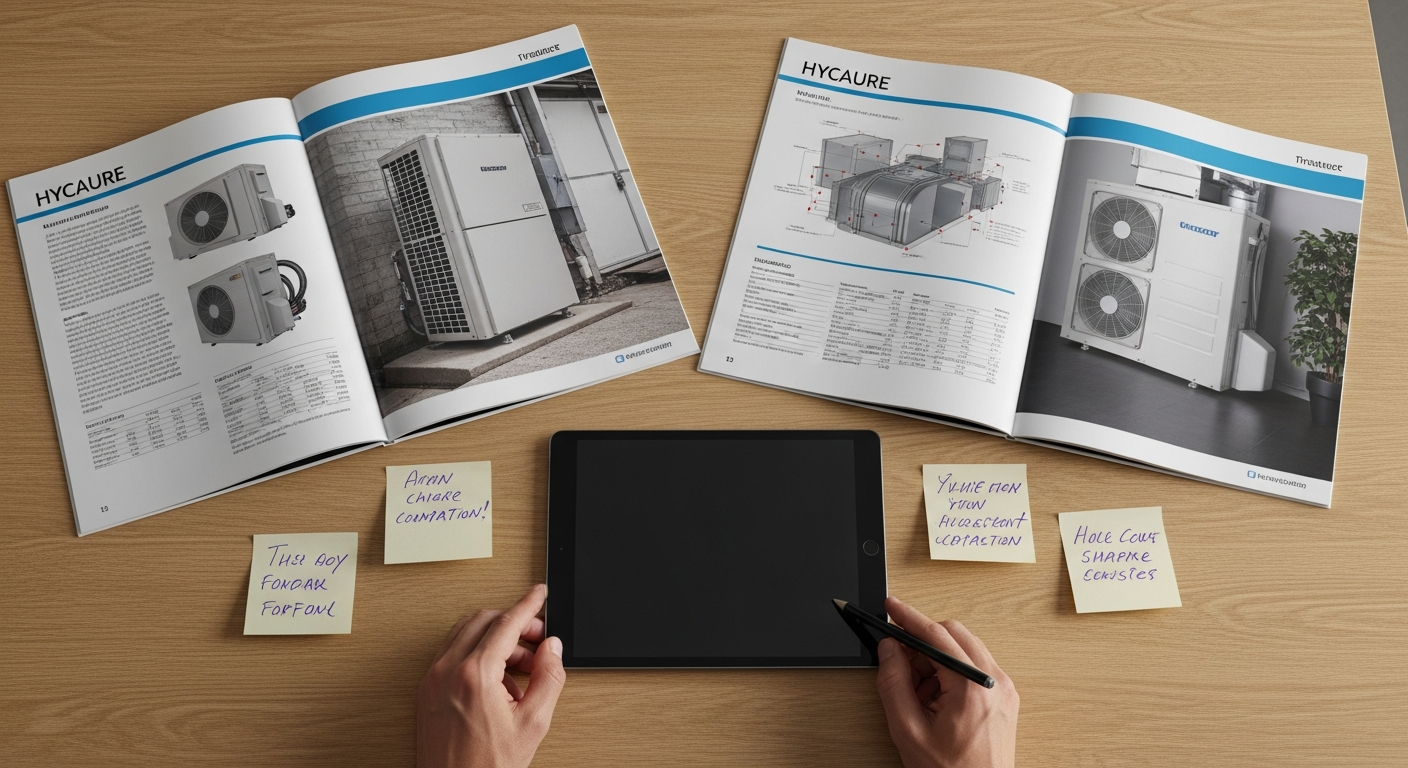
Design with a qualified commercial HVAC engineer; never compromise on makeup air or separate zones.
Restaurant HVAC success hinges on accurate load calculations, balanced ventilation, and robust equipment. Cutting corners leads to failures and code violations. Invest in a properly sized system with professional installation and regular maintenance.
What Matters Most
- Always separate kitchen and dining cooling zones.
- Makeup air units are mandatory whenever a commercial hood is installed.
- Oversize with variable speed; restaurant loads are peaky.
- Budget at least $12–$25 per sq ft for a complete new system.
- Prioritize a maintenance plan; quarterly service is minimum.
Strengths
- Maximizes comfort and air quality, leading to better reviews.
- Reduces energy waste and operating costs with right-sized, zoned design.
- Enhances safety and code compliance, preventing fines and closures.
Weaknesses
- High upfront capital expenditure; financing may be needed.
- Complex design and installation require seasoned commercial contractors.
- Ongoing maintenance is intensive and must be strictly scheduled.
Decision summary
| Scenario | Usually do | Why |
|---|---|---|
| New restaurant build | Full design-build with mechanical engineer, RTU+MAU | Requires permit sets and health department approval. |
| Upgrading a 15-year-old system | Replace all major components with high-efficiency VRF or RTU | Likely undersized and inefficient; avoid patching. |
| Persistent humidity/odor complaints | Audit ventilation and add dedicated dehumidification/DOAS | Symptom of unbalanced airflow or missing latent capacity. |
Introduction
Restaurant HVAC design is fundamentally different from residential systems. Kitchens generate massive heat and grease, while dining rooms need precise comfort to keep guests happy. A poorly designed system leads to high energy bills, code violations, and uncomfortable patrons. This guide breaks down the essential components, costs, and decisions so you can confidently work with professionals and avoid expensive mistakes. We’ll cover heat load calculations, makeup air, zoning, ventilation, sizing rules, and how to use HVACDatabase tools to estimate budgets and find qualified contractors.
Quick Answer
- Kitchen and dining areas must be zoned separately — expect at least two independent systems.
- Makeup air units (MAUs) are not optional — commercial hoods exhaust thousands of CFM; you must replace that air or risk backdrafting and negative pressure.
- Oversizing is better than undersizing with variable-speed equipment; restaurant loads peak sharply.
- Plan for high filtration and odor control — MERV 13+ filters and proper air transfer from dining to kitchen.
- Expect $12–$25 per square foot installed for a full commercial system, with kitchens on the higher end.
Understanding Restaurant Heat Loads
A restaurant’s heat load is dominated by cooking equipment. Every oven, fryer, and grill adds thousands of BTUs per hour. In a typical commercial kitchen, the sensible heat gain from equipment can exceed 500 BTUs per square foot — ten times a typical office. Add in peak occupancy, lighting, and outdoor air, and the cooling requirements soar. Use our BTU calculator to get a rough estimate for your dining space, but remember that professional load calculations (Manual N) are essential for the kitchen and must account for hood exhaust rates, makeup air, and latent (moisture) loads from steam and washing.
The Critical Role of Makeup Air Units (MAUs)
Commercial kitchen exhaust hoods can remove 2,000–10,000 cubic feet per minute (CFM) of conditioned air. Without a makeup air unit, the building goes negative, pulling in outdoor air through doors and windows, making it impossible to heat or cool. A properly sized MAU tempers incoming air (heated or cooled) and delivers it near the hood to maintain pressure balance. This is a mandatory safety requirement under most mechanical codes (IMC, NFPA 96). MAUs are often roof-mounted and integrated with the RTU. Pro tip: In colder climates, a high-temperature-rise MAU can prevent drafts near the hood.
Zoning: Separate Systems for Kitchen and Dining
Never place the kitchen and dining room on a single thermostat. The kitchen needs to stay functional at 85°F (with spot cooling for cooks), while the dining room must maintain 72–74°F and 50–55% relative humidity. Use a multi-zone approach with dedicated equipment:
- Kitchen: High-capacity packaged rooftop unit (RTU) or split system with heavy-duty filters and cooling coil protection. Consider a dedicated outdoor air system (DOAS) for ventilation.
- Dining: Variable refrigerant flow (VRF) or multiple smaller RTUs that can modulate with occupancy. VRF excels at part-load efficiency during slow periods.
Many building owners are adopting commercial HVAC systems with smart zoning controls. Remote monitoring (standard in modern BAS) lets you adjust setpoints from a phone, helping to pre-cool before a rush.
Ventilation and Air Quality Essentials
Indoor air quality (IAQ) directly impacts customer experience and health code compliance. Key metrics:
- Capture velocity: Kitchen hoods must pull at least 100 feet per minute across the cooking surface to capture smoke and grease.
- Filtration: Use MERV 13+ filters in dining areas to remove allergens; kitchen exhaust must include grease filters and, often, UV-C or electrostatic precipitators.
- Air transfer: Maintain slight positive pressure in dining relative to kitchen to keep food odors from drifting into seating. Supply a bit more air to dining and extract from kitchen. Transfer grilles or fans can assist.
For more on maintaining these components, see our guide on commercial rooftop unit maintenance.
Sizing and System Selection: Avoid These Pitfalls
| Mistake | Consequence | How to Avoid |
|---|---|---|
| Undersizing the cooling | Kitchen never reaches safe temps; coils freeze from continual runtime; premature failure. | Run block load calculations at peak occupancy and equipment use. Add 10–15% safety factor. |
| Ignoring humidity | Dining room feels clammy; mold in ductwork; condesation on cold surfaces. | Specifiy dedicated dehumidification or hot gas reheat in RTUs. Monitor dew point, not just temperature. |
| No exhaust air compensation | Backdrafting of water heaters, doors stick, sewer gases drawn in. | Install MAU interlocked with hood exhaust; test building pressure with manometer. |
| Inadequate filtration/grease management | Duct fires, offensive odors, health code violations. | Follow NFPA 96 for kitchen hoods; schedule quarterly grease duct cleaning. |
Cost Planning: What to Expect
Restaurant HVAC costs vary widely by region, complexity, and equipment quality. As an editorial estimate (not a guaranteed price):
- Basic RTU for a 1,000 sq ft dining area: $6,000–$10,000 installed.
- Kitchen MAU + exhaust hood with fire suppression: $15,000–$40,000+ depending on hood length and CFM.
- Full system for a 3,000 sq ft restaurant (two zones, ductwork, controls): $40,000–$75,000+.
- Annual maintenance contracts: $800–$2,500 per year covering filter changes, coil cleaning, belt tension, and safety checks.
Use our HVAC cost estimator for a tailored range, and check local rebates for energy-efficient equipment. For broader cost data, visit our commercial HVAC cost guide.
Decision Tree: Upgrade, Repair, or Replace?
Use this quick decision guide for an existing restaurant system:
When to repair vs. replace (click to expand)
- Age >15 years: Replace; efficiency gains alone can pay back within 3–5 years. Use our repair-or-replace calculator.
- Recent major compressor failure: Replace outdoor unit; often more cost-effective than rebuilding.
- Persistent odor or humidity complaints: Likely undersized or missing MAU; upgrade entire system design, not just components.
- High energy bills despite maintenance: Consider a newer high-SEER RTU or VRF. Our BTU calculator can help verify sizing.
- Code compliance issues (e.g., hood not meeting capture velocity): Immediate replacement/upgrade required; prioritize safety.
Local Climate Considerations
Your location dramatically affects design choices:
- Hot, humid (Miami, Houston): Focus on latent capacity. Choose units with enhanced dehumidification (hot gas reheat or dedicated outdoor air systems). Ensure MAU pre-cools and dehumidifies outside air.
- Cold, dry (Chicago, Denver): High-temperature-rise MAU critical to avoid freezing drafts. Gas-fired MAU often needed. Heat pumps may need backup electric or gas in sub-zero weather.
- Coastal (Seattle, Boston): Corrosion-resistant coils and cabinet coatings to withstand salt air. Stainless steel heat exchangers extend life.
- Older urban buildings (New York, San Francisco): Limited rooftop space may dictate VRF or split systems instead of large RTUs. Check structural capacity.
To find a contractor experienced with local codes, search HVACDatabase or see examples: Phoenix AC contractors and Chicago heating contractors.
Contractor Checklist: Questions to Ask Before Signing
- Will you perform a Manual N load calculation? (Not just rule-of-thumb.) Ask to see the printout.
- How do you coordinate hood exhaust with makeup air? They should provide a balanced airflow schedule.
- What filter efficiency (MERV) do you recommend for each zone? Kitchen should have at least MERV 8 pre-filters plus grease extraction.
- Do you include a complete controls sequence? Ensure the system ramps down during idle periods.
- Can you provide local references from other restaurants? Check their experience with health department inspections.
- What warranties come with the equipment and labor? Aim for 5-year compressor, 1-year labor minimum.
- How do you handle fire-rated duct penetrations and grease containment? Verify they follow NFPA 96.
- Will you provide a preventive maintenance plan? See our article on preventive maintenance plans.
Safety Boundaries for Property Owners
Restaurant HVAC involves high-voltage electricity, natural gas, refrigerants, and combustion exhaust. Never attempt these tasks without a licensed professional:
- Installing, charging, or repairing refrigerant circuits.
- Connecting or modifying gas lines to MAU or heating sections.
- Adjusting fire suppression systems or hood exhaust ductwork.
- Replacing compressors, capacitors, or contactors.
- Bypassing safety controls or limit switches.
What you can do safely: regularly inspect and replace air filters (how to replace an AC filter), keep outdoor unit coils free of debris, listen for unusual noises, and monitor thermostat performance. Schedule professional maintenance at least quarterly for kitchen systems.
Methodology
Our recommendations and cost estimates are based on a review of industry standards (ASHRAE, NFPA 96, IMC), manufacturer typical pricing for 3–20 ton commercial equipment, and national labor rate surveys. They represent editorial estimates, not guaranteed pricing. Actual costs depend on local labor, material costs, permitting, and complexity. Always obtain multiple quotes and validate with our contractor comparison tool.
Frequently Asked Questions
Can I use a residential HVAC system in a small café?
Generally no. Residential systems lack the coil protection, heavier filters, and ability to handle high heat and grease loads. Even a small commercial kitchen likely requires a light commercial unit (5 tons) with stainless steel heat exchanger and washable filters. Check local codes.
How often do restaurant HVAC systems need maintenance?
Kitchen exhaust hoods and grease filters: monthly. MAU filters: quarterly. Coils and blowers: semi-annually. Full system inspection and cleaning: annually. More frequent if frying or charbroiling.
What’s the difference between a MAU and a DOAS?
A makeup air unit tempers air to avoid drafts and replaces air exhausted by hoods. A dedicated outdoor air system (DOAS) independently conditions 100% outdoor air to handle both sensible and latent loads, often decoupled from space conditioning. In a restaurant, you might have both: a MAU for kitchen exhaust replacement and a DOAS for dining room ventilation.
How can I reduce HVAC energy costs?
Install demand-controlled ventilation (CO₂ sensors) in dining rooms, variable-speed fans, and high-SEER equipment. Use our rebate finder to offset upfront costs. Also, set back temperatures during closed hours with programmable thermostats, and keep hoods off when not cooking.
What’s the typical lifespan of a commercial RTU?
15–20 years with proper maintenance. Kitchen-duty units may have shorter lives due to grease and heat. A well-maintained unit can last 20+ years; neglect can kill it in 10.
Related articles
Connect this page to adjacent guides so readers keep moving deeper into the topic cluster.
How to Implement a Whole Home Energy Management System
Integrate smart tech and HVAC controls to cut energy waste. This guide shows how to audit, upgrade, and automate your home's energy use, with real savings estimates.

How to Set Up Thermostat Geofencing
Set up thermostat geofencing to automatically adjust home temperature as you come and go. Save energy, extend equipment life, and never return to an uncomfortable house. Get our quick-start guide now.
How to Troubleshoot Smart Thermostat WiFi Issues
Your smart thermostat offline? Most WiFi drops can be fixed with power checks, router adjustments, and simple restarts. Follow our step-by-step guide to regain remote control and energy savings.