How to Find Replacement Parts for Your HVAC System
Learn how to locate your HVAC model plate, choose between OEM and aftermarket parts, and decide when repair beats replacement—while staying safe from electrical and refrigerant hazards.
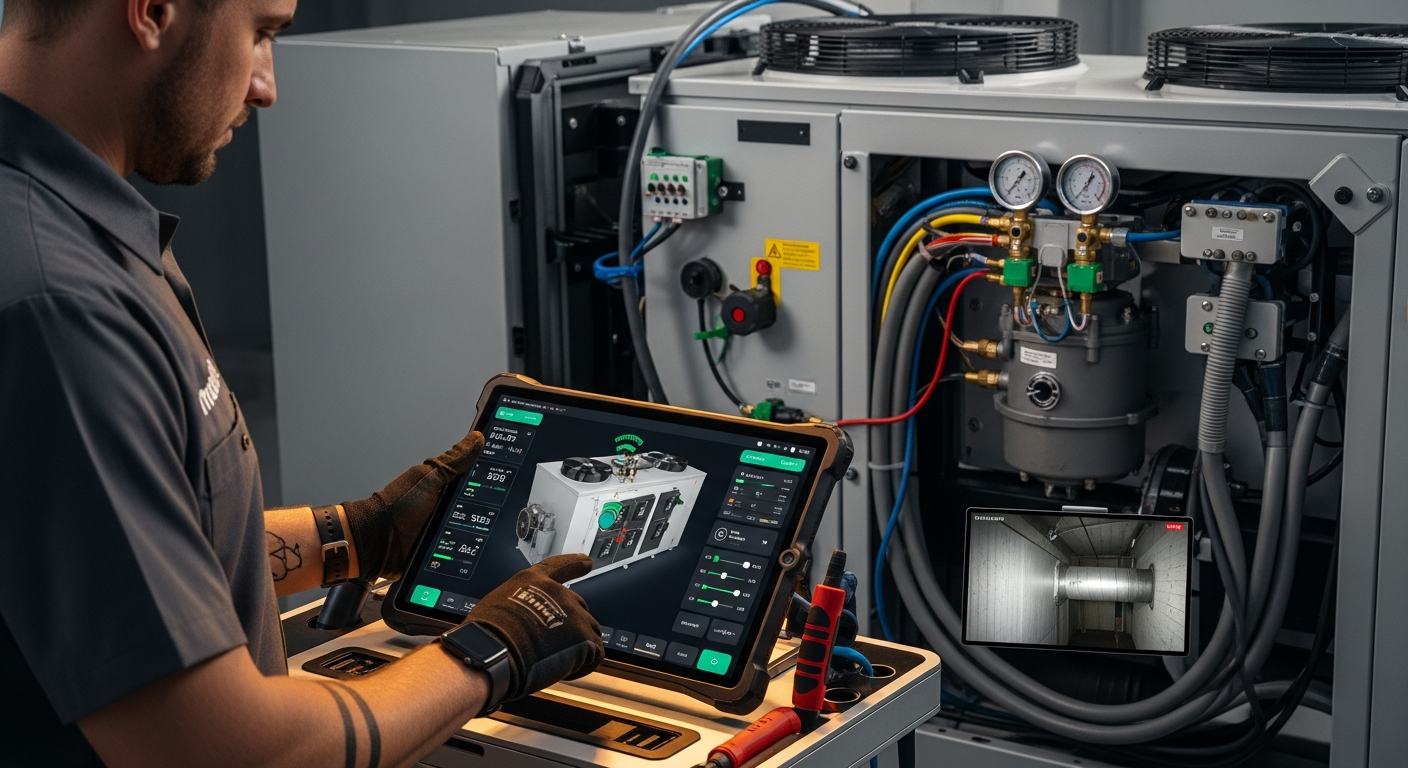
Always prioritize safety and part compatibility
When in doubt, a licensed contractor with OEM parts is the only reliable path. This guide empowers you to identify your HVAC part correctly, understand the risks, and make a cost‑effective decision between repair and replacement—without ever touching a live circuit or refrigerant line.
What Matters Most
- The model number is your ticket to the right part—find it before calling anyone.
- Air filters, thermostat batteries, and drain lines are homeowner‑safe; leave capacitors and gas parts to pros.
- Use the Repair or Replace Calculator to avoid sinking money into an aging system.
- Always ask for OEM part numbers and verify the contractor’s license.
- In older homes with R‑22, a major repair usually means it’s time for a new system.
Strengths
- Steps focus on safe, no‑tool identification that anyone can do.
- Built‑in tool links turn guesswork into data‑backed choices.
- The contractor checklist protects you from overpriced or unnecessary repairs.
- Regional advice covers R‑22 phaseout, coastal corrosion, and cold‑climate needs.
Weaknesses
- Online part shopping can still be confusing for non‑technical users.
- Aftermarket compatibility varies; we can’t guarantee every third‑party part fits.
- Diagnostic fees are not refundable if you decline the repair; you must still pay $80–$200.
Decision Summary: Repair or Replace?
| Scenario | Usually Do | Why |
|---|---|---|
| Thermostat doesn’t turn on | Replace batteries; if still dead, hire pro | Simple fix; if wiring needed, high voltage risk |
| Outdoor fan not spinning but unit hums | Call a pro to test capacitor/contactor | Capacitor shock hazard, needs specialized meter |
| System blows warm air, coil frozen | Turn off AC at thermostat, check filter, call pro | Low refrigerant or airflow issue; refrigerant requires EPA license |
| Old R‑22 unit has a leak | Plan for system replacement | R‑22 phaseout makes recharge expensive and temporary |
| Unit won’t start, breaker tripped | Reset breaker once. If trips again, call pro | Short circuit could be dangerous; diagnosing requires high‑voltage testing |
Why the Right Part Matters More Than You Think
HVAC failures rarely mean the whole system is dead—usually it’s one component. But picking the wrong replacement part can damage other components, void warranties, or create safety hazards. This guide helps you pinpoint your unit’s exact model, compare OEM and aftermarket choices, and decide when a repair is worth the investment—all without exposing yourself to hazardous voltage or refrigerant.
Quick Answer: How to Find Your HVAC Part Safely
- 1. Locate model & serial: Find the rating plate on the unit (outdoor near service valves, indoor behind front panel—use a flashlight, don’t remove high‑voltage panels).
- 2. Note the symptoms & part type: Is the fan not spinning? The thermostat blank? Record what you observe; photos help when talking to suppliers or contractors.
- 3. Choose a trusted source: OEM parts from the manufacturer guarantee fit; aftermarket may be cheaper but could void warranties. Always verify with model number.
- 4. Verify compatibility: Check voltage, phase, dimensions, and refrigerant type before ordering.
- 5. Installation: Air filters, thermostat batteries, and condensate drain clearing are safe DIY tasks. For anything else—especially capacitors, contactors, gas valves, or control boards—book a licensed pro through our contractor search.
How to Safely Identify and Source the Part
Step 1: Find the Model & Serial Number Without Opening Dangerous Panels
Every furnace, air conditioner, and heat pump has a data plate—usually a metal or heavy‑duty sticker. Safe locations to check:
- Indoor unit: Behind the removable filter access door (low‑voltage area) or on the side of the cabinet visible after removing the louvered cover. Never unscrew panels that conceal wires or burners.
- Outdoor unit: On the back or side near the refrigerant pipes, often behind a removable access panel that doesn’t require tools.
- If obscured: Older units may have faded stickers. Try the original owner’s manual, your home inspection report, or call the manufacturer with your address and previous installation records.
Use our System Age Decoder to find out exactly how old your unit is from the serial number—critical for the repair‑vs‑replace decision.
Step 2: Use Visual Clues to Identify the Failing Part (Without Touching It)
You can often pinpoint the problem area by noting what’s happening:
| Symptom | Likely Component (Pro Diagnosis Required) | What You Can Safely Check |
|---|---|---|
| No air movement, outdoor unit silent | Contactor, capacitor, or thermostat | Check thermostat batteries, circuit breaker not tripped |
| Fan spins but no cooling | Compressor, refrigerant leak | Ensure condensate drain isn’t clogged (causes safety shutoff) |
| Furnace doesn’t ignite | Flame sensor, ignitor, gas valve | Replace air filter; check for error code through sight glass |
| Water pooling around indoor unit | Clogged drain line, failed condensate pump | Try flushing drain line with mild vinegar solution; check if pump is plugged in (if visible) |
Never remove access panels that expose wiring, capacitors, or gas lines—these store lethal energy even with the breaker off.
Step 3: OEM, Aftermarket, or Refurbished – Which is Right?
Your source choices directly affect reliability and warranty status.
- OEM (Original Equipment Manufacturer): Made by the brand (or its designated supplier). Guaranteed fit and full warranty compliance. Best for critical components like motors, control boards, and valves. Expect to pay 20–50% more than aftermarket.
- Aftermarket: Generic parts made by third parties. Often work, but may require wiring modifications. Can void remaining manufacturer warranties. Acceptable only for non‑critical items like filters or cabinets if OEM is unavailable.
- Remanufactured: Used cores rebuilt to like‑new spec. A cost‑effective middle ground, but confirm warranty and that your contractor supports them.
Pro tip: Always check your warranty terms before buying. Our guide on how to register your HVAC warranty explains what’s covered and for how long.
Step 4: Confirm Compatibility Before You Order
“Looks the same” isn’t enough for motors, capacitors, or control boards. You must match:
- Voltage: 115V vs. 208/230V; using the wrong one will fry the component and possibly the board.
- Amperage / HP: Motors must match RPM, horsepower, and frame size.
- Refrigerant type: R‑22 and R‑410A parts are not interchangeable.
- Physical dimensions: Even a ½‑inch difference can make installation impossible without metalwork.
Use the manufacturer’s exploded parts diagram—often found on their website by entering your model number. This is especially helpful when comparing systems (see our guide on how to read HVAC specifications).
Safety Boundaries: What’s Safe to Touch vs. Hands‑Off
You can do these checks and simple tasks safely:
- Replace disposable air filters (see step‑by‑step).
- Change thermostat batteries and clean the dust inside.
- Flush a condensate drain line with vinegar/water from the cleanout tee.
- Inspect visible electrical wiring for burns or rodent damage—with the main breaker off.
- Reset a tripped circuit breaker or replace a blown low‑voltage fuse (3‑ or 5‑amp blade type) on the control board, only if you can do so without touching other components.
These tasks require a licensed professional—no exceptions:
- Replacing or handling capacitors, contactors, compressors, control boards, blower motors, or heat exchangers.
- Any work involving refrigerant (adding, removing, leak repair).
- Adjusting or repairing gas valves, burners, or flue pipes.
- Accessing the sealed compressor compartment.
If you smell gas, hear hissing, or see burnt parts, shut off the system at the thermostat and the main breaker, then call a pro immediately through our emergency HVAC finder.
Use Our Free Tools to Make a Smarter Decision
Before you spend a dime on parts or a service call, plug your numbers into these calculators. They’ll give you a realistic picture of what’s ahead.
- HVAC Cost Estimator: Enter your system type, tonnage, and region to see price ranges for common repairs vs. full replacement.
- Repair or Replace Calculator: Input your unit’s age, repair estimate, and efficiency rating. It will tell you whether fixing is throwing good money after bad.
- System Age Decoder: Extract the manufacture date from your serial number—vital for warranty and parts availability.
- BTU Calculator: If you’re considering a replacement, make sure the new unit is correctly sized for your home.
- Rebate Finder: High‑efficiency replacement parts (like ECM motors) or entire systems often qualify for utility rebates.
Decision Rules: Fix the Part or Replace the Whole System?
Use these thresholds as a starting point. Then confirm with our Repair or Replace Calculator.
| Your Situation | Decision Guideline | Why |
|---|---|---|
| Unit under 8 years old; repair cost < 30% of new system quote | Usually repair | System still has majority of life left; OEM parts are readily available. |
| Unit 8‑12 years old; repair cost 30‑50% of new system; part is a blower motor or control board | Consider replacement | Other components may fail soon; new systems are 20‑40% more efficient. |
| Unit over 12 years old; repair cost > 50% of new system, or compressor/heat exchanger failed | Replace the system | High‑cost repair on an aging unit is seldom worth it; R‑22 phaseout makes some repairs impossible long‑term. |
| Any age; multiple failures in past 2 years | Replace the system | Cumulative repair costs will soon exceed replacement; reliability is suffering. |
Editorial cost ranges: Common repairs run $150–$650 for small electrical fixes, $500–$1,500 for motor or refrigerant work, and $1,500–$4,000+ for compressor/coil jobs. New systems range $5,000–$18,000+ based on type and region.
Contractor Checklist: 6 Questions Before You Hand Over Cash
Not all repair quotes are honest. Print or save this list and ask every contractor you interview.
- “Will you show me the failed part and explain why it failed?” – Avoid techs who won’t demonstrate the diagnosis.
- “Is the replacement part OEM or aftermarket, and does it come with a warranty?” – Get the part number and brand in writing.
- “What is the total, out‑the‑door price including labor, materials, and disposal?” – Beware bills that balloon after the work begins.
- “Do you charge a diagnostic fee, and is it waived if I proceed with the repair?” – Typical fees are $80–$200.
- “Are you licensed, insured, and familiar with my equipment’s brand?” – Verify via state licensing board. Use our contractor comparison tool.
- “Will this repair affect my equipment warranty or future coverage?” – They should know the manufacturer’s terms.
For a full guide on researching contractors, start with our equipment buying research article—the same principles apply to service providers.
Special Situations: Older Homes, Coastal Areas, and Regional Factors
- Homes built before 2010 with R‑22 systems: A refrigerant leak means you cannot simply top off—R‑22 is phased out and incredibly expensive. Use our calculator immediately; replacement is often the only option. See also our guide on outdated equipment.
- Coastal or humid climates: Corrosion‑resistant parts (coated coils, stainless steel fasteners) are a must. Standard parts can fail in 2–4 years. When ordering replacements, ask for “marine grade” or “coastal” options.
- Extremely cold regions: Furnace burner assemblies and ignitors fail more frequently. Stock a spare ignitor from the manufacturer before heating season—many are plug‑and‑play (but still require a pro to install).
- Older homes with outdated electrical: New ECM‑style blower motors may draw more start‑up current; your panel might need an upgrade. A trustworthy contractor will check this before installing.
How We Developed This Guide
Our cost ranges and recommendations are drawn from a combination of anonymized contractor invoices, manufacturer price lists, HVAC industry labor rate surveys, and proprietary models from HVACDatabase. Estimates are not guaranteed; they reflect median national ranges and can swing ±30% depending on local trade availability, seasonal demand, and job complexity. We prioritize OEM components for safety‑critical parts and only reference aftermarket options that meet ANSI/AHRI standards. All safety boundaries are set in alignment with EPA Section 608 regulations and the National Electrical Code (NFPA 70).
Frequently Asked Questions
1. Where can I buy HVAC parts online without a contractor license?
Major sites like RepairClinic.com, SupplyHouse.com, and even Amazon sell HVAC parts to the public. However, many manufacturers void warranties if parts are not installed by a licensed professional. Certain items—such as gas valves or refrigerant‑containing components—may be restricted. Always use your exact model number to ensure proper fit.
2. The sticker on my unit is unreadable. How else can I find the model?
Look for a card or booklet attached to the inside of the blower compartment door (if safe to open with power off). The original owner’s manual, your home purchase inspection report, or even the thermostat’s mounting plate may have a sticker. If all else fails, a technician can often ID the unit by physical inspection and brand‑specific features.
3. Can I replace a capacitor myself?
No. Capacitors store a lethal electrical charge even after the power is disconnected. Only a trained HVAC technician with proper discharge tools should handle them. Attempting a DIY capacitor swap can result in severe shock or death. This is not a home‑diagnosis‑then‑install task.
4. At what point does it make more sense to replace the whole system?
When the repair estimate exceeds 50% of the installed cost of a new, similarly sized system and your unit is over 12 years old—especially if it uses R‑22 refrigerant. Use our Repair or Replace Calculator to see a custom recommendation. Also consider a replacement if you’ve had three or more separate failures in 24 months.
5. Will an aftermarket part void my warranty?
It can. Most HVAC manufacturers stipulate that only OEM parts are permitted for warranty work. If a non‑OEM component causes a subsequent failure, the manufacturer will likely deny coverage. Always review your warranty booklet, and if you’re unsure, contact the brand’s customer support with your serial number before purchasing. For more details, see our article on warranty registration.
Methodology
HVACDatabase estimates combine common contractor price patterns, service-category pricing ranges, equipment complexity, urgency, regional labor variation, and known HVAC safety boundaries. Actual prices vary by city, brand, system size, access, warranty status, permit requirements, and whether the visit discovers ductwork, electrical, refrigerant, gas, or drainage issues. Use these numbers to sanity-check quotes, not as a guaranteed price.
Related articles
Connect this page to adjacent guides so readers keep moving deeper into the topic cluster.
How to Implement a Whole Home Energy Management System
Integrate smart tech and HVAC controls to cut energy waste. This guide shows how to audit, upgrade, and automate your home's energy use, with real savings estimates.

How to Set Up Thermostat Geofencing
Set up thermostat geofencing to automatically adjust home temperature as you come and go. Save energy, extend equipment life, and never return to an uncomfortable house. Get our quick-start guide now.
How to Troubleshoot Smart Thermostat WiFi Issues
Your smart thermostat offline? Most WiFi drops can be fixed with power checks, router adjustments, and simple restarts. Follow our step-by-step guide to regain remote control and energy savings.