How to Handle an HVAC Refrigerant Leak Emergency
Learn the warning signs of an HVAC refrigerant leak and the immediate steps to take to protect your family and cooling system, plus how to hire the right pro and avoid unnecessary costs.
Shut down and ventilate first, then get a qualified pro
Refrigerant leaks are serious. Turning off the system prevents expensive compressor damage, and ventilation protects your health. Never attempt a DIY recharge. Use this guide to gauge urgency and find a trustworthy contractor.
What Matters Most
- Turn off your AC at the thermostat and breaker the moment you suspect a refrigerant leak.
- Ventilate if the leak is indoors; refrigerant can displace oxygen.
- Adding refrigerant without fixing the leak is illegal, wasteful, and doesn’t solve the problem.
- Use HVACDatabase tools to estimate repair or replacement costs before the technician arrives.
- Ask your contractor specific questions and never approve work without a written, itemized estimate.
Strengths
- Prevents catastrophic compressor failure by immediate shutdown.
- Protects household health by prioritizing ventilation and evacuation.
- Empowers homeowners to make informed decisions using cost tools and checklists.
- Clearly separates safe DIY checks from dangerous tasks.
Weaknesses
- Requires the homeowner to recognize subtle symptoms like hissing; some leaks are silent.
- Emergency service costs can be high; the guide helps prioritize but doesn't eliminate expense.
Emergency vs. Scheduled Repair Decision Summary
| Scenario | Usually do | Why |
|---|---|---|
| Hissing + ice + smell indoors | Call emergency service within 2 hours | Health risk and compressor damage |
| Ice but no noise or odor | Same-day or next-day appointment | Potential water damage, but not immediate health hazard |
| Long cycles but home reaches temp at night | Schedule within 2-4 days | Not an emergency; system still partially cooling |
| System over 12 years old, large leak | Get replacement quotes | Repair often costs >40% of new system; R-22 phaseout |
A refrigerant leak is not just a comfort problem—it’s a health and equipment emergency. Refrigerant escaping from your AC or heat pump can cause ice buildup, damage the compressor (often a $1,500–$4,000 repair), and create unsafe indoor air if it displaces oxygen. This guide gives you a clear action plan: how to recognize a leak, what to do in the first 5 minutes, when to call for emergency service, and how to find a qualified pro without overpaying. You’ll also find HVACDatabase tools to estimate costs and compare contractors.
Quick Answer: Your Refrigerant Leak Action Plan
- Turn off your AC immediately at the thermostat and then at the circuit breaker. This prevents compressor damage.
- Open windows and doors to ventilate the area, especially if the air handler is in a basement or closet.
- Keep children, pets, and vulnerable adults away from both the indoor air handler and outdoor condenser.
- Do not attempt to add refrigerant or repair the leak yourself. It’s illegal without EPA certification and rarely fixes the problem.
- Call an EPA-certified HVAC technician. Use our contractor search to find rated pros near you and our Emergency HVAC Cost Estimator to budget before they arrive.
Warning Signs: Is It Really a Leak?
Refrigerant doesn’t get “used up.” It circulates in a closed loop. If levels are low, there’s a leak. Here are the most common symptoms and what they mean:
| Symptom | What It Means | Immediate Action |
|---|---|---|
| Hissing or bubbling noises near indoor or outdoor unit | Refrigerant escaping from a puncture or joint | Shut down system and call for service |
| Ice buildup on refrigerant lines or indoor evaporator coil | Low refrigerant causes coil temperature to drop below freezing | Turn off AC to thaw ice; do not chip away |
| Long cooling cycles, home never reaches set temperature | System can’t extract enough heat due to low charge | Schedule a diagnostic visit |
| Sweet or chemical odor near the unit | Some refrigerants have a distinctive smell when leaked indoors | Ventilate immediately, call for emergency repair |
| Higher electricity bills without a change in usage | System runs longer and works harder to cool | Compare bills and schedule an efficiency check |
Immediate Steps to Protect Your Home and Health
Once you suspect a leak, every minute the system runs risks compressor failure (a $1,500+ repair). Shut down the system at the thermostat and the circuit breaker to ensure no power reaches the unit. If you can’t access the breaker, at least set the fan to “off.” Next, open windows if the leak is indoors—refrigerant is heavier than air and can accumulate in low spots. If anyone feels dizzy, nauseous, or has trouble breathing, evacuate the area and seek fresh air. Do not use fans that might blow through the HVAC system.
Safety Boundaries: What Homeowners Can and Cannot Do
Safe Homeowner Checks
- Visually inspect for ice, oil stains, or frost on refrigerant lines and coils.
- Listen for hissing or gurgling sounds when the system is off (quiet house).
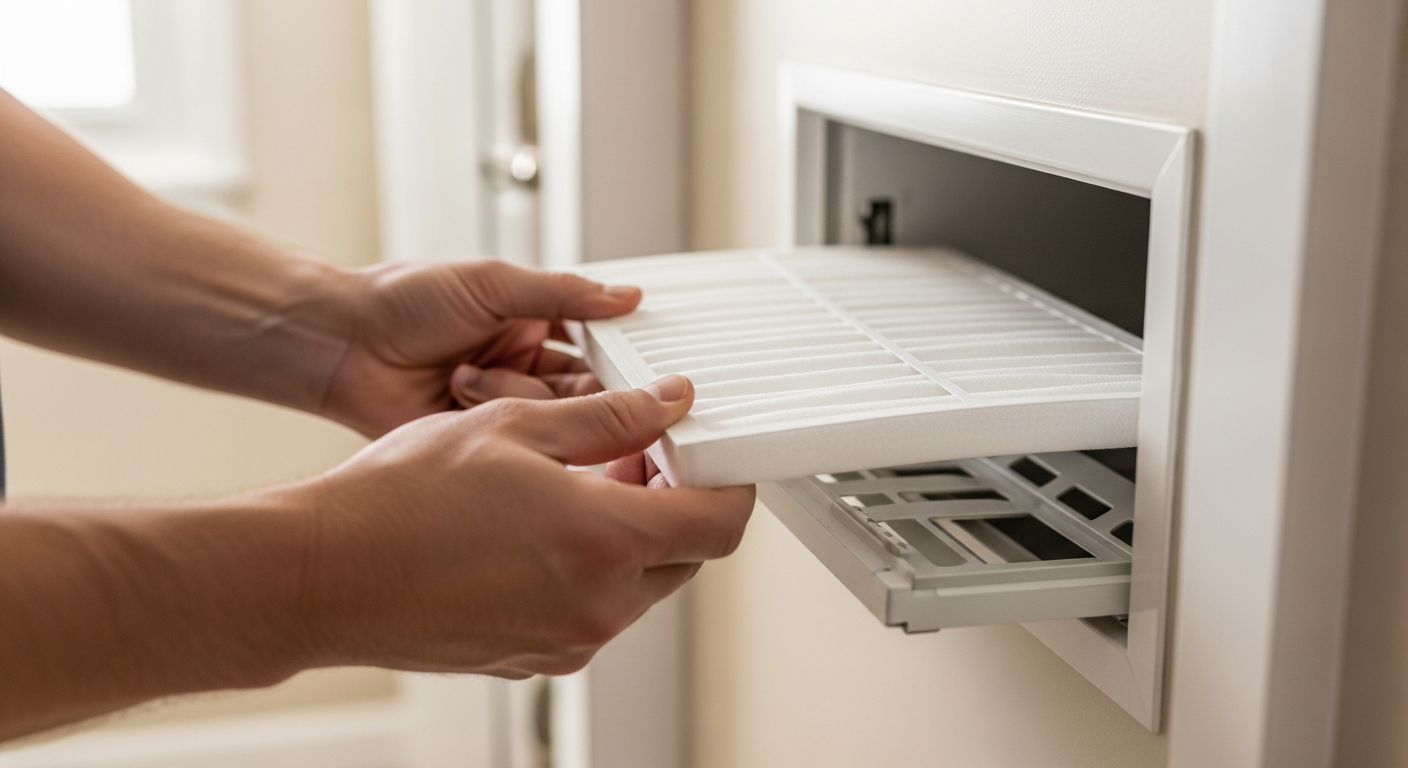
- Change the air filter if dirty—a clogged filter can mimic some symptoms but does not cause refrigerant loss.
- Check your thermostat settings and batteries to rule out control issues.
- Record system age, model, and serial number from the unit’s nameplate to help the technician.
Pro-Only Work (Requires EPA Certification)
- Handling, buying, or adding refrigerant (R-410A, R-22, etc.).
- Using electronic leak detectors, UV dye, or nitrogen pressure tests to find leaks.
- Repairing or replacing coils, linesets, compressor, metering devices, or service valves.
- Recharging the system with refrigerant after a repair.
- Any work involving opening the sealed refrigeration circuit.
Hiring a technician who cuts corners? Use our Contractor Comparison Tool to verify licensing, insurance, and EPA cert details.
Decision Guide: Emergency vs. Same-Day vs. Scheduled Repair
Not every refrigerant leak requires a middle-of-the-night service call (which can cost $150–$300 extra). Use this table to decide your urgency level:
| Scenario | Usually Do | Why |
|---|---|---|
| Hissing + ice + chemical smell indoors | Emergency call (within 2 hours) | Health risk and imminent compressor damage |
| Ice but no unusual sounds, no odor | Same-day or next-day service | Risk of water damage if ice melts, but not immediate health hazard |
| Long cycles but reaching temperature at night | Scheduled visit (2–4 days) | System is still cooling; not an emergency but needs attention |
| System is over 12 years old and leak is large | Consider replacement | Often more cost-effective than expensive coil replacement; see Repair or Replace Calculator |
| You have infants, elderly, or respiratory conditions in the home | Emergency call if odor or breathing symptoms appear | Vulnerable populations are more sensitive to refrigerant exposure |
Decision Rule: If the repair estimate exceeds 40% of the cost of a new system and the unit is over 10 years old, replacement is often the better long-term value. Use our HVAC Cost Estimator to compare typical replacement prices in your area.
Estimate Your Costs Before Calling a Pro
Refrigerant leak repairs vary widely—from a $200 braze on a joint to $2,000 for a new evaporator coil. Get a baseline before the technician arrives:
- Emergency HVAC Cost Estimator: Input your location and system type to see after-hours pricing ranges.
- Repair or Replace Calculator: Weigh the cost of leak repair vs. new equipment based on age, efficiency, and rebates.
- Energy Waste Calculator: Quantify how much a leaking system adds to your monthly bills.
Editorial estimate: typical refrigerant leak diagnostic visit runs $80–$200. Actual leak repair (finding and sealing) often falls between $500 and $1,500, not including the refrigerant re-charge. A full coil replacement can reach $1,500–$4,000+. Always get a written, itemized quote.
Contractor Checklist: Questions to Ask Before Approving Work
Not all HVAC pros follow the same leak repair protocol. Protect yourself:
- Are you EPA Section 608 certified? Request to see certification number. It’s required by law.
- How will you find the leak? Acceptable methods: electronic sniffer, UV dye, bubble solution. Avoid “topping off” without leak search.
- Will you provide a written, itemized estimate before starting? It should separate diagnostic, labor, materials, refrigerant, and disposal fees.
- Is the refrigerant recharge included in the repair price? Some quotes only cover sealing, then charge extra for refrigerant.
- How long is your warranty on the leak repair? At least 1 year on workmanship is standard; parts may have longer manufacturer warranties.
- Can you show me the leak site? A reputable technician will point out the leaking joint or corrosion under a UV light.
- If my system uses R-22, what are my options? R-22 is phased out and very expensive. You may need a retrofit or replacement; clarify costs upfront.
Local Climate: Special Considerations for Your Region
Where you live changes the urgency and repair approach:
- Hot/Dry Climates (e.g., Phoenix, Las Vegas): A broken AC in 110°F heat is a true emergency. Maintain a backup cooling plan—check our emergency cooling guide. Find a contractor near you: Phoenix AC repair pros.
- Humid Climates (e.g., Miami, Houston): A leaking system loses dehumidification ability, leading to mold growth within 24–48 hours. If you can’t get a same-day repair, run a standalone dehumidifier.
- Cold Climates (e.g., Minneapolis, Chicago): Heat pump refrigerant leaks in winter can mean no heating. Have a backup heat source; see portable heater safety tips. Also, freezing temperatures can worsen leaks—don’t let your system ice up further.
- Coastal Areas: Salt air corrodes coils and linesets rapidly. Annual inspections can catch leaks before they become emergencies.
- Older Homes: Long linesets, mismatched components, or outdated R-22 systems require careful diagnosis. A full replacement might be needed, so check our BTU Calculator to size new equipment correctly.
Methodology: How We Develop Cost Ranges and Recommendations
The cost estimates and decision rules in this article are editorial guidelines, not guaranteed quotes. They are based on aggregated data from HVAC contractor surveys, industry reports, public utility rebate programs, and actual project pricing submitted by HVACDatabase partner contractors across North America. We update cost ranges quarterly. Regional differences, system brand, warranty status, and seasonal demand all affect your final price. For the most accurate estimate, use our interactive cost tool and request quotes from at least three local contractors.
Frequently Asked Questions
Can a refrigerant leak make you sick?
Yes, in high concentrations, refrigerants can displace oxygen and cause dizziness, headaches, nausea, and respiratory irritation. Large leaks in confined spaces are particularly dangerous. Always ventilate and evacuate if you smell a chemical odor.
How much does it cost to fix a refrigerant leak?
Simple joint repairs can start around $200–$400, but most homeowners pay $500–$1,500 for detection and sealing, plus the cost of refrigerant. A coil replacement often runs $1,500–$4,000+. Use our emergency cost estimator for a range tailored to your area.
Should I repair or replace my AC if it has a leak?
Consider replacement if the unit is over 10 years old, uses R-22 refrigerant (phased out and expensive), or the repair estimate exceeds 40% of a new system’s cost. Our Repair or Replace Calculator can help you decide.
Is it normal to add refrigerant every year?
No. Air conditioners are sealed systems. If you need a “top-off” annually, you have an unrepaired leak that is wasting energy and harming the environment. A professional must locate and fix the leak.
How long does a refrigerant leak repair take?
Most repairs take 2–6 hours, depending on the leak’s location and the system’s complexity. If the evaporator coil needs replacement, it could take a full day. The technician should provide a time estimate when giving the quote.
Related articles
Connect this page to adjacent guides so readers keep moving deeper into the topic cluster.
How to Implement a Whole Home Energy Management System
Integrate smart tech and HVAC controls to cut energy waste. This guide shows how to audit, upgrade, and automate your home's energy use, with real savings estimates.

How to Set Up Thermostat Geofencing
Set up thermostat geofencing to automatically adjust home temperature as you come and go. Save energy, extend equipment life, and never return to an uncomfortable house. Get our quick-start guide now.
How to Troubleshoot Smart Thermostat WiFi Issues
Your smart thermostat offline? Most WiFi drops can be fixed with power checks, router adjustments, and simple restarts. Follow our step-by-step guide to regain remote control and energy savings.