How to Install a Dehumidifier for Your HVAC
Comprehensive guide to whole-house dehumidifier installation: benefits, costs, DIY vs professional advice, and how to choose a qualified HVAC contractor.
Hire a Licensed Professional for Safe, Code-Compliant Installation
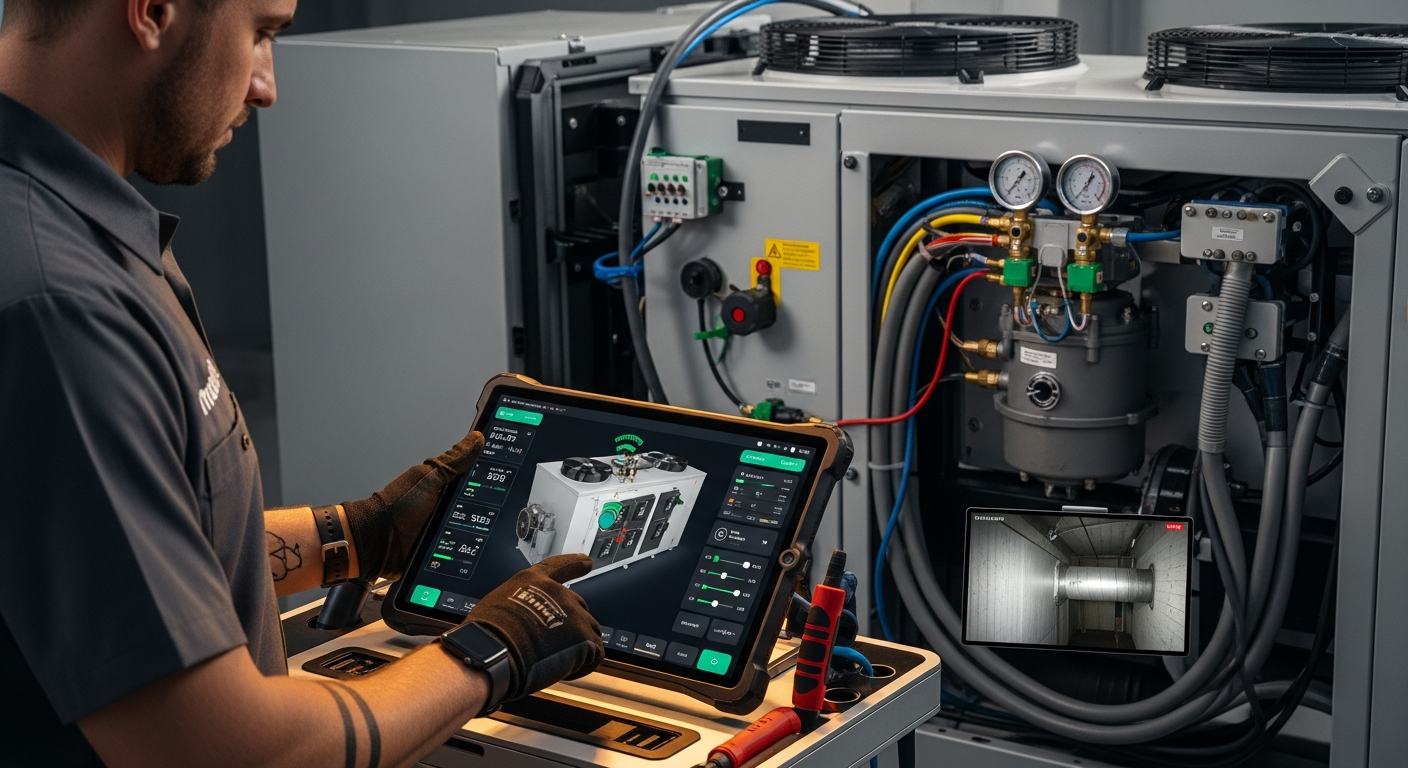
We recommend hiring a licensed HVAC contractor for whole-house dehumidifier installation to ensure safety, code compliance, and warranty coverage. DIY may be possible for standalone units with minimal duct modification, but the risks of improper installation often outweigh the savings.
What Matters Most
- Whole-house dehumidifiers are most beneficial in homes with persistent humidity above 60% that AC alone cannot control.
- Professional installation safeguards your HVAC warranty and ensures efficient, leak-free operation.
- Use HVACDatabase tools to estimate costs and compare contractor quotes before committing.
- Maintenance, including regular filter cleaning, is simple and can be done by the homeowner.
Strengths
- Better humidity control than multiple portable units.
- Can lower energy bills by allowing higher thermostat setpoints.
- Improves indoor air quality and reduces allergen growth.
- Integrated into existing ductwork for seamless whole-home coverage.
Weaknesses
- Higher upfront cost than portable solutions.
- Requires professional installation (potential for duct damage if DIY).
- Adds another mechanical system to maintain (filter changes, coil cleaning).
- May not be necessary in dry climates or if your AC already maintains <55% RH.
Decision Summary
| Scenario | Usually do | Why |
|---|---|---|
| Persistent humidity >60%, existing AC runs often but home still feels sticky | Install whole-house dehumidifier tied to HVAC | AC alone can't remove enough moisture; dehumidifier works independently of cooling demand |
| Occasional muggy days, humidity mostly below 55% | Use a portable dehumidifier in problem areas | Cheaper and sufficient for spot issues; whole-house is overkill |
| Renovating/installing new HVAC system | Consider integrated dehumidifier with fresh air ventilation | Maximizes efficiency and air quality from the start |
Introduction: Why Whole-House Dehumidification Matters
High indoor humidity (above 60%) encourages mold, dust mites, and structural wood rot. A whole-house dehumidifier integrated with your HVAC system maintains 30–50% relative humidity year-round, protects your home and health, and can even reduce cooling costs. This guide walks you through the key decisions: whether to DIY, how much it costs, how to size the unit, and what questions to ask a contractor before signing a contract. For a complete indoor air quality strategy, also read our guide on ERV/HRV systems.
Quick Answer: Should You Install a Dehumidifier Yourself?
While a very handy homeowner can install a standalone whole-house dehumidifier that ties into existing ductwork, the process involves cutting into your HVAC supply or return plenum, running a dedicated electrical circuit, and properly configuring drainage — all of which can void your equipment warranty or cause moisture damage if done incorrectly. Most homeowners are better off hiring a licensed HVAC professional. Use our HVAC cost estimator and quote checker to compare fair installation prices and find verified local contractors.
Dehumidifier Options Comparison
| Solution | Coverage | Installation Complexity | Typical Cost (Installed) | Best For |
|---|---|---|---|---|
| Portable dehumidifier | Single room | Plug-and-play; no ductwork | $150–$350 | Spot moisture problems, apartments |
| Whole-house standalone (duct-tie-in) | Entire home via existing ducts | Requires duct modification, electrical, drainage; medium complexity | $1,500–$3,500 | Persistent humidity, existing forced-air HVAC |
| Whole-house integrated HVAC dehumidifier | Entire home; often includes fresh air ventilation | High complexity; may require refrigerant lines and control integration | $2,500–$5,000+ | New HVAC installs, high-performance homes |
Editorial note: Costs are national averages and can vary by region, system size, and contractor. Get at least three quotes from HVACDatabase pros.
Safety Boundaries: What You Can Check vs. Pro-Only Work
To avoid injury, code violations, and equipment damage, observe these limits:
- Homeowner-safe tasks: Identifying humidity problems with a hygrometer, choosing a location near a drain, cleaning or replacing the dehumidifier air filter, and adjusting the humidity setpoint on the dehumidistat.
- Leave to licensed pros: Cutting into any ductwork, running new electrical circuits, installing condensate pumps, handling refrigerant (if expanding an existing system), and any modification to the furnace/air handler control board. Do not attempt any gas or combustion venting work.
If your installation requires high-voltage wiring, capacitor/contactor replacement, or compressor work, call a trained technician immediately.
Use Our Tools to Plan Your Installation
Start with the HVACDatabase BTU and Dehumidifier Sizing Calculator to estimate the pint capacity your home needs based on square footage and climate. Then, use the Cost Estimator to see local price ranges, and the Quote Checker to compare contractor bids side-by-side. For older homes, the Repair or Replace Calculator can help decide if it's time to upgrade your whole HVAC system along with the dehumidifier.
Decision Rules: Do You Really Need a Whole-House Dehumidifier?
Follow these thresholds to decide:
- If your indoor relative humidity stays above 60% for more than 24 hours during air conditioning season, a dehumidifier is recommended.
- If you see condensation on windows or cold surfaces, or notice musty odors, you likely have a moisture problem that spot dehumidifiers can’t fully solve.
- If your AC alone cannot maintain below 55% RH on the hottest days, a supplemental dehumidifier will improve comfort and lower energy bills (dryer air feels cooler).
- For homes with crawlspaces or basements, consider a dedicated dehumidifier for those areas even if the main floors are fine.
Contractor Hiring Checklist: Questions to Ask
- Are you licensed, insured, and certified to install dehumidifiers? Request proof.
- Will you perform a load calculation (Manual J or similar) to size the dehumidifier for my home?
- How do you handle drainage? Is a gravity drain or condensate pump required? Will it comply with local codes?
- Can you integrate the dehumidifier with my existing thermostat or provide a dedicated controller?
- Do you offer a maintenance plan that includes filter changes and coil cleaning?
- What warranty do you provide on labor and the equipment?
- Can I see examples of previous dehumidifier installations similar to my home?
Always check reviews on HVACDatabase and get at least three quotes before making a decision.
Local Climate Considerations
- Hot-humid (Southeast US, Gulf Coast): Whole-house dehumidifiers are often essential here. Look for units with high efficiency (Energy Star) and corrosion-resistant coils if you live near saltwater.
- Mixed-humid (Midwest, Mid-Atlantic): Dehumidifiers help during muggy summers, but may be less critical if you have a modern variable-speed AC.
- Cold climates: Humidity issues are usually seasonal (basements in summer). Portable units may suffice, but a whole-house unit with outdoor air intake can help in tightly sealed homes.
- Coastal areas: Salt air accelerates coil corrosion. Choose models with epoxy-coated coils and schedule annual maintenance.
- Older homes: Leaky ducts and poor insulation can worsen humidity. Consider a home performance assessment before installing a dehumidifier.
How We Estimate Costs and Performance
HVACDatabase cost estimates are editorial ranges based on national averages, manufacturer data, and feedback from our contractor network. Actual prices vary by location, job complexity, and market conditions. We strongly recommend using our Cost Estimator for tailored figures and Quote Checker to validate bids. Our sizing recommendations follow ASHRAE guidelines and manufacturer specifications.
Frequently Asked Questions
Can I install a whole-house dehumidifier myself?
Only if you are experienced with HVAC duct modifications, electrical wiring, and local codes—and even then, most manufacturers require professional installation to validate the warranty. For the average homeowner, hiring a licensed contractor is the safer, code-compliant route.
How much does it cost to install a whole-house dehumidifier?
Typically $1,500–$4,000 installed, including the unit and labor. High-end integrated systems can exceed $5,000. Use our cost estimator for local ranges.
Do I need a dedicated return for the dehumidifier?
Not always. Many units can pull from the existing return plenum, but a dedicated return from a central location often yields better humidity control and less impact on airflow.
How do I size a dehumidifier?
Sizing depends on square footage, climate, and number of occupants. For a 2,500 sq ft home in a humid climate, 70–90 pints per day is typical. Use our BTU and sizing calculator to get a more precise estimate.
Will a dehumidifier lower my air conditioning bills?
Yes. Drier air feels cooler at the same temperature, so you can set your thermostat 2–3°F higher and still feel comfortable, reducing cooling costs by 5–15% according to the U.S. Department of Energy.
Methodology
HVACDatabase estimates combine common contractor price patterns, service-category pricing ranges, equipment complexity, urgency, regional labor variation, and known HVAC safety boundaries. Actual prices vary by city, brand, system size, access, warranty status, permit requirements, and whether the visit discovers ductwork, electrical, refrigerant, gas, or drainage issues. Use these numbers to sanity-check quotes, not as a guaranteed price.
Related articles
Connect this page to adjacent guides so readers keep moving deeper into the topic cluster.
How to Implement a Whole Home Energy Management System
Integrate smart tech and HVAC controls to cut energy waste. This guide shows how to audit, upgrade, and automate your home's energy use, with real savings estimates.

How to Set Up Thermostat Geofencing
Set up thermostat geofencing to automatically adjust home temperature as you come and go. Save energy, extend equipment life, and never return to an uncomfortable house. Get our quick-start guide now.
How to Troubleshoot Smart Thermostat WiFi Issues
Your smart thermostat offline? Most WiFi drops can be fixed with power checks, router adjustments, and simple restarts. Follow our step-by-step guide to regain remote control and energy savings.