How to Optimize HVAC Run Times
Stop guessing about your HVAC's behavior. Learn what normal run times look like, how to diagnose problems safely, and use data-driven tools to cut energy waste without sacrificing comfort.

Optimize run times through airflow, scheduling, and professional sizing—not guesswork.
Proper HVAC run times depend on sizing, envelope, and maintenance. Homeowners can improve cycles with filters, thermostat settings, and using ceiling fans, but resolving core issues requires a contractor who performs load calculations and duct testing.
What Matters Most
- Monitor your system’s cycle length: under 10 minutes signals short-cycling; over 60 minutes in mild weather means trouble.
- Replace air filters every 30–90 days and keep vents open to avoid airflow-induced long runs.
- Use smart thermostat scheduling with modest setbacks to prevent energy-guzzling recovery runs.
- Hire only pros who can perform a Manual J load calculation and duct leakage test.
- Regional climate dictates whether humidity control or capacity matters more.
Strengths
- Quick wins like filter and thermostat adjustments cost little.
- Prevents premature compressor and motor wear from short-cycling.
- Improves humidity control and comfort without major equipment replacement.
- Tools and checklists empower homeowners to make informed contractor calls.
- Energy savings from proper run times can lower bills 10–30%.
Weaknesses
- DIY safe checks only go so far; most underlying issues need professional intervention.
- Optimizing run times might not fix high energy bills if the unit is very old or inefficient.
- Cost of a load calculation or duct test may add to a service call ($200–$500).
- Regional factors (e.g., coastal corrosion) may require additional ongoing maintenance.
- Smart thermostats can be misconfigured, leading to new problems.
Decision summary
| Scenario | Usually do | Why |
|---|---|---|
| Short-cycling (cycles <10 min) | Hire pro for sizing assessment; check filter and thermostat placement first | Oversized equipment is common; oversizing wastes energy and reduces dehumidification. |
| Nonstop running in mild weather | Get a home energy audit and duct leak test; check insulation | Likely envelope or duct leakage, not necessarily equipment failure. |
| Long runs but comfortable | Monitor energy bills; variable-speed units run long by design—confirm with data | May be normal; focus on SEER2 and electricity cost. |
| Runs fine, high humidity | Set fan to AUTO, upgrade to variable-speed or add dehumidifier | Single-stage AC can't dehumidify effectively if short-cycling. |
Quick Answer: What's an Ideal HVAC Run Time?
In mild weather (65–80°F), a properly sized AC or heat pump runs 15–20 minutes per cooling cycle, 2–3 times per hour. In extreme heat (above 95°F), continuous operation is normal. A furnace in winter typically runs 15–20 minutes, 3–6 times per hour, depending on coldness. If cycles are under 10 minutes consistently, you likely have short-cycling. If the system runs nonstop for over an hour when outdoor temps are moderate, it's struggling to keep up—caused by undersizing, leaks, or poor airflow.
Run-Time Symptom Table
| Symptom | Likely Cause | Homeowner Check | Pro Needed? |
|---|---|---|---|
| System turns on/off every 5–10 minutes | Oversized unit, frozen coil, faulty thermostat | Check filter, ensure vents open, look for ice on refrigerant lines | Yes, to size equipment or check refrigerant |
| Runs constantly in moderate weather | Undersized unit, leaky ducts, low refrigerant, poor insulation | Inspect ductwork visible in attic/basement, check attic insulation depth | Yes, for load calc, duct test, refrigerant check |
| Long runs but home still humid | Short-cycling AC or oversized unit cools too fast without dehumidifying | Verify thermostat set to AUTO, fan not ON | Yes, consider variable-speed equipment |
| Runs fine but high energy bills | Dirty coils, clogged filter, leaking ducts, old inefficient unit | Change filter, clean around outdoor unit | Yes, for coil cleaning, duct sealing |
Safety Boundaries: What You Can Do vs. When to Call a Pro
As a homeowner, you can safely:
- Replace air filters every 30–90 days. Clogged filters choke airflow and extend run times.
- Set thermostat to AUTO and program reasonable temperature setbacks (no more than 5–7°F).
- Open all supply vents and ensure return grilles are unblocked. Use ceiling fans to circulate air (set counterclockwise in summer, clockwise in winter).
- Visually inspect the outdoor condenser unit—clear debris, leaves, and trim back vegetation at least 2 feet.
Professional-only tasks: Anything involving refrigerant, gas lines, electrical components (capacitors, contactors, compressors), duct modifications, or system sizing calculations. Tampering with these can void warranties, risk injury, and worsen performance.
Use HVACDatabase Tools to Diagnose and Save
Before spending money, use our free calculators to see if your run times point to a bigger problem:
- BTU Calculator: Roughly determine if your current unit is sized appropriately for your home's square footage and climate.
- Energy Calculator: Estimate how much inefficient run times are costing you annually.
- Repair or Replace Calculator: Decide if fixing an aging system makes sense or if upgrading to a variable-speed unit will pay back.
- HVAC Cost Estimator: Get an editorial estimate range for common repairs or full system replacement.
Decision Rules: When to Act on Run Times
Use these thresholds to guide your next step. All assume typical single-family home, thermostat set correctly, and moderate outdoor temperatures (65–85°F).
If a single cooling cycle lasts less than 10 minutes…
Check filter, make sure thermostat isn't in a draft or sunlight, and verify that the outdoor unit isn't iced over. If those are fine, it's likely short-cycling due to oversized equipment or a refrigerant issue. Pro diagnosis: expect $80–$200 service call. Do not attempt to measure refrigerant yourself.
If the system runs for more than 60 minutes without reaching setpoint…
First, confirm all windows and doors are shut, and check insulation levels in the attic. Seal obvious air leaks around windows with caulk or weatherstripping. If the problem persists, suspect undersized equipment, leaking ducts, or low refrigerant. A pro load calculation and duct test are essential. A home energy audit often reveals hidden leakage.
If run times vary wildly day to day…
Smart thermostat data can reveal patterns. Look for simultaneous high humidity; variable-speed blowers may run longer on mild days to dehumidify, which is normal. If you have a single-stage system, erratic cycles often point to a failing thermostat or control board—pro diagnostic needed.
Contractor Checklist: Questions to Ask Before Hiring
When run-time issues require a technician, use this checklist to ensure they're thorough:
- Will you perform a Manual J load calculation? The right answer is yes. Guessing tonnage often leads to short-cycling or constant running.
- Do you include a duct leakage test? Leaky ducts can account for 20–30% energy loss. A qualified contractor will test and seal.
- Can you show me the data on static pressure and airflow? Proper airflow (around 400 CFM per ton) is critical; many systems underperform due to poor duct design.
- What's your plan for dehumidification? In humid climates, ask about variable-speed equipment or whole-home dehumidifiers.
- Are you insured and licensed for my area? Verify credentials here and ask for proof of liability and workers' comp.
- What are the total costs, including diagnostics? Expect a diagnostic fee of $80–$200, credited toward repair if you proceed. Get a detailed quote before any work.
Local Climate Considerations
- Hot & Humid (e.g., Houston, Miami): Prioritize dehumidification. Variable-speed or two-stage ACs run longer at low speed, removing more moisture. A thermostat that measures humidity is smart. Consider a whole-home dehumidifier if run times are short but humidity remains high.
- Hot & Dry (e.g., Phoenix, Las Vegas): High temps mean longer run times are expected; focus on proper sizing and duct integrity. Evaporative coolers (swamp coolers) can reduce AC demand in spring/fall.
- Cold (e.g., Minneapolis, Chicago): Furnace cycling is normal; short-cycling in deep cold may indicate oversized burner or poor insulation. Heat pumps in cold climates should have demand-defrost cycles; avoid user intervention.
- Coastal (e.g., San Diego, Boston): Salt air corrodes coils, reducing efficiency and extending run times. Annual rinses and corrosion-resistant coatings help.
- Older Homes: Envelope upgrades trump equipment tweaks. Prioritize air sealing and insulation before replacing equipment. Learn how to seal air leaks.
Methodology: How We Develop Run-Time Estimates and Cost Ranges
Our editorial team bases run-time benchmarks on ACCA (Air Conditioning Contractors of America) Manual S and Manual J standards, ASHRAE guidelines, and aggregated field data from HVACDatabase vetted professionals. Cost estimates are drawn from our nationwide network of contractor surveys and represent typical ranges for common repairs and diagnostics. These are not guaranteed prices; your actual cost depends on local labor rates, system specifics, and seasonality. Run-time advice assumes a properly maintained system with matched components. Always verify with a certified technician.
Frequently Asked Questions
Is it normal for my AC to run all day on a 100°F day?
Yes, continuous operation in extreme heat is expected and can actually be more efficient than short-cycling. A properly sized unit meeting its design temperature will run almost constantly. If it still doesn't cool the house, you have an issue.
Should I turn my HVAC off at night to save energy?
No. Drastic setbacks (more than 5–7°F) force the system to run for hours to catch up, often consuming more energy than maintaining a steady temperature. Use a programmable thermostat to reduce the setpoint by 3–5°F while sleeping.
Can a dirty filter really cause long run times?
Absolutely. A clogged filter reduces airflow, causing the system to run longer to move enough air to satisfy the thermostat. It also leads to frozen coils in ACs and overheated heat exchangers in furnaces. Change it every 30–90 days.
What's the payback for upgrading to a variable-speed system?
Variable-speed compressors/blowers can reduce cooling energy use by 30–40% in humid climates by running longer at low capacity. Use our repair-or-replace calculator to estimate payback based on your current system's SEER2 and electricity rates.
My furnace runs for 5 minutes then shuts off repeatedly. Is that dangerous?
This short-cycling can stress the heat exchanger and may indicate a safety lockout. Turn the system off immediately and call a pro. Do not attempt to reset the furnace repeatedly, as it could be a sign of a cracked heat exchanger or gas valve issue.
Related articles
Connect this page to adjacent guides so readers keep moving deeper into the topic cluster.
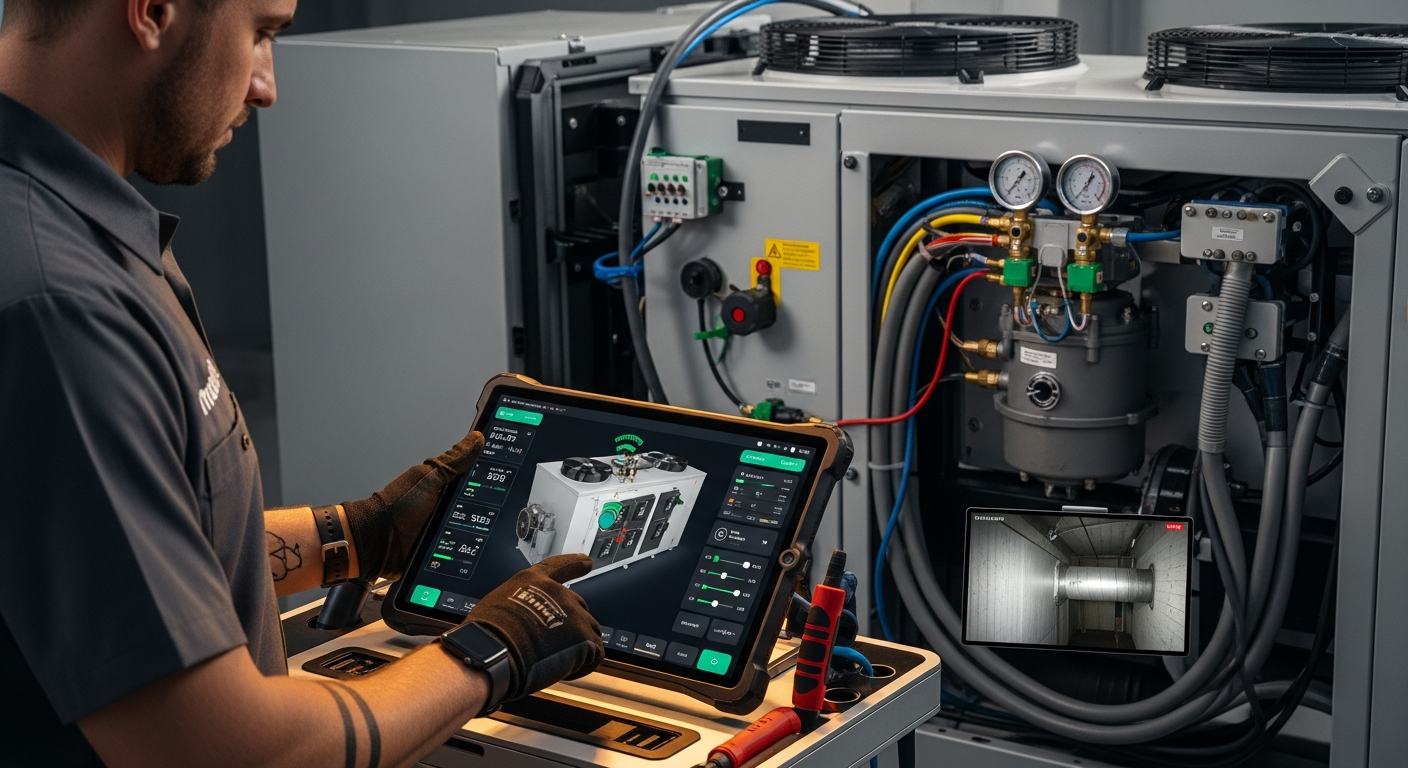
How to Implement a Whole Home Energy Management System
Integrate smart tech and HVAC controls to cut energy waste. This guide shows how to audit, upgrade, and automate your home's energy use, with real savings estimates.
How to Set Up Thermostat Geofencing
Set up thermostat geofencing to automatically adjust home temperature as you come and go. Save energy, extend equipment life, and never return to an uncomfortable house. Get our quick-start guide now.
How to Troubleshoot Smart Thermostat WiFi Issues
Your smart thermostat offline? Most WiFi drops can be fixed with power checks, router adjustments, and simple restarts. Follow our step-by-step guide to regain remote control and energy savings.