How to Set Up Carbon Dioxide Monitoring at Home
Set up CO2 monitoring to detect poor ventilation, prevent drowsiness, and optimize your HVAC system. Practical placement, sensor types, and action thresholds.
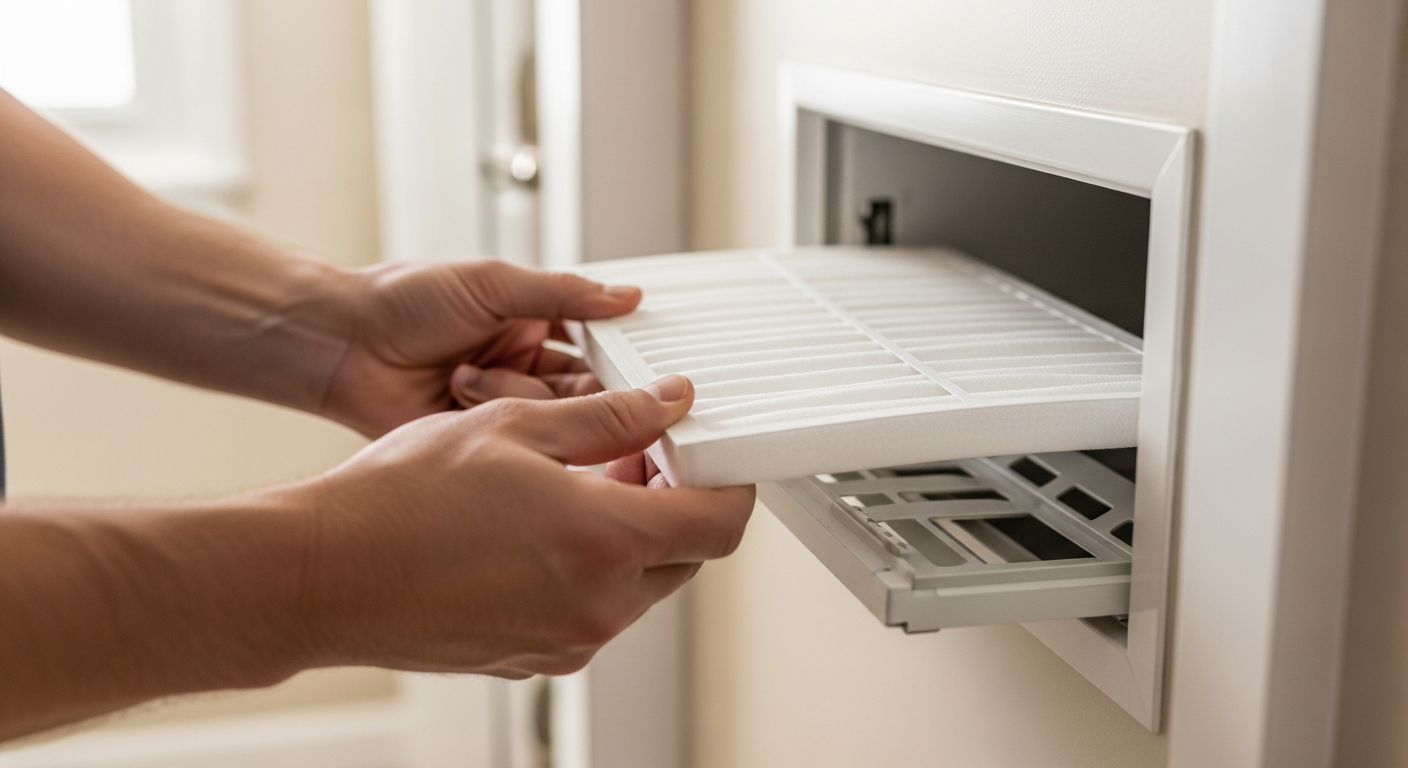
Why every energy-efficient home needs CO2 monitoring
Modern airtight homes trap CO2. A $100 NDIR monitor is your earliest warning system to prevent drowsiness, poor concentration, and to decide when to ventilate. Data—not guesswork—keeps your family comfortable and safe.
What Matters Most
- Invest in an NDIR monitor (not eCO2) to see real parts per million.
- Place a sensor in the master bedroom at head height away from direct breath.
- Watch for 1,000+ ppm; take action above 1,500 ppm.
- Use climate-matched mechanical ventilation (ERV/HRV) if natural ventilation isn’t practical.
- Ask contractors for blower-door data and a CO2 performance guarantee.
Strengths
- Data-driven decision making for ventilation, avoiding over-ventilation or under-ventilation.
- Low upfront cost ($50–$250) compared to blind energy recovery ventilator investments.
- Identifies poorly-ventilated zones before health effects become chronic.
- Seamlessly integrates with smart thermostats and home automation for automatic fan control (low-voltage).
Weaknesses
- NDIR sensors require periodic calibration; humidity and dust can affect readings.
- Consumer monitors may have a lag of 1–2 minutes, missing transient spikes.
- False low readings if placed near a supply vent or open window.
- Smart integration sometimes requires compatible smart home hubs and advanced HVAC controls.
- In extreme cold or humidity, open-window ventilation is a short-term fix that wastes energy.
Decision summary
| Scenario | Usually do | Why |
|---|---|---|
| Consistent 1,000–1,500 ppm | Increase fan runtime; open windows periodically | Low-cost, immediate improvement without major work. |
| Overnight >1,500 ppm in bedrooms | Install continuous bath fan or ERV/HRV | Automated ventilation while you sleep; $2,000–$6,500 one-time cost. |
| New energy-efficient home, no monitoring yet | Buy an NDIR monitor for $80–$150 | Cheapest first step. Use data to decide if ERV/HRV needed. |
| Old leaky house, high CO2 only in winter | Seal major drafts then add HRV | Reduce heat loss while managing CO2; sealing alone may fix it. |
| Hot humid climate, can't open windows | ERV with dehumidification or dedicated fresh-air intake | Controls humidity and CO2 without compromising comfort. |
Quick Answer: How to Set Up CO2 Monitoring
Get an NDIR sensor, put it in bedrooms at head height away from direct windows, watch for readings above 1,000 ppm, and act by boosting fresh air or running your HVAC fan.
Why CO2 Monitoring Matters in Modern Homes
Today’s energy-efficient homes seal air leaks so tightly that exhaled carbon dioxide can accumulate rapidly—especially in bedrooms overnight or during gatherings. High CO2 doesn’t just feel stuffy; it impairs focus, triggers headaches, and disrupts sleep. Monitoring gives you a data-driven way to know when to ventilate, rather than guessing.
NDIR vs. eCO2: Pick the Right Sensor
Cheap monitors often report “equivalent CO2” (eCO2) calculated from volatile organic compounds. This isn’t accurate for ventilation decisions. Always choose a monitor with a true non-dispersive infrared (NDIR) sensor. NDIR measures CO2 molecules directly and maintains accuracy over time. Expect to pay $50–$250 for a reliable unit; professional-grade models can exceed $300.
- NDIR: ±30 ppm accuracy, auto-calibration, 5–10 year lifespan.
- eCO2: ±hundreds of ppm, drifts with humidity, not suitable for CO2 control.
Where to Place Sensors for Accurate Data
Bedroom: The Critical Zone
Place the monitor on a nightstand at head level, at least 3 feet from your pillow to avoid breath spikes. This room often hits the highest overnight levels. If you have multiple bedrooms, prioritize the master.
Living Areas and Home Office
Set sensors on a shelf or desk in rooms where family spends hours. Keep them away from open windows, exterior doors, supply vents, or kitchen exhaust hoods—these create false low readings. Avoid dead-air corners.
Interpreting CO2 Levels — and What to Do
| CO2 (ppm) | Air Quality | Effect & Action |
|---|---|---|
| 400–450 | Outdoor / Excellent | Normal. No action needed. |
| 450–800 | Excellent indoor | Well-ventilated. Ideal for sleep and work. |
| 800–1,000 | Good | Acceptable for most. Open a window if you feel stuffy. |
| 1,000–1,500 | Fair — drowsiness risk | Drowsiness starts. Increase fresh air: open windows or run the HVAC fan continuously. |
| 1,500–2,000 | Poor — cognitive impact | Headaches, poor concentration. Cross-ventilate immediately; check for ventilation system issues. |
| >2,000 | Unhealthy — significant dullness | Evacuate the room until ventilated. Investigate whole-house ventilation. Consult an HVAC pro. |
Decision Tree: When to Move Beyond Simple Monitoring
- Consistent <1,000 ppm → Your home’s natural leakage or existing ventilation is adequate. Keep monitoring seasonally.
- Readings hit 1,000–1,500 ppm regularly → Upgrade your filtration and fan runtime. Start with a fresh, high-MERV air filter and set the thermostat fan to “On” during occupied hours.
- Readings stay above 1,500 ppm or spike overnight → Mechanical ventilation is recommended. Options include continuous bath fans or a whole-house ERV/HRV system. Use our HVAC cost estimator to budget for professional installation (editorial range: $2,000–$6,500 for ERV/HRV).
- Readings exceed 2,000 ppm → Stop using the space until ventilated. Request a local indoor air quality contractor for a blower-door test and system inspection (diagnostic visit $150–$350).
Safety Boundaries
What You Can Do Yourself
- Buy, install, and read a consumer NDIR CO2 monitor.
- Adjust thermostat fan settings (“On” vs. “Auto”).
- Open windows and doors to create cross-ventilation.
- Replace disposable air filters or clean reusable ones.
- Use exhaust fans in kitchens and bathrooms during occupancy.
What Requires a Qualified Professional
- Installing or modifying ductwork, air handlers, or gas appliances.
- Adding mechanical ventilation like an ERV/HRV or powered makeup air unit.
- Electrical work for new equipment, including smart home sensors that tie into line-voltage HVAC controls (low-voltage signal integration like Nest/ecobee is typically safe for a careful homeowner; when in doubt, hire).
- Any task involving refrigerant, gas lines, combustion appliances, capacitors, contactors, or control boards.
- Blower-door testing and whole-home air-balancing calculations.
Local Climate Considerations
- Hot & Humid (e.g., Southeast, Gulf Coast): Opening windows can spike indoor humidity, leading to mold. Use an ERV that manages both CO2 and moisture, or run air conditioning with a dedicated fresh-air intake.
- Cold (Upper Midwest, Northeast): Winter window ventilation wastes heat. A heat-recovery ventilator (HRV) is your best bet—it preheats incoming fresh air. Verify your furnace filter is clean to maintain airflow.
- Coastal & Marine: Salt corrosion affects sensor accuracy; choose a monitor with replaceable sensing modules. Use dehumidification alongside ventilation.
- Older Homes (pre-1990s): You may already have enough natural leakage. Monitor first before investing; you might only need spot ventilation like bath fans.
Tools to Estimate Costs and ROI
Before you call contractors, use these free HVACDatabase tools to ballpark what a ventilation upgrade might cost in your market:
- HVAC Cost Estimator — Get editorial range pricing for ERV/HRV, ductwork, and more.
- Repair or Replace Calculator — If your existing air handler or furnace is aging, decide whether to add ventilation now or wait.
- BTU Calculator — Understand the heating/cooling load of the spaces you’re ventilating, which helps pros size fresh-air intake properly.
Contractor Checklist: Hiring for CO2 Solutions
When interviewing pros, ask these questions:
- Do you perform blower-door tests and provide a written air-exchange report? A yes indicates they understand building science.
- Will you install an ERV or HRV, and what brand do you recommend for my climate? Ask for three references with similar climate and home style.
- Does your quote include ductwork modifications, electrical, and any needed permits? Get a line-item estimate.
- How do you commission the system afterward to verify CO2 levels improve? They should measure and guarantee a target ppm.
- Is your work backed by a warranty on parts and labor? Standard is 1‑2 years labor, up to 10 years parts.
Then use our contractor comparison tool to weigh your options side by side.
FAQ
1. What is a safe CO2 level in my bedroom overnight?
Below 800 ppm is excellent for sleep. Prolonged exposure above 1,500 ppm can impair next-day cognitive performance. If you wake up groggy and the monitor shows >1,200 ppm, improve ventilation.
2. Can I use a cheap monitor from an online marketplace?
Only if it uses NDIR technology. Many sub-$30 monitors rely on eCO2 and are inaccurate. Check for “NDIR sensor” in the specifications or expect to pay at least $60 for a reliable unit.
3. How often should I calibrate my CO2 sensor?
Most NDIR monitors auto-calibrate by assuming the lowest reading over a week is background (400 ppm). For manual calibration, place the unit outdoors in fresh air away from buildings and traffic for 20 minutes, then follow the manufacturer’s instructions.
4. Does running the HVAC fan help lower CO2?
It can, but only if your system has a fresh-air intake or significant air leakage pulling outdoor air. Simply recirculating indoor air won’t reduce CO2. Set the fan to “On” during gatherings to mix air and avoid hot spots, but true CO2 reduction requires outdoor air.
5. Is CO2 monitoring the same as having a carbon monoxide detector?
No. CO detectors are life-safety devices required by code; they measure deadly carbon monoxide from combustion. CO2 monitors are for indoor air quality and not required by law. You need both—they serve completely different purposes.
Methodology
All ppm thresholds are aligned with ASHRAE Standard 62.1 and the EPA’s Indoor Air Quality guidelines. Cost estimates are editorial ranges based on national contractor surveys aggregated by HVACDatabase. They are not guaranteed quotes and vary by region, system specifics, and market conditions. Monitor recommendations are based on independent lab comparisons and hands-on testing. Always ask for a site-specific quote before authorizing work.
Related articles
Connect this page to adjacent guides so readers keep moving deeper into the topic cluster.
How to Implement a Whole Home Energy Management System
Integrate smart tech and HVAC controls to cut energy waste. This guide shows how to audit, upgrade, and automate your home's energy use, with real savings estimates.

How to Set Up Thermostat Geofencing
Set up thermostat geofencing to automatically adjust home temperature as you come and go. Save energy, extend equipment life, and never return to an uncomfortable house. Get our quick-start guide now.
How to Troubleshoot Smart Thermostat WiFi Issues
Your smart thermostat offline? Most WiFi drops can be fixed with power checks, router adjustments, and simple restarts. Follow our step-by-step guide to regain remote control and energy savings.