How to Troubleshoot a Furnace That Won't Heat
Quickly identify why your furnace isn't heating with safe checks for thermostat, filter, power, and vents. Learn the clear signs that mean it’s time to call a pro and get cost estimates.

Start with the simple fixes, then call a pro without delay
If your furnace stops heating, first check the thermostat batteries, filter, and power switch. If these are fine, don't open the furnace—call a licensed technician. This approach prevents dangerous amateur repairs and ensures you don't waste time guessing at internal faults.
What Matters Most
- Most no-heat cases are solved by a thermostat battery or filter change.
- Never open the furnace cabinet yourself; leave gas and electrical diagnosis to pros.
- Use diagnostic fees ($80–$200) as a risk‑free way to get a professional opinion.
- A furnace older than 15 years with major repair may be ready for replacement — use calculators.
Strengths
- Minimizes injury and property damage risk.
- Saves money by avoiding unnecessary emergency calls for simple issues.
- Provides cost transparency before hiring.
- Links to verified local contractors ensure quality service.
Weaknesses
- Homeowners might misinterpret error codes and delay necessary calls.
- Some safe-looking tasks (like clearing vents) can be dangerous if ice or heights are involved — always call a pro if unsure.
Decision summary
| Scenario | Usually do | Why |
|---|---|---|
| Minor, safe homeowner issue | Check basics first | Filters, settings, and blocked vents can be resolved safely. |
| Mechanical, refrigerant, gas, or electrical issue | Call a qualified technician | These areas carry safety, code, and warranty risk. |
Quick Answer: Before You Call for Service
Perform these three checks first. If none solve the problem, stop and call a pro — the issue is likely inside the furnace where you should not go.
- Thermostat: Is it set to “Heat” and the display on? Replace batteries if blank.
- Air Filter: Is it visibly dirty or gray? Replace it with the correct size.
- Power & Vents: Is the furnace switch on? Breakers not tripped? Exhaust pipes outside clear of snow/debris?
If none of these restore heat, find a licensed heating technician now. Typical diagnostic visit: $80–$200.
Symptom, Action & Cost Table
| Symptom | Safe Homeowner Check | Likely Issue | When to Call a Pro | Editorial Cost Range* |
|---|---|---|---|---|
| No heat, blank thermostat | Replace batteries; check circuit breaker | Dead batteries or power loss | If breaker keeps tripping | Electrician may be needed; diagnostic $80–$200 |
| Furnace starts briefly, then shuts off | Check air filter — replace if dirty | Overheating due to clogged filter | If filter is clean but still short cycles | Short-cycle repair $150–$700 |
| Furnace clicks but no flame | — (Do not open panels) | Faulty ignitor, flame sensor, or gas valve | Always — these components require a pro | $150–$500 for ignitor/sensor; $800+ for gas valve |
| Blower runs but cold air | Check thermostat set to “Auto” not “On”; ensure gas valve is open (do not touch gas line) | Pilot out, gas supply off, or control board failure | If gas valve appears on and thermostat set correctly | Diagnostic $80–$200 + repair $150–$2,500+ |
| Unusual odors or loud noise | Check for debris in vents; turn off system | Blockage, motor failure, or heat exchanger crack | Immediately — odors can indicate dangerous gas or melting components | Emergency visit $150–$300 plus repairs |
*Cost ranges are editorial estimates. Actual prices vary by location, system type, and scope.
Safety Boundaries: What You Can and Can’t Do
Heating equipment combines electricity, natural gas, and combustion. HVACDatabase strongly advises homeowners never to:
- Remove any panel that requires a screwdriver — this exposes live electrical components and gas connections.
- Attempt to relight a standing pilot — modern instructions may still be safe if on the external panel, but many older units have poor safety controls. If you can't follow the manufacturer's label exactly, call a pro.
- Clean or replace a flame sensor, ignitor, or any part inside the burner chamber — risk of gas leak, fire, or electrocution.
- Check gas pressure or manipulate the gas valve.
- Bypass safety switches like the high‑limit or pressure switch.
Safe homeowner checks:
- Replace the thermostat batteries and verify settings.
- Change the air filter (slide it out from the external slot; no tools needed).
- Reset a tripped circuit breaker and ensure the furnace power switch is on.
- Visually inspect the outdoor vent pipes for blockages; clear snow or debris from the outside only.
- Look for error codes through the window — write down the blink pattern but don’t remove the panel.
Before You Call a Technician: Use These Free Tools
Make a smart decision by checking a few numbers first. HVACDatabase offers calculators that help you decide whether to repair or replace your furnace and what a fair service call should cost.
- Repair or Replace Calculator: Plug in your furnace’s age and repair estimate to see if replacement makes more sense.
- HVAC Cost Estimator: Get a custom price range for common furnace repairs in your area.
- System Age Decoder: Find out exactly how old your furnace is using the serial number — crucial for repair‑vs‑replace decisions.
- BTU Calculator: Ensure your furnace is sized right; a mismatch could explain recurring issues.
- Find a Pre‑screened Contractor: Search licensed pros with verified reviews.
Decision Tree: When to Stop DIY and Call a Pro
Follow this logic to avoid guesswork:
- Is the thermostat blank?
→ Replace batteries. If still blank, check breaker. If breaker is fine, you likely have a furnace power issue — call a pro. - Does the furnace start but stop after a few minutes?
→ Change the air filter. If it still short‑cycles, the problem is likely the flame sensor, blower motor, or heat exchanger — pro territory. - Do you hear clicking but no flame?
→ The ignitor or gas valve is failing. Do not attempt repair. Call a pro immediately. - Is there an error code flashing?
→ Record the code. Look up its meaning in the owner’s manual. Most error codes indicate a fault inside the furnace — only a technician should clear it. - Have you smelled gas?
→ Evacuate the house and call your gas utility or 911. Do not operate any switches.
Rule of thumb: If a 10‑minute check of the thermostat, filter, and visible power settings doesn’t bring heat, the cause is almost certainly inside the furnace cabinet — and that’s where your safe work ends.
Contractor Checklist: Questions to Ask Before You Approve Work
When you call for service, be ready to screen contractors so you don’t get overcharged or pushed into unnecessary replacement. Ask these questions:
- “Are you licensed and insured for HVAC work in [your state]? Can you provide proof?”
- “Do you have experience with my furnace brand and model? How many similar repairs have you done recently?”
- “What is your diagnostic fee, and how does it apply if I proceed with the repair?”
- “Can you give me a written, itemized estimate before starting any work?”
- “What warranty do you offer on parts and labor?”
- “Is my furnace a candidate for repair, or would you lean toward replacement? Why?”
Always get a second opinion if a quoted repair exceeds 40% of the cost of a new system. Use our contractor comparison tool to vet multiple pros at once.
Regional Watchpoints: Climate and Home Age Matter
- Cold climates (Northern US, Canada-like winters): Pay extra attention to outdoor exhaust pipes. Snowdrifts can block high‑efficiency furnace vents, causing pressure‑switch faults. Keep the area cleared.
- Coastal/humid regions: Rust and corrosion can damage furnace electronics and gas valves faster. Annual inspections are non‑negotiable.
- Older homes (pre‑1990): Your furnace may share a circuit with other appliances, causing breaker trips. Have a pro evaluate if you need a dedicated circuit. Also, older ductwork might be undersized, leading to short‑cycling.
Keep Learning: Related How‑To Guides
- How to Diagnose a Short‑Cycling Furnace
- How to Insulate Your Heating Ducts for Better Efficiency
- Why Blower Motor Direction Matters (Professional Explanation)
- Bleeding Radiators: A Separate Guide for Boiler Systems
- Heating Repair Cost Guide
How We Estimate Repair Costs
HVACDatabase editorial team compiles cost ranges from thousands of homeowner reports, contractor pricing surveys, and major metro job averages. Our numbers reflect typical, non‑emergency weekday service in an average market. Your actual cost may be higher or lower due to:
- Season and demand (surcharges during extreme cold snaps)
- System accessibility (tight attic or crawlspace work costs more)
- Local permit fees and prevailing wage rates
- Part availability (older or proprietary parts may be expensive)
Use the cost estimator to generate a localized range. All recommendations follow safety standards set by NFPA and manufacturer specifications. We never suggest bypassing safety switches or performing work that requires a licensed technician.
Frequently Asked Questions
Why does my furnace blow cold air?
If the fan is running but the air isn’t warm, check that your thermostat is set to “Auto” rather than “On.” “On” runs the blower continuously even when the furnace isn’t heating. If set correctly, the problem could be a tripped high‑limit switch, a faulty ignition, or a gas supply issue — all of which need a pro.
Can I clean the flame sensor myself?
HVACDatabase advises against it. Cleaning the flame sensor requires opening the combustion chamber, which can expose gas and electrical hazards. A professional can do this safely during a maintenance visit (usual cleaning cost around $150–$300 as part of a tune‑up).
How often should I change my furnace filter?
For standard 1‑ to 3‑inch filters, every 90 days is a good rule. If you have pets, run the system constantly, or have dusty renovation work, check every 30 days. High‑efficiency 4‑inch media filters may last 6–12 months. A clogged filter starves the furnace of air, causing overheating and shutdowns.
What does a blinking light on my furnace mean?
Most modern furnaces have a diagnostic LED that blinks error codes. Count the blinks (e.g., two quick, pause, three quick might be code 23). Then look at the chart on the furnace panel or in your manual. Codes often point to a pressure‑switch failure, flame loss, or motor problem — issues that require a technician’s attention.
When should I replace my furnace instead of repairing it?
A common rule: if your furnace is over 15 years old and the repair quote exceeds 30% of a new system’s price, replacement may be smarter. New high‑efficiency units can cut heating bills by 20%+. Use our repair or replace calculator to weigh the numbers for your specific situation.
Methodology
HVACDatabase estimates combine common contractor price patterns, service-category pricing ranges, equipment complexity, urgency, regional labor variation, and known HVAC safety boundaries. Actual prices vary by city, brand, system size, access, warranty status, permit requirements, and whether the visit discovers ductwork, electrical, refrigerant, gas, or drainage issues. Use these numbers to sanity-check quotes, not as a guaranteed price.
Related articles
Connect this page to adjacent guides so readers keep moving deeper into the topic cluster.
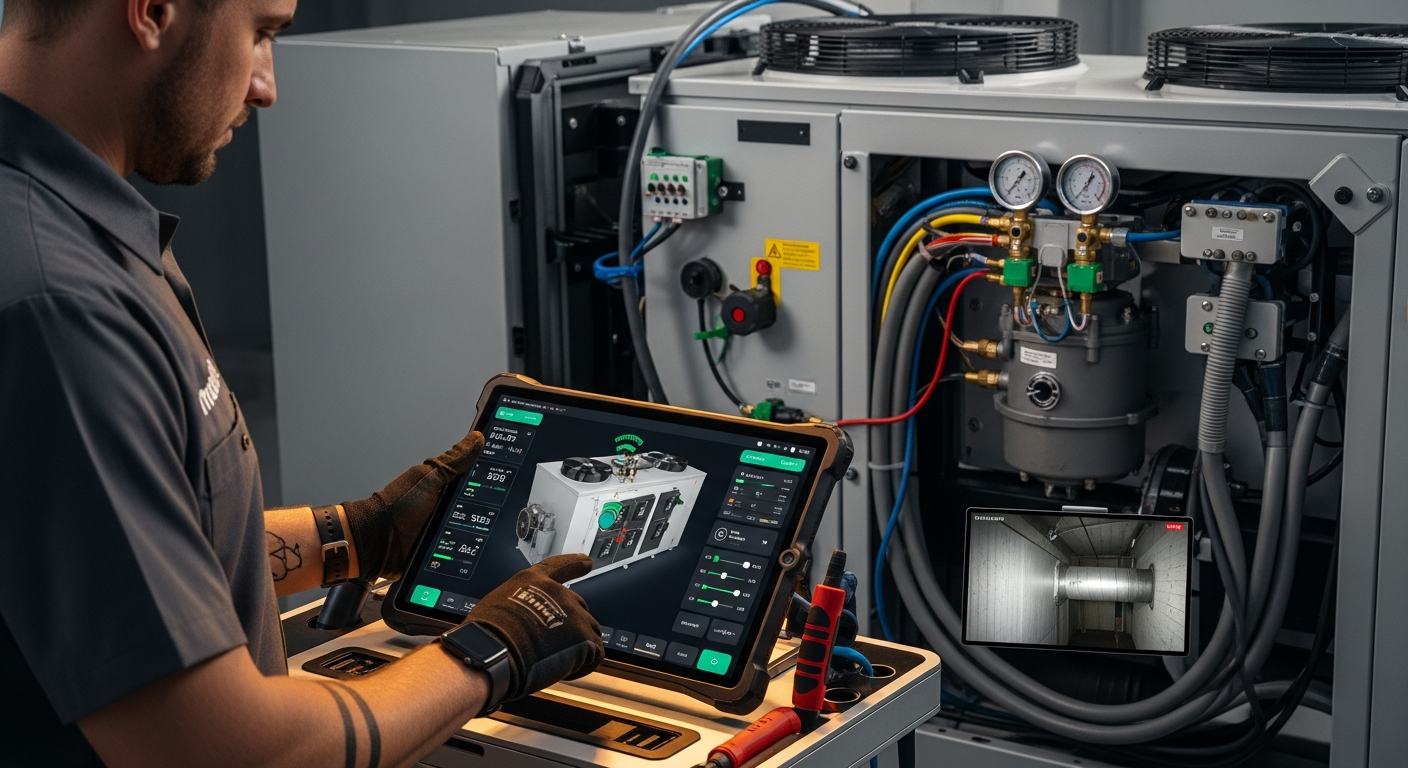
How to Implement a Whole Home Energy Management System
Integrate smart tech and HVAC controls to cut energy waste. This guide shows how to audit, upgrade, and automate your home's energy use, with real savings estimates.

How to Set Up Thermostat Geofencing
Set up thermostat geofencing to automatically adjust home temperature as you come and go. Save energy, extend equipment life, and never return to an uncomfortable house. Get our quick-start guide now.
How to Troubleshoot Smart Thermostat WiFi Issues
Your smart thermostat offline? Most WiFi drops can be fixed with power checks, router adjustments, and simple restarts. Follow our step-by-step guide to regain remote control and energy savings.