HRV vs ERV: Which Is Right for Your Home
Compare Heat Recovery (HRV) and Energy Recovery (ERV) ventilators: which saves more energy and controls humidity for your climate? Get clear guidance, costs, and the right questions to ask installers.
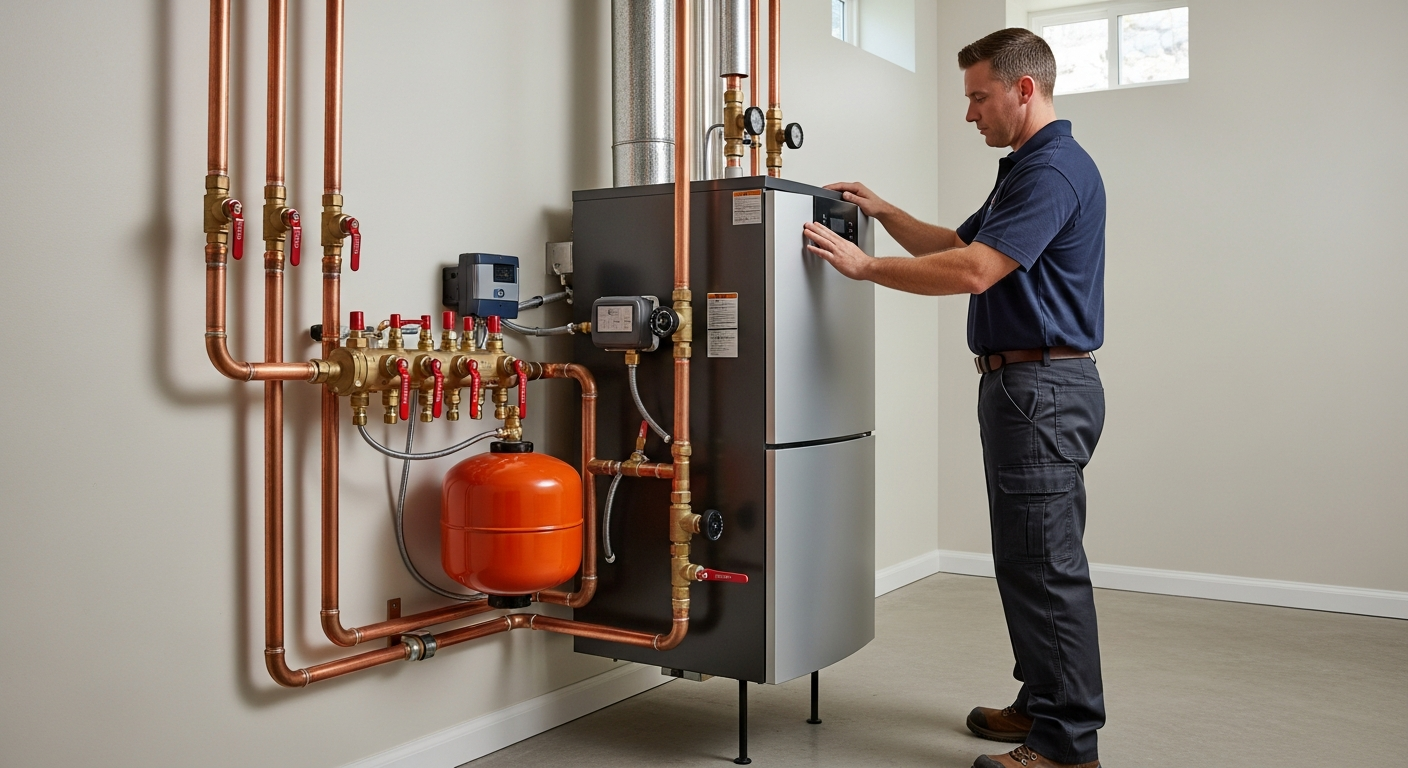
Clear Recommendation: Choose Based on Climate and Humidity
In most U.S. climates, an ERV is the better all-around choice for year-round humidity control, while an HRV excels in very cold, dry climates where retaining moisture is unnecessary.
What Matters Most
- HRVs transfer heat only, making them ideal for cold, dry regions where excess winter humidity must be expelled.
- ERVs transfer heat and moisture, reducing AC loads in summer and preventing dry air in winter in mixed or humid climates.
- Installed costs range from $2,000 to $5,500; Energy Star units yield the quickest payback through utility rebates.
- Homeowners can maintain filters and hoods, but all ductwork, electrical, and core cleaning require a pro.
- Use our BTU calculator and rebate finder to size and incent your ventilation project.
Strengths
- ERVs maintain more consistent indoor humidity year-round
- ERVs reduce summertime air-conditioning latent load, lowering energy bills
- In mixed climates, ERVs adapt to both heating and cooling seasons without seasonal adjustments
- ERVs prevent bringing in outdoor pollutants bound to moisture particles
Weaknesses
- ERVs typically cost $500–$1,000 more upfront than comparable HRVs
- In extremely cold climates, ERVs can retain too much moisture, leading to condensation unless defrost strategies are perfect
- The moisture-exchange core may require more frequent cleaning to avoid mold
- Slightly higher fan energy use due to more complex airflow paths
Decision Summary
| Scenario | Usually do | Why |
|---|---|---|
| Cold, dry winter climate (e.g., Minnesota) | Choose HRV | Exhausts excess indoor moisture without transferring humidity, maximizing heat recovery and preventing window condensation. |
| Hot, humid summer climate (e.g., Florida) | Choose ERV | Transfers moisture to prevent outdoor humidity from entering, reducing AC load and improving comfort. |
| Mixed climate with both heating and cooling seasons | Consider ERV | Helps balance humidity year-round; HRV may work if budget is tight and dedicated dehumidification is added. |
| Extremely airtight home (<3 ACH50), allergy concerns | Prioritize ERV with advanced filtration | Controls latent load and prevents outdoor pollutants; add HEPA bypass if needed. |
| Upgrading from no ventilation, tight budget | HRV with separate dehumidifier if needed | Lower initial cost; still achieves heat recovery; can add moisture control later. |
Quick Answer: HRV or ERV?
If you live where it's cold and dry most of the year, pick an HRV. If you face hot, humid summers—or need to manage humidity year-round—an ERV is often the better choice. In most U.S. climates, an ERV provides superior comfort by balancing moisture, but an HRV excels in northern regions where keeping indoor humidity from condensing on windows is a priority. Read on for a decision framework, costs, and a contractor checklist.
How HRV and ERV Systems Work
Both systems use a fan-powered core to exchange stale indoor air with fresh outdoor air while recovering energy. The core is the critical component that determines whether you get an HRV or an ERV.
- HRV (Heat Recovery Ventilator): Transfers only heat (sensible energy). It does not move moisture. Perfect for cold climates where you want to capture outgoing heat but also exhaust excess humidity from showers, cooking, and breathing.
- ERV (Energy Recovery Ventilator): Transfers both heat and moisture (latent energy). It helps maintain indoor humidity levels, which lightens the load on your air conditioner in summer and reduces dry-air discomfort in winter.
At a Glance: HRV vs ERV Comparison
| Feature | HRV | ERV |
|---|---|---|
| Heat transfer | Yes | Yes |
| Moisture transfer | No | Yes |
| Best climate | Cold, dry winters | Hot-humid, mixed-humid, very dry |
| Controls bathroom/kitchen humidity | Excellent at exhausting it | Helps balance it |
| Reduces AC load in summer | Minimal | Yes—pre-cools and dehumidifies incoming air |
| Typical installed cost range* | $2,000–$4,500 | $2,500–$5,500 |
*Editorial estimate ranges. Includes unit and professional installation. Prices vary by home size, ductwork condition, region, and electrical work needed. Not guaranteed.
Decision Rules: When to Choose HRV or ERV
Use these thresholds to narrow your choice, then verify with a local HVAC pro.
Choose an HRV when:
- You heat your home at least 5,000 heating degree days per year (roughly USDA zone 5 and colder).
- Indoor humidity during winter often rises above 50% and you see window condensation.
- Your summers are mild and dry—you run the AC only a few weeks per year.
- Your home has a wood stove or unvented gas appliances that add moisture.
Choose an ERV when:
- You live in a climate with over 2,500 cooling degree days or high humidity (coastal South, Midwest, Southeast).
- Indoor humidity swings are a problem: sticky in summer, static in winter.
- You run air conditioning for several months each year.
- Your home is extremely airtight (ACH50 < 3.0) and you want year-round moisture control.
Still unsure? Use our free BTU calculator to understand your home’s heating and cooling load, which heavily influences the ventilation strategy. Pair that with the rebate finder to see if your utility offers incentives for Energy Star ventilation equipment.
Safety Boundaries: What You Can Check vs. Leave to a Pro
Installing, balancing, or modifying an HRV/ERV system involves sealed ducting, electrical connections, and potentially dealing with the building envelope. Improper work can create dangerous pressure imbalances, backdraft combustion appliances, or moisture problems.
Homeowner-Safe Checks
- Inspect and replace filters every 2–4 months. Filters are inside the unit or on intake grilles.
- Verify exterior intake and exhaust hoods are clear of debris, snow, or insect nests.
- Listen for unusual rattling or grinding from the fan motors; report to a pro.
- Check the drain line (if equipped) for clogs and clean with a mild vinegar solution.
- Monitor indoor humidity with an inexpensive hygrometer; target 30–50% in heating season.
Leave to a Qualified Technician
- Core removal and deep cleaning of the heat exchanger.
- Fan motor, capacitor, or control board replacement.
- Refrigerant-related integrated systems (some ERVs interface with heat pumps).
- Ductwork modifications, static pressure measurement, and airflow balancing.
- Any electrical work beyond plugging/unplugging the unit.
Need a trusted pro? Search local HVAC contractors and read verified reviews.
Costs, Savings, and Efficiency Labels
Expect a diagnostic site visit to cost $80–$200, often credited toward the project. The unit plus professional installation typically falls between $2,000 and $5,500, depending on home size, duct adaptations, and local labor rates. Annual maintenance averages $100–$250 per visit.
Look for the ENERGY STAR® label—certified ERVs and HRVs use about 70% less energy than non-certified models. Many utilities offer rebates of $200–$600 for qualifying installations. Check eligibility with our rebate finder. To compare system costs versus repair options for aging HVAC, try the repair-or-replace calculator.
Contractor Checklist: 8 Questions to Ask Before You Hire
- How many HRV/ERV installations have you done in our climate zone? Insist on local experience.
- Will you perform a blower-door test or estimate my home’s air tightness? Essential for sizing.
- How will you balance the airflow? The pro should use a manometer and aim for balanced supply and exhaust.
- Which filtration options are compatible? Discuss MERV ratings. If you have allergies, ask about adding a HEPA bypass or upgrading the whole-home filter. (See how to improve indoor air quality.)
- How do you handle condensation and defrost? Models have defrost strategies; make sure the ducting accounts for this.
- What controls will I have? Look for multi-speed, timer, or smart humidity controls.
- What maintenance do you recommend, and do you offer a service plan? Get specifics on core cleaning.
- Can you provide a written, itemized quote and energy savings estimate? Use our quote checker to review the numbers before signing.
Local Climate Considerations
- Cold, dry (Minneapolis, Denver): Lean strongly toward HRVs. They dump winter moisture and maximize heat recovery. If you install an ERV here, it must have a defrost cycle.
- Hot, humid (Houston, Miami, Atlanta): ERVs are almost mandatory. They keep sticky outdoor air from penetrating your home and lower your AC’s latent load.
- Mixed-humid (St. Louis, Washington D.C.): ERVs usually win for year-round comfort. However, if your home is leaky and you prioritize low cost, an HRV paired with dedicated dehumidification can work.
- Coastal (salt air): Choose a model with corrosion-resistant coatings on the core and fans. ERVs often have an advantage because the moisture transfer reduces condensate, which can be corrosive.
- Older homes (pre-1990 with unsealed ducts): Address duct sealing first, or the new ventilator will underperform. For homes with existing ducted systems, read how to clean your HVAC ductwork before proceeding.
Example: Searching for AC repair in Phoenix or heating repair in Chicago returns local specialists who often install ventilation systems tailored to those climates.
Tools and Calculators for Your Decision
Use these free HVACDatabase tools to quantify your home’s needs and find trusted installers:
- BTU Calculator: size your heating/cooling load to match ventilation capacity.
- HVAC Cost Estimator: get an idea of project scope before talking to pros.
- Quote Checker: upload contractor bids for expert review.
- Repair or Replace Calculator: if your current system needs work, see if stepping up to a full ventilation upgrade makes sense.
- System Age Decoder: find out when your existing equipment was made.
- Find Local Contractors and compare them on our contractor comparison page.
Methodology: How We Form Our Recommendations
This article synthesizes Department of Energy building-science principles, manufacturer engineering guidelines, and aggregated installer feedback from HVACDatabase’s network. Cost ranges are editorial estimates drawn from national surveys and our cost-tool data; they are not guaranteed quotes. Climate recommendations are based on ASHRAE climate zones and typical heating/cooling degree days. Always obtain a site-specific assessment from a qualified HVAC professional.
Frequently Asked Questions
1. What’s the real difference between HRV and ERV?
An HRV only transfers heat; an ERV transfers heat and water vapor. This means an ERV helps control humidity, while an HRV simply exhausts indoor air and brings in outdoor air with its temperature tempered.
2. Can I install an HRV or ERV myself?
No. These systems require sheet-metal work, electrical wiring, and precise airflow balancing. Mistakes can cause mold, backdrafting of combustion appliances, or wasted energy. Hire a licensed contractor with ventilation-specific experience.
3. How much do these systems cost to run per month?
An Energy Star unit typically uses 50–100 watts, similar to a large lightbulb. At $0.13/kWh, expect $4–$9 per month. Savings on heating and cooling bills usually offset this cost in well-sealed homes.
4. Do I still need bathroom exhaust fans if I have an HRV/ERV?
Often, yes—especially with an HRV. An HRV provides general ventilation but may not capture peak moisture from a 10-minute shower. Many codes still require dedicated bath fans. An ERV can partially manage humidity, but a boost timer on the ventilator or a separate fan is still recommended for extreme moisture events.
5. Can I run the HRV/ERV continuously?
Yes, most are designed for continuous low-speed operation. Some homes run them on a 20-minute-on/40-minute-off cycle to save energy. Proper balancing ensures you don’t over-ventilate and lose conditioned air.
Next Steps
1. Determine your climate zone and typical humidity using the decision rules above.
2. Use our tools to estimate loads and costs.
3. Interview at least three local contractors using the checklist.
4. Check for rebates before buying.
5. Schedule professional installation and enjoy fresh, balanced air year-round.
Related articles
Connect this page to adjacent guides so readers keep moving deeper into the topic cluster.
Electrostatic vs Pleated HVAC Filters
Electrostatic filters are washable and budget-friendly over time, but pleated filters catch more allergens. See which fits your home's air quality and HVAC demands.

Supply vs Exhaust Ventilation Systems
Discover whether a supply or exhaust ventilation system suits your home’s climate, budget, and air quality goals. Our guide includes cost ranges, safety tips, and pro checklists.
Smart Thermostat vs Smart Vent System
Homeowners often ask: smart thermostat or smart vents? Our practical guide explains the core trade-offs, safety limits, and a clear decision path to avoid wasting money or harming your system.