Summer HVAC Maintenance Checklist
A practical summer HVAC maintenance checklist for homeowners: safe DIY steps, professional tune‑up details, cost ranges, and tools to prevent heat‑wave breakdowns.
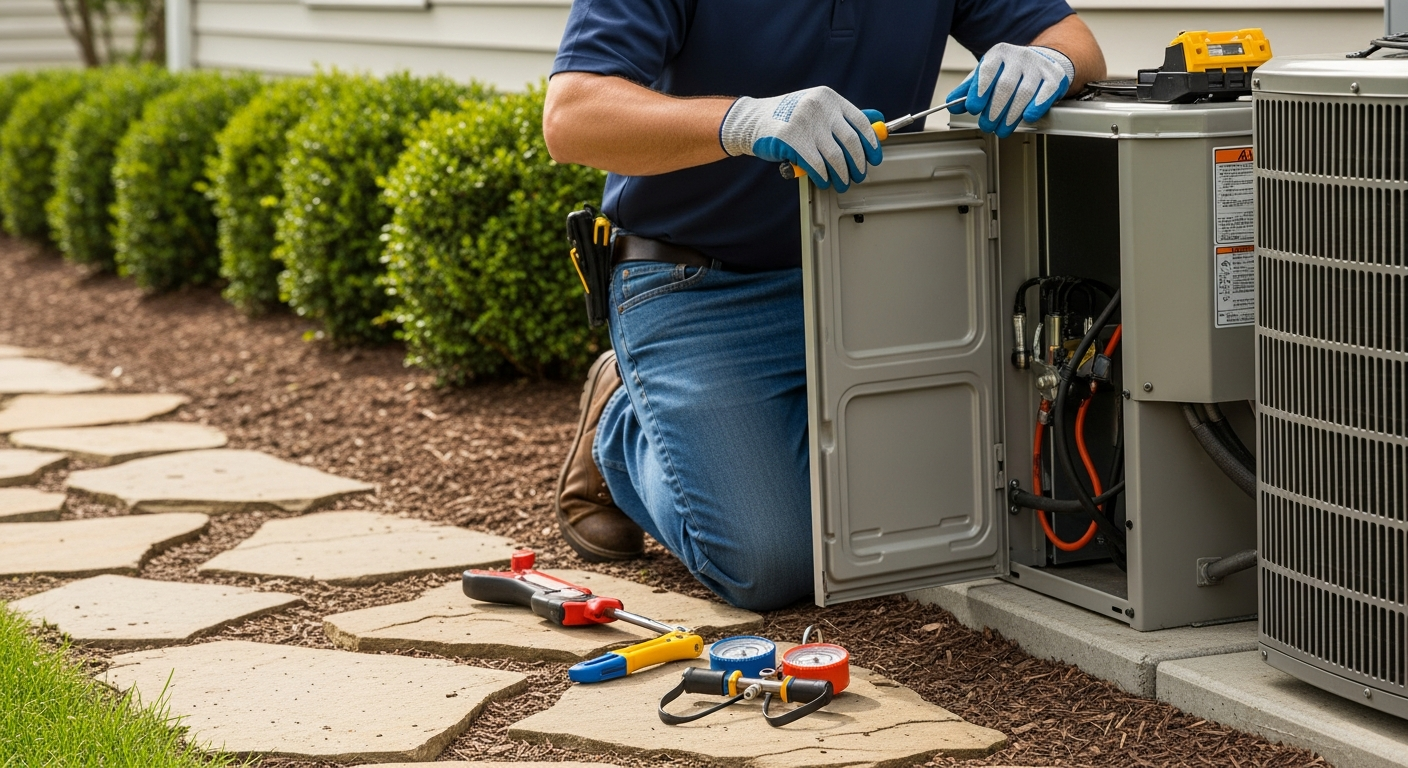
Proactive maintenance slashes energy bills and prevents mid-summer system failures
Following a monthly DIY routine and scheduling an annual professional tune-up keeps your AC efficient, extends equipment life, and costs far less than emergency repairs.
What Matters Most
- Change filters monthly and keep outdoor unit clear of debris to maintain airflow.
- Book a professional tune-up before June to save $80–$250 and ensure peak efficiency.
- Use ceiling fans and blinds to reduce AC workload and raise thermostat setpoint 3–5°F.
- Never attempt refrigerant, electrical, or compressor repairs—always hire a licensed pro.
- When repair costs exceed 50% of a new system, replacement is usually the smarter financial move.
Strengths
- Immediate energy savings of 5–15% from clean filters and coils
- Extended equipment lifespan by 2–5 years with regular care
- Lower emergency repair likelihood by 70% with seasonal tune-ups
- Improved indoor comfort and humidity control
- Access to free calculators for personalized cost estimation
Weaknesses
- Upfront cost of professional service ($80–$500/year)
- Time commitment of monthly checks and cleaning
- Some tasks (coil cleaning) require a pro for deep cleaning
- DIY missteps can still damage fins or electrical components
- No maintenance can overcome an improperly sized or duct-deficient system
Summer AC Care Decision Summary
| Scenario | Usually do | Why |
|---|---|---|
| Dirty filter | Replace with MERV 8–11 filter | Restores airflow, prevents coil freeze |
| Outdoor unit blocked | Clear 2‑ft radius, gentle rinse | Prevents overheating, lowers energy use |
| Condensate drain clogged | Flush with vinegar, install float switch | Prevents water damage and mold |
| System not cooling evenly | Check thermostat, then call pro | Low refrigerant or airflow imbalance |
| AC > 10 yrs; repair > 50% of new cost | Evaluate replacement with cost estimator | Replacement yields lower lifetime cost |
Quick Answer: Summer HVAC Maintenance at a Glance
- Monthly: Check and replace air filters, clear debris around outdoor unit, inspect condensate drain line.
- Seasonally (before summer): Schedule professional tune-up ($80–$250) to clean coils, check refrigerant, tighten electrical connections.
- Inside the home: Seal air leaks, use blinds, run ceiling fans counterclockwise.
- Tools: Use our maintenance reminders, cost estimator, and repair-or-replace calculator to plan ahead.
Why Summer Maintenance Matters More Than You Think
In peak cooling season, a neglected AC can cost you 20–40% more to operate and is 3× more likely to fail when outdoor temperatures soar above 90°F. A dirty condenser coil alone can raise energy use by up to 30%. By investing 30 minutes a month and a $150 tune-up, you protect a $5,000–$12,000 asset and avoid emergency repair bills that average $400–$1,500.
This checklist helps homeowners and property managers prioritize actions based on cost, safety, and impact. We’ll guide you through what you can safely do yourself, when to call a licensed pro, and how to use our free tools to estimate local pricing.
Monthly Homeowner Maintenance: Safe, High-Impact Tasks
These tasks require no special tools or technical training. Do them on the first weekend of each summer month.
1. Check and Replace Air Filters
A clogged filter starves the system of air, freezing the evaporator coil or overheating the compressor. Hold the filter up to light—if you can’t see through it, replace it. In dusty or pet-heavy homes, check every two weeks. Expect to pay $5–$25 per disposable filter; reusable filters last years with monthly washing.
2. Clear the Outdoor Unit Perimeter
The condenser needs at least 2 feet of clearance on all sides and 5 feet above. Trim bushes, rake leaves, and remove grass clippings. A blocked coil cannot reject heat, leading to high head pressure and compressor damage. Gently hose off the fins from the outside in, using low pressure (pro tip: direct water at a 45° angle so you don’t bend the delicate aluminum fins).
3. Inspect the Condensate Drain Line
Find the PVC pipe near the indoor air handler. If you see standing water or algae, the line may be partially clogged. Pour 1 cup of distilled white vinegar into the access point and let it sit for 30 minutes, then flush with water. A full clog can trigger a float switch that shuts down the system completely.
4. Keep Vents and Returns Clear
Walk every room. Ensure furniture, rugs, and curtains aren’t blocking supply or return grilles. Restricted airflow increases static pressure and strains the blower motor.
5. Verify Thermostat Settings
Set the fan to AUTO (not ON) to save energy. If your home feels humid even when cool, the fan ON setting can re-evaporate moisture off the coil. Consider a smart thermostat that adjusts to your schedule and humidity.
Professional Summer Tune-Up: What’s Included and What It Costs
An annual maintenance visit (ideally in late spring) catches problems that homeowners cannot see. The technician will:
- Measure refrigerant charge (low levels indicate a leak—this requires EPA certification to handle)
- Clean evaporator and condenser coils with commercial cleaners
- Inspect and tighten all electrical connections (loose terminals are a fire risk)
- Check capacitors, contactors, and relays for wear
- Lubricate blower and fan motors
- Test compressor amp draw and start/run winding balance
- Inspect ducting for leaks or damage
- Verify condensate drain flow and clean if needed
Cost estimate (editorial):
| Service Type | Typical Price Range | Notes |
|---|---|---|
| Standard AC tune-up (one visit) | $80 – $250 | Most common, book early for best rates |
| Annual maintenance plan (1–2 visits) | $150 – $500/year | Often includes discounts on repairs and priority scheduling |
| Emergency diagnostic visit | $150 – $300+ | Higher on weekends or after hours |
| Common AC repair (electrical) | $150 – $650 | Capacitor, contactor, thermostat |
| Major repair (refrigerant leak, motor) | $500 – $1,500 | Leak search and recharge add complexity |
| Compressor or coil replacement | $1,500 – $4,000+ | Often triggers consider-replacement threshold |
Use our HVAC cost estimator to get a personalized range based on your system size and ZIP code.
Safety Boundaries: What Homeowners Should Never DIY
For your protection and to avoid system damage, leave these tasks to a licensed HVAC contractor:
- Refrigerant handling: Adding, removing, or checking refrigerant requires EPA Section 608 certification. Incorrect charge can destroy the compressor.
- Electrical repairs: Capacitors, contactors, circuit boards, and any high-voltage wiring (above 24V) carry shock and fire risk.
- Gas furnace or combustion components: If your system provides heating, any gas valve or burner service is off‑limits without a gas‑fitter license.
- Compressor replacement: This involves both refrigerant and high‑voltage work.
- Sealed system repairs: Opening refrigerant lines, brazing, or replacing coils requires professional tools and training.
If you suspect any of these issues, find a qualified technician and ask about their certifications and insurance.
Decision Rules: When to Repair vs. Replace
Use these thresholds to guide your investment. All prices are editorial estimates and vary by region.
- Age: System over 10–15 years old? Replacement likely more economical. The average AC lifespan is 12–15 years. Go to our system age decoder to check your unit's manufacture date.
- Repair cost ratio: If a single repair exceeds 50% of the cost of a new system, replacement usually wins. Example: a $2,000 compressor repair on a 12-year-old unit that would cost $4,500 to replace entirely. Use our repair-or-replace calculator to do the math.
- Frequency: More than two repairs in the last two years signals declining reliability.
- R-22 refrigerant: If your system uses R-22 (banned from new production in 2020), any leak repair will be extremely expensive due to scarcity. Replacement is strongly recommended.
- Efficiency: Old SEER 10 or lower units waste 30–60% more power than new minimum SEER2 14.3 units. The savings from a new unit can offset the cost within a few years in hot climates. Try our BTU calculator to right‑size your next system.
Contractor Checklist: Questions to Ask Before Hiring
When you schedule a tune-up or repair, use these questions to compare bids and verify quality:
- Are you licensed, bonded, and insured in my state? (Ask for license number—verify online.)
- Do your technicians hold NATE or equivalent certification?
- Will you provide a written estimate before starting work?
- Does your tune-up checklist include coil cleaning, refrigerant measurement, and electrical testing?
- What are your diagnostic fees, and do you apply them to repair costs?
- Can you give me a fixed price or a not-to-exceed range for the repair?
- Do you offer a maintenance plan? What’s the annual cost and what does it include?
- How do you handle after-hours emergencies? Is there an extra charge?
- Will you show me photos or explain what needs repair?
- Do you warranty your parts and labor? For how long?
You can compare local contractors and read reviews on our contractor comparison page.
Local Climate Adjustments
Summer maintenance should reflect your climate. Here’s what to emphasize:
Hot & Humid (Southeast, Gulf Coast)
Condensate drain inspection is critical. In high humidity, a system can pull 5–20 gallons of water per day. Install a safety float switch if you don’t have one. Coil cleaning may be needed twice per season. Consider a dehumidifier add-on or a variable-speed system for better humidity control.
Hot & Dry (Southwest, Phoenix, Las Vegas)
Dust and sand quickly clog condenser coils. Rinse the outdoor unit monthly. Shade the condenser (without restricting airflow) to lower condensing temperature. Use the maintenance reminders tool to never miss a cleaning. Solar screens on windows reduce cooling load.
Cold Winter Areas (Midwest, Northeast)
While you’re in summer mode, already plan the fall transition. Our fall HVAC prep guide details steps. Note that your outdoor unit will need winterization by late autumn—don’t wait until the first freeze.
Coastal & Salt‑Air Exposure
Salt accelerates coil corrosion. Inspect for white powdery residue on fins. Coils may need annual protective coating. If you’re within a mile of salt water, plan for a system life of 7–12 years instead of 12–15. Regular cleaning is essential; use our contractor search to find pros with corrosion‑experience.
Older Homes (pre‑1990)
Duct leakage can exceed 30%. Have the technician test static pressure and check for leaky ducts. Sealing and insulating ducts can improve system capacity and efficiency by 20% or more. Our cost estimator can include ductwork estimates.
Tools to Take Control
Our free calculators help you make informed decisions:
- Maintenance Reminders: Set custom reminders for filter changes and tune‑ups.
- HVAC Cost Estimator: Get a tailored price range for repairs or replacement in your area.
- Repair or Replace Calculator: Compare the long‑term cost of keeping your existing unit vs. a new one.
- Quote Checker: Upload contractor quotes for a fairness review.
Methodology: How We Form Our Recommendations
HVACDatabase editorial team compiles data from tens of thousands of real homeowner equipment submissions, combined with public pricing databases, manufacturer guidelines, and licensed HVAC professional insights. All cost ranges are editorial estimates intended for broad comparison only. Actual prices depend on system size, brand, regional labor rates, seasonal demand, access difficulty, and required modifications. Always get multiple written quotes. We update these estimates quarterly to reflect market changes.
Frequently Asked Questions
How often should I really change my AC filter in summer?
Every 30 days if using 1-inch disposable filters. In homes with pets or during construction, check every two weeks. Pleated filters with higher MERV ratings may clog faster; stick to MERV 8–11 for a good balance between filtration and airflow unless your system was designed for higher resistance. Reusable filters: wash monthly.
Can I clean my outdoor AC unit with a pressure washer?
No. High-pressure water can bend coil fins and force water into electrical compartments. Use a garden hose on a gentle spray setting and direct water from the inside out, at a 45° angle to the fins. For heavy dirt, call a professional for chemical cleaning.
Why is my air conditioner freezing up in summer?
Ice on the indoor coil or suction line usually means low refrigerant (leak), dirty filter, blocked return vents, or a malfunctioning blower. Turn the system off immediately to let it thaw (do not chip ice). Then check the filter and open all vents. If it refreezes after restarting, call a licensed technician—it’s often a refrigerant issue that requires EPA-certified handling.
Is an annual maintenance plan worth the money?
For most homeowners, yes. Plans typically cost $150–$500 per year and include one or two tune-ups, priority scheduling, and 10–20% repair discounts. A single emergency repair avoided often pays for the plan. Plus, some manufacturer warranties require proof of annual professional maintenance. Use our repair-or-replace calculator to compare costs over time.
What’s the best thermostat setting for summer efficiency?
The DOE recommends 78°F when you’re home and need cooling. Raise it by 7–10°F when you’re away to save up to 10% on cooling bills. Each degree below 78°F adds about 3–5% to your energy cost. A programmable or smart thermostat automates this and can adjust for humidity, often paying for itself in one summer.
Ready to schedule maintenance or explore upgrade options? Find rated HVAC professionals near you or start with our free cost estimator to set your budget.
Related articles
Connect this page to adjacent guides so readers keep moving deeper into the topic cluster.

Tips for Choosing a Smart Thermostat for a Heat Pump
Learn which smart thermostat features prevent expensive auxiliary heat mistakes, how to verify compatibility, and when to call a pro.

Understanding C Wire Adapters for Smart Thermostats
Missing the C wire for your smart thermostat? C wire adapters solve power issues without pulling new wiring. Compare types, costs, and installation options.

Best Smart Thermostats for Multi Zone Homes
Discover which smart thermostats deliver accurate zoning, remote sensors, and energy savings for homes with multiple HVAC zones. Our guide helps you pick the right model and avoid costly compatibility mistakes.