Tips for Improving Air Circulation in Small Homes
Stuffy rooms? Learn to maximize airflow in small homes with practical tips on fan placement, filter choice, and when to call a pro. Use our tools to diagnose and compare solutions.
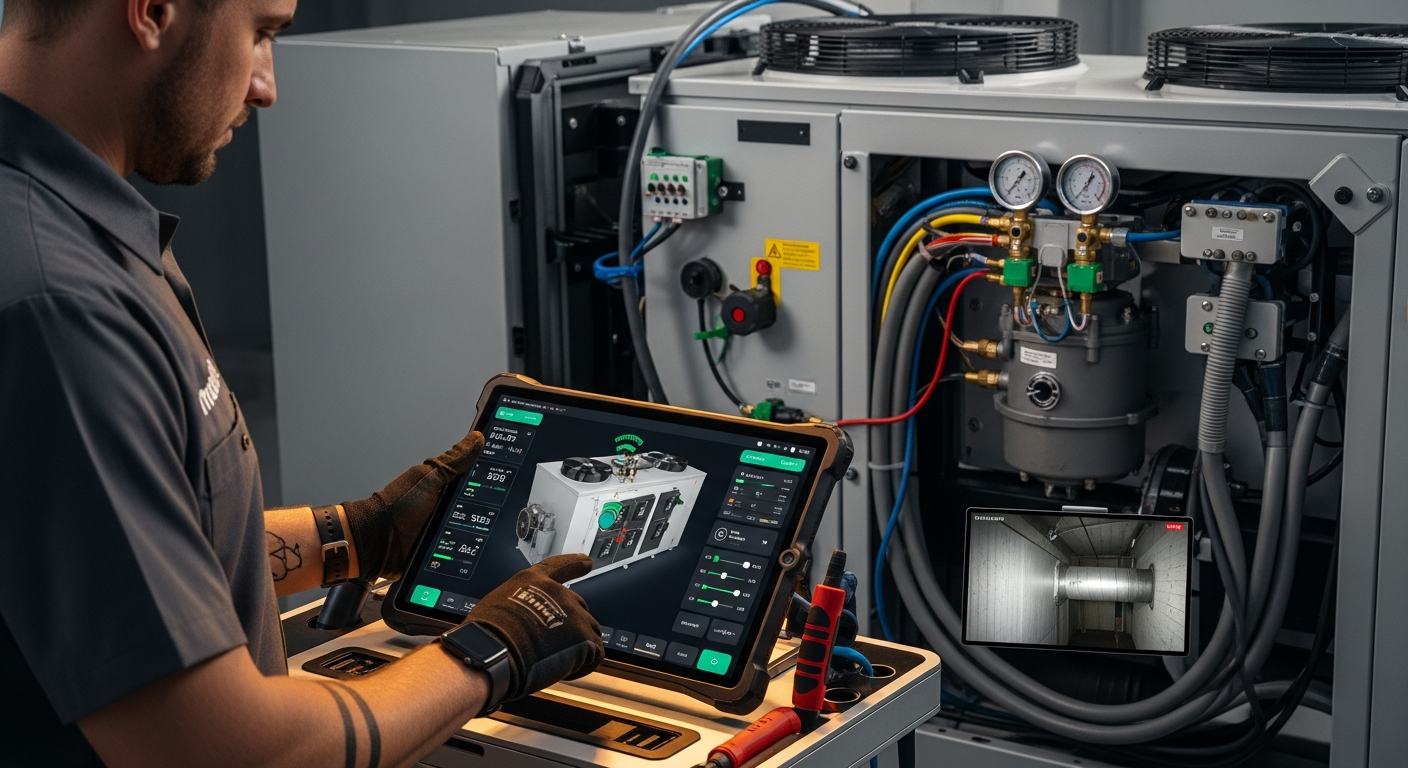
Phased Improvement from No-Cost to Investment
Start with free adjustments like vent clearing and door opening. Upgrade to better filters, then consider targeted equipment (booster fans, dehumidifiers) only if problems persist. Always require load calculations and multiple quotes for major work.
What Matters Most
- Clear vents and doors can solve mild stuffiness immediately at no cost.
- Upgrade to a MERV 8-13 filter and clean registers to tackle dust and weak airflow.
- Use a BTU calculator and professional airflow test to diagnose hot/cold spots.
- For persistent humidity, a whole-home dehumidifier or an ERV/HRV may be necessary.
- Always ask for a Manual J and static pressure check before agreeing to ductwork changes.
Strengths
- Low initial cost—most effective fixes are free or under $100.
- Phased approach prevents overspending on unnecessary equipment.
- Prioritizes health by improving filtration and moisture control.
Weaknesses
- May require temporary DIY trial-and-error (e.g., fan placement).
- Booster fans can increase duct pressure if not properly sized, potentially straining the blower.
- Older systems may not handle high-MERV filters; checking compatibility is essential.
Decision Summary
| Scenario | Usually do | Why |
|---|---|---|
| Room consistently >4°F warmer than setpoint | Call pro for duct inspection and possible booster fan | Indicates airflow imbalance; DIY fixes rarely solve the core issue. |
| Filter very dirty within 1 month | Upgrade filter to MERV 11 and seal filter rack | Better capture reduces dust loading; sealing prevents air bypass. |
| Humidity over 60% even with AC running | Add portable dehumidifier or consult pro for whole-home unit | High humidity damages home and health; AC alone may not dehumidify sufficiently in small, tight homes. |
| System over 12 years with single-speed fan | Consider replacement with variable-speed unit | Old blowers can’t circulate air gently; new systems save energy and improve comfort. |
| One room stuffy with door closed | Install door grille or keep door open | Equalizes pressure; booster fan may be next step if grille isn’t enough. |
Introduction
Small homes often suffer from stale air and uneven temperatures, but you don’t need a major renovation to fix the problem. In just a few hours, strategic changes like repositioning fans, clearing vents, and upgrading filters can dramatically improve airflow. This guide gives you practical steps, cost estimates, and decision rules so you can choose the right fix for your space and budget. If you’re comparing HVAC upgrades, use our HVAC cost estimator to see potential investment ranges for your area.
Quick Answer: What’s the fastest way to improve air circulation in a small home?
Start with no‑cost adjustments: open windows on opposite sides for a cross‑breeze, set ceiling fans to counter‑clockwise in summer, and make sure no furniture blocks vents. Next, invest $20‑$50 in a high‑quality air filter rated MERV 8‑13 that fits your system. If rooms still feel stuffy, consider a register booster fan (around $60-$200 installed) to pull more air into problem areas. For whole‑home solutions, an in‑duct air purifier or variable‑speed blower upgrade can cost $500‑$3,000 but may be worth it for severe issues. Always check with a pro before modifying ductwork.
The Cost of Poor Circulation vs. Common Fixes
| Issue | Symptom | DIY Fix (Cost Range) | Pro Fix (Editorial Estimate*) |
|---|---|---|---|
| Stuffy room with closed door | Temperature differs by >3°F from hallway | Leave door open, install a door grille ($15‑$50) | Duct booster fan installation ($200‑$600) |
| Weak airflow from one vent | Little air movement felt by hand | Clean vent and ensure it’s fully open ($0) | Duct inspection and cleaning/sealing ($300‑$1,000) |
| Excess humidity (above 60% RH) | Musty smell, condensation on windows | Use a portable dehumidifier ($150‑$300) | Whole‑home dehumidifier ($1,200‑$2,500 installed) |
| Quick return of dust after cleaning | Dust buildup on surfaces within 2 days | Upgrade to MERV 11 filter and seal canister ($20‑$60) | Duct cleaning and air purifier install ($500‑$2,000) |
| Hot/cold spots throughout home | Some rooms >4°F different from thermostat setting | Adjust dampers (if accessible) and balance registers ($0) | Professional air balancing and possibly zoning system ($500‑$3,000) |
*Editorial estimates for a typical small home (1,000‑1,500 sq ft). Actual costs vary by location, system accessibility, and contractor rates. Use our Repair or Replace Calculator to compare long‑term costs.
Safety Boundaries: What Homeowners Can Check vs. Leave to Pros
Safe Homeowner Checks
- Inspect and replace disposable air filters (power off).
- Clean supply registers and return grilles with a vacuum.
- Ensure furniture and drapes don’t block vents—keep at least 12 inches clearance.
- Check that dampers in accessible ductwork are open.
- Feel for air leakage around window frames and exterior doors; seal with caulk or weatherstripping.
- Reset a tripped circuit breaker for an air handler (if it’s clearly labeled and the breaker is standard).
Pro‑Only Work (Do Not Attempt)
- Refrigerant leak checks, charging, or line repair—requires EPA certification.
- Repairing or replacing motors, capacitors, contactors, control boards, or high‑voltage wiring.
- Cutting into ductwork to install booster fans or dampers—improper sealing can cause backdrafting of combustion gases.
- Cleaning or servicing gas burners, heat exchangers, or combustion chambers—risk of carbon monoxide.
- Any work on a compressor or sealed refrigeration system.
- Bypassing safety switches or altering system limits.
If you suspect a problem beyond these boundaries, use our contractor search to find a licensed professional.
Use Our Tools to Pinpoint Your Needs
Not sure if your air circulation issue is a simple fix or a sign of a failing system? Try these free calculators:
- BTU Calculator: Check if your HVAC is correctly sized—oversized units short‑cycle and fail to dehumidify.
- Repair or Replace Calculator: Compare the cost of fixing an older system vs. investing in a new, more efficient model with better airflow control.
- System Age Decoder: Find out the true age of your furnace or AC—units over 12 years often lack modern variable‑speed blowers that improve circulation.
- Rebate Finder: See if you qualify for utility rebates when upgrading to a high‑efficiency fan or whole‑home ventilation system.
- Quote Checker: Get a second opinion on contractor pricing for any recommended airflow upgrade.
Decision Rules: When to DIY, When to Hire, and When to Upgrade
Use these thresholds to guide your next move:
- Try a DIY fix first if: You can identify a clear obstruction (e.g., a sofa blocking a vent) or a dirty filter. Also if humidity is only occasionally high and resolves with open windows. Spend under $100.
- Call a pro for diagnosis if: Rooms differ by more than 4°F consistently, you hear whistling or banging from ducts, or you smell mustiness that persists after cleaning. An airflow test and load calculation (typical diagnostic cost: $100‑$350) can pinpoint hidden issues.
- Consider system replacement or major upgrade if: Your HVAC is over 15 years old, uses a single‑speed blower, or requires frequent repairs (more than one major repair in 2 years). New variable‑speed systems can cut energy use by 30% and dramatically improve air mixing.
Always get at least three quotes and use our Contractor Comparison tool to evaluate proposals.
Local Factors: Adjusting for Your Climate
Air circulation strategies should match your region’s challenges:
- Hot, humid climates (e.g., Southeast US): Prioritize dehumidification. Set your AC fan to “Auto” rather than “On” to prevent moisture from being re‑evaporated off the coil. Consider a whole‑home dehumidifier if indoor relative humidity stays above 55%. Whole‑home air purifiers with UV can also combat mold.
- Cold climates (e.g., Midwest, Northeast): Heat rises, so ceiling fans on low in reverse (clockwise) push warm air down. Ensure your home has adequate ventilation to avoid ice dams from moist indoor air. ERV/HRV systems are ideal for bringing in fresh air without losing heat.
- Dry, hot climates (e.g., Southwest): Air movement helps with cooling, but dust is a bigger concern. Use high‑MERV filters (check system compatibility) and seal ducts to keep dust out. Phoenix AC contractors often recommend annual duct inspections.
- Coastal or older homes: Corrosion and leaky ducts are common. Inspect rust and replace damaged ductwork. For historic small homes, focus on preserving natural cross‑ventilation and using mini‑split systems rather than forced air if feasible. Check out tips for running your AC while on vacation to manage humidity when away.
Contractor Checklist: Questions to Ask Before Approving Work
When hiring an HVAC pro for air circulation improvements, ask these questions to ensure value and safety:
- “Will you perform a Manual J load calculation and an airflow test before recommending changes?” (Good contractors always do.)
- “Can you show me how my current system’s static pressure compares to design specs?” (High static pressure indicates airflow restriction.)
- “Are you licensed, insured, and bonded? Do you carry workers’ comp?” (Verify at your state’s licensing board.)
- “How will adding a booster fan or zoning damper affect my system’s warranty?” (Modifications can void warranties if not approved.)
- “What’s the full cost breakdown, including materials, labor, permits, and cleanup?” (Be wary of bids that seem too low.)
- “Can you provide references for similar small‑home projects you’ve completed in the last year?” (Call them.)
- “Will you commission the system after installation to verify airflow and temperature differences?” (Essential for proving results.)
Use our Contractor Comparison page to see how to evaluate bids side‑by‑side.
How We Develop Our Recommendations
HVACDatabase ratings and estimates are based on a combination of public manufacturer data, industry-standard pricing surveys, and interviews with licensed HVAC technicians. Our editorial team reviews repair and replacement data from thousands of jobs logged in our system, applying a proprietary model that accounts for regional labor rates, equipment efficiency tiers, and common accessory costs. We never guarantee prices—use our cost estimator for more personalized figures. Safety guidelines align with ASHRAE and EPA standards for homeowner maintenance. For more on our data sources, see our Cost Guide.
Frequently Asked Questions
1. Can I just leave interior doors open to improve airflow?
Yes, especially if you don’t have return ducts in each room. Open doors reduce pressure imbalances. However, for fire safety, be aware that some building codes require solid doors to slow smoke spread. A compromise: install transfer grilles or undercut doors by 1 inch to allow passive air movement while doors remain closed at night.
2. Are plug‑in air purifiers enough to improve circulation?
Portable air purifiers clean the air but don’t move it between rooms. They’re best for a single room. For whole‑home circulation, you need duct‑based solutions or strategic fan placement. Combine a purifier with a whole‑home system for comprehensive results.
3. How do I know if my HVAC system is too big for my small home?
Signs of an oversized system: short cycles (runs under 10 minutes), poor humidity control, and loud airflow. Use our BTU Calculator to estimate proper sizing. An oversized system can be partly mitigated by setting the fan to “On” to continuously mix air, but a professional load calculation is the only way to confirm.
4. Will a booster fan increase my energy bill significantly?
A typical register booster fan consumes 25‑50 watts, adding about $2‑$4 per month if run continuously. The benefit is often a reduction in AC runtime because the boosted room reaches setpoint faster. The net effect on your bill is usually minimal. Check our cost estimator for project‑specific savings.
5. What should I do if circulating air smells musty even after changing filters?
Musty smell often means microbial growth on the evaporator coil or in the drain pan. This is a pro‑level cleaning task. You can try cleaning the drain line with a wet/dry vac, but coil cleaning requires safe access and proper chemicals. Use our contractor search to find a technician who offers evaporator coil cleaning ($150‑$400 estimated).
Methodology
HVACDatabase estimates combine common contractor price patterns, service-category pricing ranges, equipment complexity, urgency, regional labor variation, and known HVAC safety boundaries. Actual prices vary by city, brand, system size, access, warranty status, permit requirements, and whether the visit discovers ductwork, electrical, refrigerant, gas, or drainage issues. Use these numbers to sanity-check quotes, not as a guaranteed price.
Related articles
Connect this page to adjacent guides so readers keep moving deeper into the topic cluster.

Tips for Choosing a Smart Thermostat for a Heat Pump
Learn which smart thermostat features prevent expensive auxiliary heat mistakes, how to verify compatibility, and when to call a pro.

Understanding C Wire Adapters for Smart Thermostats
Missing the C wire for your smart thermostat? C wire adapters solve power issues without pulling new wiring. Compare types, costs, and installation options.

Best Smart Thermostats for Multi Zone Homes
Discover which smart thermostats deliver accurate zoning, remote sensors, and energy savings for homes with multiple HVAC zones. Our guide helps you pick the right model and avoid costly compatibility mistakes.