Tips for Ventilating Your Home in Winter
Learn how to ventilate your home in winter without losing heat. Compare manual methods, HRV/ERV costs, and when to call a professional—all backed by editorial estimates.
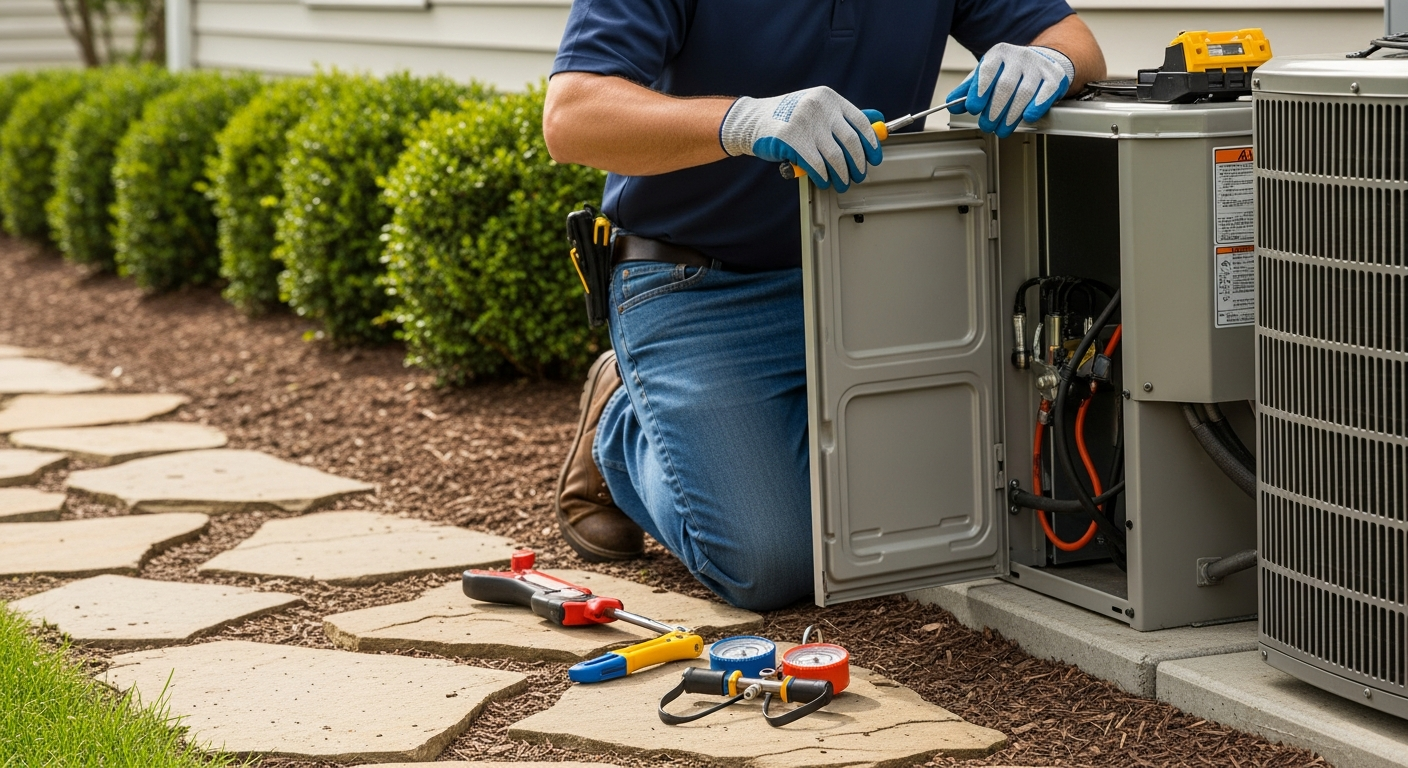
For cold-weather homes, install a Heat Recovery Ventilator (HRV) if manual venting and exhaust fans fail to control condensation or stuffiness. In mixed-humid
Mechanical ventilation with heat/energy recovery delivers consistent fresh air without sacrificing warmth, but it requires professional installation and upfront investment. Combine with daily cross-ventilation and filter maintenance for best results.
What Matters Most
- Start with free manual methods: cross-ventilate daily and use exhaust fans.
- Upgrade to mechanical ventilation if condensation or odors persist despite manual efforts.
- Get at least three quotes and verify contractor credentials before installing HRV/ERV.
- Use HVACDatabase tools to estimate costs and find rebates.
Strengths
- Heat recovery ventilators maintain indoor comfort while providing fresh air.
- Proper ventilation reduces mold risk and respiratory issues.
- Editorial cost ranges help set realistic budgets.
Weaknesses
- Mechanical systems require upfront investment and professional installation.
- HRV may dry indoor air in already dry climates without an ERV's moisture transfer.
- Manual ventilation demands daily attention and may be less effective in extreme cold.
Should You Install Mechanical Ventilation?
| Scenario | Usually do | Why |
|---|---|---|
| You see condensation on windows in winter despite daily venting | Yes, consider HRV/ERV | Moisture buildup signals inadequate air exchange. |
| Your home feels stuffy and odors linger | Yes | High pollutants; mechanical ventilation ensures continuous fresh air. |
| No condensation, no stuffiness, and you open windows daily | Stick with manual methods | Your home likely has adequate air exchange; save the investment. |
| Budget is tight, but you have occasional window condensation | Try exhaust fan upgrades and check duct leaks first | Lower-cost improvements may solve the problem. |
Quick Answer
Winter ventilation requires balancing fresh air with heat retention. Start with free methods (cross-ventilation, exhaust fans), upgrade air filters, and consider a mechanical heat recovery ventilator (HRV) if condensation or staleness persists. Professional airflow diagnosis: $100–$350. HRV installed: $1,500–$4,500 (editorial estimate). Always verify contractor credentials.
Why Winter Ventilation Matters
When temperatures drop, sealing your home tight traps pollutants, allergens, and moisture. Without ventilation, indoor air quality can drop to levels five times worse than outdoors. Excess humidity from cooking, showers, and breathing condenses on cold surfaces, promoting mold and wood rot. You can solve this without losing all your heat.
Safe Homeowner Ventilation Practices
- Cross-ventilation: Open windows on opposite sides for 5–10 minutes, 2–3 times a day. This flushes stale air without significantly cooling walls and furniture.
- Exhaust fans: Run kitchen and bathroom fans for 20 minutes after use. Ensure they vent outside, not into the attic.
- Interior doors: Keep them open to prevent stagnant pockets.
- HVAC filter: Check monthly; replace with MERV 8–13 if dirty. See how to improve indoor air quality for more filter guidance.
Safety Boundaries
You can safely: clean/replace filters, check supply and return vents for obstructions, test exhaust fan operation, and inspect exposed ductwork for visible leaks (seal small gaps with UL 181 tape). Never modify gas or refrigerant lines, install new electrical circuits, replace motors, compressors, capacitors, or control boards. For any installation involving wiring, ductwork alterations, or combustion appliances, hire a licensed HVAC professional.
Mechanical Ventilation: HRV vs. ERV
| Feature | Heat Recovery Ventilator (HRV) | Energy Recovery Ventilator (ERV) |
|---|---|---|
| Best for | Cold, dry winters | Cold winters with dry indoor air; or humid summers |
| Heat transfer | Recovers heat only | Recovers heat and moisture |
| Humidity control | No moisture transfer; may dry indoor air further | Helps maintain indoor humidity balance |
| Installed cost* | $1,500–$4,000 | $2,000–$5,500 |
| Efficiency | 60–85% heat recovery | 60–80% heat recovery plus moisture management |
*Editorial estimates; actual costs vary. Read our full guide: how to use an ERV or HRV system.
Decision Rules: When to Upgrade Ventilation
Consider professional mechanical ventilation if:
- Window condensation persists despite daily venting.
- Musty odors or visible mold appear.
- Wood floors or trim show warping.
- Family members experience headaches or allergies indoors.
- Home built after 2000 (tight envelope) and windows rarely opened.
- Indoor humidity stays above 60% in winter (use a hygrometer).
Start with a professional airflow diagnostic ($100–$350) before buying equipment.
Estimated Cost Table
| Solution | Typical Range | Notes |
|---|---|---|
| Manual ventilation | $0 | Free; requires daily discipline. |
| Exhaust fan upgrade | $100–$800 installed | Pro installation if venting outside. |
| HRV system | $1,500–$4,000 | Unit + labor; layout-dependent. |
| ERV system | $2,000–$5,500 | Best for variable humidity. |
| Airflow diagnostic | $100–$350 | Often credited toward a full plan. |
Tools to Estimate Your Needs
- HVAC Cost Estimator: Get a tailored ventilation equipment range.
- Quote Checker: Compare contractor bids to local averages.
- Repair or Replace Calculator: See if a full HVAC upgrade makes sense.
- Rebate Finder: Find utility incentives for energy-efficient ventilation.
Contractor Checklist
Before hiring, ask these questions and compare at least three bids:
- Are you licensed, bonded, and insured in my state? (Verify independently.)
- How many HRV/ERV installations have you done in homes like mine? Request local references.
- Will you perform a Manual J load calculation and duct design review?
- Does the quote include all labor, materials, permits, and warranty terms?
- What ongoing maintenance and filter costs should I expect?
- Can you provide a written timeline and detailed scope?
Find pre-screened contractors: HVACDatabase Contractor Search or compare them: Contractor Comparison Tool.
Local & Regional Considerations
- Cold climates (Midwest, Northeast): HRV strongly recommended. Avoid ERV unless summer humidity is high.
- Mixed-humid (Southeast): ERV may be better year-round for humidity control. Adjust settings seasonally. See ERV/HRV guide.
- Older homes (pre-1970): Often leaky; manual ventilation may suffice. Seal major air leaks before investing in mechanical systems. Learn how to seal ductwork.
- Coastal areas: Salt air corrodes standard HRV/ERV cores; choose anti-corrosion models and schedule frequent maintenance.
Methodology
Cost estimates are editorial ranges based on national averages, HVACDatabase user reports, and industry pricing data as of early 2025. Actual costs vary by location, home size, system capacity, ductwork complexity, and contractor rates. Recommendations prioritize energy efficiency and ASHRAE 62.2 standards. Always obtain multiple detailed quotes.
Frequently Asked Questions
1. How often should I open windows in winter for fresh air?
Open windows on opposite sides for 5–10 minutes, 2–3 times daily. This flushes stale air without significantly cooling your home’s structure. Pair with exhaust fans for best results.
2. Can I install an HRV myself?
No. HRV installation involves electrical wiring, ductwork, and airflow balancing. It must meet building codes. You can safely clean or replace the HRV filters yourself. Always hire a certified HVAC contractor for installation.
3. What’s the difference between a bathroom exhaust fan and an HRV?
A bathroom fan only removes air, so replacement air leaks in from outdoors, bringing cold drafts. An HRV exchanges indoor and outdoor air while recovering heat, providing balanced ventilation with much less energy loss.
4. Will an HRV make my house colder?
No. An HRV recovers 60–85% of the warmth from outgoing air and transfers it to incoming fresh air. The supply air may feel slightly cool but doesn’t lower room temperature noticeably when properly sized and installed.
5. How do I know if my house is too tight and needs mechanical ventilation?
Indicators: persistent condensation on windows, stale odors, high humidity (above 60% in winter), allergy symptoms indoors, or a blower door test result under 0.35 ACH. A pro can measure this; expect $100–$350 for an assessment.
Related articles
Connect this page to adjacent guides so readers keep moving deeper into the topic cluster.

Tips for Choosing a Smart Thermostat for a Heat Pump
Learn which smart thermostat features prevent expensive auxiliary heat mistakes, how to verify compatibility, and when to call a pro.

Understanding C Wire Adapters for Smart Thermostats
Missing the C wire for your smart thermostat? C wire adapters solve power issues without pulling new wiring. Compare types, costs, and installation options.

Best Smart Thermostats for Multi Zone Homes
Discover which smart thermostats deliver accurate zoning, remote sensors, and energy savings for homes with multiple HVAC zones. Our guide helps you pick the right model and avoid costly compatibility mistakes.