VRF System Installation Cost for Commercial
Variable Refrigerant Flow (VRF) commercial systems cost $15–$25 per square foot installed. Learn how heat recovery, zoning, and energy savings influence your total investment.
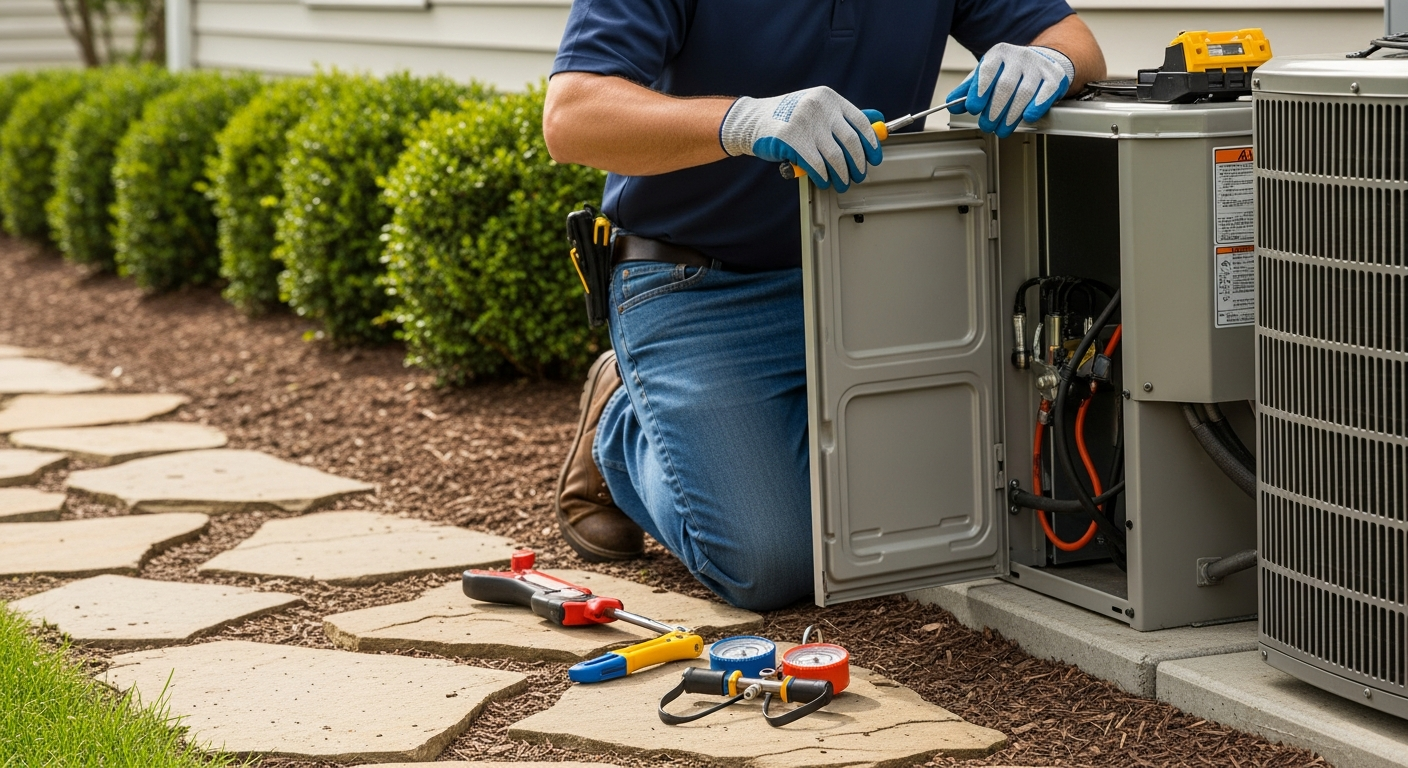
Heat‑pump VRF is the smarter first step for most commercial buildings
Unless your building has year‑round simultaneous heating and cooling needs, start with a heat‑pump VRF system. It delivers 25–35% energy savings over traditional units at a lower installation cost than heat recovery, while still providing per‑zone control.
What Matters Most
- Budget $15–$25/sq ft for installed VRF; heat recovery adds 10–20% more.
- Payback runs 5–8 years from energy savings—use our tools to model your own.
- Always require factory‑trained, VRF‑certified installers and itemized proposals.
- Match equipment to your climate: hyper‑heat in cold areas, corrosion protection coasts.
- Never attempt refrigerant or electrical VRF work yourself—it voids warranties and risks safety.
Strengths
- 30–40% lower energy consumption than standard commercial HVAC
- Simultaneous heating and cooling without ductwork losses or complex hydronics
- Per‑zone temperature control improves tenant comfort and can reduce disputes
- Inverter‑driven compressors deliver exceptional part‑load efficiency and quiet operation
- Long service life (15–20 years) when maintained properly
Weaknesses
- Upfront cost is 2–3× higher than packaged rooftop units for the same tonnage
- Installation and service require specialized, harder‑to‑find labor pools
- Refrigerant leaks can be costly to locate and repair (environmental and regulatory concerns)
- Performance in extreme cold (< -13°F) still lags behind gas‑fired heating
Decision Summary: VRF vs Traditional Commercial HVAC
| Scenario | Usually do | Why |
|---|---|---|
| 10,000 sq ft office, moderate climate, new construction | Heat‑pump VRF | Lower life‑cycle cost, zoning flexibility, and utility rebates often apply. |
| Same office but with dense server rooms and perimeter heating loads | Heat‑recovery VRF | Recovers waste heat, avoiding simultaneous heating/cooling energy waste. |
| Large 50,000 sq ft building with open floor plate and traditional ductwork already in place | High‑efficiency packaged units with VAV zoning | Lower first cost; VRF piping retrofit may be prohibitively expensive. |
| Historic downtown retrofit where ductwork impossible and individual tenant control required | VRF with slim ducted or ceiling cassettes | Minimizes structural alterations, provides per‑zone billing capability. |
| Extreme cold climate (design temp –20°F) | Hybrid: VRF with gas backup or boiler | VRF efficiency suffers below –13°F; backup ensures heating reliability. |
Quick Answer: What to Budget for a Commercial VRF System
For a typical commercial space, installed VRF system costs run $15–$25 per square foot. A 10,000 sq ft office falls between $150,000 and $250,000. Heat‑recovery configurations that can heat and cool simultaneously add 10–20% to the total. Retrofits in occupied buildings cost more than new construction. Energy savings of 30–40% can recover the premium over a standard rooftop unit in 5–8 years. All figures are editorial estimates—use our HVAC cost estimator for a personalized range.
Introduction
Commercial Variable Refrigerant Flow (VRF) systems offer unmatched energy efficiency, but they come with a higher upfront price. For a typical 10,000 sq ft office, expect to invest $150,000–$250,000, or $15–$25 per square foot installed. That’s two to three times the cost of a standard rooftop unit, yet property owners often see payback in 5–8 years through 30–40% lower utility bills. This guide breaks down real‑world VRF pricing, explains the factors that swing your total, and provides checklists and calculators to help you compare bids fairly. Whether you’re retrofitting an older building or designing new construction, you’ll find actionable steps to avoid overpaying and to qualify for energy rebates.
VRF Cost Comparison Table
| Building Scenario | Square Footage | VRF Type | Installed Cost Range* | Notes |
|---|---|---|---|---|
| Small office / retail | 2,500–5,000 | Heat pump | $37,500–$125,000 | 1‑2 outdoor units, 4‑8 indoor cassettes |
| Mid‑size professional office | 10,000 | Heat recovery | $150,000–$250,000 | Simultaneous heating/cooling across zones |
| Large floor plate office | 25,000 | Heat recovery | $375,000–$625,000 | Multiple outdoor unit arrays, complex piping |
| Hotel / multi‑tenant | 50,000 (50 rooms) | Heat pump per suite | $750,000–$1,250,000 | Individual control per room, lower first cost than 4‑pipe |
| Retrofit in historic building | 8,000 | Heat pump or heat recovery | $160,000–$240,000 | Extra labor for navigating existing structure, finishes |
*Editorial estimates; actual bids vary with region, access, equipment brand, and economic conditions. Always obtain three or more itemized quotes.
What Drives VRF Installation Cost?
System Complexity: Heat Pump vs. Heat Recovery
The biggest cost swing comes from whether you need heat recovery. A heat‑pump VRF can only provide heating or cooling to all indoor units at the same time. Heat‑recovery VRF uses a branch circuit controller to send waste heat from rooms being cooled into rooms needing heating. This adds about 10–20% to the equipment and labor total but delivers the signature VRF advantage: simultaneous climate control. If your building has a server room that always needs cooling while perimeter offices call for heat, heat recovery pays for itself through energy reuse. Otherwise, a heat‑pump system with separate zoning still saves 25–35% over traditional systems.
Equipment, Labor, and Materials Breakdown
- Outdoor and indoor units: 50–60% of total cost. Inverter‑driven compressors from Daikin, Mitsubishi Electric, LG, or Toshiba carrier. Indoor units range from 4‑way cassettes to slim ducted and wall‑mounted.
- Labor: 25–35%. Only factory‑certified technicians can braze copper refrigerant lines, pressure‑test, vacuum, and commission. Labor rates for certified VRF crews run higher than standard HVAC.
- Refrigerant piping, insulation, and controls wiring: 10–15%. High‑grade refrigerant‑grade copper, closed‑cell insulation, and shielded communication cable. Long piping runs in larger buildings push this up.
- Electrical and structural: 5–10%. Dedicated circuits, outdoor unit pads/curbs, and possibly electrical service upgrades, especially in older buildings.
Decision Rules: Heat Pump or Heat Recovery?
Choose heat‑pump VRF when:
- All zones typically need the same mode (e.g., cooling during business hours).
- You can schedule occupied/unoccupied setbacks to manage small differences.
- Budget is the primary concern and you want the simpler, lower‑cost option.
Choose heat‑recovery VRF when:
- Your building has core areas that always need cooling (IT closets, server rooms, kitchens) and perimeter spaces that need heating.
- You want maximum energy efficiency and are recovering heat from internal zones.
- You are seeking green building certifications (LEED, BREEAM) that reward simultaneous heating/cooling.
Quick Decision Flowchart
- Is there at least one room that always needs cooling while others need heating? → Yes: Heat recovery likely needed. No: Continue.
- Do you have many zones with different orientation (sun‑exposed vs shaded)? → Yes: Consider heat recovery for comfort. No: Heat pump is sufficient.
- Is the building shell well insulated and airtight? → Yes: Heat pump may handle minor variations. No: Heat recovery can compensate.
- What is the price premium? If heat recovery adds >20% to total, ensure energy savings justify it (use our repair or replace calculator to model).
Safety Boundaries: What You Can and Cannot Touch
VRF systems circulate high‑pressure refrigerant and carry high‑voltage electricity. Never open refrigerant piping, adjust charge, or attempt compressor or inverter repairs. These tasks require EPA Section 608 certification and manufacturer‑specific training. As a building owner or property manager, you can safely:
- Visually inspect indoor unit filters and replace or clean them monthly.
- Check condensate drain pans and traps for blockages.
- Monitor energy usage through the building management system (BMS) and flag unusual spikes.
- Listen for abnormal vibration or noise and report to a qualified contractor.
- Schedule professional maintenance twice a year (pre‑cooling and pre‑heating season).
Pro‑only tasks include: refrigerant handling, compressor replacement, control board diagnosis, capacitor/contactor service, gas furnace integration, and any 208/230V electrical work. When in doubt, find a licensed commercial VRF contractor through our directory.
Use Our Free Planning Tools
Get a personalized cost snapshot and compare your options with these interactive tools:
- HVAC Cost Estimator — Answer a few questions about your building to see an installed budget range.
- Quote Checker — Upload your bids and let our algorithm flag overcharges or missing line items.
- Repair or Replace Calculator — Model if VRF retrofit beats patching a 15‑year‑old rooftop unit.
- Commercial BTU Calculator — Validate that the proposed tonnage matches your load.
- Rebate Finder — Discover utility incentives that can knock 15–30% off the project.
Contractor Checklist for VRF Projects
Before signing a contract, ask every bidder these questions. Record answers and compare with our contractor comparison tool.
- Are you factory‑trained and certified by the VRF manufacturer? (Request documentation.)
- How many commercial VRF installations have you completed in the last 12 months? Can you provide references for buildings similar in size and use to mine?
- Will you perform a full ACCA Manual N load calculation and provide a piping schematic before installation?
- What is the compressor warranty, parts warranty, and labor warranty? Does it require annual maintenance by your team to stay valid?
- How do you handle refrigerant leak testing and commissioning? Will I receive a start‑up report with subcool/superheat and pressure readings?
- Do you have a dedicated service department for VRF? What are your emergency response times?
- Will you train my building engineer or maintenance staff on daily operation and filter care?
- Can you itemize the quote to break out equipment, labor, controls, electrical, and any demolition?
- Are you licensed, bonded, and insured for commercial HVAC work in this jurisdiction?
- What permits are required, and who pulls them?
Regional Considerations for VRF Performance
VRF works in virtually any climate, but your system design must match local conditions:
- Hot/humid (Gulf Coast, Southeast): Insist on a dehumidification logic that avoids coil frosting during part‑load cooling. Oversized units short‑cycle and leave humidity untouched—accurate load calculations are critical.
- Cold climates (Midwest, Northeast, Mountain West): Choose “hyper‑heat” or enhanced vapor injection (EVI) models rated to –13°F. Below that, capacity drops quickly. Plan for backup heat strips or a small condensing boiler if your area sees frequent sub‑zero days.
- Coastal / corrosive environments: Outdoor units need factory‑applied anti‑corrosion coatings (often a special order). Salt spray destroys standard coil fins in under five years.
- Older buildings (pre‑1980): Budget for electrical service upgrades—many aging panels cannot handle the inrush current of inverter‑driven systems. Structural reviews for outdoor unit placement may also be needed.
For location‑specific contractor help, see our example pages for Phoenix AC contractors and Chicago heating contractors, and always use the HVACDatabase contractor search to find local, VRF‑qualified pros.
Long‑Term ROI and Maintenance
VRF systems typically run 30–40% more efficiently than code‑minimum rooftop units. Over a 10‑year life, a $200,000 VRF installation in a 10,000 sq ft office in a mixed climate can save $60,000–$80,000 in utilities compared to a standard unit with gas heat and electric cooling. That’s a simple payback of 6–8 years, after which the savings continue. Extra benefits include much quieter operation, better tenant comfort, and the ability to zone down to individual offices.
To protect that investment, sign a preventive maintenance plan. Commercial VRF maintenance often runs $300–$800 per system per year, depending on unit count and contract scope. Read our guide on setting up a commercial HVAC maintenance plan and choosing the right contractor for ongoing care.
Methodology
Cost ranges in this article are editorial estimates derived from aggregated contractor surveys, manufacturer price books, and project data from 2022–2025. We apply regional multipliers for labor and materials, and adjust for building size and system complexity. They are not guaranteed quotes—your actual price will depend on site conditions, competitive bids, supply chain factors, and utility incentives. Always obtain detailed, itemized proposals and plug your numbers into our HVAC cost estimator to see how your project stacks up.
Frequently Asked Questions
1. How much does a VRF system cost per square foot?
Editorial estimates show $15–$25 per square foot for a complete commercial installation, including equipment, labor, and materials. A simple heat‑pump system on a new construction project may land at the low end; a heat‑recovery retrofit in an occupied high‑rise can exceed the high end.
2. What is the typical payback period for a VRF system?
Most commercial VRF projects show a simple payback of 5–8 years through energy savings alone. In regions with high electricity rates or generous utility rebates, payback can drop to as little as 4 years. Use our repair or replace calculator to estimate your specific return on investment.
3. Can VRF replace both my heating and cooling systems?
Yes. VRF is an all‑electric heat pump solution that provides both heating and cooling. In moderate climates, it can eliminate the need for a separate furnace or boiler. In very cold climates, a hyper‑heat model can handle most of the heating load, but a small backup heat source may be required for the coldest days.
4. How long does a commercial VRF installation take?
A 10,000 sq ft office typically takes 4–8 weeks on‑site, depending on whether it’s new construction (faster) or a retrofit where the building remains occupied. Larger buildings or those with multiple outdoor arrays can take 3–4 months. Your contractor should provide a detailed project timeline with milestone dates.
5. What maintenance does a VRF system need?
Twice‑yearly professional checks: clean coils, inspect filters (replace monthly by staff), clear condensate drains, verify refrigerant charge (pro‑only), torque check electrical connections, and update BMS settings. Annual maintenance contracts generally cost $300–$800 per system. Read our guide to maintaining commercial HVAC equipment for proactive tips, though VRF has fewer moving parts than a packaged unit.
Related articles
Connect this page to adjacent guides so readers keep moving deeper into the topic cluster.

Cost to Install Multiple Smart Thermostats
Get a clear cost breakdown for installing 2–4+ smart thermostats. Includes equipment, labor, zoning upgrades, and how to save with utility rebates. Practical checks and contractor questions inside.
How to Implement a Whole Home Energy Management System
Integrate smart tech and HVAC controls to cut energy waste. This guide shows how to audit, upgrade, and automate your home's energy use, with real savings estimates.
How Utility Demand Response Programs Use Smart Thermostats
Enrolling your smart thermostat in a demand response program can earn you up to $150/year while keeping you comfortable. Learn if it's right for your home and how to maximize benefits.