Cost to Install a Whole Home Generator for Heating
Planning for winter power outages? Whole-home generator installation averages $10,000 but ranges $6,000–$16,000. Get a cost breakdown, decision rules, and hiring checklist to keep heat running safely.
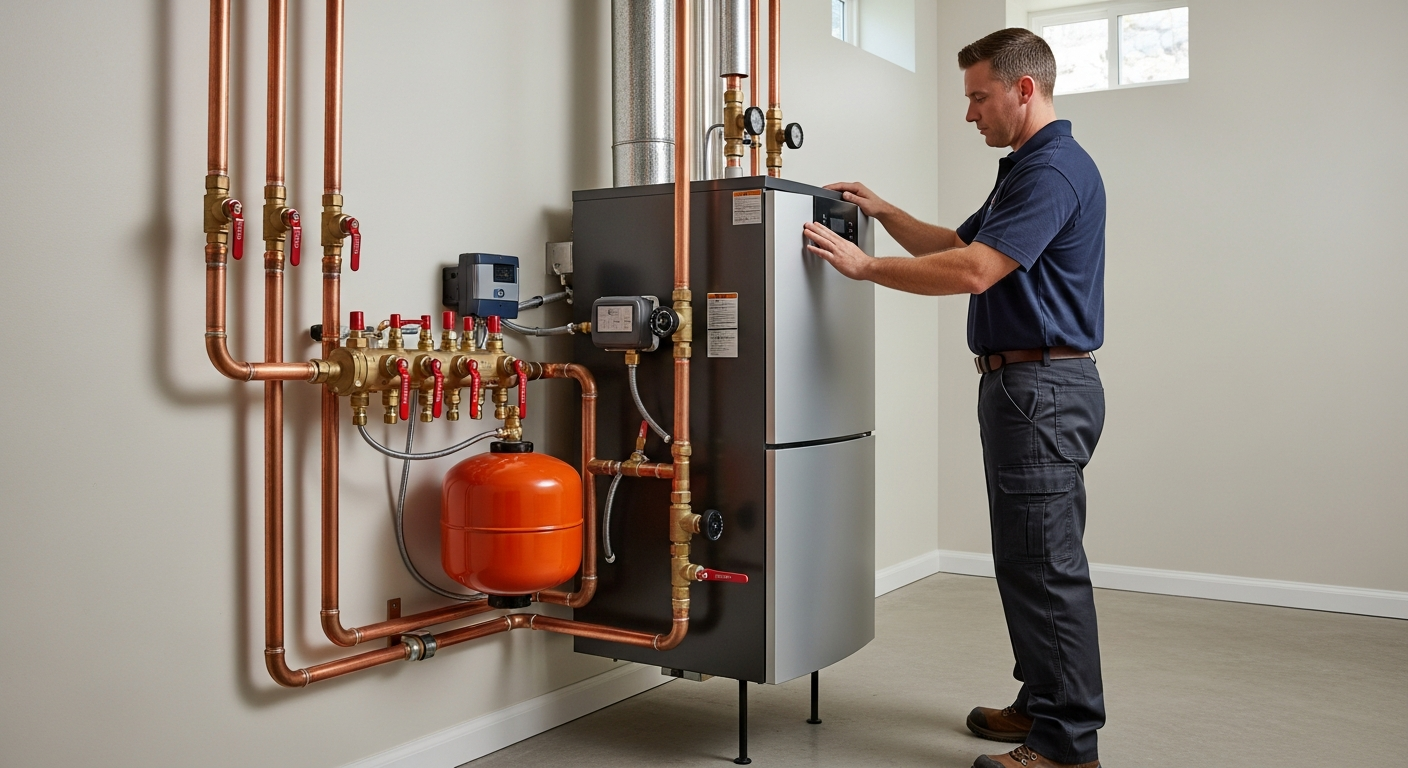
Standby Generators: Worth the Cost for Heating Security
We recommend a professionally installed standby generator if you experience at least 24 hours of winter outages yearly or rely on electric heat without backup. Always obtain three quotes and verify contractor licenses.
What Matters Most
- Total installed cost for a heating-capable standby generator averages $10,000, with a typical range of $6,000–$16,000.
- Generator size is dictated by heating type: gas furnaces need less power; electric furnaces and heat pumps require much larger units.
- Always hire licensed electricians and plumbers—DIY installation risks safety and voids warranties.
- Factor in annual maintenance ($150–$400) and fuel storage (propane tank or natural gas line upgrade).
- Verify local permits and HOA rules before committing.
Strengths
- Automatic operation keeps the house warm without manual intervention.
- Prevents frozen pipes and water damage during extended winter blackouts.
- Can power additional critical loads like medical equipment, sump pumps, or refrigerators.
- Increases home resale value in outage-prone neighborhoods.
Weaknesses
- High upfront cost with multi-year payback unless outages are frequent.
- Loud noise (60–70 dBA) may bother neighbors and require careful placement.
- Ongoing maintenance and fuel costs; propane storage can be unsightly.
- Requires professional installation compliant with building and safety codes, adding complexity.
Decision Summary: Generator vs Portable vs None
| Scenario | Usually do | Why |
|---|---|---|
| You lose power for more than 24 hours each winter | Install a standby generator | Avoids pipe freezes and loss of heat; cheaper than major repairs. |
| Your heating system is a natural gas furnace | Consider a 14kW–16kW unit | Blower and electronics are small loads; you can power other circuits too. |
| Your heating is electric (furnace or heat pump) | Install a 22kW–26kW generator | Electric strips draw huge amperage; smaller generator won't start them. |
| Outages are short (under 4 hours) and rare | Try a portable generator with a transfer switch | Lower cost, less installation; may power gas furnace blower. |
| You're in a cold climate with propane availability | Go with a propane-fueled generator and large tank | Natural gas may have pressure issues in extreme cold; propane ensures fuel availability. |
Quick Answer: Whole Home Generator Installation Costs
Most homeowners spend between $6,000 and $16,000 to install a standby generator capable of powering a central heating system. The national average for a mid-sized 20kW unit is about $10,000 including equipment, automatic transfer switch, permits, and professional labor. Factors like generator size, fuel source, and installation complexity can shift the final price up or down. These are editorial estimates, not guaranteed quotes.
Cost Breakdown Table
| Component | Typical Cost Range | Notes |
|---|---|---|
| Generator unit | $3,000–$7,000 | 22kW–26kW models for electric heat can push to $8,000+ |
| Automatic transfer switch (ATS) | $500–$1,200 | Service-rated ATS may cost more |
| Installation labor & materials | $2,500–$5,000 | Includes electrician & plumber, trenching, gas line, wiring, pad |
| Permits & inspections | $200–$500 | Electrical and plumbing permits |
| First-year maintenance plan | $150–$400 | Often optional but recommended |
Use our HVAC cost estimator to see region-specific ranges.
Sizing for Your Heating System
Generator capacity (kW) must cover the starting surge of your heating equipment plus other essentials you want to power. Here’s a rough guide:
| Heating Type | Minimum Generator Size | Real-World Example |
|---|---|---|
| Natural gas or propane furnace | 7–10 kW | Typical 80,000 BTU gas furnace needs only ~600W for blower and controls. |
| Oil furnace | 10–14 kW | Burner motor and blower require more surge watts. |
| Electric furnace | 20–26 kW | 15kW strip heat may draw 65+ amps; needs large unit. |
| Heat pump (with backup electric strips) | 16–24 kW | Strips alone can draw 10–20kW; consider a load-management device. |
For a precise load calculation, use our BTU and wattage calculator or ask a pro to perform a Manual J and generator sizing report.
Fuel Source & Storage
Standby generators typically burn natural gas (NG) or liquid propane (LP).
- Natural gas: Convenient if you already have a gas line. Often requires a higher-pressure line run from the meter. Supply may be uninterrupted in outages (unless the gas utility fails), but some regions mandate low-pressure shut-off in earthquakes. Average gas-line work: $500–$2,000.
- Propane: Requires a storage tank on your property. Sizing matters: a 20kW unit may consume 2–3 gallons/hour at full load, so a 500-gallon tank gives a week of runtime. Tank installation: $1,500–$3,500 for new burial or pad. Refill costs vary.
Installation Complexity & Hidden Costs
Labor is the biggest variable. If your electric meter and gas meter are far apart, or the generator must sit far from the panel, trenching, conduit, and gas piping add $1,000–$3,000. Electrical panel upgrades (if your existing panel can’t accept the ATS) cost $1,500–$3,500. Concrete pad: $300–$800. Cold-weather kits (battery warmer, oil heater) for reliable starting below 0°F: $200–$500.
Safety Boundaries: What Homeowners Can Check, What Pros Must Do
Safe homeowner checks and tasks
- Visual inspection: Look for corrosion, loose wires, or puddles. Do not touch any internal components.
- Weekly exercise test: Most units have a test button; listen for smooth start-up. Never open the cabinet while running.
- Oil and air filter checking: With generator OFF and cool, you can check oil level and air filter condition per manual—but never dismantle guarded parts.
- Confirm battery date: Replacement every 2–3 years is a pro job unless the manual says otherwise and involves simple disconnect.
Professional-only work (do not DIY)
- Electrical connections to transfer switch and panel
- Gas-line connections, pressure testing, and leak checks
- Compressor, capacitor, contactor, control-board repairs
- Any internal engine or alternator work
- Refrigerant handling or sealed system work (rare in generators)
Never bypass safety interlocks or operate the generator indoors or near windows. Carbon monoxide poisoning is a leading cause of death in outages. A professional ensures proper exhaust and clearance, and that the unit meets combustion safety standards.
Decision Rules: Is a Standby Generator Worth It for You?
Answer these questions to decide:
- Does your area see more than 24 hours of winter outages per year on average? If yes, a generator likely pays for itself by preventing frozen-pipe damage (average $5,000+ insurance deductible).
- Is your heating system electric (furnace/heat pump) and you have no alternative heat? Electric heat amplifies the need; a portable generator rarely can power electric strips.
- Do you or household members have medical devices that require uninterrupted power? If yes, a standby generator is strongly recommended.
- Can you tolerate the noise and maintenance? Standby units are louder (60–70 dBA) and require annual upkeep. If not, consider a battery backup system for critical loads.
If you answered yes to two or more, get multiple quotes. Use our quote checker to compare proposals.
Contractor Checklist: Questions to Ask Before You Sign
- Are you licensed for both electrical and gas work, or will subcontractors be involved? Ask to see their HVACDatabase profile or local license.
- Will you perform a load calculation and provide a written sizing recommendation?
- Does the quote include permits, inspections, and a concrete pad?
- What is the warranty? (Parts + labor, typically 5 years on unit, 1–2 years on installation.)
- Do you offer an annual maintenance plan? What’s included?
- Can you provide references from recent installations nearby?
- Will you handle utility coordination for gas-line upgrades or propane tank placement?
- What is the expected runtime at typical load, and how much fuel storage do I need?
Local Market Considerations
- Cold climates (Northeast, Midwest): Add cold-weather kit; propane may be more reliable than NG if freezing is severe. Trench depth for gas line may be greater (frost line).
- Coastal/humid areas (Southeast, Gulf Coast): Choose a generator with a corrosion-resistant enclosure (marine-grade). Hurricane prep often requires an LP tank that can be strapped down.
- Hot climates (Southwest): Overheating risk; adequate clearance and airflow are critical. Gas supply may be consistent, but consider dust and sand.
- Older homes: Electrical panel upgrade almost certain; may need whole-home surge protection. Use our system age decoder to assess existing HVAC age.
Methodology: How We Form Our Cost Estimates
HVACDatabase compiles cost data from aggregated contractor quotes, industry pricing databases, and permit records across US regions. We adjust for typical market conditions as of 2025. These ranges are editorial estimates meant to help you budget and compare proposals; actual quotes will vary. We strongly recommend using our contractor comparison tool and reading verified reviews before hiring. Always obtain at least three detailed quotes that break down equipment, labor, and permits.
Frequently Asked Questions
1. Can I use a portable generator for my heating system instead?
Portable generators can power a gas furnace blower (often 600–900 watts) if you have a manual transfer switch and the right cord. But they cannot run electric furnaces or heat strips. Portable units also require manual fueling, never run indoors, and lack automatic startup. For cold-climate reliability, a permanent standby generator is safer and more convenient.
2. How long do standby generators last?
Well-maintained units typically last 20–30 years or 3,000+ hours of runtime. Regular oil changes, valve adjustments, and exercising under load lengthen life. Use our repair-or-replace calculator if your current generator is aging.
3. Does my generator need to run during summer for air conditioning?
If you want to power the A/C, you must size the generator for the AC’s starting surge (lock rotor amps). A typical 3-ton AC needs a 14kW–16kW generator minimum. Without A/C, you can often downsize. Consider a high-efficiency condenser to reduce startup load.
4. Will the generator automatically turn on when the power fails?
Yes, a properly installed automatic transfer switch detects the outage, starts the generator, and switches circuits to generator power within 10–30 seconds. The process reverses when utility power returns. This is why professional installation is critical.
5. Are there any rebates or tax credits for whole-home generators?
Unlike solar batteries, standalone generators usually do not qualify for federal tax credits. Some states or utilities offer small rebates for load-management devices that reduce peak demand. Check our rebate finder by ZIP code. Also, some home insurance companies give discounts for automatic standby generators.
Ready to get quotes? Start with our cost guide hub and find prescreened pros in your area.
Related articles
Connect this page to adjacent guides so readers keep moving deeper into the topic cluster.

Cost to Install Multiple Smart Thermostats
Get a clear cost breakdown for installing 2–4+ smart thermostats. Includes equipment, labor, zoning upgrades, and how to save with utility rebates. Practical checks and contractor questions inside.
Duct Booster Fan Installation Cost
Uneven room temps? Duct booster fan installation costs: register fans $30–$100 DIY, inline fans $500–$800+ with pro. Learn when a booster works and when you need a bigger fix.
Makeup Air Unit Installation Cost Guide
Expect to pay $1,500–$4,500 for a pro-installed makeup air unit. Discover passive vs. tempered options, code triggers, and money-saving decision rules.