Cost to Upgrade Commercial HVAC for Energy Efficiency
Upgrading to an energy-efficient commercial HVAC system can slash utility bills by 20-50%. This guide covers true costs, payback, and smart decisions for property owners and managers.

Upgrade if your system is over 12 years old
Most commercial buildings over 12 years old should replace their HVAC with a modern high‑efficiency system; the savings and reliability gains far outweigh the upfront cost when you plan properly and capture rebates.
What Matters Most
- Budget $15–$40 per square foot for a full energy‑efficient HVAC upgrade.
- Payback often arrives in 3–5 years after factoring in utility rebates and tax incentives.
- Always request a Manual N load calculation and an energy model before signing.
- Phased upgrades are viable but require a long‑term master plan.
- Use our free tools to compare quotes and validate savings projections.
Strengths
- Cuts energy consumption by 20–50% immediately.
- Improves occupant comfort and productivity.
- Locks in lower operating costs for the next 15–20 years.
- Increases asset value and can qualify for green building certifications.
- Reduces maintenance emergencies and refrigerant leaks.
Weaknesses
- High upfront capital expenditure may require financing or PACE loans.
- Installation disruptions can affect business operations; plan for off‑hours work.
- Payback varies with utility rate fluctuations and climate variability.
- Incorrect sizing or commissioning can negate promised savings.
- Older buildings may need costly structural or electrical upgrades.
Upgrade Path Decision Summary
| Scenario | Usually do | Why |
|---|---|---|
| System >15 years old or uses R‑22 refrigerant | Replace with high‑efficiency packaged or VRF | R‑22 phase‑out makes repairs costly; new unit saves 30‑50% energy |
| System <10 years, but bills climbing | Add smart controls, CO₂ demand ventilation, recommission | Controls payback in 1‑2 years; avoids capital cost of full replacement |
| Multi‑zone building with comfort complaints | Upgrade to VRF or zone‑by‑zone RTU replacement | Eliminates hot/cold spots; improves part‑load efficiency |
Is Your Commercial HVAC Holding Your Building Back?
If your commercial building’s HVAC is over 10 years old, you’re likely spending 20–50% more on energy than necessary. Upgrading to high-efficiency equipment is the single most impactful energy investment a property owner can make. But the price tag can range from $15–$40 per square foot, and choosing the wrong system or contractor can erase savings. This guide gives you real cost ranges, decision rules, and a step-by-step plan to evaluate and execute a profitable upgrade—without getting oversold. Use our tools and checklist to make a confident, data-driven decision.
Quick Answer
A commercial HVAC energy-efficiency upgrade typically costs $15–$40 per square foot installed, with most projects landing between $25,000 and $150,000 for a 5,000–10,000 sq ft building. Payback periods range from 2 to 7 years, depending on climate, utility rates, and available rebates. For many properties, upgrading a 15‑year‑old unit to a modern 16‑SEER2 packaged rooftop unit or VRF system cuts cooling and heating costs by 30% or more. Use our repair‑or‑replace calculator to see if now is the time to act.
Upgrade Cost Breakdown
All prices are editorial estimates for installed, commissioned systems in moderate‑cost U.S. markets before rebates. Final cost depends on building layout, ductwork, accessibility, and local labor rates. Always get at least three bids.
| System Type | Efficiency Level | Installed Cost per Sq Ft | Typical Total Installed Cost (5,000–10,000 sq ft) | Best For |
|---|---|---|---|---|
| High‑Efficiency RTU | 16–18 SEER2 | $18–$25 | $90,000–$250,000 | Small‑to‑midsize offices, retail |
| VRF with Heat Recovery | Up to 30+ SEER2 | $30–$40 | $150,000–$400,000 | Multi‑zone buildings, historic retrofits |
| High‑Efficiency Split System | 16–20 SEER2 | $20–$30 | $100,000–$300,000 | Buildings with existing ductwork, limited outdoor space |
| Geothermal Heat Pump | 25–35 EER | $25–$45 | $125,000–$450,000 | Highest possible efficiency, large lot for loop field |
Smart Controls and Automation Add‑Ons
Even if you don’t replace the entire unit, adding building automation can deliver 10–20% energy savings. Costs for a building automation system (BAS) range from $2,500 to $10,000 per zone. Smaller upgrades like smart thermostats and CO₂ demand‑controlled ventilation often pay for themselves in under 2 years. See our guide on preventive maintenance plans to keep these systems efficient.
Structural and Supporting Component Costs
An upgrade often requires more than just the main unit. If you’re replacing an outdoor condenser, budgeting for an AC condenser pad replacement ($500–$2,000) ensures a level, stable foundation. Extending the life of an indoor evaporator coil? Replacing it costs $1,500–$4,000 but dramatically improves heat transfer. Read our condenser replacement cost guide for details. Electrical panel upgrades (common in older buildings) add $1,500–$5,000, while roof reinforcement for a heavy RTU may cost $2,000–$8,000. Leaky ducts? Sealing or replacement adds $3–$7 per square foot.
Decision Rules: Repair vs. Upgrade
- If your system is over 12 years old
It’s likely time to replace. Efficiency has doubled, and R‑22 refrigerant is phased out. - If a single repair exceeds 30% of a new unit’s cost
Don’t fix it. Put that money toward a high‑efficiency upgrade. - If annual energy bills exceed $2 per sq ft
An upgrade will pay back in under 3 years in most climates. Use our energy upgrade calculator to run the numbers. - If your SEER/EER is below 12
Jumping to 16+ SEER2 saves 30–50% immediately. - If you have constant temperature complaints across zones
Consider a VRF system or zoned RTU replacement—uneven temps signal an under‑sized or improperly ducted system.
Use the repair‑or‑replace calculator for a personalized recommendation.
Climate and Location Impact
Your building’s location dictates the best technology and expected payback.
| Climate Zone | Key Efficiency Focus | Recommended Technologies | Notes |
|---|---|---|---|
| Hot/Dry (Phoenix, Southwest) | High EER for extreme heat, evaporative pre‑cooling | Variable‑speed RTU, economizers, solar‑ready | Payback often fastest due to high cooling hours. Find Phoenix commercial pros. |
| Hot/Humid (Houston, Miami) | Latent load management, dehumidification | VRF with dedicated outdoor air system (DOAS), corrosion‑resistant coatings | Ignore humidity control at your peril; mold risks increase. |
| Cold (Chicago, Minneapolis) | High HSPF for heating, cold‑climate heat pumps | Dual‑fuel systems, condensing boilers with radiant | Electrification incentives can offset heat pump cost. Find Chicago heating pros. |
| Coastal (Seattle, Boston) | Saltwater corrosion resistance | Stainless steel heat exchangers, coastal finishes | Budget 10–15% more for materials. |
| Older Buildings (pre‑1980) | Limited space, no existing ductwork | VRF or mini‑splits, high‑velocity small‑duct systems | Structural review mandatory; often requires phased approach. |
Safety Boundaries for Property Owners
What You Can Safely Do
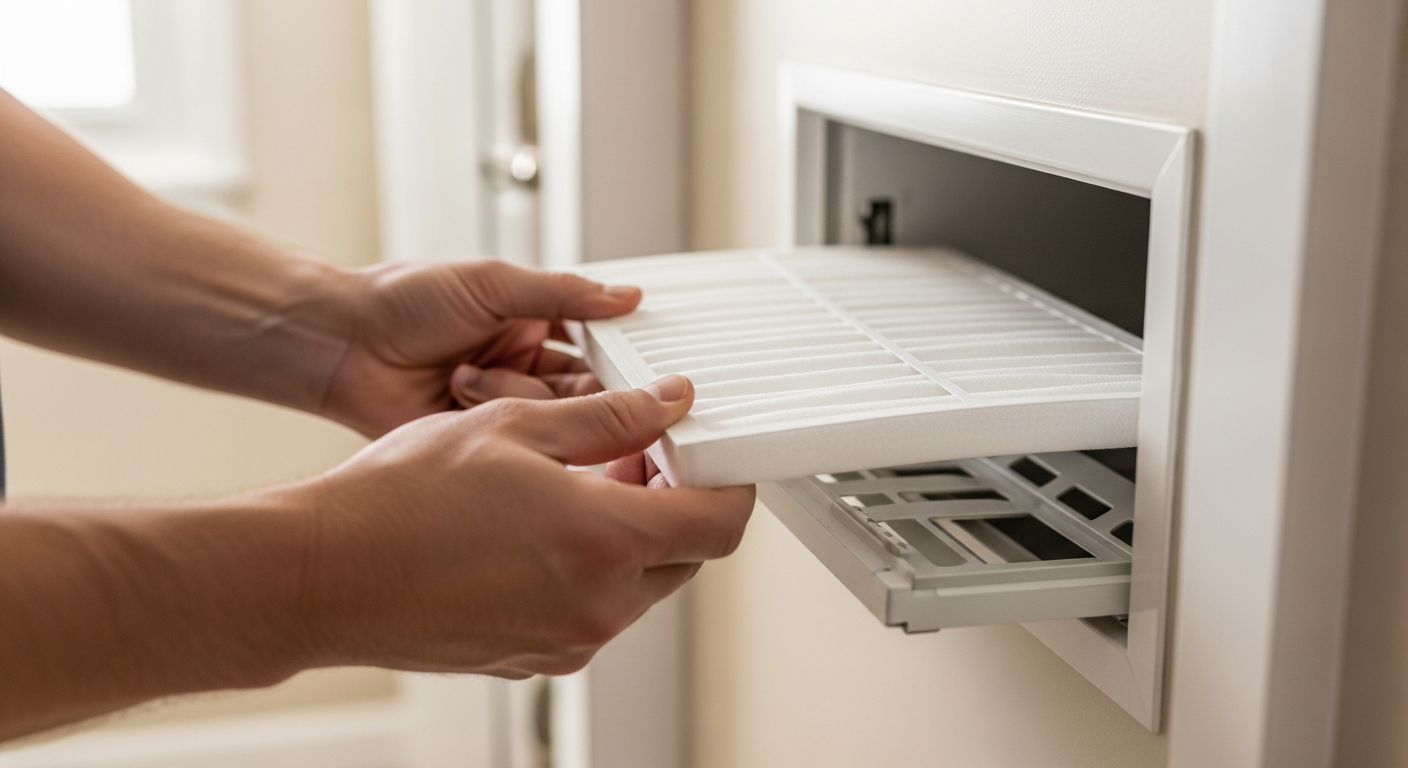
- Inspect and change air filters monthly during peak seasons.
- Keep outdoor condenser coils free of leaves and debris (turn off power first, but no chemical cleaning).
- Check thermostat batteries and programming.
- Listen for unusual rattling, screeching, or hissing noises.
- Visually inspect insulation on refrigerant lines; report any damage.
- Ensure condensate drains are clear.
Leave to Licensed Pros Only
- Any refrigerant leak checks, recharging, or line modifications.
- Gas piping or combustion adjustments.
- Replacement of capacitors, contactors, compressors, control boards, or any high‑voltage component.
- Duct sealing requiring mastic or pressurized testing.
- Structural roof or electrical panel upgrades.
Attempting these can void warranties, create safety hazards, and violate local codes. Always hire a licensed, insured commercial HVAC contractor.
Contractor Checklist: 10 Questions to Ask
Before signing a contract, get written answers to these questions. Then compare bids side‑by‑side with our contractor comparison tool.
- Are you licensed, insured, and bonded for commercial HVAC work in this state?
- Will you provide a Manual J (or Manual N) load calculation and an energy model?
- Do you handle all permits and inspections?
- What exactly is included—demolition, crane time, roof curb, controls, commissioning?
- How many similar commercial buildings have you retrofitted in the last two years? Can I see references?
- What is the projected annual energy savings in dollars, and do you guarantee it?
- What manufacturer rebates and utility incentives will you file on my behalf?
- What is the firm start and end date, and what are the penalties for delays?
- Do you offer a performance contract or energy service agreement?
- Will I receive a full commissioning report before final payment?
Find pre‑screened commercial specialists at HVACDatabase.com.
Free Tools to Plan Your Upgrade
- Commercial HVAC Cost Estimator – Get a customized cost range based on your building.
- Repair‑or‑Replace Calculator – See if an upgrade is the smarter financial move.
- Energy Savings Calculator – Input your utility rates and equipment to see payback.
- Rebate Finder – Discover local utility and federal incentives you qualify for.
- BTU Calculator – Size your new system correctly (first step in any upgrade).
Methodology
Cost estimates in this article are editorial averages drawn from 2023–2024 contractor bid data, RSMeans, DOE reference buildings, and real‑world retrofit project reports. Prices are for installed, commissioned systems in moderate‑cost U.S. markets, excluding major structural, electrical, or environmental abatement. Final costs will vary by site conditions, bid climate, and local labor rates. We recommend obtaining at least three detailed quotes.
Frequently Asked Questions
How much can I actually save by upgrading my commercial HVAC?
Owners of typical 10,000 sq ft office buildings report 30–50% reduction in HVAC energy costs after a full upgrade from a 15‑year‑old 10‑SEER unit to a modern 18‑SEER2 unit with controls. With average commercial electricity rates of $0.12/kWh, that translates to $4,000–$8,000 annual savings. ROI often hits 20–30% IRR over 10 years.
What’s the difference between SEER2 and EER2?
SEER2 (Seasonal Energy Efficiency Ratio 2) measures cooling efficiency over an entire cooling season with updated testing procedures. EER2 (Energy Efficiency Ratio 2) measures efficiency at peak conditions (95°F outside). For hot climates, prioritize EER2; for mixed climates, SEER2 matters more. New DOE standards require minimum 12.0 SEER2 for commercial units.
Should I go with a VRF system or a packaged rooftop unit?
VRF excels in buildings with many zones needing individual control, historic structures where ductwork is impossible, or where simultaneous heating and cooling is needed. RTUs are simpler, cheaper to install, and easier to maintain. If your building has large open spaces and existing ductwork, start with a high‑SEER2 RTU. Read our commercial HVAC system guide for a deeper comparison.
How do I estimate payback on an HVAC upgrade?
Divide the net upgrade cost (after rebates) by the projected annual energy savings. For example, if a $50,000 project yields $8,000/year savings, simple payback is 6.25 years. But also consider increased tenant comfort, reduced maintenance, and higher property value. Use the energy upgrade calculator for a detailed payback simulation.
Can I upgrade my system gradually or do I need to do it all at once?
Yes, phased upgrades are common. Start with smart controls and high‑efficiency rooftop unit replacement in one zone, then add VRF cassettes or a DOAS later. However, mixing incompatible equipment can reduce efficiency. Have an engineer design a master plan before beginning any work. Read about proper sizing to avoid mismatches.
Related articles
Connect this page to adjacent guides so readers keep moving deeper into the topic cluster.
Cost to Install Multiple Smart Thermostats
Get a clear cost breakdown for installing 2–4+ smart thermostats. Includes equipment, labor, zoning upgrades, and how to save with utility rebates. Practical checks and contractor questions inside.
Duct Booster Fan Installation Cost
Uneven room temps? Duct booster fan installation costs: register fans $30–$100 DIY, inline fans $500–$800+ with pro. Learn when a booster works and when you need a bigger fix.
Makeup Air Unit Installation Cost Guide
Expect to pay $1,500–$4,500 for a pro-installed makeup air unit. Discover passive vs. tempered options, code triggers, and money-saving decision rules.