How to Reduce HVAC Energy Use in Summer
Discover proven tactics to cut summer cooling costs by up to 30% without sacrificing comfort. Learn thermostat tricks, maintenance musts, and sealing strategies to keep your home efficiently cool.

Best next step
Use the article decision rules, then compare a written quote when professional work is required.
What Matters Most
- Check safe basics first.
- Use cost ranges to sanity-check quotes.
- Call a qualified pro for refrigerant, gas, combustion, and electrical work.
Strengths
- Clearer next step.
- Better quote comparison.
Weaknesses
- Final pricing depends on local conditions.
- Some problems require in-person diagnosis.
Decision summary
| Scenario | Usually do | Why |
|---|---|---|
| Minor, safe homeowner issue | Check basics first | Filters, settings, and blocked vents can be resolved safely. |
| Mechanical, refrigerant, gas, or electrical issue | Call a qualified technician | These areas carry safety, code, and warranty risk. |
Summer cooling costs can eat up 50% of your energy bill, but you don’t have to suffer in the heat to save. By making a few simple adjustments—thermostat programming, regular filter changes, and sealing air leaks—you can slash energy use by 10–30% while staying comfortable. This guide walks you through proven strategies, helps you decide which tasks to DIY vs. hire out, and connects you to calculators that estimate your personal savings. Ready to cut your bills? Let’s dive in.
Quick Answer: Slash Summer Cooling Costs Now
- Set thermostat to 78°F when home, higher when away.
- Replace dirty air filters monthly.
- Seal windows, doors, and ducts to stop cooled air from escaping.
- Use ceiling fans to feel 4°F cooler.
- Schedule annual professional maintenance.
For personalized estimates, try our energy calculator and repair-or-replace tool.
Optimize Your Thermostat Settings Without Sacrificing Comfort
Setting the thermostat lower doesn't cool faster; it only forces the compressor into longer cycles, wasting energy. The U.S. Department of Energy recommends 78°F when you're home and awake. Upgrade to a programmable or smart thermostat to automate setbacks—cutting cooling bills by up to 10%. If you're away for more than 4 hours, set it to 85°F or higher. Avoid drastic temperature swings; they cause humidity buildup and strain components.
Maintain Your System for Peak Efficiency
Replace Air Filters on Schedule
A clogged filter can increase energy consumption by 5–15%. Check monthly during heavy use, and replace every 30–90 days. Step-by-step filter replacement guide.
Keep the Outdoor Unit Clear
Trim vegetation back at least 2 feet. Rinse the condenser coil gently with a garden hose (low pressure). Never use a pressure washer—it bends fins. Remove debris from the top grille. If you notice ice on the refrigerant lines or the unit short-cycling, call a pro—those indicate refrigerant or electrical issues.
Schedule a Professional Tune-Up
Annual maintenance visits cost $80–$250 (editorial estimate). Technicians check refrigerant charge, test capacitors, clean coils, and lubricate motors—tasks that require specialized tools and training. Find a vetted contractor near you.
Seal the Envelope: Stop Cool Air Leaks
Up to 30% of cooled air escapes through gaps, cracks, and poorly sealed ducts. Start with a home energy audit (often $200–$500; many utilities rebate part of the cost). Then tackle DIY sealing: weatherstripping doors, caulking windows, and insulating attic hatches. For duct leaks, use mastic sealant or metal tape—not duct tape. In older homes, consider blown-in insulation in attics and walls. How-to seal air leaks.
Manage Solar Heat Gain Like a Pro
South- and west-facing windows let in massive radiant heat. Close blinds or draperies during peak sun hours. White, reflective backing can reflect 45% of solar heat. Exterior solutions like awnings or solar screens block even more heat before it hits the glass. Plant deciduous trees on the sunny sides—they provide shade in summer and allow sunlight in winter.
Leverage Ceiling Fans to Boost Comfort
Ceiling fans don't cool rooms; they cool people via wind-chill effect. By running them counterclockwise in summer, you can raise the thermostat by 4°F without feeling warmer. Use ceiling fans to save energy. Turn fans off when you leave the room—they don't cool empty spaces.
Cut Internal Heat Gains
Appliances, incandescent bulbs, and cooking all add heat. Switch to LED lighting, run the dishwasher and dryer after 8 p.m., and use the microwave or outdoor grill to keep kitchen heat down. Even electronics on standby produce heat—unplug chargers and shut down computers when not in use.
Tools to Diagnose and Shrink Your Energy Footprint
Use these HVACDatabase calculators to make data-driven decisions:
- Energy Calculator – Estimate your cooling costs based on your system and local rates.
- BTU Calculator – Verify if your AC unit is properly sized for your home.
- Repair or Replace Calculator – Compare repair costs vs. long-term savings of a high-efficiency system.
- Cost Estimator – Get editorial price ranges for upgrades, repairs, and maintenance.
- Rebate Finder – Uncover utility and federal incentives for efficient HVAC equipment.
Safety Boundaries: What You Can Tackle and When to Call a Pro
Homeowners can safely do these tasks:
- Change disposable filters.
- Gently rinse outdoor condenser coils with a garden hose.
- Clear debris and trim vegetation around the outdoor unit.
- Seal visible air leaks with caulk or weatherstripping.
- Adjust thermostat settings and program schedules.
- Install window coverings and ceiling fans.
Stop and call a licensed HVAC technician if you encounter:
- Refrigerant leaks or the need to add refrigerant (requires EPA certification).
- Electrical issues: tripped breakers, burnt wiring, capacitor/contactor replacement, or control board diagnostics.
- Compressor problems, strange noises, or burning smells.
- Gas furnaces, combustion safety checks, or venting issues.
- Ductwork modification beyond simple sealing of accessible joints.
Attempting these repairs can void warranties, cause injury, or damage equipment. Compare qualified contractors instead.
Decision Tree: Choose Your Energy-Saving Path
Use these rules to decide what to do next:
- Your air filter is dirty? Replace it. If it clogs within 30 days, your home may need better filtration or duct sealing—call a pro for an assessment.
- Rooms feel unevenly cooled? Partially close dampers (if accessible) to balance airflow, but never close more than 20% of registers—it can harm the system. If imbalance persists, a home energy audit can identify duct leaks or insulation gaps.
- AC runs almost constantly on hot days? A properly sized unit should run 2–3 cycles per hour in extreme heat. Constant running suggests low refrigerant, a failing compressor, or an undersized system. Use our BTU calculator
Decision Summary Table
Situation Best next step Why it matters Simple setting, filter, or airflow issue Check the safe basics first Thermostat settings, dirty filters, and blocked vents can mimic larger HVAC failures. Repeated failure, unusual noise, water, ice, or weak performance Schedule a diagnostic visit The cause may involve airflow, refrigerant, motors, controls, drainage, or ductwork. Major repair on older equipment Compare repair cost against replacement How to Reduce HVAC Energy Use in Summer may become a repair-vs-replace decision if the system is old or the quote is high. Contractor Checklist
Before approving HVAC work, ask for a written scope rather than a one-line price.
- What failed, and what evidence did the technician use to diagnose it?
- Is the part or system still under manufacturer, labor, home warranty, or installer warranty?
- Does the price include diagnosis, parts, labor, taxes, disposal, permits, and return visits?
- Will any refrigerant, gas, combustion, electrical, or code-related work be handled by a qualified technician?
- For replacement quotes, did the contractor verify sizing, duct condition, electrical capacity, drain routing, and warranty registration?
- What happens if the repair does not solve the problem?
Methodology
HVACDatabase estimates combine common contractor price patterns, service-category pricing ranges, equipment complexity, urgency, regional labor variation, and known HVAC safety boundaries. Actual prices vary by city, brand, system size, access, warranty status, permit requirements, and whether the visit discovers ductwork, electrical, refrigerant, gas, or drainage issues. Use these numbers to sanity-check quotes, not as a guaranteed price.
FAQ
Can I handle How to Reduce HVAC Energy Use in Summer myself?
You can handle basic checks such as thermostat settings, filter replacement, blocked vents, visible debris, and obvious water or ice. Anything involving refrigerant, gas, combustion, high-voltage electrical components, compressors, or sealed system work should be left to a qualified technician.
When should I call an HVAC contractor?
Call a contractor if the problem repeats, the system trips a breaker more than once, cooling or heating is weak after basic checks, you see ice or water where it does not belong, or the repair requires opening equipment panels.
How do I know if a quote is fair?
Compare the written scope, not just the price. A fair quote should explain the diagnosis, parts, labor, warranty, exclusions, and whether follow-up work may be needed.
Should I repair or replace the system?
Repair usually makes sense for newer equipment with minor failures. Replacement becomes worth comparing when the system is older, the repair is major, comfort is poor, or the repair approaches 40-50% of replacement cost.
What is the safest next step?
Do the safe homeowner checks first, document symptoms, then use HVACDatabase tools or contractor comparison pages if the issue points to mechanical, electrical, refrigerant, gas, or combustion work.
Related articles
Connect this page to adjacent guides so readers keep moving deeper into the topic cluster.
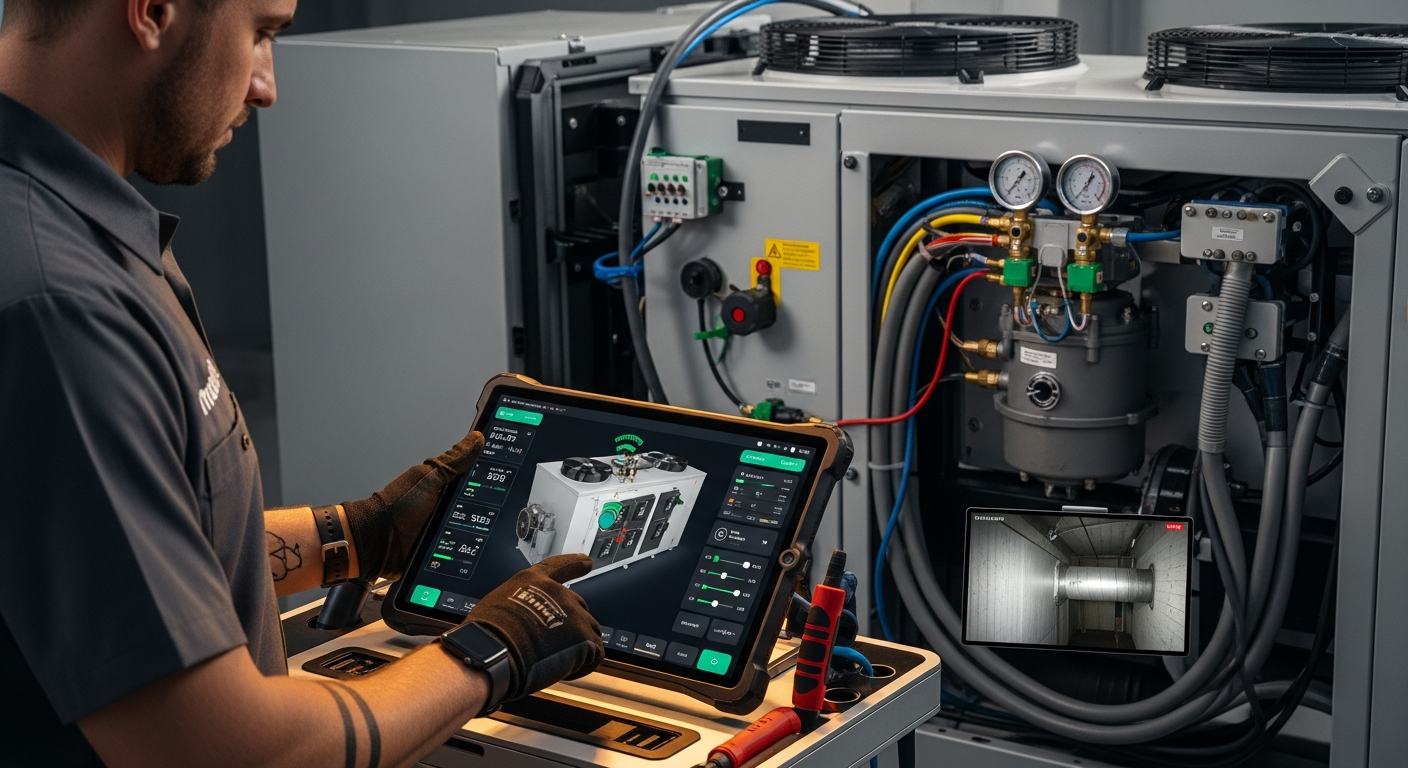
How to Implement a Whole Home Energy Management System
Integrate smart tech and HVAC controls to cut energy waste. This guide shows how to audit, upgrade, and automate your home's energy use, with real savings estimates.
How to Set Up Thermostat Geofencing
Set up thermostat geofencing to automatically adjust home temperature as you come and go. Save energy, extend equipment life, and never return to an uncomfortable house. Get our quick-start guide now.
How to Troubleshoot Smart Thermostat WiFi Issues
Your smart thermostat offline? Most WiFi drops can be fixed with power checks, router adjustments, and simple restarts. Follow our step-by-step guide to regain remote control and energy savings.