New Furnace Efficiency Standards Explained
Updated federal furnace efficiency standards are phasing out low-AFUE models. See what that means for your next heating system replacement, from available rebates to installation requirements.
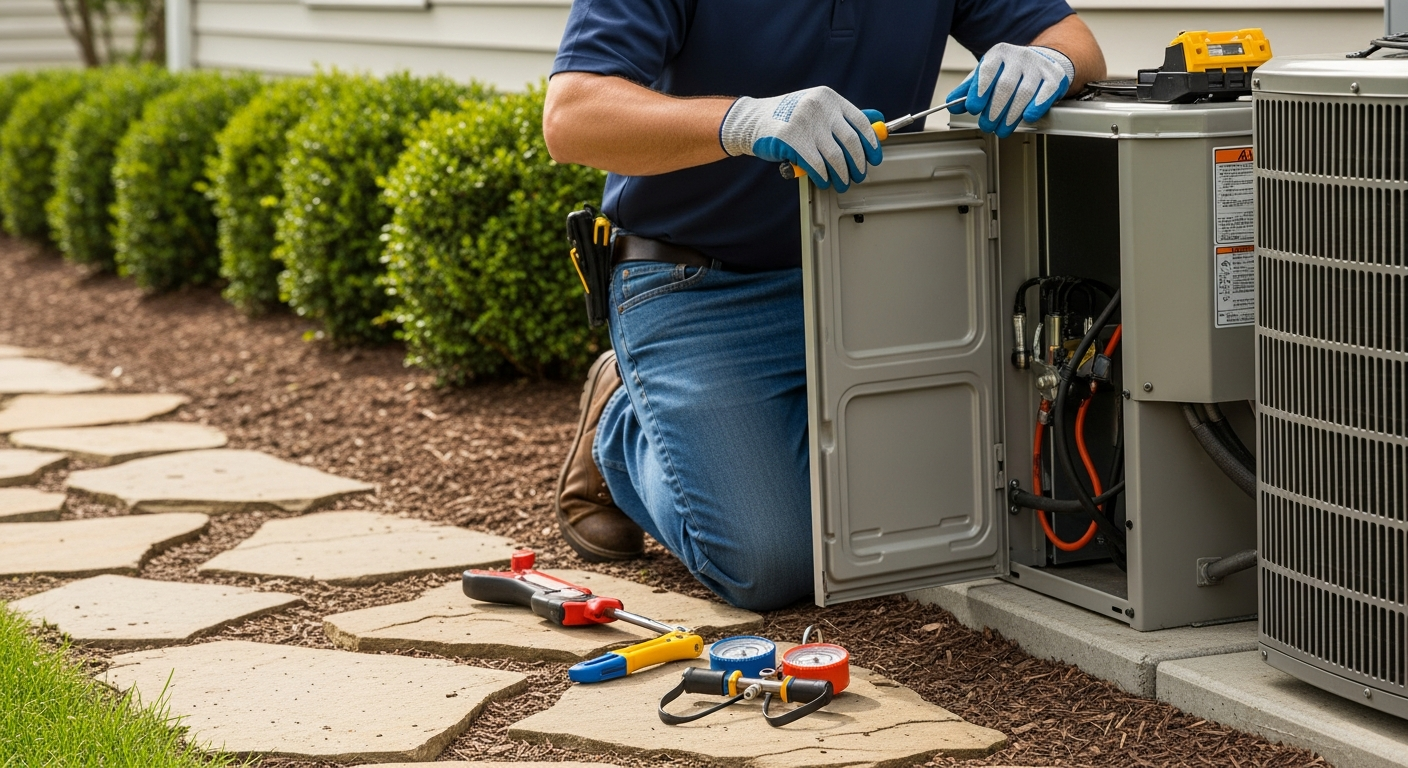
Upgrade to a condensing furnace when replacing an older unit to maximize long-term savings and comfort, but verify installation feasibility first.
Homeowners in colder climates should target 95%+ AFUE condensing furnaces, while those in milder zones may consider high-efficiency heat pumps. Always get a load calculation and a written estimate covering venting, drainage, and duct adjustments.
What Matters Most
- New standards effectively require condensing furnaces with 90%+ AFUE in many regions
- Higher upfront costs are offset by 30-50% fuel savings and available rebates
- Proper venting and condensate drainage are critical; installation labor can range $500-$2,000 extra
- Use the HVACDatabase Cost Estimator and Rebate Finder to personalize your project
- Always confirm the contractor pulls necessary permits and commissions the system after installation
Strengths
- Significant long-term energy savings (15-30% over standard 80% models)
- Improved indoor comfort with variable-speed blowers and better heat distribution
- Positive environmental impact and potential increase in home resale value
- Availability of federal, state, and utility rebates can offset initial costs
Weaknesses
- Higher installation cost: $1,000-$3,000 more than a basic non-condensing swap
- May require structural changes: side-wall venting, condensate pump, and electrical upgrades
- Not always suitable for homes without practical drainage or tight mechanical spaces
- Requires professional sizing; oversized units cause short-cycling and moisture issues
Decision Summary for Furnace Replacement
| Scenario | Usually do | Why |
|---|---|---|
| Old furnace is 15+ years with 80% AFUE or less | Replace with 95%+ condensing furnace | Fuel savings cover the premium within 5–10 years; new unit meets code |
| Furnace under 10 years with minor repair needed | Repair and defer replacement | Avoids premature landfill waste; wait for broader home upgrade or utility incentives |
| Home has no floor drain near furnace | Plan for condensate pump installation | Condensing furnaces produce water that must be pumped to a drain; budget $300–$800 |
| Mild climate heating season <3 months | Consider a high-efficiency heat pump | Heat pumps provide heating and cooling; may be more cost-effective than a furnace in mild zones |
What the New Furnace Standards Mean for Your Home
As of 2024, updated U.S. Department of Energy rules require residential furnaces to meet higher Annual Fuel Utilization Efficiency (AFUE) ratings. In practice, this phases out traditional 80% AFUE non-condensing furnaces in favor of condensing models that reach 90–98% AFUE. For homeowners planning a replacement, understanding these changes ensures you pick a system that complies with code, qualifies for rebates, and cuts monthly heating bills. While the upfront cost is higher, the long-term savings and improved comfort make a compliant upgrade the smart financial and environmental choice.
Quick Answer
If your current furnace is over 15 years old or rated below 90% AFUE, the new standards mean your next replacement should be a condensing furnace (90%+ AFUE). This will typically cost $1,000–$3,000 more than a basic swap, but utility rebates and 15–30% annual fuel savings can recover the premium within 3–7 years. Always confirm your home can accommodate the required venting and condensate drainage before proceeding.
Understanding AFUE and the New Standards
AFUE measures how much fuel becomes usable heat over a heating season. A 95% AFUE furnace wastes only 5% of its fuel, compared to 20% waste from an 80% unit. The new rules set minimums regionally:
- Northern states: 95% AFUE for gas furnaces (effective 2024 for new installations).
- Southern states: 90% AFUE for gas furnaces; eligible for trade-off credits with heat pumps in some zones.
Decision Rules: When to Upgrade vs. Repair
Use these thresholds to decide your next move:
| Current Furnace Condition | Action | Rationale |
|---|---|---|
| 15+ years old, 80% AFUE or less | Replace with 95%+ condensing furnace | Fuel savings pay back the premium in 5–10 years; meets current code; lowers carbon footprint. |
| Under 10 years, minor repair needed (e.g., ignitor, sensor) | Repair and defer replacement | Avoids premature disposal; wait for broader home renovation or utility incentive phase. |
| Heat exchanger cracked or burner assembly fails | Replace immediately | Safety hazard; repair cost may exceed 50% of a new compliant system. |
| Your thermostat, ductwork, or insulation is outdated | Upgrade those alongside the furnace | Maximize efficiency gains; an Audit can reveal 15–25% additional savings. |
Cost and Savings Breakdown
Below are editorial estimate ranges based on aggregated market data. Actual prices vary by region, contractor, and project complexity.
| Item | Low (Simple) | Mid (Typical) | High (Complex) |
|---|---|---|---|
| Condensing furnace plus installation | $5,000 | $7,000 | $12,000+ |
| Additional venting/drain modifications | $400 | $800 | $2,000 |
| Condensate pump installation | $150 | $300 | $600 |
| Permit & commissioning | $100 | $250 | $500 |
| Annual fuel savings (vs. 80% AFUE) | $120 | $250 | $500+ |
Use our HVAC Cost Estimator for a personalized range and our Rebate Finder to uncover local incentives.
Safety Boundaries: Homeowner Checks vs. Pro-Only Work
Installing a high-efficiency furnace involves gas, combustion, and electrical connections. Severe injury or property damage can result from improper work.
You Can Safely Do These Before Calling a Pro:
- Check thermostat settings and batteries.
- Inspect and replace air filters monthly during heavy use.
- Ensure supply and return vents are unblocked.
- Listen for unusual noises; note error codes on the furnace board.
- Verify your home has a clear path to a drain or sump pit for condensate.
Leave These to a Licensed HVAC Contractor:
- Gas line sizing, connection, and leak testing.
- Venting system design (PVC, concentric, or chimney lining).
- Condensate trap and drainage installation.
- Electrical wiring, control board, and high-voltage connections.
- Refrigerant handling (if upgrading to a heat pump).
- Combustion analysis and startup commissioning.
- Any repair involving the compressor, capacitor, contactor, or control board.
Compatibility and Installation Must-Knows
Switching to a condensing furnace often requires:
- Venting: PVC pipes through a side wall instead of a metal chimney. Liners may be needed for existing chimneys used by other appliances.
- Drain: A condensate pump or gravity drain to handle acidic water. Plan for $300–$800 if a pump is added.
- Electrical: A dedicated 120V outlet near the furnace is typical; variable-speed motors may draw 2–5 amps more than old PSC motors.
- Ductwork: High-efficiency blowers can expose leaky ducts. Seal and test ducts before the new unit is installed.
Find qualified local pros through our Contractor Search and compare bids with Contractor Comparison tool.
Local Climate Considerations
- Cold Northern Climates (e.g., Minneapolis, Chicago): Prioritize 95%+ AFUE condensing gas furnaces. Heating degree days are high; fuel savings are maximized.
- Mild Southern Climates (e.g., Atlanta, Phoenix): A 90% AFUE furnace or an electric heat pump may be more cost-effective when cooling is also needed year-round. Check the Energy Calculator to compare.
- Humid Coastal Areas (e.g., Houston, Tampa): Ensure the condensate drain can handle high volumes and consider a float switch to prevent overflow.
- Older Homes (pre-1960): Limited mechanical room space may require creative venting; confirm adequate combustion air and clearance to combustibles.
Contractor Checklist: 8 Questions to Ask Before You Sign
- Will you perform a Manual J load calculation and share the report?
- How will you route the new venting and condensate drain?
- Is the gas line adequate, and will you conduct a pressure test?
- What brand/model are you proposing, and what is its real-world AFUE under part-load conditions?
- Do you pull permits and coordinate inspections?
- Can you provide a commissioning checklist (static pressure, temperature rise, gas pressure)?
- What warranty coverage do you offer on labor and parts?
- Are you familiar with local utility rebates and how to apply?
Tools & Calculators to Help You Decide
- BTU Calculator – approximate proper furnace size.
- HVAC Cost Estimator – see pricing for your zip code.
- Rebate Finder – money back from utilities and governments.
- Repair or Replace Calculator – age-based recommendation.
- Energy Calculator – compare fuel types and efficiency scenarios.
Methodology
Cost figures and savings projections are editorial estimates synthesized from aggregated contractor surveys, DOE appliance data, and regional permit databases. They are not guaranteed quotes. Use them as benchmarks when comparing bids. Efficiency recommendations are based on ENERGY STAR and federal minimum standards effective 2024. Always obtain at least three written estimates and verify licensing and insurance.
Frequently Asked Questions
What AFUE rating does my region really require?
Northern states (IECC climate zones 4–8) now mandate 95% AFUE for gas furnaces. Southern zones can install 90% AFUE. Some local jurisdictions may have stricter rules. Check with your building department or use our Rebate Finder which includes code summaries.
Are there rebates for upgrading to a condensing furnace?
Yes. Many utilities offer $200–$800, and federal tax credits (e.g., 25C) can cover 30% of project costs up to $600 for qualifying high-efficiency equipment. Apply before installation; your contractor should handle the paperwork.
Can I vent a condensing furnace through my existing chimney?
No, unless a factory-approved stainless-steel liner is inserted. Direct venting through a side wall with PVC is standard. If the chimney serves a water heater, the liner must be sized correctly to avoid backdrafting.
How much will I actually save each year by going to 95% AFUE?
Figure 15–30% less fuel compared to an 80% furnace. For an average Northern home burning 800 therms per year, that’s 120–240 therms or $120–$300 annually at current gas prices. Add savings from a variable-speed blower for additional electric bill reduction.
Do I need a new thermostat with a condensing furnace?
Not always, but a modern two-stage or modulating thermostat unlocks the full efficiency and comfort of a high-end furnace. Basic single-stage thermostats will work but may cause the furnace to run less efficiently.
Related articles
Connect this page to adjacent guides so readers keep moving deeper into the topic cluster.

How Utility Demand Response Programs Use Smart Thermostats
Enrolling your smart thermostat in a demand response program can earn you up to $150/year while keeping you comfortable. Learn if it's right for your home and how to maximize benefits.
Heating Industry Trends to Watch
Smart thermostats and heat pumps headline heating industry changes. But which trends deliver real savings? Use our decision guide, cost ranges, and contractor checklist to plan your upgrade.

How Gas Bans Are Affecting Heating Choices
Gas bans in new construction and retrofit codes are pushing homeowners toward electric heat pumps. Understand your options, costs, and available incentives before you replace your furnace.