Signs Your Furnace Needs Replacing
Is your furnace over 15? Getting repairs often? Rising bills? See the 7 signs you need a new furnace, plus cost ranges and replacement decision tools.
Best next step
Use the article decision rules, then compare a written quote when professional work is required.
What Matters Most
- Check safe basics first.
- Use cost ranges to sanity-check quotes.
- Call a qualified pro for refrigerant, gas, combustion, and electrical work.
Strengths
- Clearer next step.
- Better quote comparison.
Weaknesses
- Final pricing depends on local conditions.
- Some problems require in-person diagnosis.
Decision summary
| Scenario | Usually do | Why |
|---|---|---|
| Minor, safe homeowner issue | Check basics first | Filters, settings, and blocked vents can be resolved safely. |
| Mechanical, refrigerant, gas, or electrical issue | Call a qualified technician | These areas carry safety, code, and warranty risk. |
Quick Answer
Your furnace likely needs replacement if:
- It’s over 15 years old – even if still running, efficiency drops sharply.
- A single repair exceeds 50% of new furnace cost – especially for heat exchangers or blowers.
- Energy bills jumped 20% or more with no change in thermostat settings or outdoor temps.
- You smell gas, see flames, or detect carbon monoxide – replace immediately; don’t wait.
- Loud banging, rattling, or persistent odours point to major mechanical failure.
New gas furnaces typically cost $5,000–$15,000 installed, but high efficiency (AFUE 95%+) can slash heating bills by up to 40%. Use our Repair or Replace Calculator to see if it’s time.
7 Signs Your Furnace Is Failing
| Sign | What to look for | Recommended action |
|---|---|---|
| 1. Age over 15 years | Check serial number with our System Age Decoder | Start planning replacement; even minor repairs add up |
| 2. Rising energy bills | Compare last two winters’ bills, adjusting for weather | Have a pro calculate efficiency loss; if >20%, replacement may pay back quickly |
| 3. Frequent repairs | Two or more service calls in 12 months | Use the 50% cost rule: if repair cost × 2 > new furnace cost, replace |
| 4. Strange noises | Banging, screeching, rattling when starting or running | Motor or blower failure risk; get diagnostic quote and compare to replacement |
| 5. Uneven heating | Some rooms too hot, others cold despite open vents | Could be furnace not distributing air properly; rule out duct issues with a pro |
| 6. Poor air quality | Excess dust, dry air, or soot near vents | Heat exchanger may be cracked; this is a safety hazard. Stop using and call for emergency service. |
| 7. Rust or corrosion | Visible rust on flue pipe, burner area, or cabinet | Schedule inspection; rust on heat exchanger means replace asap |
1. Age Over 15 Years
A standard gas furnace lasts 15–20 years with annual maintenance. Once past 15, even a “working” furnace runs at 60–70% efficiency, wasting fuel. Modern units achieve 95–98% AFUE. Use our System Age Decoder to check your unit’s birthday. Start budgeting for replacement; prices range from $5,000 to $15,000 depending on size and brand.
2. Energy Bills Creeping Up
Compare utility bills from the same month a year ago. If you see a 20%+ increase without extra usage, the furnace may be the culprit. A diagnostic visit costs $80–$200 and can confirm efficiency loss. High‑efficiency replacements often pay for themselves in under 7 years through savings. Our Cost Estimator can project your potential savings.
3. Frequent Repairs
Repairing a blower motor ($800–$2,500) on a 16‑year‑old furnace rarely makes sense. Follow the “50% rule”: if total repair cost exceeds half the price of a new unit, install a replacement. Our Repair or Replace Calculator makes this math clear. Also, two repairs within one heating season often signal a cascade of failures.
4. Strange Noises
A soft hum is normal. Banging on startup, screeching, or constant rattling indicates loose or failing components—often the blower or motor. A pro can diagnose ($80–$200 diagnostic fee) and give a repair estimate. If the repair approaches $1,000 and the unit is over 10 years, weigh replacement.
5. Uneven Heating
Hot‑cold spots usually point to poor distribution, which can be caused by a failing blower or undersized furnace. Have a contractor perform a Manual J load calculation ($200–$600) before quoting a replacement. This ensures a correctly sized system. Check related article: How to Troubleshoot a Furnace That Won’t Heat.
6. Declining Air Quality
Excessive dust, soot, or a persistent “burning” smell can mean a cracked heat exchanger—a serious carbon monoxide risk. If you suspect this, leave the home and call an emergency HVAC contractor. Replacement is mandatory. Our Emergency HVAC page helps you find 24/7 service.
7. Visible Rust or Corrosion
Rust on the flue pipe or around the burner area is a sign of condensation and age. If the heat exchanger itself is rusted, the furnace is unsafe. Get a professional inspection immediately. In humid or coastal areas (e.g., Florida, Gulf Coast), corrosion accelerates—see local contractors familiar with climate‑specific issues.
Safety Boundaries: What You Can Check vs. What Pros Must Handle
Safe homeowner checks
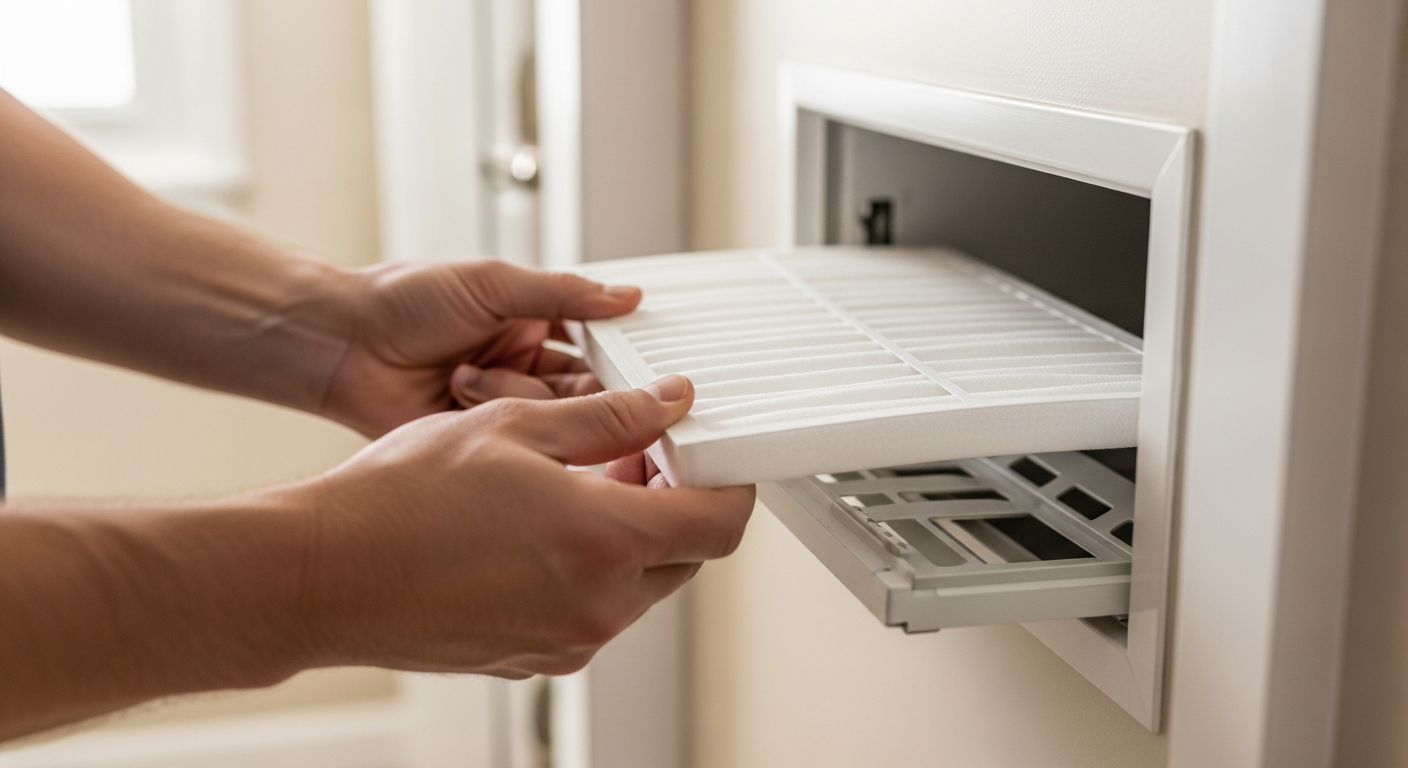
- Inspect air filter monthly and replace if dirty
- Look for visible rust, water leaks, or soot around the furnace
- Listen for unusual noises during operation
- Smell for gas or “rotten eggs” outside the furnace room; if detected, evacuate and call the gas company
Leave these to a licensed HVAC technician
- Opening the sealed combustion chamber or heat exchanger
- Testing or adjusting gas pressure, gas valve, or burners
- Measuring carbon monoxide or flue gases
- Electrical work on the blower motor, control board, ignitor, or capacitor
- Handling refrigerant (if your system is a heat pump)
- Any repair involving combustion safety
Never bypass safety switches or attempt to repair a heat exchanger—it is a life‑safety component.
Decision Rules: When to Replace vs. Repair
Use these thresholds to guide your choice:
- Age > 15 years AND any major repair ($800+) → Replace. The odds of another breakdown are high.
- Repair quote > 50% of the cost of a new furnace → Replace, regardless of age.
- Heat exchanger failure → Always replace. Repair is seldom cost‑effective and often unsafe.
- Energy bill increase > 20% for two consecutive winters → Evaluate replacement. Inefficiency is paying for a new unit.
- Age < 10 years and minor repair → Repair. The unit still has a lot of life.
Use our Repair or Replace Calculator for a personalized decision.
HVACDatabase Calculators & Tools
Make a data‑driven decision with these free resources:
- Repair or Replace Calculator – Plug in repair cost and furnace age to see the breakeven.
- System Age Decoder – Decode the serial number to find manufacture date.
- Cost Estimator – Get a room‑by‑room load estimate and rough system cost.
- Rebate Finder – See available federal, state, and utility incentives for high‑efficiency furnaces.
- Quote Checker – Upload your bid for an expert sanity check.
Contractor Vetting Checklist
Before you sign a replacement contract, ask these questions:
- Are you licensed and insured in my state? Verify at your state’s licensing board.
- Will you perform a Manual J load calculation? A proper sizing prevents short cycling and inefficiency.
- What AFUE rating do you recommend, and why? High‑efficiency (95%+) qualifies for rebates.
- Does the quote include all labor, permits, and a commissioning report? Permits prove code compliance; commissioning ensures proper setup.
- What warranties do you offer on parts and labor? Look for at least 1‑year labor warranty and 10‑year parts.
- Can you provide references from the last 12 months? Check recent installations, not just old ones.
- Do you have experience with my home’s type? Older homes, radiant retrofits, or high‑humidity areas need special knowledge.
- How will you handle my old furnace disposal? Ensure it’s included in the price.
Local Climate Considerations
Your location influences the urgency and specs of a replacement:
- Cold climates (Chicago, Minneapolis): A furnace failure in January is dangerous. Plan replacement in fall. Choose 97% AFUE models for maximum savings. See Chicago heating contractors for local expertise.
- Hot, humid climates (Houston, Miami): Corrosion from humidity shortens furnace life even if used less. Consider a dual‑fuel system (heat pump + furnace). Check contractors in humid regions.
- Coastal areas: Salt air corrodes metal. Look for corrosion‑resistant models and annual maintenance plans ($150–$500).
- Older homes: May need ductwork upgrades for higher‑efficiency furnaces. Factor in $2,000–$5,000 for ductwork if airflow is poor.
Methodology & Cost Estimates
All prices in this guide are editorial estimates based on industry data and feedback from HVACDatabase‑contracted professionals. Actual quotes depend on home size, system capacity, region, season, and contractor overhead. Use the Quote Checker to compare your bid against local benchmarks. Savings projections assume average residential energy rates and typical use patterns.
FAQ
1. How long does a gas furnace typically last?
15–20 years with annual maintenance. After 15, it’s wise to budget for replacement. Regular filter changes and professional tune‑ups can help you reach the upper end.
2. What does a new furnace cost installed?
For a standard forced‑air gas furnace, expect $5,000–$15,000. High‑efficiency models (95% AFUE) start around $6,500. Prices increase with larger homes, zoning, or complex venting. Use our Cost Estimator for a tailored range.
3. My furnace is only 10 years old but needs a $1,200 repair. Should I repair or replace?
With 10 years of expected life remaining, repair is usually justified if the unit is otherwise healthy. Get a second opinion and check for any other hidden failures. Use the Repair or Replace Calculator for clarity.
4. Will a new furnace really lower my bills?
Yes. Modern furnaces with 95%+ AFUE can cut heating costs 20–40% compared to an old 70%‑efficient unit. The savings often cover the higher upfront cost in 5–10 years.
5. Can I replace my furnace myself?
No. Furnace replacement involves gas lines, venting, high‑voltage electrical, and combustion safety. Always hire a licensed, insured HVAC contractor. Use our Contractor Search to find pre‑vetted pros.
Related articles
Connect this page to adjacent guides so readers keep moving deeper into the topic cluster.

Tips for Choosing a Smart Thermostat for a Heat Pump
Learn which smart thermostat features prevent expensive auxiliary heat mistakes, how to verify compatibility, and when to call a pro.
Understanding C Wire Adapters for Smart Thermostats
Missing the C wire for your smart thermostat? C wire adapters solve power issues without pulling new wiring. Compare types, costs, and installation options.

Best Smart Thermostats for Multi Zone Homes
Discover which smart thermostats deliver accurate zoning, remote sensors, and energy savings for homes with multiple HVAC zones. Our guide helps you pick the right model and avoid costly compatibility mistakes.