Tips for Understanding HVAC Equipment Efficiency Tiers
Navigate HVAC efficiency ratings with our practical guide to SEER2, AFUE, and HSPF2 tiers. Use calculators, checklists, and climate tips to choose wisely and save money.

Choose mid-range two-stage for most value, but go premium if you plan to stay 10+ years in an extreme climate.
For most homeowners, a mid-range (16–18 SEER2, 92–95% AFUE) two-stage system offers the best balance of upfront cost, comfort, and long-term savings. If you're in a hot, humid, or extremely cold region and won't move for a decade, premium variable-speed equipment pays for itself through lower utility bills and superio
What Matters Most
- Efficiency tiers directly impact lifetime energy costs; use calculators.
- Get a Manual J sizing, not a guess.
- Rebates can make premium tiers feasible.
- Comfort benefits of variable-speed are as important as dollar savings.
- Always verify contractor credentials.
Strengths
- Better humidity control and indoor air quality.
- Resale value boost.
- Quieter operation.
- Longer equipment life due to reduced cycling.
- Future-proof against tightening energy codes.
Weaknesses
- Higher upfront investment.
- More complex technology means higher repair costs after warranty.
- Requires skilled installation; bad install negates benefits.
- May need electrical or venting upgrades.
Decision summary
| Scenario | Usually do | Why |
|---|---|---|
| Budget-focused, moving soon | Entry-level, single-stage | Lowest upfront cost; won't recoup premium in short ownership. |
| Stay 5–10 years, moderate climate | Mid-range two-stage | Balances comfort and payback; better resale appeal. |
| Long-term home, extreme winters | Premium 96%+ AFUE furnace | Fuel savings can exceed $300/year; comfort upgrade. |
| Hot, humid region, long-term | Premium variable-speed AC/heat pump | Superior dehumidification; lowers cooling bills 30%+. |
| Older home with leaky ducts | Mid-range + duct sealing | High efficiency wasted without sealed ducts. |
Deciphering HVAC efficiency tiers doesn't have to be a headache. In fact, a few minutes with the right numbers can save you hundreds of dollars a year on utility bills. This guide breaks down SEER2, AFUE, and HSPF2 into actionable choices for your climate, budget, and timeline—with tools to estimate your exact savings.
Quick Answer: Which Efficiency Tier Should You Choose?
- Entry-level (14–16 SEER2, 80% AFUE, 7.5–8.5 HSPF2): Best if you're on a tight budget or plan to move within 3–5 years. Gets the job done but higher monthly bills.
- Mid-range (16–18 SEER2, 92–95% AFUE, 8.5–10 HSPF2): Good balance for most homeowners, especially with moderate climates and 5–10 year stays. Better comfort and humidity control.
- Premium (18+ SEER2, 96–98% AFUE, 10+ HSPF2): Ideal if you'll stay for 10+ years in a climate with extreme heat or cold. Whisper-quiet, precise temperature control, and can slash energy bills by 20–40% versus entry-level.
The Three Numbers That Matter
Every HVAC system comes with an EnergyGuide label. Here's what counts:
SEER2: Cooling Efficiency
Seasonal Energy Efficiency Ratio (SEER2) measures how efficiently an AC or heat pump cools over a typical cooling season. Higher = lower electric bills. Example: upgrading from a 10 SEER (pre-2023) to a 16 SEER2 can cut cooling costs by up to 37%. Use the Energy Savings Calculator to see your potential savings.
AFUE: Furnace Fuel Efficiency
Annual Fuel Utilization Efficiency (AFUE) rates furnaces and boilers. An 80% AFUE furnace wastes 20 cents of every fuel dollar; a 96% one wastes only 4 cents. In cold climates, the payback for high-AFUE can be under 5 years. Proper sizing is just as critical as the rating.
HSPF2: Heat Pump Heating Efficiency
Heating Seasonal Performance Factor (HSPF2) applies to heat pumps in heating mode. In regions where electricity is pricey, a high HSPF2 (e.g., 10+) matters most. Cold-climate heat pumps now rival gas furnaces with HSPF2 ratings above 11.
Efficiency Tiers Explained
Manufacturers group equipment into three tiers. Here’s what you really get for your money.
Entry-Level (Standard Efficiency)
- Meet federal minimums (SEER2 14.3 in south, 13.4 in north; AFUE 80%).
- Single-stage operation: full blast or off. Can cause temperature swings.
- Noise levels often 70+ decibels.
- Budget-friendly upfront but higher operating costs.
Mid-Range (High Efficiency)
- Two-stage compressors or burners: run at 60–70% capacity most of the time, ramping up only when needed.
- Improved humidity removal and steadier temps.
- Noise typically 60–65 dB.
- Payback often 5–8 years in moderate climates.
Premium (Ultra-High Efficiency)
- Variable-speed inverter technology: adjusts in tiny increments (as low as 25% capacity).
- Advanced filtration, dehumidification, and airflow control.
- Quiet operation (as low as 55 dB).
- Highest price tag, but can cut energy consumption 30–50% vs. entry-level. Use the HVAC Cost Estimator to weigh payback.
What Tier Fits Your Home? A Decision Guide
Answer these questions to narrow your options:
- How long will you stay in this home? <5 years → Entry. 5–10 → Mid. 10+ → Premium.
- What’s your climate? Frequent extremes (hot summers, cold winters) → Premium. Mild year-round → Mid or Entry.
- What are your utility rates? High electric or gas prices → Premium. Low rates → Entry may suffice.
- Any comfort or health concerns? Allergies, asthma, or hot/cold spots → Premium variable-speed for better filtration and even temperatures.
- Available incentives? Federal tax credits and utility rebates can slash the premium upgrade cost. Check the Rebate Finder before deciding.
| Scenario | Usually Do | Why |
|---|---|---|
| Budget-focused, moving soon | Entry-level, single-stage | Lowest upfront cost; won't recoup premium in short ownership. |
| Stay 5–10 years, moderate climate | Mid-range two-stage | Balances comfort and payback; better resale appeal. |
| Long-term home, extreme winters | Premium 96%+ AFUE furnace | Fuel savings can exceed $300/year; comfort upgrade. |
| Hot, humid region, long-term | Premium variable-speed AC/heat pump | Superior dehumidification; lowers cooling bills 30%+. |
| Older home with leaky ducts | Mid-range + duct sealing | High efficiency wasted without sealed ducts. Learn more about system selection. |
Tools to Personalize Your Decision
Don't guess—calculate. Our free tools give you data-driven answers:
- Energy Savings Calculator: Compare annual operating costs between tiers.
- HVAC Cost Estimator: See installed price ranges for your home size and region.
- Rebate Finder: Find federal, state, and utility incentives that can make premium tiers affordable.
- BTU Sizing Calculator: Ensure your new system isn't too big or too small—critical for efficiency.
Questions to Ask Before Signing Anything
Efficiency ratings mean little if the install is botched. Interview at least three contractors using our Contractor Comparison tool, and ask:
- Will you perform a Manual J load calculation? Downgrade sizing guesses. Proper size prevents short-cycling.
- What warranty do you provide on labor? At least 1 year. (Our warranty registration guide shows why this matters.)
- Are you EPA-certified and insured? Non-negotiable for refrigerant handling.
- Can you show before/after efficiency projections? A good pro will estimate your energy savings with different tiers.
- Will you check and seal ductwork as needed? Leaky ducts can squander 20–30% of efficiency gains.
- What ongoing maintenance do you recommend? Ask about annual service plans to protect your investment. Typical costs: standard maintenance visit $80–$250, annual plans $150–$500 depending on visits.
How Climate and Location Shift the Math
Efficiency payback depends heavily on where you live:
- Hot, humid regions (Southeast, Gulf Coast): Prioritize SEER2 and dehumidification. A premium variable-speed AC can cut humidity-related comfort problems and mold risks. Emergency breakdown? Find emergency HVAC services near you.
- Cold northern climates: High-AFUE furnace (95%+) or cold-climate heat pump with HSPF2 >10 is wise. Factor in a complete cost comparison of gas vs. electric.
- Coastal or salty air: Look for corrosion-resistant coatings; premium units often have better cabinet protection.
- Older homes: Insulation and ductwork upgrades may be needed before a high-efficiency unit makes sense. Use our System Age Decoder to see if your existing equipment is past its prime.
Safety Boundaries: What You Can (and Can't) Do Yourself
HVAC equipment involves high voltage, flammable gas, and pressurized refrigerant. Some checks are safe for a homeowner; other work is legally and practically for professionals only.
Safe homeowner checks:
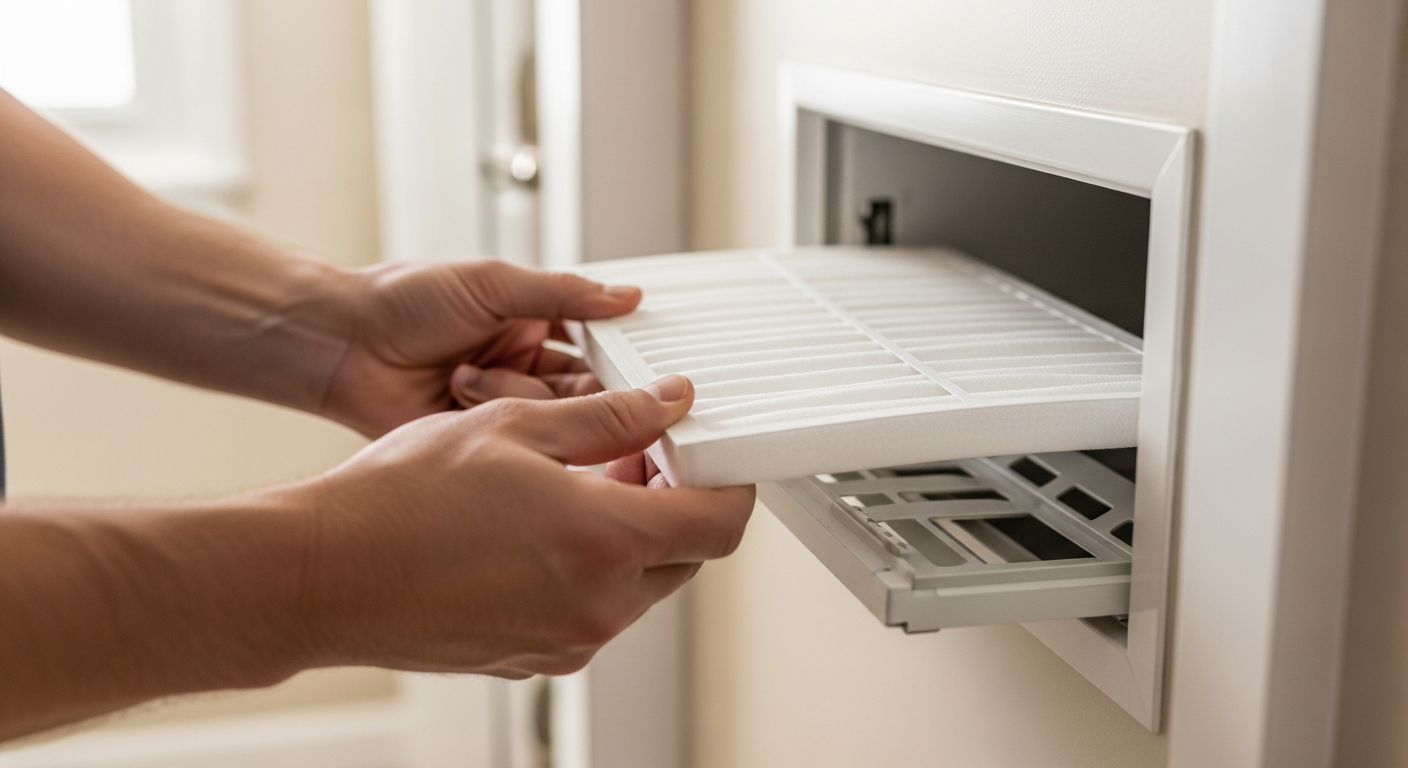
- Inspect and replace air filters monthly during peak seasons.
- Keep outdoor unit clear of debris, leaves, and ice.
- Ensure supply and return vents are not blocked by furniture.
- Test thermostat accuracy with a standalone thermometer.
- Look for obvious ice buildup on lines (sign of a pro-needed issue).
Always call a qualified, EPA-certified contractor for:
- Refrigerant charging, leak detection, or handling.
- Gas line, burner, or combustion adjustments.
- Electrical work, including capacitors, contactors, or control boards.
- Compressor or motor replacement.
- Any repair requiring opening sealed components.
For trusted local professionals, search our contractor directory.
How We Formulated These Recommendations
Our efficiency tier advice integrates:
- U.S. Department of Energy minimum standards and ENERGY STAR criteria.
- Real utility rates from EIA data, averaged across climate zones.
- Typical equipment lifespans (15–20 years) and national homeownership tenure (~13 years).
- Payback calculations using a 6% discount rate and inflation-adjusted energy price trends.
Cost estimates are editorial estimates—not firm quotes—based on national surveys and contractor interviews. Actual prices vary by region, system size, brand, and other factors.
Frequently Asked Questions
1. What's the difference between SEER and SEER2?
SEER2 is the new 2023 test standard that better reflects real-world duct leakage and external static pressure. SEER2 values are about 5–10% lower than the old SEER for the same equipment. Always compare SEER2 to SEER2.
2. Is a variable-speed system worth the extra upfront cost?
If you experience frequent hot/cold spots, high humidity, or want near-silent operation, yes. The comfort upgrade is immediate. Financially, it pays for itself fastest in regions with extreme weather and high electric rates. Use our Repair or Replace Calculator to compare scenarios.
3. How long until a high-efficiency HVAC pays me back?
Typically 5–12 years, depending on the tier jump, utility prices, and usage. A mid-range two-stage often pays back in 5–8 years; premium variable-speed in 8–12 years. Federal tax credits and rebates (up to $2,000 for heat pumps) shorten this dramatically.
4. Can I install a high-efficiency furnace without modifying my vents?
Sometimes. High-AFUE condensing furnaces (90%+) generally require PVC venting instead of a traditional metal chimney. Your contractor must assess the venting path and may need to drill new side-wall or roof openings. This can add $500–$1,500 to installation.
5. Do efficiency requirements vary by state?
Yes. Federal minimums are the floor, but some states (e.g., California) have stricter standards. Always check local codes and available rebates using our Rebate Finder.
Methodology
HVACDatabase estimates combine common contractor price patterns, service-category pricing ranges, equipment complexity, urgency, regional labor variation, and known HVAC safety boundaries. Actual prices vary by city, brand, system size, access, warranty status, permit requirements, and whether the visit discovers ductwork, electrical, refrigerant, gas, or drainage issues. Use these numbers to sanity-check quotes, not as a guaranteed price.
Related articles
Connect this page to adjacent guides so readers keep moving deeper into the topic cluster.

Understanding C Wire Adapters for Smart Thermostats
Missing the C wire for your smart thermostat? C wire adapters solve power issues without pulling new wiring. Compare types, costs, and installation options.

Tips for Choosing a Smart Thermostat for a Heat Pump
Learn which smart thermostat features prevent expensive auxiliary heat mistakes, how to verify compatibility, and when to call a pro.
Tips for Heating a Home With Radiant Barriers
Radiant barriers can reduce winter heat loss through ceilings, but they are not a replacement for insulation. Learn when they help and what else you need for a warm, efficient home.