Why Variable Speed HVAC Systems Save Energy
Variable speed HVAC systems run at lower, steadier speeds, slashing energy use and improving comfort. Learn if the upgrade makes financial sense for your home.
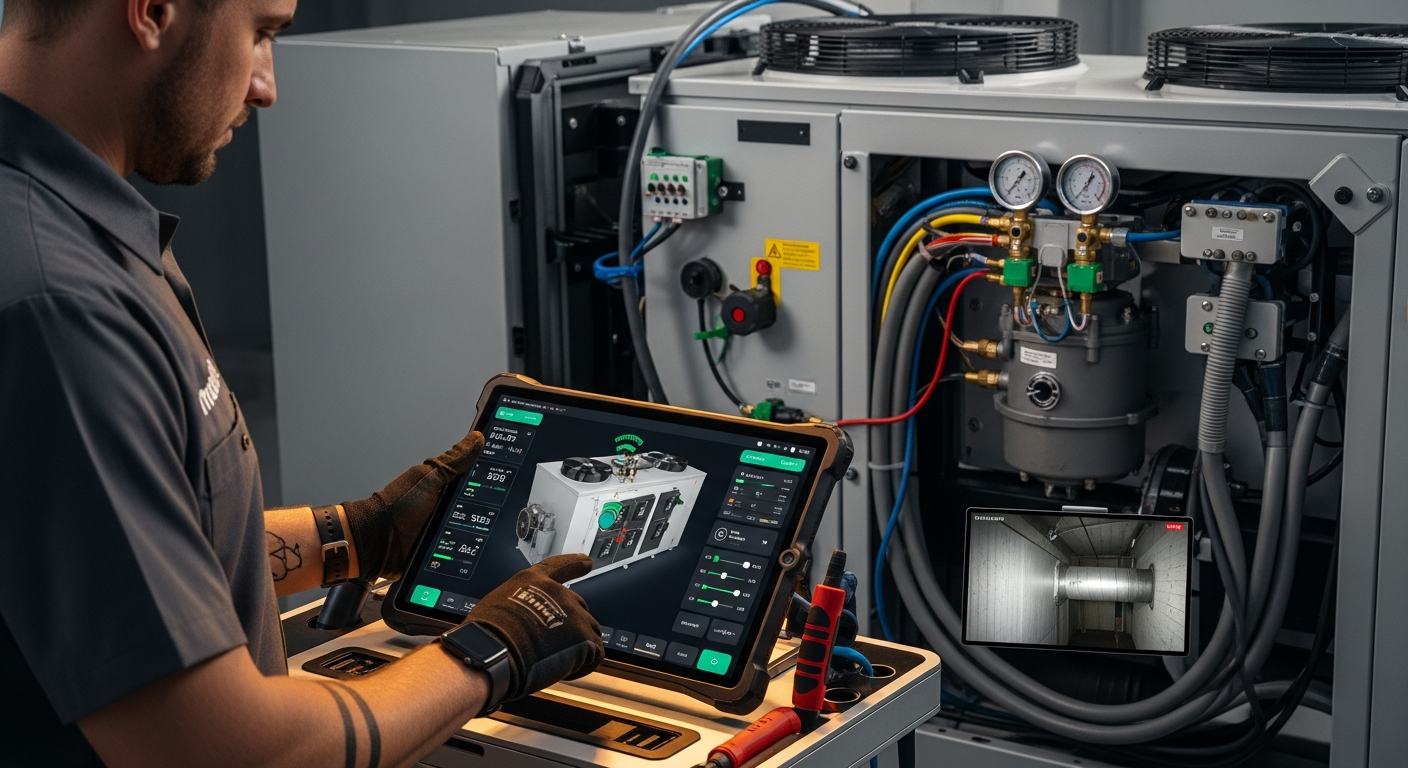
Clear recommendation: Invest if you meet key conditions
For most homeowners in moderate to hot climates with an aging HVAC system, variable speed technology pays for itself through energy savings and comfort within 3-7 years. Prioritize a Manual J load calculation and a NATE-certified installer to unlock full benefits.
What Matters Most
- Variable speed HVAC can reduce cooling bills by 30-50%.
- Best suited for humid climates, multi-story homes, and long-term homeowners.
- Upfront premium ($2K-$4K) is offset by utility savings and rebates.
- Proper installation is critical—don't skip the contractor checklist.
- Use our free calculators to estimate costs and payback before calling contractors.
Strengths
- Superior comfort with stable temperatures within 0.5°F.
- Excellent humidity control, reducing mold and 'feels like' temperature.
- Whisper-quiet operation.
- Lower overall energy consumption due to longer, low-power cycles.
- Potential for longer equipment life from reduced cycling.
Weaknesses
- Higher initial cost.
- More complex repairs with costlier parts.
- Requires skilled installers; poor installation erases efficiency benefits.
- May need ductwork modifications.
- Not always cost-effective for very small homes or short-term occupancy.
Decision Summary
| Scenario | Usually do | Why |
|---|---|---|
| Hot/humid climate, large home | Variable speed | Maximizes humidity removal and energy savings |
| Mild climate, tight budget | Two-stage or high-efficiency single-stage | Lower upfront cost, still decent efficiency |
| Ductless addition or single room | Mini-split heat pump | Avoids ductwork, very efficient for zones |
| Historic home with no ductwork | Mini-split system | Ductwork may be impractical or damaging |
| Condo or townhome with noise restrictions | Variable speed (quietest) or mini-split | Noise levels as low as 55dB |
Quick Answer
What you need to know in 30 seconds
- Variable speed systems adjust compressor and fan speed to match demand, unlike single-stage on/off units.
- Typical energy savings: 30-50% on cooling costs compared to older single-speed units.
- Best for: homes in hot/humid climates, multi-story homes, noise-sensitive households, and those with high SEER goals.
- Upfront cost: $2,000-$4,000 more than single-stage, but payback often within 3-7 years from lower bills.
- Key tradeoffs: higher initial cost, requires skilled installation and sometimes duct modifications.
How Variable Speed HVAC Works
Unlike traditional HVAC that runs at full blast or off, a variable speed system uses an inverter-driven compressor and a variable-speed blower motor. The compressor can ramp from roughly 25% to 100% capacity, while the fan adjusts airflow accordingly. This means on a mild day it might run at 40% for longer periods, maintaining temperature within 0.5°F instead of swinging 2-4°F.
Think of it as cruise control: constantly adjusting to maintain set speed, rather than accelerating hard and coasting.
Single-Stage vs. Two-Stage vs. Variable Speed
| Feature | Single-Stage | Two-Stage | Variable Speed |
|---|---|---|---|
| Compressor speeds | 1 (100%) | 2 (typically 70% and 100%) | Hundreds (as low as 25%) |
| Energy efficiency | Moderate (SEER2 13-16) | Good (SEER2 16-19) | Excellent (SEER2 18-24+) |
| Humidity control | Basic | Better | Superior (removes 30-50% more moisture) |
| Noise level (compressor) | Loud at startup | Quieter | Whisper-quiet (as low as 55 dB) |
| Installed cost (3-ton system) | $5,000-$7,000 | $6,500-$9,000 | $9,000-$14,000+ |
Editorial cost ranges; actual prices vary by region, home layout, and contractor.
Energy Savings: What to Expect
A variable speed system achieves its efficiency by running longer at lower power. Since it avoids the massive surge of energy needed to start a motor repeatedly, it consumes far less electricity. Studies show that the average homeowner can cut cooling costs by 30-50% when replacing a 10+ year-old single-stage unit. Heating savings with a variable-speed heat pump can be similar.
Use our Energy Calculator to estimate your potential annual savings based on your current system and local utility rates.
Pro tip: Pair a variable speed system with a programmable or smart thermostat that can leverage its staging capabilities for even greater comfort and efficiency.
Comfort and Indoor Air Quality
Longer run times at low speed mean air passes through the filter more often, capturing dust, pollen, and pet dander. This constant filtration can improve indoor air quality significantly. Moreover, the extended cooling cycles remove 2-3 times more humidity than single-stage units, making 78°F feel as comfortable as 74°F in a humid climate. To maximize these benefits, ensure your home is well-sealed—see our guide on sealing air leaks.
Is a Variable Speed System Right for You? Decision Checklist
Answer these questions:
- Do you live in a climate with high humidity or long cooling seasons? If yes, variable speed almost always pays off.
- Is your current single-stage system over 12 years old? If yes, the savings jump and comfort upgrade are most noticeable.
- Do you have uneven temperatures between floors or rooms? Variable speed, combined with zoning, can solve this.
- Is noise a concern? (e.g., bedroom near outdoor unit, home office) The silent operation is a major quality-of-life upgrade.
- Do you plan to stay in your home at least 5 years? Payback typically takes 3-7 years, so long-term occupancy maximizes ROI.
- Is your ductwork in good condition and properly sized? Marginal ducts may need upgrades; a contractor evaluation is critical.
If you answered "yes" to three or more, variable speed is likely a strong investment. If you're unsure, use our Repair or Replace Calculator to weigh the financials.
Cost and ROI
While a variable speed system costs $2,000-$4,000+ more than a basic single-stage unit, the annual energy savings can range from $300 to $800 depending on climate, size, and energy prices. Many utilities offer rebates for high-efficiency equipment—check our Rebate Finder for local incentives that can cut the premium by $500-$1,500.
Example payback:
- Upgrade cost premium: $3,000
- Annual savings: $500
- Plus a $700 rebate: net premium becomes $2,300
- Payback: about 4.6 years (after that, pure savings)
Get a personalized estimate with our HVAC Cost Estimator.
Safety Boundaries: What You Can and Can't Do
Homeowner-safe tasks:
- Check and replace air filters monthly during heavy-use seasons—a clogged filter starves a variable speed blower and reduces efficiency.
- Inspect outdoor unit for debris, leaves, or ice buildup (ice indicates a refrigerant or airflow problem—call a pro).
- Verify thermostat settings and ensure it's not in "emergency heat" mode unnecessarily.
- Listen for unusual noises or vibrations and note when they occur.
- Keep supply and return vents unblocked by furniture or drapes.
Pro-only tasks (do not attempt):
- Refrigerant charging, leak repair, or line set work—requires EPA Section 608 certification.
- Compressor, inverter board, capacitor, or contactor diagnostics and replacement—high-voltage risk.
- Gas furnace combustion adjustments or heat exchanger inspection—carbon monoxide hazard.
- Ductwork modifications that require air balance calculations and sealing with specialized materials.
Contractor Checklist: Questions to Ask Before Installation
Before hiring, ask these questions to ensure a proper install:
- "Will you perform a Manual J heating/cooling load calculation?" Never trust a contractor who sizes by "rule of thumb" or square footage alone.
- "What SEER2 rating do you recommend for my home, and why?"
- "Can you provide a written AHRI certificate for the proposed system match?"
- "Do you offer a multi-year labor warranty in addition to the manufacturer's parts warranty?"
- "Will you inspect and test my ductwork for leaks, and is duct sealing included in the quote?"
- "How do you handle refrigerant lines—will they be flushed and checked for leaks?"
- "Are your technicians NATE-certified, and do you carry liability and workers' comp insurance?"
- "Can I see three recent reviews or talk to a past customer who had a similar variable-speed install?"
Find prescreened, high-efficiency specialists on HVACDatabase's contractor search.
Regional Considerations
- Hot & humid (Southeast, Gulf Coast): Variable speed is almost a necessity. Demand a system with enhanced humidity control (some models have a dehumidification mode). Example: Phoenix AC contractors can advise on desert vs. humid needs.
- Cold climates (Northern states, Canada border): Opt for a variable-speed heat pump rated for sub-zero operation (some operate down to -5°F or lower), paired with a backup heat source.
- Coastal/sea air: Ensure the outdoor unit has anti-corrosion coating. Variable speed systems often have thicker coils; confirm with contractor.
- Older homes with radiators or no central ducts: Consider ductless mini-split variable speed systems (also called heat pumps). They offer the same efficiency without ductwork costs.
Tools & Calculators
Use these free tools to plan your upgrade:
- HVAC Cost Estimator: Get a personalized price in your ZIP code.
- Energy Calculator: See your potential savings.
- Repair or Replace Calculator: Weigh the decision mathematically.
- BTU Calculator: Check if your proposed system is properly sized.
- Rebate Finder: Find local utility incentives.
FAQs
1. How much can a variable speed HVAC save per month?
Many homeowners see $30-$70 per month in cooling season savings when replacing an old single-stage AC. Actual savings depend on climate, house size, energy costs, and usage patterns. Use our Energy Calculator for a tailored estimate.
2. Are variable speed systems more expensive to repair?
Yes, parts like inverter boards and variable-speed compressors can be 50-100% pricier than single-speed components. However, they're under less stress and often last longer. Always review the warranty—most manufacturers offer 10-year parts warranties when registered.
3. Do I need a special thermostat for variable speed?
Yes. While many units come with a communicating thermostat, some work with standard thermostats using a proprietary interface. A communicating thermostat allows the system to adjust based on humidity and demand algorithms, maximizing comfort and efficiency.
4. Can I add variable speed to my existing furnace?
Partly. You can upgrade to a variable-speed blower motor on some furnaces, which improves efficiency and comfort, but pairing it with a single-stage AC limits the full benefit. For maximum savings, a matched variable-speed AC and furnace/air handler is ideal.
5. What's the difference between inverter mini-splits and central variable speed?
Both use inverter-driven compressors, but mini-splits are ductless and often more efficient for single rooms or additions. Central variable speed systems distribute air through ducts and are better for whole-house solutions. Both offer excellent efficiency and comfort.
Methodology
Cost estimates are editorial ranges derived from aggregated contractor pricing databases, manufacturer suggested retail prices, and homeowner surveys from 2022-2025. Savings percentages are based on comparative energy modeling of SEER2 13 single-stage systems vs. SEER2 20+ variable speed systems in typical 2,000 sq. ft. homes across mixed climates, corroborated by ENERGY STAR data. Payback calculations assume average U.S. electricity rates and exclude maintenance cost differences. Actual results vary; always obtain multiple quotes. Our recommendations prioritize safety, manufacturer guidelines, and industry best practices (ACCA Manuals J, S, D).
Related articles
Connect this page to adjacent guides so readers keep moving deeper into the topic cluster.

Tips for Choosing a Smart Thermostat for a Heat Pump
Learn which smart thermostat features prevent expensive auxiliary heat mistakes, how to verify compatibility, and when to call a pro.

Understanding C Wire Adapters for Smart Thermostats
Missing the C wire for your smart thermostat? C wire adapters solve power issues without pulling new wiring. Compare types, costs, and installation options.

Best Smart Thermostats for Multi Zone Homes
Discover which smart thermostats deliver accurate zoning, remote sensors, and energy savings for homes with multiple HVAC zones. Our guide helps you pick the right model and avoid costly compatibility mistakes.