AFUE Ratings Explained for Furnaces
Discover how AFUE ratings impact your heating bills, when to upgrade your furnace, and how to use our tools to maximize savings—without sales fluff.
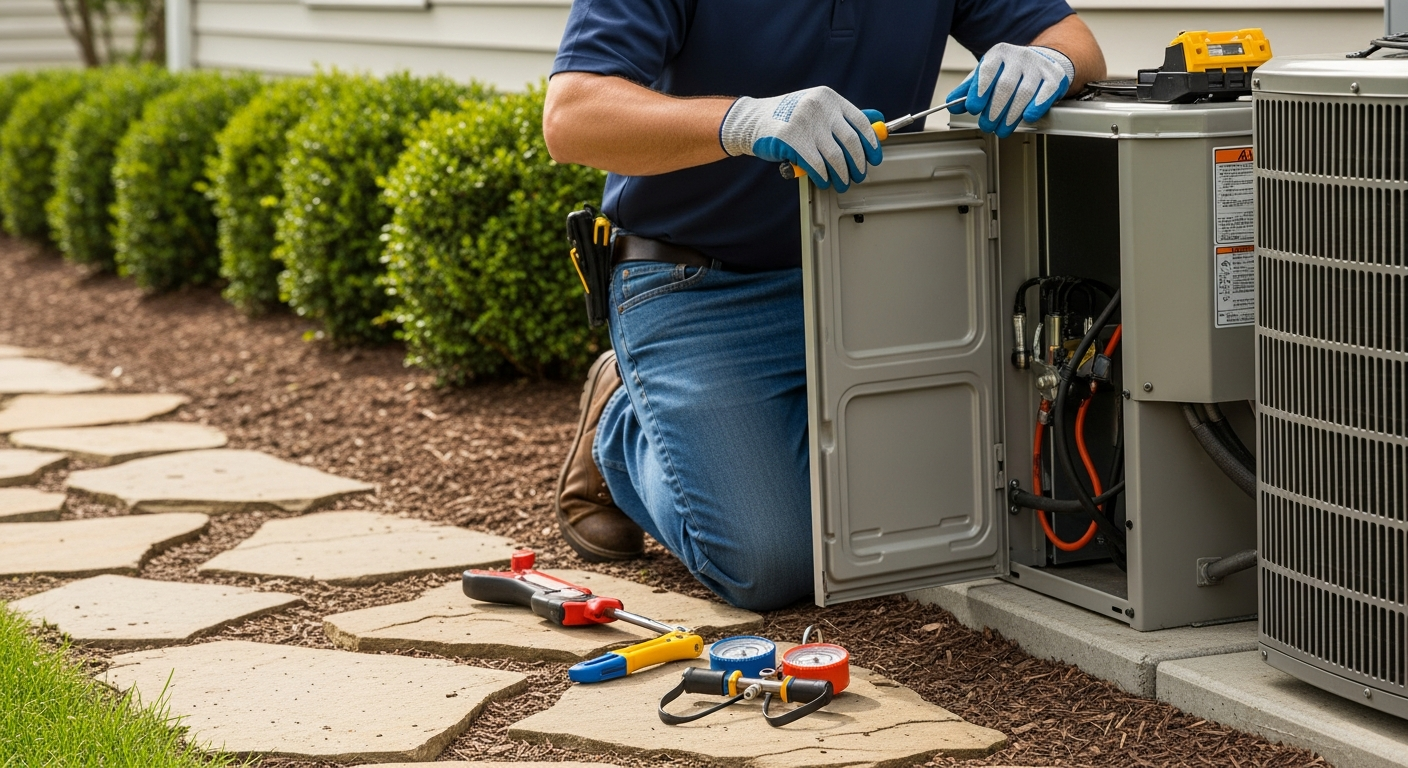
Get a load calculation, target 95%+ in cold climates
Before choosing AFUE, insist on a Manual J load calculation. In heating-dominated regions, 95%+ efficiency offers the fastest payback and best comfort, provided the home is well-sealed.
What Matters Most
- AFUE measures fuel-to-heat efficiency; higher means lower bills.
- Payback for upgrading from 80% to 95% often takes 6–12 years in cold climates.
- Always pair efficiency with proper sizing and home air-sealing.
- Use tools and rebate finders to reduce net cost.
- Never DIY furnace installation or repair.
Strengths
- Significant fuel savings in heating-dominated climates.
- Potential tax credits and utility rebates lower upfront cost.
- Modern high-efficiency furnaces offer better comfort with two-stage or variable-speed blowers.
Weaknesses
- Higher purchase price; may not pencil out in mild climates.
- Condensing furnaces require drain lines; more complex maintenance.
- Payback extends if home is poorly insulated.
AFUE Upgrade Decision Scenarios
| Scenario | Usually do | Why |
|---|---|---|
| Old furnace >15 years, <80% AFUE, cold climate | Upgrade to 95%+ | High savings, fast payback |
| Furnace <10 years, 80% AFUE, mild climate | Maintain, insulate | Upgrade cost outweighs mild savings |
| High heating bills but newer 90% furnace | Energy audit first | Heat loss may be from ducts or insulation |
| Budget limited, need new furnace | 90% AFUE with rebates | Balance efficiency and cost |
Quick Answer: Is a High-AFUE Furnace Worth It?
If your furnace is over 15 years old or below 80% AFUE, upgrading to a 95% AFUE model can slash heating bills by 20–35%. Payback typically takes 5–10 years. Use our Energy Savings Calculator to estimate your numbers.
Understanding AFUE Numbers
Annual Fuel Utilization Efficiency (AFUE) measures the percentage of fuel a furnace turns into usable heat over a heating season. A 90% AFUE furnace converts 90% of its fuel into heat and loses 10% through exhaust. The higher the AFUE, the less fuel you waste.
| AFUE Rating | Heat Delivered | Heat Lost | Typical Furnace Type |
|---|---|---|---|
| 80% | 80% | 20% | Standard-efficiency, single-stage |
| 90% | 90% | 10% | Mid-efficiency, condensing |
| 95% | 95% | 5% | High-efficiency, two-stage/variable |
| 98%+ | 98%+ | ≤2% | Premium variable-speed condensing |
How Much Can You Save?
| Current AFUE | New AFUE | Annual Fuel Cost | Annual Savings | Install Cost Range | Payback Period |
|---|---|---|---|---|---|
| 70% (old) | 95% | $960 → $707 | $253 | $6,000–$12,000 | 6–12 years |
| 80% | 95% | $960 → $809 | $151 | $5,000–$10,000 | 8–16 years |
| 80% | 90% | $960 → $853 | $107 | $5,000–$9,000 | 10–20 years |
| 90% | 98% | $853 → $784 | $69 | $7,000–$14,000 | 12–25+ years |
Data assumes constant fuel prices and proper sizing. Use our Energy Calculator for a personalized estimate.
Decision Guide: When to Upgrade
- Check your current furnace’s AFUE and age. Look for the yellow EnergyGuide label or the model number.
- If it’s below 80% AFUE or over 15 years old, an upgrade likely pays off. Use our Repair or Replace Calculator.
- If your home has drafty rooms or high bills, schedule a home energy audit first—insulation and air sealing can magnify furnace savings.
- Calculate your potential savings with our Energy Savings Calculator.
- Get at least three quotes from licensed local contractors. Share the same AFUE target and ask for Manual J load calculations (see checklist below).
- Verify rebates with our Rebate Finder—high-efficiency furnaces often qualify.
Safety Boundaries: What Homeowners Can (and Cannot) Do
DIY Checks
- Replace air filter monthly/quarterly.
- Ensure return vents are unblocked.
- Check thermostat batteries and settings.
- Inspect visible ductwork for obvious leaks or disconnected sections.
- Clear snow/ice from outside exhaust vents.
Pro-Only Work
- Any gas line work.
- Inspecting or repairing a heat exchanger.
- Electrical component replacement.
- Any sign of carbon monoxide (evacuate and call professional).
- Annual combustion analysis and efficiency testing.
- Refrigerant handling (if heat pump).
- Bypassing safety switches.
Attempting furnace repair risks fire, explosion, or CO poisoning. Always hire a licensed professional.
Contractor Checklist for a High-AFUE Furnace Install
- Will you perform a Manual J load calculation? Avoid contractors who guess based on square footage alone. Oversizing leads to short-cycling and comfort issues.
- Are you licensed and insured for HVAC work in my state? Ask for proof.
- What AFUE do you recommend for my home and why? They should consider local climate, fuel prices, and your home’s envelope.
- Do you handle rebates and tax credits? Some contractors file paperwork for you; confirm.
- What maintenance plans do you offer to keep AFUE high? Annual tune-ups are essential.
- Can you provide local references and a detailed written estimate? Get it all in writing before signing.
Local Climate and Home Factors That Change the Math
- Cold climates (heating degree days > 6,000): High AFUE (95%+) pays back quickly. Consider two-stage or modulating for comfort.
- Mild climates (<4,000 HDD): 90% AFUE may be sufficient; payback for 95%+ can stretch past 15 years.
- Humid or coastal areas: Look for corrosion-resistant heat exchangers; efficiency matters but ensure proper drainage for condensing models.
- Older homes: Ductwork and insulation often need upgrades; an energy audit is critical before sizing. Sealing air leaks can reduce the required furnace size and lower install cost.
Tools to Crunch Your Numbers
Before you call a contractor, use these free calculators to build a baseline:
- BTU Calculator – estimate the heating capacity your home needs.
- Energy Cost Calculator – project your annual heating costs at different AFUEs.
- HVAC Cost Estimator – see what a high-efficiency furnace might cost in your area.
- Repair or Replace Calculator – decide if fixing your old furnace is worth it.
- Rebate Finder – uncover utility and federal incentives.
Maintenance Keeps AFUE From Fading
Change filters regularly (monthly for 1–2 inch filters, every 3–6 months for pleated). Schedule annual professional maintenance ($80–$250). Technicians clean burners, check heat exchanger integrity, test combustion efficiency. Don’t skip: a dirty blower or sooted heat exchanger can drop efficiency by 5–10%.
Methodology
Cost and savings estimates are editorial, based on average residential natural gas prices (≈$1.20/therm), typical heating consumption (800 therms/year for a cold-climate 2,000 sq.ft. home), and national furnace installation cost data. Actual savings vary with fuel prices, climate, system sizing, and home insulation. Always consult a qualified contractor for a tailored analysis.
Frequently Asked Questions
1. What does AFUE really mean for my wallet?
AFUE directly affects how much of each fuel dollar heats your home. Moving from 70% to 95% AFUE means 25 cents less wasted per dollar—translating to hundreds of dollars saved annually.
2. Is a 95% AFUE furnace always better than 80%?
It’s more efficient, but payback depends on climate and gas prices. In warmer regions, the extra upfront cost ($1,000–$3,000 more) may not be recovered within the furnace’s lifetime. Use our Energy Calculator to compare.
3. Will a high-AFUE furnace alone fix cold rooms?
No. If ductwork is leaky or poorly insulated, heat still escapes before reaching rooms. A home energy audit can pinpoint those issues. Balancing dampers and sealing ducts often solve uneven heating.
4. How long do high-efficiency furnaces last?
With proper maintenance, 95%+ condensing furnaces typically last 15–20 years, similar to standard models. The secondary heat exchanger can fail earlier if annual maintenance is skipped.
5. Can I install a high-AFUE furnace myself to save money?
No. Furnace installation involves gas lines, combustion exhaust, and electrical connections—all of which carry safety risks and require permits. DIY errors can lead to carbon monoxide poisoning or fires. Always hire a licensed professional.
Related articles
Connect this page to adjacent guides so readers keep moving deeper into the topic cluster.

Tips for Choosing a Smart Thermostat for a Heat Pump
Learn which smart thermostat features prevent expensive auxiliary heat mistakes, how to verify compatibility, and when to call a pro.

Understanding C Wire Adapters for Smart Thermostats
Missing the C wire for your smart thermostat? C wire adapters solve power issues without pulling new wiring. Compare types, costs, and installation options.

Best Smart Thermostats for Multi Zone Homes
Discover which smart thermostats deliver accurate zoning, remote sensors, and energy savings for homes with multiple HVAC zones. Our guide helps you pick the right model and avoid costly compatibility mistakes.