Bryant vs Carrier Heating Systems
Bryant and Carrier come from the same factory, but Carrier costs 5–15% more. Use our decision tools to see which heating brand fits your home and budget.
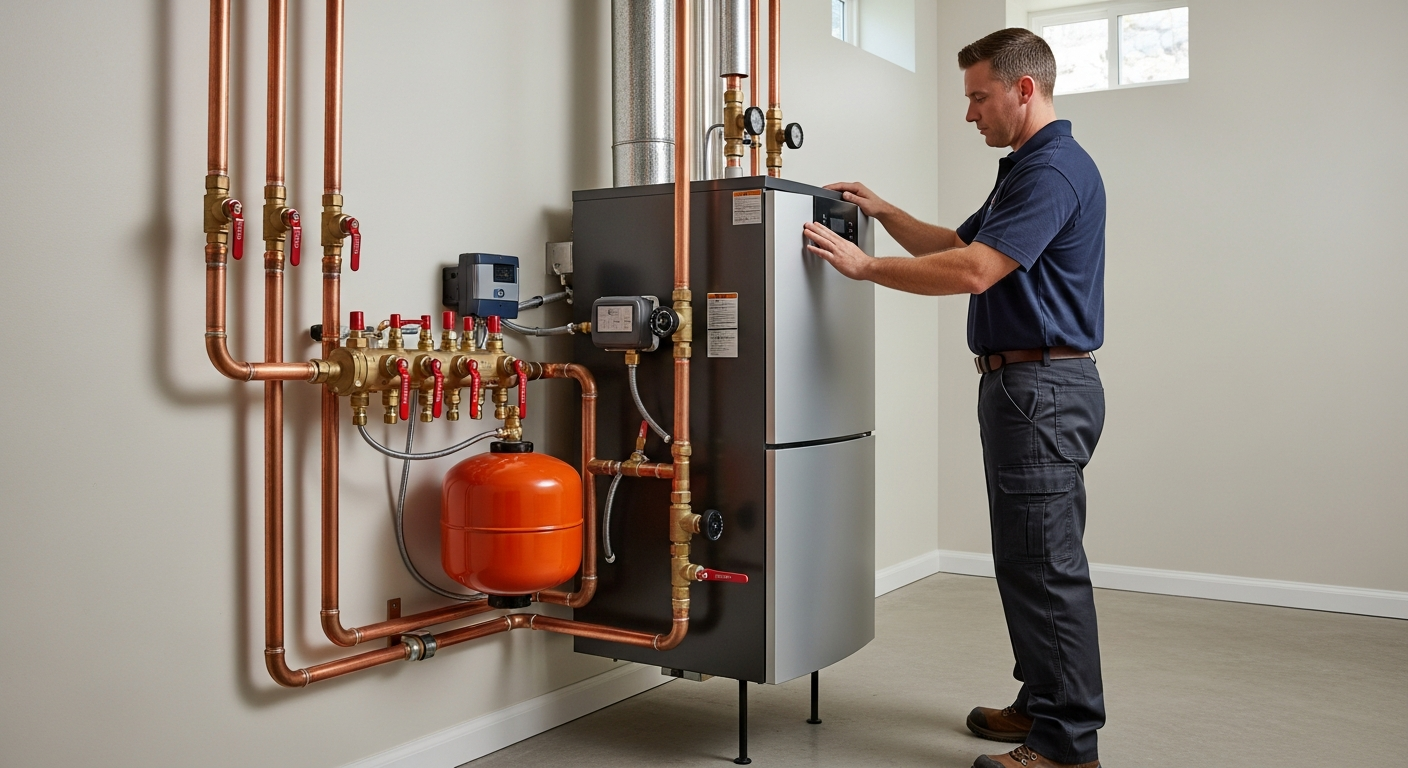
Bryant delivers better value for most homes
Unless a specific Carrier rebate, dealer limitation, or thermostat preference exists, choose Bryant and invest the savings in installation quality and an extended labor warranty. Carrier’s premium rarely translates to longer equipment life or lower energy bills.
What Matters Most
- Bryant and Carrier share parts, assembly lines, and reliability.
- Carrier costs 5–15% more for the same efficiency—a marketing premium.
- Installation quality impacts longevity more than brand choice.
- Run local quotes through our tools before buying on brand name.
- Dealer reputation often trumps the badge on the sheet metal.
Strengths
- Bryant offers identical core technology for less money
- Both brands have wide, serviceable dealer networks
- Parts warranties are effectively the same (10-year standard if registered)
- Variable-speed premium tiers deliver excellent comfort regardless of badge
Weaknesses
- Carrier’s price premium rarely pays back through energy savings
- Proprietary Infinity thermostat locks you into Carrier ecosystem
- Dealer quality varies widely; you must vet installers independently
- Perceived resale value difference is minimal in real estate markets
Decision Summary
| Scenario | Usually Do | Why |
|---|---|---|
| Budget-conscious | Buy Bryant Preferred | Same two-stage comfort, lower cost |
| Want best available tech | Buy Bryant Evolution | Matches Carrier Infinity, normally cheaper |
| Carrier-specific rebate or thermostat lock-in | Buy Carrier | Only if net cost beats Bryant after incentives |
Quick Answer
For most homeowners, Bryant delivers better value. Both brands offer identical core technology and efficiency, but Carrier's 5–15% price premium rarely pays back. Choose Carrier only if Bryant dealers in your area have poor reviews, you're chasing a Carrier-specific rebate, or you strongly prefer the Infinity thermostat interface. Otherwise, invest the savings in a high-quality installation and an extended labor warranty.
Bryant vs Carrier: What’s the Same, What’s Different
Carrier and Bryant are siblings under United Technologies. They share manufacturing lines, compressors, heat exchangers, and control boards. The real differences: Carrier spends more on marketing, positions itself as premium, and offers the Infinity communicating thermostat ecosystem. Bryant competes on price and reliability without the flash—often winning on total cost of ownership. Equipment reliability scores are nearly identical because the parts inside are the same.
Efficiency and Performance Comparison
Both brands organize products into three tiers. The table below shows typical efficiency ranges and equipment-only cost estimates for a 3-ton system. Prices are editorial estimates—final installed cost depends on labor, ductwork, and region.
| Tier | Bryant Series | Carrier Series | Typical AFUE / SEER2 | Equip. Cost Range* | Best If… |
|---|---|---|---|---|---|
| Premium | Evolution | Infinity | Up to 98% AFUE, 24+ SEER2 | $4,000–$7,000 | You want precise temperature control, maximum savings, and can invest upfront |
| Mid-Range | Preferred | Performance | 95–97% AFUE, 18–22 SEER2 | $2,500–$4,500 | You want two-stage comfort without the premium price |
| Entry | Legacy | Comfort | 92–95% AFUE, 16–18 SEER2 | $1,800–$3,000 | You need a basic, reliable replacement on a budget |
*Installation adds $2,000–$5,000+ depending on your home’s needs.
Cost Breakdown: What You’ll Actually Pay
Carrier’s 5–15% premium is mostly branding. For a mid-range two-stage furnace, you could save $400–$800 on equipment by choosing Bryant Preferred over Carrier Performance—enough to cover a premium air filter system or part of a labor warranty. Use our tools to get personalized estimates:
- HVAC cost estimator – See what similar jobs cost in your area
- Quote checker – Submit your bids for a second opinion
- Repair or replace calculator – Decide if it’s time for a new system
- Rebate finder – Stack utility and manufacturer incentives
Safety Boundaries: What Homeowners Can—and Cannot—Do
Heating equipment involves natural gas, high voltage, and refrigerant. Only licensed professionals should open access panels, handle refrigerants, adjust gas valves, or replace electrical components. You can safely:
- Change or clean air filters monthly
- Check thermostat batteries and settings
- Clear debris and snow from outdoor heat pump units
- Listen for unusual noises and report them
- Know the location of the emergency gas shutoff and electrical disconnect
Pro-only tasks: refrigerant charge, combustion testing, heat exchanger inspection, capacitor/contactor replacement, control board diagnostics, compressor swap, and any work that requires reclaiming refrigerant or opening sealed systems.
Decision Rules: Which Brand Fits Your Home?
Use these thresholds to narrow your choice. If you answer “yes” to multiple, focus on Bryant unless a specific trigger pulls you to Carrier.
- Budget under $4,000 installed? – Bryant Legacy or Preferred; Carrier equivalents will stretch your budget without meaningful gains.
- Extreme climate (long sub‑freezing winters or scorching summers)? – Compare top‑tier Evolution vs Infinity quotes with variable‑speed compressors. In such climates, the higher SEER2/HSPF of Carrier’s top models can pay back, but run the numbers with our cost estimator first.
- Older home with existing ductwork? – A mid‑range two‑stage from either brand often strikes the best balance. Check with a BTU calculator before sizing.
- Considering a heat pump or ductless? – Both brands offer strong heat pump lines. For whole‑home ductless, read ducted vs ductless AC systems before committing.
- Local dealer only carries one brand? – Dealer quality trumps brand. If the Bryant contractor has stellar reviews and the Carrier dealer is questionable, buy Bryant. Compare contractors on HVACDatabase.
Contractor Checklist: 7 Questions Before You Sign
Installation quality determines longevity more than the name on the unit. Ask every bidder:
- “Are you factory‑trained and authorized by Bryant/Carrier?”
- “Will you perform a Manual J load calculation and share the report?”
- “Do you pull all necessary permits, and is the permit cost included?”
- “What labor warranty do you offer beyond the manufacturer’s parts warranty?”
- “Can you provide a written startup commissioning report with static pressure and temperature rise?”
- “Do you have references for similar installations in my neighborhood?”
- “What is your after‑hours emergency policy?”
Local Context: Climate and Home Age Matter
- Hot, humid regions (Southeast, Gulf Coast): Prioritize variable‑speed air handlers and high SEER2 for dehumidification. Both brands offer excellent modulating heat pumps; a Bryant Evolution with impeccable install often outperforms a cheaper Carrier install.
- Cold northern climates: Look for 97%+ AFUE modulating gas furnaces. Bryant Evolution and Carrier Infinity are nearly equal—let the local dealer’s winter installation backlog and reputation decide.
- Coastal or salty air: Ask about coastal coating options (often an add‑on for outdoor coils). Both brands provide corrosion‑resistant models; no clear winner here.
- Older homes: You may need panel upgrades or duct sealing. Use our BTU calculator and factor 10–20% extra for electrical or ductwork modifications.
Methodology: How We Get Our Numbers
Cost ranges are editorial estimates based on aggregated contractor surveys, industry pricing databases, and feedback from HVACDatabase users. They represent typical equipment costs for a 3‑ton system in a mild‑climate metro, excluding extreme variances. Efficiency data comes from published AHRI certificates and manufacturer specifications. Our recommendation stance favors lifecycle value: we weight installed cost, reliability data, and real‑world contractor quality over brand prestige. Always get three local quotes and use our quote checker to validate bids.
Frequently Asked Questions
Is Bryant really as reliable as Carrier?
Yes. Since the internal components are often identical, independent reliability studies show statistically insignificant differences. Installation quality and maintenance habits drive long‑term reliability far more than the brand label.
Can I use my existing thermostat with Bryant or Carrier?
Basic single‑stage and two‑stage models work with most standard thermostats. Premium variable‑speed systems (Evolution/Infinity) require the brand’s proprietary communicating thermostat to unlock full modulating capability. Factor $300–$700 for that thermostat if upgrading to top‑tier.
How much can I actually save by choosing Bryant?
Equipment savings of 5–15% are common. On a full premium system, that can be $500–$1,000 off the equipment line item. Those dollars can buy a better filter, extended labor warranty, or duct sealing.
What if my local dealer only sells one brand?
Dealer quality matters more than brand. A highly reviewed Bryant contractor will almost always deliver a better outcome than a poorly rated Carrier dealer. Use contractor search to find and compare options.
Do Carrier rebates ever make it cheaper than Bryant?
Occasionally. Some utilities and Carrier Comfort‑Rewards programs offer substantial rebates that can close the gap. Run your ZIP through the rebate finder and compare final net cost, not sticker price.
Related articles
Connect this page to adjacent guides so readers keep moving deeper into the topic cluster.
Electrostatic vs Pleated HVAC Filters
Electrostatic filters are washable and budget-friendly over time, but pleated filters catch more allergens. See which fits your home's air quality and HVAC demands.

Supply vs Exhaust Ventilation Systems
Discover whether a supply or exhaust ventilation system suits your home’s climate, budget, and air quality goals. Our guide includes cost ranges, safety tips, and pro checklists.
Smart Thermostat vs Smart Vent System
Homeowners often ask: smart thermostat or smart vents? Our practical guide explains the core trade-offs, safety limits, and a clear decision path to avoid wasting money or harming your system.