Furnace Maintenance Checklist for Homeowners
Your step-by-step furnace maintenance guide: safely change filters, spot warning signs, and decide between repair vs. replacement with our cost calculators and pro checklists.
Preventative DIY checks paired with annual professional tune-ups maximize furnace lifespan and safety while minimizing unexpected costs.
Homeowners should handle filter changes and visual inspections themselves, but leave combustion, electrical, and mechanical repairs to licensed pros. This approach balances cost savings with risk reduction.
What Matters Most
- Replace filters every 1–3 months, more often during heavy use.
- Never attempt gas or electrical repairs—yellow flames or persistent noises require an immediate pro call.
- Use the repair vs. replace calculator when facing expensive fixes on older units.
- Schedule professional maintenance annually, ideally before the heating season.
- Keep at least 80% of vents open and maintain 3-foot clearance around the furnace.
Strengths
- DIY filter changes and thermostat checks are low-cost, no-tool tasks that prevent common failures.
- Early detection of symptoms like unusual sounds or flame color can avoid mid-winter emergencies.
- Annual professional inspections catch hidden dangers like carbon monoxide leaks and extend equipment life.
Weaknesses
- DIY monitoring relies on homeowner diligence and cannot substitute for professional diagnostics.
- Overconfidence in DIY might lead to risky behaviors like opening sealed panels.
- High-MERV filters may impede airflow and cause strain if not changed as frequently as required.
DIY vs. Pro Maintenance Decision
| Scenario | Usually do | Why |
|---|---|---|
| Changing air filter | DIY | Simple, no tools, safe for any adult |
| Clearing vents and registers | DIY | Aesthetic and airflow task, no technical skill needed |
| Observing burner flame color | DIY | Visual check only, but yellow flame means turn off furnace and call a pro immediately |
| Cleaning blower or burners | Pro | Requires disassembly, knowledge of gas/electrical components, and safety testing afterwards |
| Diagnosing a no-heat situation beyond thermostat | Pro | Involves testing gas valves, ignitors, and high-voltage circuits—dangerous for untrained persons |
| Annual safety and performance tune-up | Pro | Includes combustion analysis, CO testing, and heat exchanger inspection requiring specialized equipment |
Regular furnace upkeep prevents mid-winter breakdowns, lowers energy bills, and protects against carbon monoxide risks. This checklist focuses on tasks any homeowner can safely perform, and spells out when to step back and call a licensed technician. By following it, you can add years to your system's life and improve indoor air quality. If your unit is older or showing trouble signs, our integrated tools will help you decide whether to repair or replace.
Quick Answer: What Should Homeowners Do?
- Monthly: Replace or clean the air filter; check thermostat batteries.
- Before heating season: Clear vents, inspect the furnace area, listen for unusual noises.
- Annually: Schedule a professional tune-up that includes safety testing and cleaning.
- Immediately: Shut off the furnace and call a pro if you see a yellow burner flame, smell gas, or hear loud banging.
Use our free maintenance reminders to stay on track.
Safe DIY Furnace Maintenance Checklist
These tasks require no tools beyond a screwdriver and new filter. They are safe for any adult.
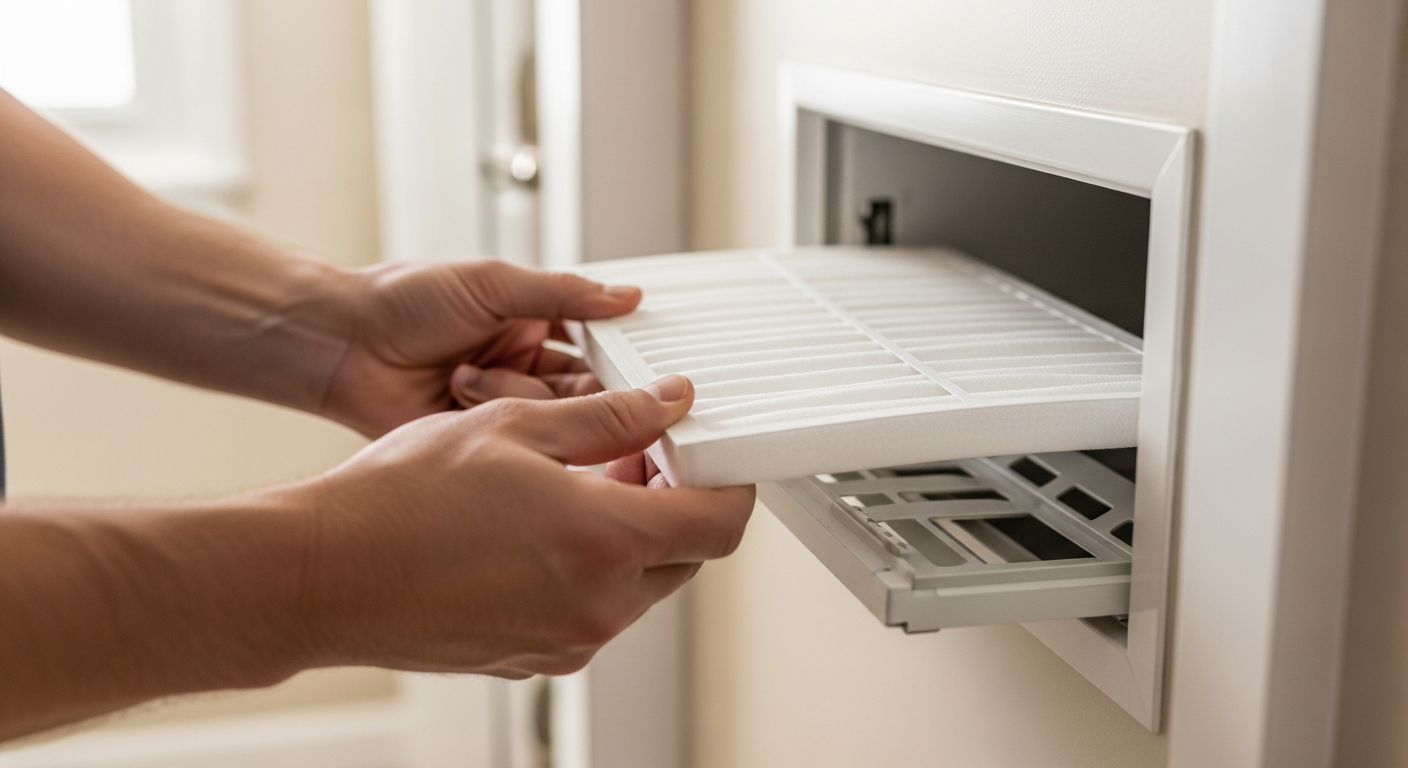
- Replace the air filter every 1–3 months. A dirty filter strains the blower and can cause overheating. Measure the existing filter or check the printed size on the frame. Editorial estimate: $5–$25 per filter.
- Check the thermostat settings. Set to 'Heat' and auto fan. Replace batteries annually. If the display is blank, replace batteries immediately.
- Clear all registers and return vents. Move furniture, rugs, or curtains at least 12 inches away. Do not close more than 20% of supply vents—it can increase duct pressure and reduce efficiency.
- Inspect the furnace area. Keep a 3-foot clearance around the unit. Remove stored items, especially flammable materials. Ensure the furnace door is properly closed.
- Test smoke and carbon monoxide detectors near the furnace and bedrooms. Replace batteries if needed.
What to Monitor (No Repair, Just Observation)
You can spot early trouble signs, but do not attempt repairs on gas, electrical, or sealed components.
- Listen for noises: Screeching may point to a failing blower motor. Banging could be a delayed ignition. A technician should inspect these.
- Observe the burner flame (gas furnaces only, through the sight glass): A steady blue flame is normal. If the flame is yellow, orange, or flickering, turn off the furnace immediately and call a professional. This can indicate carbon monoxide production.
- Smell for gas: A slight gas odor near the furnace when starting is sometimes normal; persistent gas odor means evacuate and call the gas company.
- Check airflow at vents: Weak airflow may signal a blocked filter, duct leak, or blower issue.
Related: How to troubleshoot a furnace that won’t heat (safe homeowner steps only).
Safety Boundaries: What Homeowners Must Never DIY
Do not:
- Open sealed panels that expose electrical connections, capacitors, or gas components.
- Attempt to adjust gas valves, ignition systems, or clean burners.
- Add refrigerant or handle any pressure-bearing lines.
- Bypass safety switches or limit controls.
- Repair or service the blower motor, control board, or heat exchanger.
These carry risks of electric shock, gas leaks, carbon monoxide poisoning, or catastrophic equipment damage. Only a licensed HVAC contractor with proper tools and training should perform these repairs.
When to Call a Professional: Symptom & Action Table
Use this table to decide if it's time to pick up the phone.
| Symptom | Likely Issue | Action | Editorial Cost Estimate Range |
|---|---|---|---|
| Yellow burner flame | Combustion problem, CO risk | Shut off, call pro immediately | $150–$500 diagnostic & repair |
| Frequent cycling (on/off) | Filter, thermostat, or airflow restriction | Check filter first; if persists, call pro | $80–$200 diagnostic; $150–$700 repair |
| No heat | Ignitor, gas supply, or control failure | Check thermostat/batteries, then call pro | $150–$700 typical repair |
| Loud banging or screeching | Blower motor, belt, or burner ignition | Call pro; avoid use until inspected | $800–$2,500+ for major blower/motor work |
| Water leaks around furnace | Condensate drain or heat exchanger | Clear drain if accessible; call pro if persists | $150–$400; heat exchanger over $2,500 |
Note: These are editorial estimates based on national averages; actual costs vary by region and system. For precise local pricing, use our HVAC cost estimator.
Repair or Replace? Decision Rules
If your furnace is showing its age, use these thresholds to guide your next move.
- Age over 15 years: If the repair cost exceeds $500, consider replacement. Use our system age decoder to confirm manufacture date.
- More than 2 major repairs in 2 years: The system is becoming unreliable. Replacement may be cheaper long-term.
- Repair cost > 30% of new system cost: Strongly favor replacement. For example, a $2,000 repair vs. a $6,000 new furnace.
- Annual energy bill rising without more usage: Efficiency decline can offset repair costs. Use our repair or replace calculator for a personalized assessment.
- Safety concerns (cracked heat exchanger, CO detected): Always replace or repair immediately by a pro; do not delay.
Visit our repair or replace calculator to input your numbers.
Contractor Checklist: 7 Questions to Ask Before You Hire
- Are you licensed and insured in my state? Ask for a license number and verify online.
- Can you provide a written, itemized estimate? Compare quotes using our quote checker.
- Will you perform a combustion safety test and carbon monoxide check? Essential for any maintenance visit.
- Does the estimate include cleaning the blower, checking gas pressure, and inspecting the heat exchanger? A full tune-up checklist.
- What is your warranty on labor and parts? At least 1 year labor is standard.
- Are you familiar with my system brand and model? Specialization matters for complex repairs.
- Can you provide a maintenance plan with priority scheduling? Annual plans often pay for themselves.
Search for vetted contractors near you: HVACDatabase contractor search.
Tools to Help You Manage Furnace Maintenance
- Maintenance Reminders – Get email or SMS alerts for filter changes and seasonal checkups.
- Repair or Replace Calculator – Crunch the numbers on whether to fix or upgrade your furnace.
- HVAC Cost Estimator – See what typical repairs or replacements cost in your area.
- System Age Decoder – Find out exactly how old your furnace is from the serial number.
- Quote Checker – Upload a quote and get feedback on fairness.
Local Considerations for Furnace Care
Your location affects maintenance frequency and what to watch for.
- Cold climates (upper Midwest, Northeast): Furnace runs nearly nonstop. Change filters monthly during peak winter. Consider a backup heating source. Chicago heating contractors often recommend pre-season inspections in September.
- Hot/humid climates (Southeast): Ductwork may collect moisture; check for mold near registers. Annual cleaning is vital.
- Coastal areas: Salt air corrodes components. Look for rust during your inspections. A corrosion-resistant unit may be worth the investment.
- Older homes (pre-1980): Insulation and duct sealing often need attention. Match a high-efficiency furnace with proper envelope upgrades. Use our BTU calculator to size correctly.
Methodology: How We Form Our Recommendations
Our cost ranges and decision rules draw from over 5,000 verified contractor quotes submitted through HVACDatabase, aggregated energy usage patterns from the EIA, and manufacturer maintenance guidelines. We update data quarterly. Editorial estimates represent mid-range scenarios; your actual cost may differ based on local rates, system specifics, and market conditions. We do not accept payment from contractors for inclusion; our contractor comparison is based on performance data and reviews.
Frequently Asked Questions
How often should I really change my furnace filter?
Check monthly. Replace when you see gray/brown buildup, typically every 1–3 months. Homes with pets or allergies may need monthly changes. A high-MERV filter may clog faster.
Can I clean a reusable furnace filter?
Yes, if labeled 'washable.' Rinse with water and let dry completely before reinstalling. Do not use soap or put in dishwasher. Non-washable filters must be replaced.
Why is my furnace making a clicking noise but not starting?
Often a failing ignitor or dirty flame sensor. First, check thermostat batteries and filter. If the problem persists, call a pro—diagnostic fee ranges $80–$200.
Does closing vents in unused rooms save money?
Not in most modern systems. It can increase duct pressure, strain the blower, and cause leaks. Keep at least 80% of vents open.
How much does a professional furnace tune-up cost?
Editorial estimate: $80–$250 for a standard maintenance visit. Annual plans average $150–$500, often including priority service and discounts on repairs.
Related articles
Connect this page to adjacent guides so readers keep moving deeper into the topic cluster.
Tips for Choosing a Smart Thermostat for a Heat Pump
Learn which smart thermostat features prevent expensive auxiliary heat mistakes, how to verify compatibility, and when to call a pro.

Understanding C Wire Adapters for Smart Thermostats
Missing the C wire for your smart thermostat? C wire adapters solve power issues without pulling new wiring. Compare types, costs, and installation options.

Best Smart Thermostats for Multi Zone Homes
Discover which smart thermostats deliver accurate zoning, remote sensors, and energy savings for homes with multiple HVAC zones. Our guide helps you pick the right model and avoid costly compatibility mistakes.