Gas Furnace vs Electric Furnace
See exactly when a gas furnace saves money vs. an electric furnace, including cost tables, safety rules, and a contractor checklist. Get the right fit for your climate.
Gas furnaces are the cost leader in cold climates; electric furnaces make sense only in very mild zones or where gas isn’t available.
If you have natural gas and face freezing winters, a high‑AFUE gas furnace delivers the lowest operating cost. Without gas, consider a cold‑climate heat pump before a pure electric furnace. Use our calculators to confirm based on your utility rates and heating hours.
What Matters Most
- Check your local HDD – if above 4,500, gas almost always wins.
- Electric furnaces cost $2,000‑$4,000+ per year to run in cold climates.
- Adding gas infrastructure costs $1,000‑$3,000 upfront, but pays back in 3‑7 years.
- Always require a Manual J load calculation before selecting equipment.
- Install CO detectors with any gas appliance.
Strengths
- Lowest monthly heating bills in cold regions when natural gas is present.
- Fast heat delivery – gas furnaces can raise room temperature quickly.
- Reliable performance even during sub‑zero weather, unlike older heat pumps.
- High‑AFUE models (95%+) significantly reduce flue energy loss.
Weaknesses
- Higher upfront cost if gas line must be run or chimney relined.
- Mandatory annual inspections to mitigate CO risk and maintain safety.
- Heat exchanger corrosion may shorten lifespan in coastal or humid areas.
- Not a cooling solution – must pair with separate AC or heat pump.
The right system for your scenario
| Scenario | Usually do | Why |
|---|---|---|
| I have a natural gas line in a cold climate (zones 4‑7) | Choose a 92‑98% AFUE gas furnace | Dollar‑for‑dollar, cheapest heat; high efficiency added only $800‑$1,200 and saves 10‑20% on fuel |
| No gas line, electricity reasonable (~$0.10‑0.15/kWh) and mild winters | Consider a heat pump first; electric furnace if auxiliary only | Heat pump uses 1/3 the electricity of an electric furnace; pure resistance only for backup or very low heating hours |
| I have propane and 2,000+ heating hours/year | Propane furnace (90%+ AFUE) if propane < $3/gallon | Propane often still beats electric resistance, but check payback vs. heat pump |
| My home already has old ducts and I need AC too | Gas furnace + central AC or dual‑fuel heat pump | Dual‑fuel runs heat pump when mild, gas when freezing – comfort and savings |
Your quick answer: gas vs. electric furnace
If you have natural gas access and winters drop below 40°F regularly, a high‑efficiency gas furnace almost always wins on total cost. Without gas, an electric furnace can work in mild climates (zones 1‑2), but a heat pump often cuts heating bills further. Use our BTU calculator and cost estimator to size the system to your home.
How each furnace heats your home
| Technology | Gas furnace | Electric furnace |
|---|---|---|
| Heat source | Burns natural gas or propane in a sealed combustion chamber | Electric resistance coils glow red‑hot |
| Efficiency | 80‑98% AFUE (some heat lost up flue) | 100% (all electricity turns into heat) |
| Air delivery | Blower pushes air over a metal heat exchanger | Blower pushes air directly over the coils |
Costs at a glance
| Cost category | Gas furnace (80‑98% AFUE) | Electric furnace |
|---|---|---|
| Equipment + install | $3,500‑$9,000+ (natural gas line present) | $1,800‑$5,500 |
| Adding gas line & venting | $1,000‑$3,000 if none exists | No gas work needed |
| Annual fuel (2,000 sq ft, cold climate) | $800‑$1,600 | $2,200‑$4,000+ |
| Annual maintenance | $150‑$500 (inspection + tune‑up) | $80‑$200 (filter + coil cleaning) |
| Expected lifespan | 15‑20 years | 20‑30 years |
Typical gas furnace repairs run $150‑$700 for ignitor/control work; major blower or gas valve work can hit $800‑$2,500. Electric furnace repairs are usually $150‑$650 for element or sequencer replacement, but high‑amp wiring keeps this pro‑only (see Safety Boundaries).
Decision rules: when to choose which
Use these thresholds. Always verify with a local qualified contractor.
Natural gas line exists
Heating degree days (HDD) > 4,500 → gas furnace. Even an 80% AFUE model beats electric resistance on pocketbook. Go 92‑98% AFUE if your furnace runs 1,500+ hours/year.
No gas line, propane available
Electricity $/kWh ÷ propane $/gallon < 8.0 → propane furnace. When electricity is cheap (< $0.08/kWh) or propane is expensive, electric may be comparable, but rarely wins in zones 5‑7.
Mild climate (zones 1‑3)
Annual heating hours < 1,000 → electric furnace acceptable. But a cold‑climate heat pump often cuts heating costs 50‑70% vs. electric resistance.
Older home without ductwork
Adding ducts? Consider radiant or ductless mini‑splits before committing to a gas furnace plus ductwork.
Safety boundaries
Homeowner‑safe steps
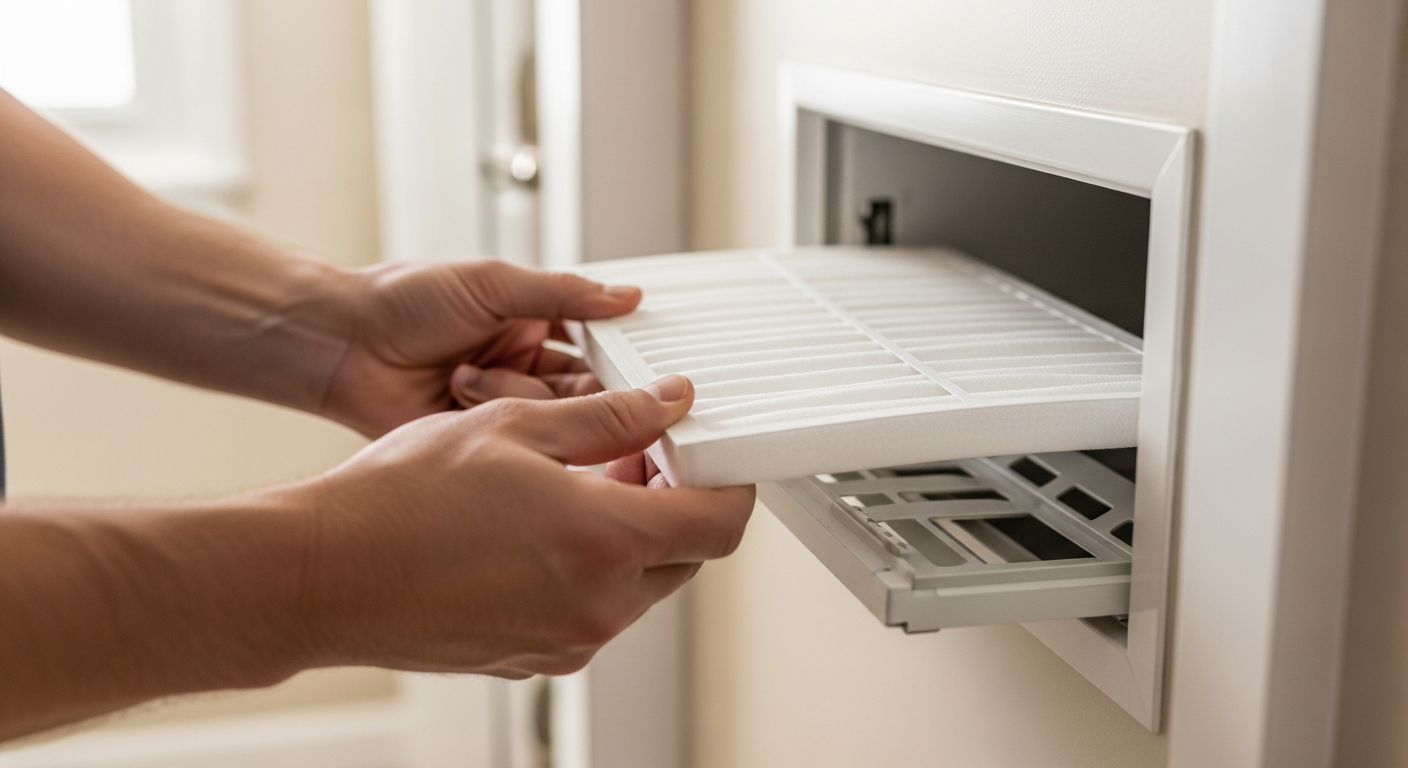
- Replace or clean air filter every 1‑3 months (both types).
- Install and test carbon monoxide detectors on every floor when using any combustion appliance – gas furnace, stove, fireplace.
- Check that vent pipes outside are clear of snow, nests, or debris.
- Listen for unusual sounds (hissing gas, loud bangs) and smell for rotten eggs – if detected, evacuate and call 911, then your utility.
- Inspect visible ductwork for gaps; seal with foil tape, never duct tape.
Professional‑only work (do not attempt yourself)
- Gas line installation, pressure testing, or leak repair.
- Heat exchanger inspection or replacement (risk of CO poisoning).
- Combustion chamber, burner, or ignitor repairs.
- Capacitor, contactor, sequencer, control board, or high‑voltage wiring.
- Refrigerant handling, if a heat pump is part of the system.
Contractor checklist – before you sign
- “Will you perform a Manual J load calculation and share the report?” Accept nothing less.
- “How many heating design days did you assume, and at what outdoor temperature?”
- “Can you provide a written quote that separates equipment, labor, permits, and any electrical/ductwork changes?”
- “What is the AFUE rating and warranty – both parts and labor – for the equipment you propose?”
- “Do you include a post‑install airflow and combustion analysis test?” (Required for gas efficiency rebates.)
- “Are you licensed, insured, and will you pull a permit?”
- “What rebates or local incentives apply? Will you help with paperwork?” Use our rebate finder first.
Local context
- Cold North (MN, ND, ME): Gas furnace dominant. 95‑98% AFUE paired with a heat pump for shoulder seasons is gaining traction. Avoid electric furnaces – bills can top $500/month.
- Mild Pacific Northwest / coastal Carolinas: Electric resistance can run moderately, but heat pumps are often cheaper. Gas isn’t always available; propane adds delivery logistics.
- Hot‑humid Gulf Coast: Key need is cooling. A dual‑fuel system (gas furnace + heat pump) handles mild heating efficiently and cold snaps cheaply. Pure electric resistance is rare due to humidity control demands.
- Older homes (pre‑1960): Chimney relining or direct‑vent options add cost to gas furnaces. Electric is simpler but may strain old 100‑amp panels – budget $1,200‑$2,800 for a panel upgrade.
Tools to sharpen your numbers
Run these free calculators before getting quotes. They empower your contractor conversations.
- BTU calculator – get the heating capacity your home requires.
- HVAC cost estimator – see local installation ranges.
- Repair or replace calculator – if your current furnace is 12+ years old.
- System age decoder – find when your unit was built.
- Quote checker – submit contractor bids for expert review.
Methodology
All cost figures are editorial estimates based on 2023‑2024 U.S. averages from Energy Information Administration fuel prices, RSMeans construction data, and HVAC‑specific contractor surveys. Your actual price will vary with system size, brand, efficiency level, region, season, local permits, and labor rates. We do not provide guaranteed quotes; use our quote checker to compare real bids.
Frequently asked questions
Is an electric furnace ever cheaper to run than gas?
Only in rare cases with very low electricity rates (< $0.06/kWh) and mild heating loads. For most of the U.S., gas delivers 2‑4 times more heat per dollar. Check our BTU calculator and plug in your local utility rates.
Can I switch from electric to gas furnace without a gas line?
Yes, but installing a gas line, meter, and venting typically costs $1,000‑$3,000 extra, and you need gas utility availability at the street. Always get at least three quotes.
Do electric furnaces need a chimney or vent?
No, they produce no combustion gases. This simplifies installation and eliminates backdraft risks. However, they still require adequate electrical panel capacity – often a 60‑100‑amp circuit.
Which one is safer?
Electric furnaces hold no risk of carbon monoxide poisoning or gas leaks. Gas furnaces require annual inspections to maintain safety. With proper maintenance and CO detectors, both are safe. Never skip a gas furnace tune‑up.
How can I find a trustworthy installer?
Use our contractor search to see local pros, then filter by NATE certification and read verified reviews. Always request a Manual J report and a quote check.
Related articles
Connect this page to adjacent guides so readers keep moving deeper into the topic cluster.
Electrostatic vs Pleated HVAC Filters
Electrostatic filters are washable and budget-friendly over time, but pleated filters catch more allergens. See which fits your home's air quality and HVAC demands.

Supply vs Exhaust Ventilation Systems
Discover whether a supply or exhaust ventilation system suits your home’s climate, budget, and air quality goals. Our guide includes cost ranges, safety tips, and pro checklists.
Smart Thermostat vs Smart Vent System
Homeowners often ask: smart thermostat or smart vents? Our practical guide explains the core trade-offs, safety limits, and a clear decision path to avoid wasting money or harming your system.