How to Implement a Whole Home Energy Management System
Integrate smart tech and HVAC controls to cut energy waste. This guide shows how to audit, upgrade, and automate your home's energy use, with real savings estimates.
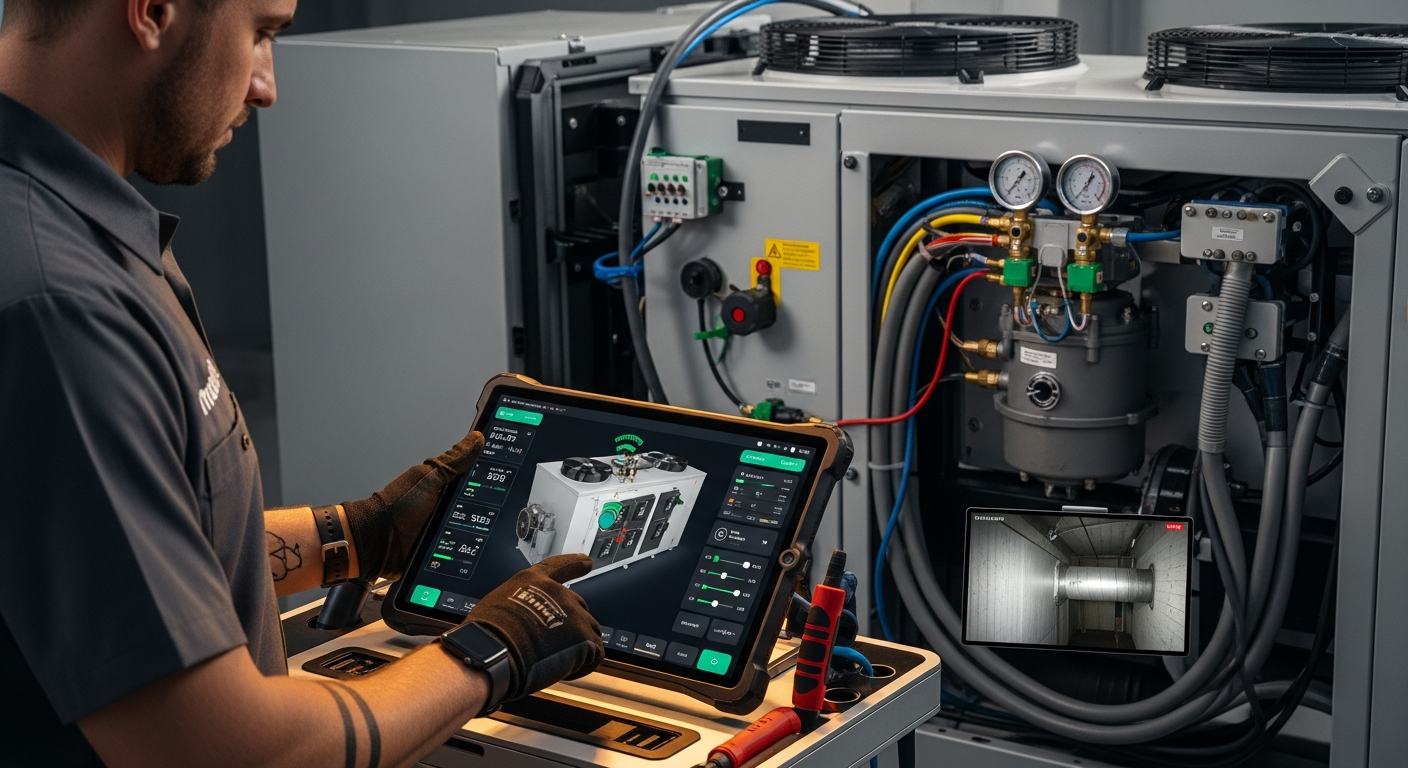
Start with a professional energy audit, then layer in smart controls and automation tied to real-time energy pricing.
A whole-home energy management system that skips the audit often fails to deliver promised savings. Once you know where your home leaks energy, a step-by-step integration of monitoring, sealing, and automation yields reliable 15–30% reductions on heating and cooling costs.
What Matters Most
- An energy audit is the non-negotiable first step; without it, you’re guessing.
- Sealing air leaks and upgrading insulation often deliver faster payback than smart gadgets alone.
- Smart thermostats and energy monitors are most effective when paired with automated routines that exploit time-of-use rates.
- Whole-home systems typically cost $1,800–$4,500 before rebates but can cut HVAC bills by 15–30%.
- Always hire a licensed pro for panel-level monitoring and integration to protect warranties and safety.
Strengths
- Proven payback: Projects anchored in building-science data avoid overspend.
- Scalable: You can start small and expand as budget allows.
- Utility support: Many rebates require a recognized audit, making the path incentive-friendly.
- Comfort gains: Right-sized equipment and thoughtful automation eliminate hot/cold spots.
Weaknesses
- Upfront cost: A comprehensive system may take 3–7 years to pay back.
- Complexity: Integrating devices from different brands can be frustrating without a pro.
- Labor dependence: Electrician and HVAC-specialist coordination adds scheduling delays.
- Technology risk: Some wireless protocols may become obsolete or poorly supported.
Decision Summary
| Scenario | Usually Do | Why |
|---|---|---|
| You’ve never had an energy audit | Book a professional audit first | You can’t manage what you don’t measure; blower door and infrared reveal hidden leaks. |
| Your HVAC is over 12 years old | Consider replacement with a >18 SEER2 heat pump model | New systems offer variable-speed communication that older units can’t match, boosting HEMS automation. |
| You have TOU electricity rates | Install a smart monitor with load control, shift water heating and EV charging to off-peak | Many utilities offer rebates that cover 50–100% of monitoring hardware. |
| Your home is drafty or has ice dams | Air seal attic and rim joists before buying smart controls | A tight envelope lets your thermostat work less; otherwise, you’re heating the outdoors. |
| Budget is tight | Start with a smart thermostat and one-year subscription to a home energy monitor | Even basic awareness typically cuts usage 5–10%, funding deeper upgrades later. |
A whole-home energy management system (HEMS) isn’t a single gadget—it’s a connected approach that can slash your HVAC energy use by 15–30% annually. By pairing a professional energy audit, smart thermostats, and real-time monitoring with better insulation and automated routines, you stop paying for waste and start controlling comfort room by room. This guide gives you a step-by-step framework: from figuring out where your house leaks energy to hiring the right contractor and programming scenes that match your family’s actual schedule. You’ll find cost estimates, decision rules, and links to free calculators that turn ambition into a working plan—without overspending on tech your home doesn’t need.
Quick Answer
A HEMS combines three layers: 1) A professional audit that finds air leaks and weak insulation; 2) Smart controls (thermostats, sensors, energy monitors) that talk to each other; 3) Automated routines that shift or trim loads based on time-of-use rates and occupancy. Most homes save 10–30% on heating and cooling, with payback in 3–7 years. You can DIY parts like installing a smart thermostat or setting schedules, but electrical-panel monitors and integrated automation should be left to a licensed electrician or HVAC pro. The best time to start is right after an energy audit—use the free HVACDatabase Energy Calculator to estimate your potential savings.
Decision Summary Table
| Scenario | Usually Do | Why |
|---|---|---|
| You’ve never had an energy audit | Book a professional audit first | You can’t manage what you don’t measure; blower door and infrared reveal hidden leaks. |
| Your HVAC is over 12 years old | Consider replacement with a >18 SEER2 heat pump model | New systems offer variable-speed communication that older units can’t match, boosting HEMS automation. |
| You have TOU electricity rates | Install a smart monitor with load control, shift water heating and EV charging to off-peak | Many utilities offer rebates that cover 50–100% of monitoring hardware. |
| Your home is drafty or has ice dams | Air seal attic and rim joists before buying smart controls | A tight envelope lets your thermostat work less; otherwise, you’re heating the outdoors. |
| Budget is tight | Start with a smart thermostat and one-year subscription to a home energy monitor | Even basic awareness typically cuts usage 5–10%, funding deeper upgrades later. |
Safety Boundaries: What You Can and Cannot Do Yourself
Homeowner-Safe Tasks
- Visually inspect insulation, weatherstripping, and window seals.
- Replace air filters monthly.
- Program thermostat schedules, occupancy sensors, and ceiling-fan direction.
- Read your energy labels (see our guide on energy labels).
- Review utility bills and app alerts to spot anomalies.
Pro-Only Work
- Installing current-transformer (CT) clamps inside an electrical panel.
- Wiring a hardwired energy monitor or smart subpanel.
- Modifying furnace, heat pump, or air-conditioner control boards.
- Any refrigerant-line or gas-pipe work.
- Sizing and installing mechanical ventilation for spray-foam or tight homes.
Penalties for DIY electrical errors can void insurance and manufacturer warranties.
Estimate Your Savings with HVACDatabase Tools
- Energy Savings Calculator: See how much a smart thermostat and sealed ducts could cut your bill.
- Rebate Finder: Enter your ZIP to find utility rebates for energy monitors, smart thermostats, and insulation upgrades.
- HVAC Cost Estimator: Budget for a new high-efficiency system if your audit suggests replacement.
- Repair or Replace?: Compare the economics of fixing an aging unit vs. investing in a communicating model.
Decision Rules: When to Prioritize Which Upgrades
- If blower-door test shows >30% air leakage: Seal and insulate before adding smart gadgets. Savings from sealing often exceed the cost of a HEMS in three years.
- If your furnace or AC is older than 15 years: Prioritize replacement with a variable-speed, communicating unit. New models have built-in monitoring and work natively with advanced thermostats.
- If you’re on a time-of-use rate plan: Automate pool pumps, water heaters, and EV charging first. A $200 smart load controller can save $300–$600/year in many markets.
- If humidity control is a struggle (coastal, humid climate): Add a whole-home dehumidifier or ventilating dehumidifier as part of the HEMS; the system can run it only when needed, avoiding overcooling.
Contractor Interview Checklist
Ask these questions before you hire:
- Are you licensed and insured for electrical work in my state? (Ask to see credentials.)
- How many whole-home energy management projects have you completed? Can I talk to a recent client?
- Will you perform a Manual J load calculation and a duct-leakage test before prescribing equipment?
- Do the smart devices you recommend integrate with my existing Wi-Fi and smartphone? (Demo the app.)
- What is the total installed price, including any panel upgrades or subpanels? Get a line-item quote.
- Can you provide a wiring diagram and a list of all communication protocols (Z-Wave, Zigbee, Wi-Fi, etc.) you’ll use?
- Will the installation void any existing HVAC equipment warranties? (Request written confirmation.)
- Do you help with utility rebate paperwork?
Always compare at least two quotes using HVACDatabase’s contractor comparison tool.
Tailoring Your HEMS to Your Climate
- Hot & Humid (e.g., Gulf Coast, Florida): Focus on latent load. A communicating variable-speed heat pump with a dedicated dehumidifier keeps humidity under 55% without subcooling the house. Air sealing is critical to keep moisture out. See our ceiling fan guide to improve comfort at higher thermostat settings.
- Cold & Mixed (e.g., Midwest, Northeast): Insulation pays fast. Choose a cold-climate air-source heat pump that works below 0°F, and pair it with a smart thermostat that predicts recovery time. Storm windows or energy-efficient replacements can cut your heat load 20–30%.
- Coastal (e.g., California, Pacific Northwest): Salt air corrodes outdoor units fast. Pick equipment with corrosion-resistant coils and install a smart monitor that alerts you to rising amp draw (a sign of failing motors). Duct insulation and sealing are often neglected in mild climates.
- Older Homes (pre-1960 building stock): Assume significant air leakage and poor insulation. Start with a whole-house blower-door audit and infrared scan. You may need to upgrade electrical service before adding heavy loads like a heat pump water heater. Work through our air-sealing guide first.
How We Estimate Costs and Savings
Our cost estimates and savings ranges come from U.S. Department of Energy (DOE) benchmark data, Energy Star reports, and contractor surveys across ten major metro areas. We assume average electricity rates of $0.15/kWh and natural gas at $1.20/therm, adjusted regionally. Payback calculations factor in a 5% annual utility inflation. Always obtain at least three quotes for your specific home; use our Cost Estimator to get localized ranges. The editorial team reviews all guidance quarterly to reflect rebate changes and technology advances.
Frequently Asked Questions
Can I build a HEMS without replacing my old HVAC?
Yes. Start with a smart thermostat compatible with your system and a plug-in energy monitor. You’ll still see savings from tighter schedules and awareness. However, the biggest gains come when your HVAC supports variable capacity and two-way communication. See our guide on reading energy labels to understand your current unit’s efficiency.
How much does a whole-home energy management system cost?
Hardware ranges from $50 for a basic smart thermostat to $2,000+ for a full Sense or Span panel with load controllers. Professional installation, including audit and panel work, adds $500–$3,000. Many utilities offer $50–$500 rebates. Typical out-of-pocket for a complete setup (audit, air sealing, smart thermostat, 16-circuit monitor, and pro integration) is $1,800–$4,500 before incentives.
Will my utility notice a fast drop and send someone to inspect?
Sudden usage drops can trigger utility fraud alerts. Notify your provider proactively when you complete major energy improvements; many will send a verification inspector to ensure safe wiring, and some will even increase your rebate.
I rent. Can I still install a HEMS?
You can use portable plug-load monitors and a smart thermostat that doesn’t require C-wire alterations (many battery-operated models exist). Avoid any hardwired panel devices. See our calculator to estimate savings from behavioral changes alone.
What’s the most common mistake that kills savings?
Skipping the blower-door and duct-leak test. Wrapping a leaky house in smart controls is like putting cruise-control on a car with four flat tires—data looks busy but nothing improves. Always audit first, then automate.
Methodology
HVACDatabase estimates combine common contractor price patterns, service-category pricing ranges, equipment complexity, urgency, regional labor variation, and known HVAC safety boundaries. Actual prices vary by city, brand, system size, access, warranty status, permit requirements, and whether the visit discovers ductwork, electrical, refrigerant, gas, or drainage issues. Use these numbers to sanity-check quotes, not as a guaranteed price.
Related articles
Connect this page to adjacent guides so readers keep moving deeper into the topic cluster.

How to Set Up Thermostat Geofencing
Set up thermostat geofencing to automatically adjust home temperature as you come and go. Save energy, extend equipment life, and never return to an uncomfortable house. Get our quick-start guide now.
How to Troubleshoot Smart Thermostat WiFi Issues
Your smart thermostat offline? Most WiFi drops can be fixed with power checks, router adjustments, and simple restarts. Follow our step-by-step guide to regain remote control and energy savings.
How to Set Up Multiple Smart Thermostats
Balance uneven home temperatures and reduce HVAC costs by setting up multiple smart thermostats. This guide covers zoning options, wiring checks, app grouping, and when to call a pro.