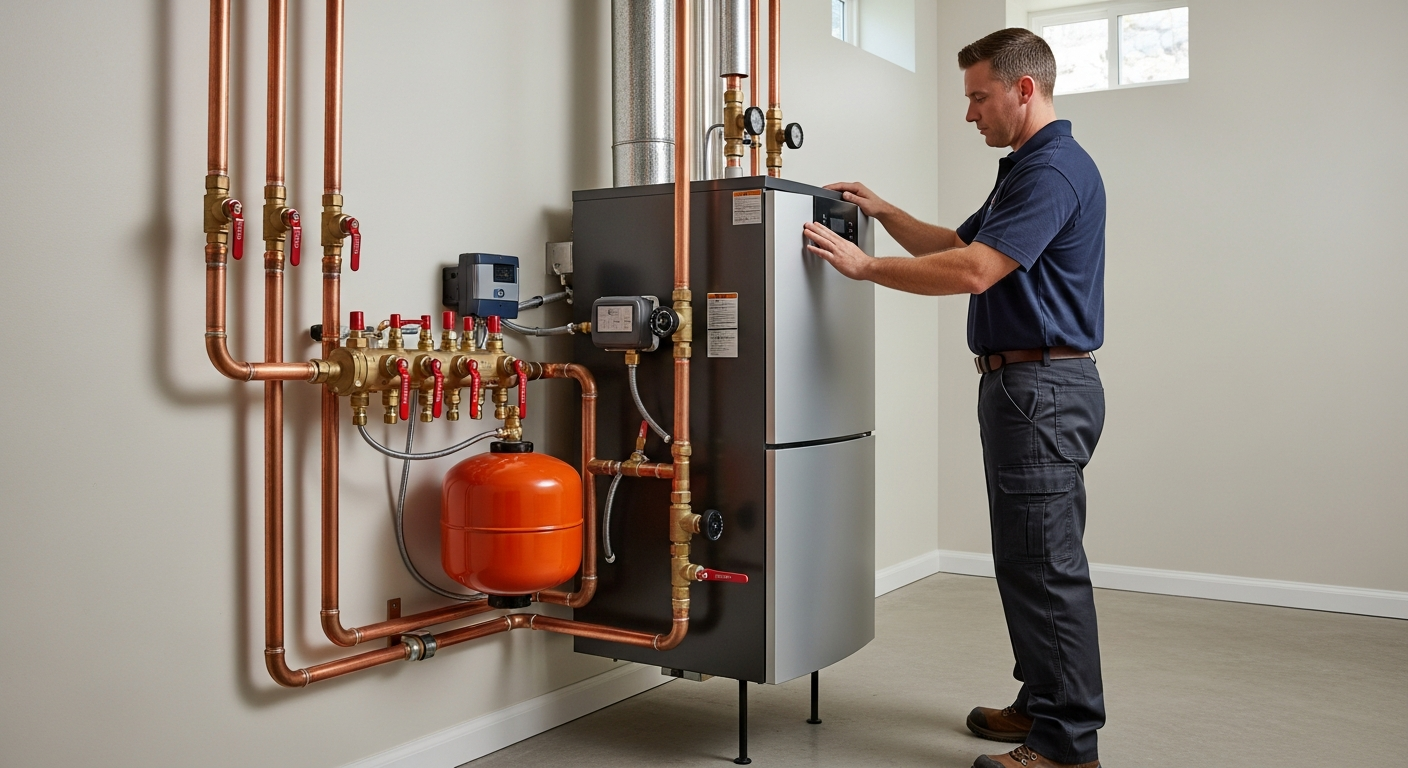
Gas prevails where lines exist, oil is a strong off-grid option
If natural gas is available, a high-efficiency gas furnace usually delivers the lowest lifetime cost. In areas without gas, an oil furnace provides powerful heat and long equipment life, but budget for higher and more volatile fuel expenses.
What Matters Most
- Gas is cheaper and cleaner long-term if you already have a gas line.
- Oil furnaces last longer and heat more intensely, but require strict maintenance.
- Get at least three contractor quotes, and always ask for a Manual J load calculation.
- Use our calculators to compare total cost of ownership, not just upfront price.
Strengths
- Lower and more stable fuel costs
- Less maintenance
- Cleaner emissions
- No fuel delivery hassles
Weaknesses
- Higher initial cost if gas line must be installed
- Shorter equipment lifespan
- Dependence on utility infrastructure
Decision summary
| Scenario | Usually do | Why |
|---|---|---|
| You have a natural gas line on your street and budget permits. | Install a 95%+ AFUE gas furnace. | Lowest operating cost, convenient, and maximizes efficiency rebates. |
| No gas line; you live in a cold rural area. | Install an oil furnace with a properly sized tank. | Reliable high-BTU heat without utility connection; long lifespan offsets fuel cost. |
| You want the lowest carbon footprint. | Consider a cold-climate heat pump or hybrid system. | Minimum fossil fuel use; check rebates and climate suitability. |
| You're on a tight budget and have existing oil tank. | Repair or replace with another oil furnace. | Avoids gas line installation costs; but compare fuel price projections. |
Choosing between heating oil and natural gas affects yearly bills, comfort, and your home’s setup. This guide cuts through the noise with decision tools and real cost data.
Quick Answer: Which Furnace Is Right for You?
If your home has existing natural gas lines, a gas furnace usually wins on cost and convenience. If you don’t have gas lines and live in a cold climate, an oil furnace offers powerful heat. Use our decision guide below to confirm.
Oil vs Gas Furnace: At-a-Glance Comparison
| Factor | Gas Furnace | Oil Furnace |
|---|---|---|
| Fuel Supply | Continuous via utility line | On-site tank with delivery |
| Efficiency (AFUE) | 90–98% | 80–90% |
| Heat Output | Adequate, steady | Hotter air, quicker warm-up |
| Typical Lifespan | 15–20 years | 25–30 years |
| Annual Maintenance | Inspection, filter changes | Full cleaning, nozzle/filter changes |
| Upfront Cost | $5,000–$12,000+ installed (if gas line in place) | $4,000–$8,000 installed (plus tank if needed) |
| Fuel Cost Stability | Relatively stable | Volatile, market-dependent |
| Environmental | Lower emissions | Higher CO2, soot |
Cost ranges are editorial estimates. Actual prices vary by region and site conditions.
Decision Tree: How to Choose
Answer these questions to narrow your choice:
- Do you have a natural gas line already stubbed to your property?
Yes: Gas is almost always cheaper and easier. No: Check local gas utility extension costs (often $2,000–$5,000+). If extension is expensive and you’re in a cold climate, oil may be better. - What’s your local climate?
In very cold regions (heating degree days > 6,000), oil’s higher BTU output can be an advantage, but high-efficiency gas still works well. In moderate climates, gas efficiency wins. - How long do you plan to stay?
If less than 10 years, gas’s lower fuel costs might not offset higher install cost if gas line needed. Oil’s longer equipment life may appeal to long-term owners. - Are you concerned with emissions?
Gas is cleaner. Consider a hybrid system with a heat pump for shoulder seasons.
Use Our Calculators to Estimate Your Costs
Get a personalized breakdown before you call contractors:
- See total installed costs with our HVAC cost estimator.
- Find the right furnace size using the BTU calculator.
- Is your existing furnace worth fixing? Try our repair or replace calculator.
- Search for local pros and compare bids with our contractor comparison tool.
Safety Boundaries: What You Can and Cannot Do
While both furnaces require professional service for major issues, safe homeowner tasks include:
- Regularly replace or clean filters (see our filter guide).
- Check thermostat operation and battery.
- Monitor oil tank gauge and schedule deliveries.
- Keep area around furnace clean and unobstructed.
- Check for unusual odors or sounds—if you smell gas or oil fumes, call your utility or an HVAC pro immediately. For gas leaks, evacuate and call 911.
Leave these tasks to licensed technicians:
- Any work on gas lines, oil lines, or burners.
- Cleaning or adjusting the combustion chamber, flue, or heat exchanger.
- Electrical troubleshooting beyond thermostat batteries.
- Repairing or replacing components like igniters, blower motors, control boards, or safety switches.
- Carbon monoxide testing and venting inspections—get annual professional checks.
Contractor Questions to Ask Before Installing
- “Will you perform a Manual J load calculation to size the new furnace?”
- “What AFUE rating do you recommend for my climate, and what rebates are available?” (Use our rebate finder)
- “What are the total installation costs, including any necessary gas line extension, oil tank removal/installation, chimney liner, or electrical upgrades?”
- “Do you offer a maintenance plan, and what does it cover?” (Annual maintenance typically costs $150–$500.)
- “Can you provide references from similar homes in my area?”
- “What warranties apply to the equipment and labor?”
Climate and Home-Specific Considerations
Cold Northeast/Midwest: Oil furnaces are common in rural areas without gas lines. If you’re on propane, compare to oil. Gas is cheaper but extension costs may be prohibitive. If your home is older, ensure the chimney is lined properly for the fuel type.
Moderate/Warm Climates: If heating needs are lower, a gas furnace with high AFUE may be overkill. Consider a dual-fuel system (gas furnace + heat pump) to cover both heating and cooling. Use our cost estimator to compare.
How We Form Our Recommendations
The cost ranges and decision rules in this article are editorial estimates based on aggregated contractor pricing surveys, manufacturer data, and local market trends as of 2025. They are not guaranteed quotes. Actual costs vary by region, season, system size, and site conditions. Always obtain multiple detailed bids. Our stance is grounded in typical homeownership scenarios, but your situation may differ; use the tools and checklists to verify.
Frequently Asked Questions
Is it cheaper to run a gas or oil furnace?
On average, natural gas is cheaper per BTU than heating oil in most regions. However, exact savings depend on current fuel prices and your furnace’s efficiency. Use our cost estimator to plug in local rates.
Can I convert my oil furnace to gas?
Conversion is possible but typically requires a new burner, gas line install, and possibly chimney liner modifications. It often costs $3,000–$6,000+. In many cases, replacing the entire furnace is more cost-effective and efficient.
Do oil furnaces need more maintenance?
Yes. Oil systems produce soot and require annual cleaning of the flue, burner inspection, and filter changes. Gas furnaces need annual inspections too but are generally less dirty.
What’s the lifespan difference?
Oil furnaces often last 25–30 years with diligent maintenance. Gas furnaces typically last 15–20 years, though high-efficiency models may last 15–18 years.
Which is better for the environment?
Natural gas burns cleaner with lower CO2 and particulate emissions. Oil is a dirtier fuel. For the lowest carbon footprint, consider a heat pump paired with renewables.
Local Context
HVAC advice changes by market. In hot cities such as Phoenix or Las Vegas, cooling failures become urgent faster and summer schedules fill quickly. In humid markets such as Houston, Tampa, or Miami, drainage, mold risk, and humidity control matter as much as temperature. In cold markets such as Chicago or Minneapolis, no-heat calls can become safety issues during severe weather. Coastal homes may see faster outdoor-unit corrosion, while older homes often need duct, electrical, venting, or access corrections before equipment performs as advertised.
Methodology
HVACDatabase estimates combine common contractor price patterns, service-category pricing ranges, equipment complexity, urgency, regional labor variation, and known HVAC safety boundaries. Actual prices vary by city, brand, system size, access, warranty status, permit requirements, and whether the visit discovers ductwork, electrical, refrigerant, gas, or drainage issues. Use these numbers to sanity-check quotes, not as a guaranteed price.
Related articles
Connect this page to adjacent guides so readers keep moving deeper into the topic cluster.
Electrostatic vs Pleated HVAC Filters
Electrostatic filters are washable and budget-friendly over time, but pleated filters catch more allergens. See which fits your home's air quality and HVAC demands.

Supply vs Exhaust Ventilation Systems
Discover whether a supply or exhaust ventilation system suits your home’s climate, budget, and air quality goals. Our guide includes cost ranges, safety tips, and pro checklists.
Smart Thermostat vs Smart Vent System
Homeowners often ask: smart thermostat or smart vents? Our practical guide explains the core trade-offs, safety limits, and a clear decision path to avoid wasting money or harming your system.