AC Rebates and Incentives Available Now
Homeowners can save thousands on energy-efficient AC upgrades with 2025 federal tax credits, local utility rebates, and seasonal promotions. Find out what you qualify for now.
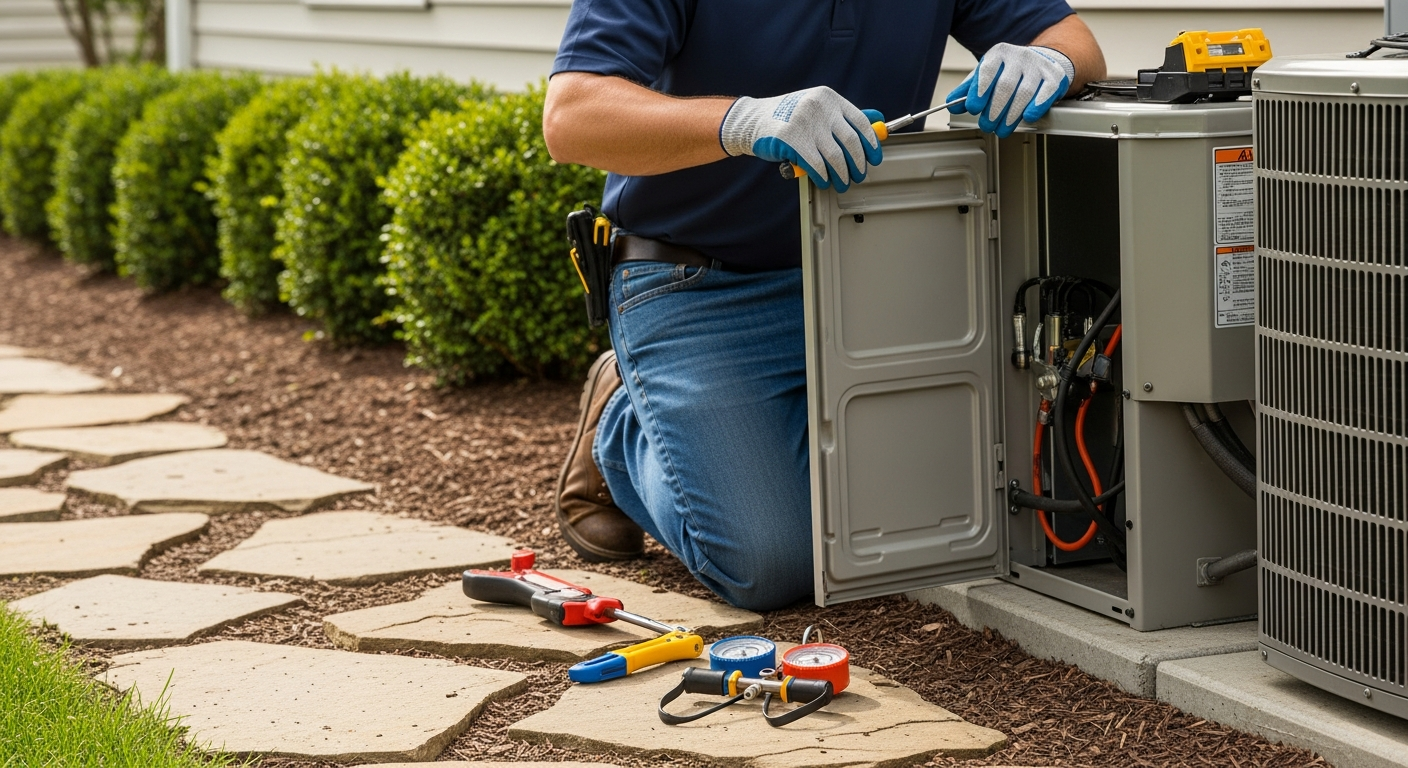
Quick Answer: Don't Leave Money on the Table
Homeowners installing a qualifying high-efficiency air conditioner or heat pump can claim a federal tax credit of up to $2,000, stack it with local utility rebates often $300–$1,500, and time a manufacturer promotion to save 30% or more off the installed cost. Use our Rebate Finder to see exactly what you qualify for by ZIP code.
Incentive Types at a Glance
| Incentive Type | Typical Value | How to Claim | Key Requirement |
|---|---|---|---|
| Federal Tax Credit (25C) | Up to $2,000 | File IRS Form 5695 with your taxes | Heat pumps: eligible models list; AC: SEER2 ≥ 16 |
| Utility Rebate | $300–$1,500+ | Apply through utility (instant or mail-in) | ENERGY STAR® certification often required |
| Manufacturer Promotion | 5–15% off or 0% financing | Contractor applies at purchase | Varies by brand and season |
| State/Local Programs | $100–$1,000 | Check state energy office | Income or geographic restrictions may apply |
All these can be layered, but always verify with your tax pro and contractor that your equipment and installation comply.
Safety Boundaries for Homeowners
Rebates are great, but never risk your safety or warranty trying to DIY installation or advanced diagnostics. Here’s what you can safely do, and what requires a licensed professional.
- Safe to do: Check and replace air filters monthly during heavy use (see filter replacement guide). Keep outdoor condenser coils clean of debris (see coil cleaning tips). Inspect the condensate drain pan for clogs (see drain pan maintenance). Adjust thermostat settings and program schedules.
- Requires a pro: Any work involving refrigerant (handling, charging, leak repair), gas lines, combustion components, compressor or capacitor replacement, contactor or control board repairs, and high‑voltage electrical connections. Improper work can void rebates, damage equipment, and create serious safety hazards. Use our contractor search to find factory‑trained technicians who know incentive paperwork.
Estimate Your Total Savings with Our Tools
Don’t guess what you’ll save. Use these free calculators and finders before you get quotes:
- Rebate Finder: Enter your ZIP code and equipment type to see all federal, state, and utility offers.
- HVAC Cost Estimator: Get a personalized range for installed cost based on system size, SEER2, and labor.
- Repair or Replace Calculator: If your AC is aging, see whether repairs still make sense.
- BTU Calculator: Right‑size your new unit for rebate eligibility—oversizing can disqualify you.
Decision Tree: Should You Upgrade Now?
Answer these questions to decide if chasing rebates makes financial sense right now.
- Is your current AC over 10 years old? If yes → replacement likely offers over 40% energy savings. If no → skip to question 3.
- Have you had a repair bill over $1,500 in the last 2 years? If yes → replacement is often cheaper long‑term. Use the Repair or Replace Calculator.
- Does your current unit use R‑22 refrigerant? If yes → replacement is strongly recommended due to the refrigerant phase‑out and rising costs.
- Do you plan to stay in the home 5+ years? If yes → high‑efficiency upgrade pays back. If moving soon, scale back to a less efficient model that still qualifies for basic rebates.
- Are you in a region with high cooling demand (e.g., Phoenix, Miami)? If yes → higher SEER2 yields faster payback; target a heat pump for year‑round savings.
Contractor Checklist for Incentive Success
Before you sign, make sure your contractor checks these boxes. The wrong pro can cost you your rebate.
- Licensed & Insured: Confirm state HVAC license and liability insurance. Ask for proof.
- Rebate Experience: “How many of these federal tax credit jobs did you do last year?” Expect a confident number.
- Manual J Load Calculation: Demand a written load calculation. Oversized systems won’t qualify for many utility rebates.
- Model Verification: Have them show you the exact model’s AHRI certificate proving SEER2 and eligibility.
- Paperwork Assistance: They should provide the manufacturer’s certification statement for IRS tax filing.
- No Up‑Sell to Non‑Qualifiers: If a recommended model doesn’t meet the SEER2 threshold, ask why. All qualifying models are listed on the ENERGY STAR website.
Use our contractor comparison tool to check ratings and reviews.
Local Spotlights: Incentives Where You Live
Rebate landscapes differ dramatically. Here’s what to expect in common climates.
- Hot/Arid (Phoenix, Las Vegas): Utilities like APS and SRP offer up to $1,125 for high‑efficiency AC or heat pumps. Combined with federal credit, savings exceed $3,000. See Phoenix AC contractors.
- Humid (Houston, Miami): Focus on units with enhanced dehumidification. Some Gulf Coast co‑ops offer rebates up to $800 for SEER2 ≥ 17.
- Cold (Chicago, Minneapolis): Cold‑climate heat pumps can earn the full $2,000 federal credit plus state clean energy rebates. Check with Chicago heating contractors for local programs.
- Coastal (San Diego, NYC): High electricity rates mean efficiency pays back faster. Look for time‑of‑use rate plans and smart thermostat rebates from your utility.
- Older Homes: Ductwork upgrades may be required. Some programs include duct sealing rebates; ask your contractor.
Methodology: Where Do These Numbers Come From?
The savings estimates in this article are based on public data as of early 2025. We aggregate:
- Federal Tax Credits: IRS Section 25C guidelines via Energy Star.
- Utility Rebates: Program filings from the 50 largest electric utilities, updated quarterly.
- Manufacturer Promotions: Seasonal offers monitored from Carrier, Trane, Lennox, and Daikin.
- Cost Ranges: Editorial estimates drawn from HVACDatabase community pricing, national surveys, and our cost hub. Actual quotes vary by market, labor rates, and home specifics.
We never guarantee a rebate amount; always verify with the issuing agency or contractor before purchase. Use our tools to get a real‑time snapshot.
Frequently Asked Questions
What SEER2 rating do I need for a federal tax credit?
For split‑system central air conditioners, SEER2 ≥ 16 is required. Heat pumps must meet SEER2 ≥ 15.2 and HSPF2 ≥ 8.1. Always check the Rebate Finder for the latest thresholds.
Can I claim the tax credit if I install a system myself?
No. The credit requires installation in your principal residence and must be installed by a qualified contractor. DIY installation also voids most manufacturer warranties and may violate local codes.
How long do utility rebates take to process?
Instant rebates appear as a line‑item discount on your invoice. Mail‑in rebates typically take 6‑10 weeks. Some utilities require pre‑approval before installation, so check rules early.
Are there income limits for rebates?
Most utility rebates have no income limit. However, some state‑funded programs (like California’s TECH initiative) target low‑ and moderate‑income households. Federal tax credit has no income cap.
Can I stack multiple incentives on the same system?
Yes, you can combine a federal tax credit, utility rebate, and manufacturer promotion on the same installation, provided each program’s rules are met. For example, a $12,000 heat pump could see $2,000 federal + $1,000 utility + 0% financing for 36 months. Always document each separately.
Related articles
Explore related maintenance, equipment, and hiring questions.

Nest Learning Thermostat (4th gen) vs ecobee Premium
Both models offer remote room sensors. Compare the exact generation, wiring compatibility, controls, and installed quote before choosing.

MERV 11 vs MERV 13: check filtration and equipment compatibility
Compare particle filtration, verify the filter your equipment supports, and use a buying checklist without assuming a universal health or energy saving.

How to check an HVAC contractor before hiring
Use a documented shortlist: business identity, applicable credentials, job experience, a written scope, and a clear handover.