Commercial HVAC Emergency Repair Cost
Commercial HVAC emergency? Expect diagnostic fees from $300–$600+ and labor at $200–$400/hr. Use our cost calculator, decision tools, and contractor checklist to make an informed choice.
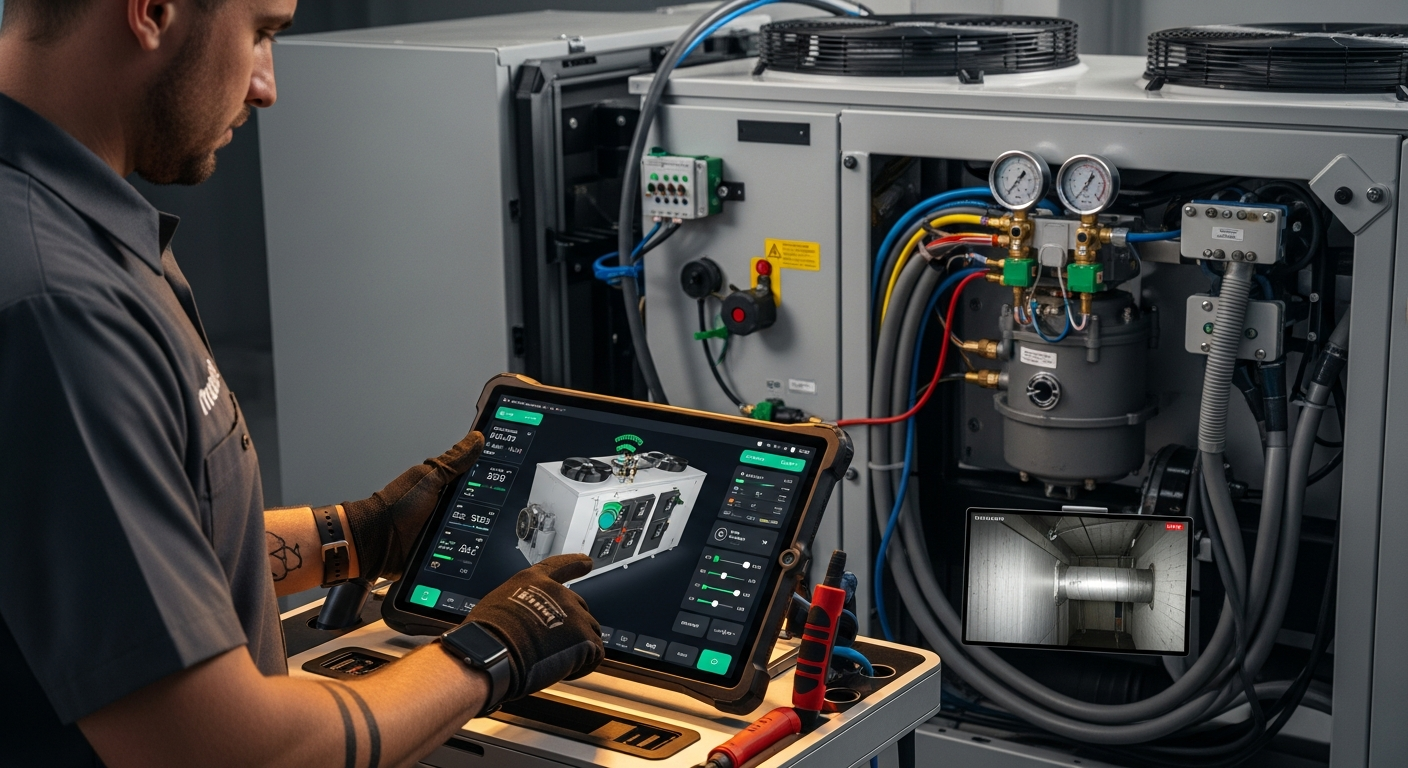
When your commercial HVAC fails, every minute of downtime costs money. Emergency repairs command premium rates because technicians are dispatched after hours, often with limited parts inventory. This guide gives you realistic cost ranges, a decision framework to repair or replace, and a contractor vetting checklist—all tailored for property owners and facility managers. Use our free tools to estimate your repair bill, compare quotes, and locate pre-screened commercial HVAC pros near you.
Quick Answer: What You’ll Pay for Emergency Commercial HVAC Repair
Based on industry data, expect $300–$600 for an after-hours diagnostic visit. Hourly labor ranges from $200–$400. Simple repairs (capacitor, relay) often total $400–$850. Major work like compressor or coil replacement can reach $3,000–$8,000 or more. Use our emergency cost tool to get a personalized estimate.
Cost Breakdown by Common Emergency Scenarios
| Emergency Service | Typical Cost Range (Editorial Estimate) | What’s Included |
|---|---|---|
| After-hours diagnostic visit | $300 – $600+ | Travel, first 30-60 min of troubleshooting, written quote |
| Standard emergency labor rate | $200 – $400 per hour | Time-and-a-half or double-time, skilled commercial tech |
| Small electrical repair (e.g., relay, thermostat) | $400 – $850 total | Parts & labor, common fixes |
| Refrigerant leak repair & recharge | $1,000 – $3,500+ | Leak search, repair, evacuate, recharge |
| Compressor or coil replacement | $3,000 – $8,000+ | Heavy parts, longer labor, possible crane rental |
Safety Boundaries: What You Can Check vs. When to Call a Pro
Safe Homeowner/Manager Checks
- Verify thermostat settings and batteries.
- Check that circuit breakers haven’t tripped.
- Inspect air filters—replace if clogged.
- Look for visible ice on lines or standing water around the unit.
- Listen for unusual noises but do not open access panels.
Leave These to a Licensed Pro
- Refrigerant handling or recharging.
- Electrical component replacement (capacitors, contactors, control boards).
- Compressor or motor work.
- Gas furnace or combustion repairs.
- Any work involving high-voltage wiring.
Decision Tools: Repair or Replace in an Emergency
A costly emergency forces a tough choice. Use these thresholds:
- Repair cost vs. replacement: If the quote exceeds 50% of a new system’s installed cost, replacement usually wins.
- Age: Systems older than 10–15 years often have other worn components; a band-aid fix can lead to repeat failures.
- Efficiency: Modern commercial units cut energy bills significantly. Factor savings into the decision.
Run the numbers with our Repair or Replace Calculator and get instant clarity. Also try the HVAC Cost Estimator to compare full-system pricing.
Emergency Contractor Hiring Checklist
Click to expand: 7 questions to ask before approving work
- Are you licensed and insured for commercial HVAC in my state?
- What is the total diagnostic fee, and does it apply to the repair if I proceed?
- Can you provide a written estimate before starting work?
- Do you have the needed part on your truck, or will sourcing add time and cost?
- What’s the warranty on parts and labor?
- Can you provide references from similar commercial properties?
- Do you offer a preventive maintenance plan to avoid future emergencies?
Pre-vet contractors before disaster strikes. Use HVACDatabase’s search to find local pros with commercial expertise, and compare their profiles on our contractor comparison page.
How Location Affects Emergency HVAC Costs
Regional climate demands can spike emergency repair prices:
- Hot markets (Phoenix, Miami): Summer AC failures trigger surge pricing. See example contractors in Phoenix.
- Cold markets (Chicago, Boston): Heating emergencies on weekends and holidays carry premium labor rates. Chicago heating pros often charge double-time.
- Coastal areas: Salt-air corrosion accelerates wear; units may need more frequent repairs or special coatings, increasing long-term costs.
- Older buildings: Code upgrades (ventilation, refrigerant phase-outs) can add to repair bills. Always ask about local code compliance.
Methodology: How We Estimate Repair Costs
Our editorial estimates are based on published contractor pricing surveys, service-call data from multiple U.S. markets, and input from HVAC trade organizations. Actual prices vary by region, season, access difficulty, and parts availability. These ranges are not guaranteed quotes; always get a written estimate from a licensed professional.
Frequently Asked Questions
Why are emergency commercial HVAC repairs so expensive?
After-hours, weekend, and holiday calls require paying technicians overtime (often 1.5x–2x hourly rates). Sourcing parts outside normal supplier hours can add rush fees. Commercial systems are complex, and the urgency limits your ability to shop around.
Does business insurance cover emergency HVAC repairs?
It depends on your policy. Typically, sudden and accidental damage from a covered peril (e.g., storm, fire) may be covered. Wear-and-tear or breakdowns due to lack of maintenance usually aren’t. Check your policy or talk to your agent.
How quickly can a commercial HVAC emergency be resolved?
Simple fixes (e.g., capacitor, thermostat) can be done in 1–2 hours once the tech arrives. Major repairs may take 4–8 hours, sometimes requiring a return visit if parts must be ordered. In a crisis, ask the contractor for a realistic timeline.
When should I consider replacing rather than repairing my commercial system?
Replace if the repair exceeds 50% of a new system’s cost, or the unit is beyond 10–15 years old and requires a costly fix. Also consider replacement if the system uses obsolete R-22 refrigerant. Use our Repair or Replace Calculator to weigh factors specific to your unit.
What maintenance steps prevent emergency breakdowns?
Implement a preventive maintenance plan with seasonal checkups. A building automation system can alert you to performance dips early. Keep a pre-vetted contractor list for fast response. Read our guide: How to Set Up a Preventive Maintenance Plan for Commercial HVAC.
Practical Next Steps
- Write down the system age, brand, model number, thermostat setting, and exact symptom before calling.
- Take photos of visible ice, water, error codes, dirty filters, or unusual equipment conditions without opening sealed or electrical compartments.
- Use HVAC cost estimator, Quote checker, Repair or replace calculator to estimate the budget or compare next steps.
- Get at least two written quotes for major repairs or replacements, especially when the system is more than 8-10 years old.
The strongest quote is not always the cheapest. Look for a contractor who explains the cause, confirms whether the repair is durable, documents warranty coverage, and gives you a clear path if the first repair does not fully solve the issue.
Related articles
Explore related maintenance, equipment, and hiring questions.

Nest Learning Thermostat (4th gen) vs ecobee Premium
Both models offer remote room sensors. Compare the exact generation, wiring compatibility, controls, and installed quote before choosing.

MERV 11 vs MERV 13: check filtration and equipment compatibility
Compare particle filtration, verify the filter your equipment supports, and use a buying checklist without assuming a universal health or energy saving.

How to check an HVAC contractor before hiring
Use a documented shortlist: business identity, applicable credentials, job experience, a written scope, and a clear handover.