Cost of DIY HVAC Filter Replacement vs Professional Service
We break down the real costs of DIY versus professional HVAC filter replacement, including hidden impacts on energy bills and system life. Use our checklist and tools to decide with confidence.

DIY for routine, pro for annual
Replace the filter yourself every 1–3 months to save money, but schedule a professional inspection once a year—especially if your system is old, under warranty, or you have indoor air quality concerns. This dual approach maximizes savings and safety.
What Matters Most
- DIY filter replacement costs $5–$80 per change; professional service costs $80–$250 and includes a system inspection.
- You should check and replace your filter every 1–3 months; set reminders to stay consistent.
- A pro tune‑up is worth the annual cost if you can’t do deeper inspections yourself or your system is under warranty.
- Never attempt electrical, refrigerant, or gas work; always hire a licensed technician.
- Use our free tools (filter finder, cost estimator) to avoid mistakes and get fair pricing.
Strengths
- Low ongoing cost: you only pay for filters most of the time.
- Full control over filter quality and change frequency.
- Annual pro visit catches hidden issues, extends equipment life.
- Warranty protection: many manufacturers require professional annual maintenance.
- Better indoor air quality from timely, correct filter changes.
Weaknesses
- DIY filter install errors (backward, wrong size) can happen, reducing effectiveness.
- You might miss subtle system problems (like a failing capacitor) that a pro would spot.
- Professional maintenance costs vary widely; overpaying without comparing quotes is a risk.
- Some homeowners find monthly filter checks tedious and forget, leading to clogged filters.
Decision Summary: DIY vs. Pro
| Scenario | Usually do | Why |
|---|---|---|
| Routine filter change | DIY | Saves $80–$250 per visit; minimal skill required |
| Annual system check‑up | Hire pro | Pro inspects safety and efficiency; often required for warranty |
| Unusual noise or ice on coils | Hire pro | Indicates a problem needing diagnostic tools and licensed repair |
| Upgrading to high‑MERV filter | Consult pro first | Dense filters can restrict airflow and damage your system without proper static pressure test |
Introduction
Changing your HVAC air filter is one of the most straightforward maintenance tasks, but the decision to do it yourself or include it in a professional service visit involves more than just the price of the filter. A wrong choice can lead to higher energy bills, poor air quality, or even equipment damage. This guide gives you clear, actionable data to weigh the true cost—and value—of each approach, so you can make an informed decision for your home and budget.
Quick Answer
For most homeowners, replacing the air filter yourself every 1–3 months is the most cost-effective and practical choice. You'll pay only for the filter ($5–$80 depending on type and efficiency) and a few minutes of time. Professional filter service typically costs $80–$250 per visit and is best paired with a full-system tune‑up once a year. If you have a complex system, mobility issues, or prefer the peace of mind of a multi‑point inspection, a pro visit offers added value beyond the filter swap.
Cost Breakdown: DIY vs Professional
| Cost Factor | DIY (Typical Range) | Professional Service (Typical Range) |
|---|---|---|
| Filter material | $5–$80 | Included or $15–$50 |
| Labor/trip fee | $0 (your time) | $80–$250 per visit |
| Tools needed | None usually; maybe a step stool | Provided by technician |
| Additional inspections | None | Blower, coils, electrical, refrigerant (if AC), safety checks |
| Annual cost (monthly changes) | $60–$960 (depends on filter grade) | $80–$250 for one tune‑up with filter |
| Risk of error | Low to moderate (wrong size, backward install) | Very low |
Editorial note: All cost ranges are estimates based on average US pricing and may vary by region, system type, and market conditions. Always get multiple quotes for professional work.
What’s Really Included in a Professional Filter Service?
A professional visit goes far beyond swapping the filter. During a typical maintenance call (often priced $80–$250), the technician will:
- Inspect the blower motor, belt, and fan for wear
- Check refrigerant levels and electrical connections (for AC/heat pump)
- Clean the condenser and evaporator coils if needed
- Test thermostat operation and safety controls
- Measure airflow and static pressure if requested (adds $50–$100)
- Report early signs of trouble that could prevent mid‑season breakdowns
This comprehensive look can save you from expensive repairs later—a seized blower motor can cost $500–$1,500 to replace, and a refrigerant leak can run $500–$1,500, not counting environmental hazards.
Safety Boundaries: What You Can (and Cannot) Do Yourself
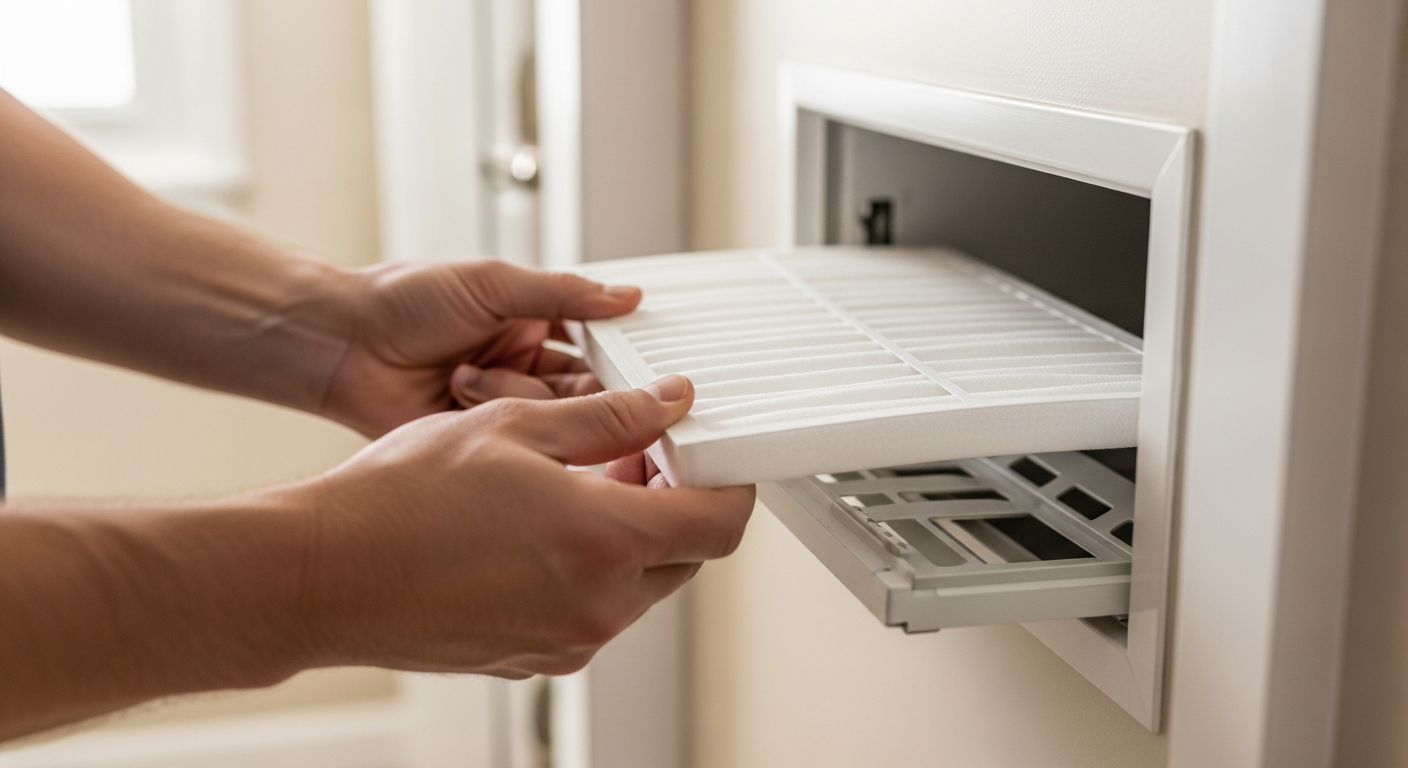
Replacing the air filter is a safe, homeowner‑level task that requires no tools and no electrical or refrigerant handling. You can also safely:
- Vacuum accessible return grilles and registers
- Clean the exterior of the furnace/air handler (refer to our furnace cleaning guide)
- Check your filter monthly and replace when visibly dirty
- Inspect the condensate drain line for clogs (see drain clearing tips)
Leave these tasks to a licensed technician: refrigerant handling, gas/combustion system work, electrical component replacement (capacitors, contactors, control boards), and any repair that requires opening sealed equipment or high‑voltage access. DIY attempts at these create serious safety risks and can void warranties. If your system is more than 10 years old or you hear unusual noises, smell gas, or notice ice on the coils, call a pro immediately—find emergency service here.
Decision Rules: When to DIY and When to Go Pro
Use this decision tree to guide your choice:
- DIY is usually best if…
- Your system is less than 12 years old and trouble‑free
- You can easily access the filter slot without climbing onto equipment
- You remember to check it monthly and replace it on schedule (set reminders with our free maintenance reminder tool)
- You buy quality filters in the right size (use the filter finder to avoid sizing mistakes)
- Go pro if…
- Your system is under active warranty—annual professional service may be required to keep it valid
- You have a heat pump, ductless mini‑split, or high‑velocity system where filter access is awkward
- You or household members have allergies or respiratory conditions that demand MERV 13+ filtration and proper system compatibility checks
- You haven’t had a professional inspection in over 2 years—a $200 tune‑up is cheap insurance against a $5,000+ compressor failure
- You notice dust buildup on vents shortly after filter changes, indicating possible duct leaks or poor filtration
Hybrid approach: Replace the filter yourself every 1–3 months and schedule a professional inspection annually. This gives you cost savings and ongoing oversight.
Contractor Checklist: Questions to Ask Before Booking a Filter Service
If you decide to hire, use this list to avoid overpaying or getting a superficial visit:
- “What’s included in the maintenance package beyond the filter change?” (Should list specific components, not just ‘system check’)
- “Do you provide a written report with photos or measurements?” (Helps you track trends)
- “Will you check static pressure and airflow? Is that extra?” (Proactive contractors do this; typical add‑on $50–$100)
- “Are you licensed, insured, and familiar with my brand?” (Verify on our contractor directory)
- “What’s your rate for a diagnostic if I call separately?” (Get it in writing—standard diagnostic $80–$200)
- “Can I buy my own filters and have you install them?” (Some may refuse or charge a small fee)
- “Do you offer an annual plan? What’s the discount vs. one‑time visits?” (Annual plans often $150–$500 for two visits, saving 10–30%)
Compare multiple contractors using our side‑by‑side comparison tool.
Local Climate Considerations
Where you live changes how often and what type of filter you need:
- Hot, dry climates (Phoenix, Las Vegas): Dust clogs filters faster. Check monthly; use MERV 8–11 pleated filters. A Phoenix‑area contractor can help with seasonal dust prep.
- Humid, coastal regions (Houston, Miami): High humidity encourages mold on filters. Replace every 30–60 days with a high‑MERV filter and invest in a UV light or whole‑home dehumidifier (pro installation).
- Cold, northern climates (Chicago, Minneapolis): Furnace filters work hard in winter. Use MERV 8–11 for gas furnaces; never block airflow with overly restrictive filters. A Chicago heating pro can check heat exchanger integrity.
- Older homes (pre‑1990): Ductwork may be leaky, pulling in attic or crawlspace air. A pro can test for leaks with a duct blaster. DIY filter changes still essential, but consider whole‑house media cabinets for better filtration.
Tools to Help You Decide
Before buying or calling, use these free HVACDatabase tools:
- Filter Finder – Confirm the exact size and MERV rating for your unit.
- Maintenance Reminders – Get email/text alerts so you never forget a change.
- Cost Estimator – See local pricing for professional maintenance in your ZIP code.
- System Age Decoder – Older units benefit more from annual pro inspections.
Methodology
Our cost estimates are editorial ranges based on analysis of contractor surveys, aggregated public pricing data, and industry benchmarks from leading HVAC trade sources. Final prices depend on your region, equipment specifics, job complexity, and market conditions. All recommendations prioritize homeowner safety and equipment longevity over temporary savings. For the most accurate local pricing, get multiple quotes from prescreened contractors via HVACDatabase.com.
Frequently Asked Questions
How often should I really change my filter?
Change a 1-inch filter every 30–90 days; a 4–5-inch media filter can last 6–12 months. Homes with pets, allergies, or dusty climates should lean toward the more frequent end. Use our reminder tool to stay on track.
Can a dirty filter cause a system breakdown?
Yes. A severely clogged filter restricts airflow, causing the blower motor to overheat and the AC coil to freeze. This can lead to a cracked heat exchanger (gas furnace) or a seized compressor—repairs ranging from $500 to $4,000+. A $15 filter change is cheap insurance.
What MERV rating is safe for my system?
Most residential systems handle MERV 8–11 without issues. MERV 13+ filters are denser and can reduce airflow if your ductwork or blower isn’t designed for it. Before upgrading, have a pro measure static pressure (find one here) to avoid damage.
Is annual professional maintenance worth it?
For systems under warranty, it’s often required. For others, a $150–$250 tune‑up every 1–2 years typically pays for itself through improved efficiency, early problem detection, and extended equipment life. Skipping it might save money now but risks a mid‑season $5,000 replacement.
How can I find a trustworthy HVAC contractor?
Use our contractor search to see verified profiles, read reviews, and compare credentials. Always ask for license, insurance proof, and a written estimate before work begins. Our comparison tool makes this easy.
Related articles
Connect this page to adjacent guides so readers keep moving deeper into the topic cluster.
Cost to Install Multiple Smart Thermostats
Get a clear cost breakdown for installing 2–4+ smart thermostats. Includes equipment, labor, zoning upgrades, and how to save with utility rebates. Practical checks and contractor questions inside.
Duct Booster Fan Installation Cost
Uneven room temps? Duct booster fan installation costs: register fans $30–$100 DIY, inline fans $500–$800+ with pro. Learn when a booster works and when you need a bigger fix.
Makeup Air Unit Installation Cost Guide
Expect to pay $1,500–$4,500 for a pro-installed makeup air unit. Discover passive vs. tempered options, code triggers, and money-saving decision rules.