Cost to Add AC to an Older Home
Retrofitting AC in an older home? See typical costs for central, ductless, and high-velocity systems, plus essential planning tips and a contractor hiring checklist.
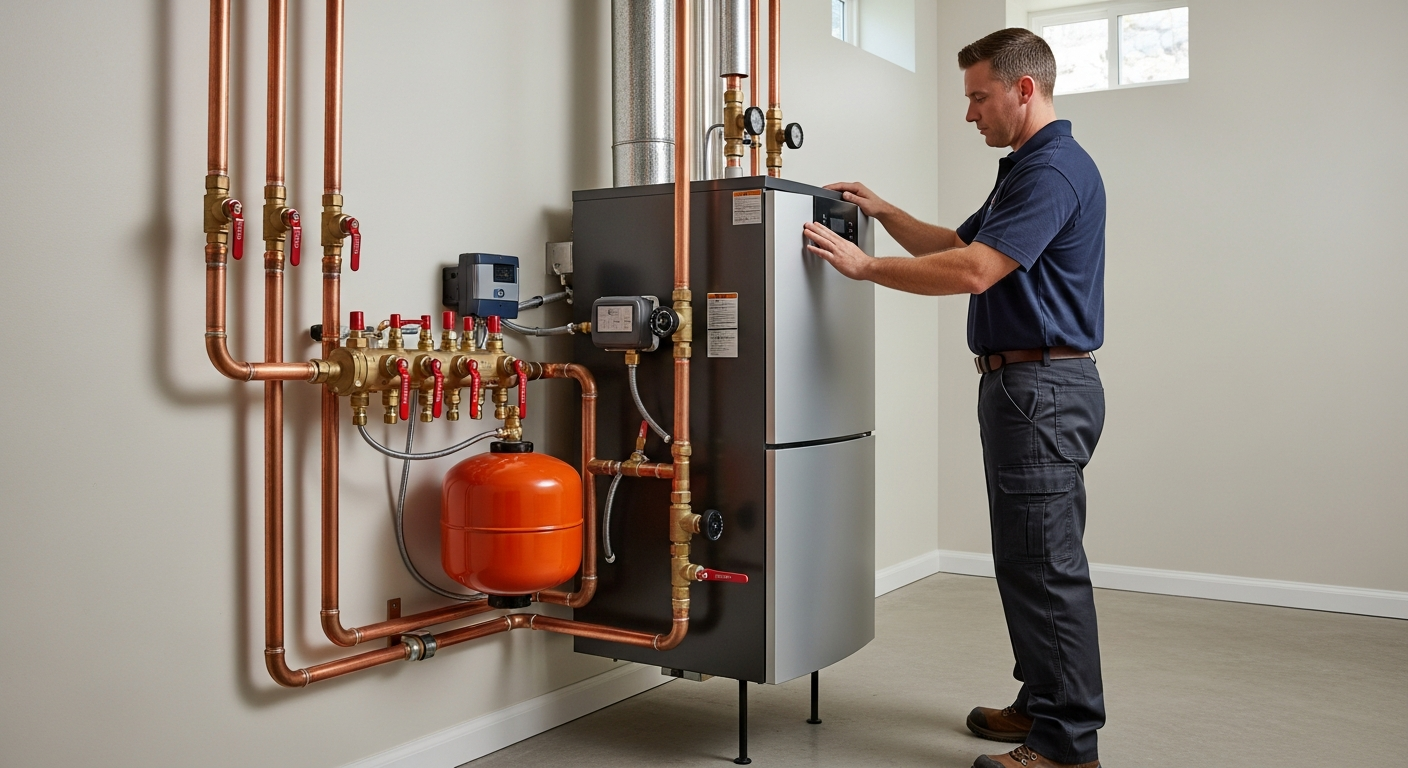
For most older homes without ducts, we recommend ductless mini‑splits
Ductless mini‑splits deliver high‑efficiency zoned cooling with minimal structural impact and no duct losses. They work well in all climates and preserve architectural integrity.
What Matters Most
- Get a Manual J load calculation to avoid oversizing
- Explore rebates—federal and local incentives can cover 10–30% of costs
- Match the system to your home’s existing infrastructure
- Always verify contractor experience with older homes
- Plan for electrical service upgrade if your panel is under 100 amps
Strengths
- Zoned comfort: cool only occupied rooms
- No ductwork needed—small wall penetration only
- Very high efficiency (SEER2 up to 30+)
- Quiet operation indoors and out
- Federal tax credits often available
Weaknesses
- Visible indoor wall units
- Higher upfront cost than window units or adding central AC to existing ducts
- Requires regular filter cleaning per unit
- May need a dedicated electrical circuit
- Aesthetic impact in period‑style rooms
Which AC Retrofit Solution Fits Your Home?
| Scenario | Usually do | Why |
|---|---|---|
| You have a forced‑air furnace with ductwork | Add central AC coil & condenser | Lowest cost, uses existing infrastructure |
| You have radiant heat (no ducts) | Install ductless mini‑split | No ductwork, high efficiency per zone |
| Historic home, fragile walls, no space for ducts | Choose high‑velocity | Small flexible tubes preserve architecture |
| You need cooling in only 1–2 rooms | Single‑ or dual‑zone mini‑split | Zoned cooling without whole‑house expense |
| Your electrical panel is 60‑100 amps | Upgrade to 200 amps + chosen AC system | Safety and capacity for new equipment |
Quick Answer
Adding AC to an older home typically costs $5,000–$15,000. Homes with existing forced-air ductwork can add central AC for $3,000–$7,000. Without ducts, ductless mini‑splits run $8,000–$15,000+, and high‑velocity systems $12,000–$20,000+. Electrical upgrades, if needed, add $1,500–$4,000. Get at least three contractor quotes and check for local rebates to lower net cost.
Retrofit Cooling Options & Cost Ranges
| System Type | Editorial Estimate Range* | Best For | Key Considerations |
|---|---|---|---|
| Central AC (existing ducts) | $3,000–$7,000 | Homes with a forced‑air furnace | Lowest upfront cost if ducts are in good shape; requires adequate return air |
| Central AC (new ductwork) | $8,000–$15,000+ | Whole‑house cooling where ducts are feasible | Invasive install; may need soffits or closet chases; factor in wall/ceiling repairs |
| Ductless Mini‑Split | $8,000–$15,000 (multi‑zone) | Homes without ducts; zoned cooling | Wall‑mounted air handlers visible; very efficient; one outdoor unit serves up to 4–5 indoor heads |
| High‑Velocity HVAC | $12,000–$20,000+ | Historic homes; no space for large ducts | Small flexible tubing fits in wall cavities; preserves architecture; higher equipment cost |
*Editorial estimates based on national averages for a 1,500–2,500 sq. ft. home. Actual costs vary by region, system brand, complexity, and required permits. Always get written, itemized quotes.
Decision Rules: Which System Fits Your Home?
- Existing forced‑air furnace? Central AC is almost always the most economical choice.
- Radiators or baseboard heat, no ducts? Ductless mini‑splits offer the best balance of cost, efficiency, and reduced demolition.
- Historic district or fragile plaster walls? High‑velocity preserves original details with minimal tear‑out.
- Only need cooling in 1–2 rooms? Consider a single‑ or dual‑zone mini‑split ($3,000–$7,000) rather than whole‑house system.
- Electrical panel is 60–100 amps? Budget $1,500–$4,000 for a service upgrade to 200 amps before AC installation.
- Hot, humid climate? Avoid oversized units; they short‑cycle and leave humidity high. Insist on a Manual J load calculation.
Safety Boundaries: What Homeowners Can Check (and What’s Pro‑Only)
Safe homeowner tasks:
- Replace or clean air filters monthly during heavy use.
- Keep outdoor condenser area clear of leaves, debris, and overgrown plants (2 ft clearance).
- Check that supply vents are open and unblocked.
- Test thermostat operation and replace batteries.
- Inspect visible ductwork for obvious leaks or disconnected joints (do not climb into attics/crawlspaces unless safe).
Never attempt—licensed HVAC technician required:
- Refrigerant handling, charging, or leak repair (EPA license required).
- Electrical wiring or panel upgrades.
- Compressor, capacitor, contactor, or control board replacement (high‑voltage/shock risk).
- Gas furnace integration or combustion adjustments.
- Cutting structural walls or ceilings for ductwork.
Use Our Free Tools to Plan Your Project
- HVAC Cost Estimator – Get a personalized cost range based on your home details.
- BTU Calculator – Right‑size your system for proper comfort and efficiency.
- Repair or Replace Calculator – If you already have old equipment, decide whether to fix or upgrade.
- Rebate Finder – Discover utility and federal incentives that can cut your net cost by hundreds.
- System Age Decoder – Check the age of an existing unit.
- Quote Checker – Upload a contractor proposal for unbiased review.
Contractor Checklist: 10 Questions to Ask Before Hiring
- Are you licensed and insured? Ask for proof; check your state’s licensing board.
- Do you have experience retrofitting older homes? Request examples or references from similar projects.
- Will you pull required permits? Reputable contractors handle permits; avoid anyone who suggests skipping them.
- How do you size the equipment? Insist on a Manual J load calculation, not a rule‑of‑thumb.
- What’s included in the quote? Clarify if electrical work, drywall/plaster repair, and debris removal are included.
- What are the warranty terms? Labor warranty (1+ year) and manufacturer parts warranty (typically 10 years).
- Can you provide a written timeline? Expect 1–3 days for central AC addition, 3–5 days for ductless or high‑velocity installs.
- Will you test for asbestos or lead? Older homes may contain hazardous materials; testing and abatement add cost but are necessary.
- Do you offer a maintenance plan? Annual tune‑ups keep the system efficient and preserve the warranty.
- Can I see a detailed itemized bid? Avoid lump‑sum quotes without breakdowns.
Local Market Considerations for Older Homes
- Hot, humid climates (Southeast): Prioritize dehumidification. High‑velocity systems and mini‑splits with dry mode work well. Avoid oversizing.
- Cold climates (Midwest, Northeast): Consider a heat pump that works down to ‑15°F for efficient heating and cooling in one.
- Coastal areas: Salt air corrodes standard outdoor units; choose “coastal” models with coated coils.
- Historic districts: Exterior changes may require board approval. High‑velocity or mini‑split wall units inside avoid exterior alterations.
- Urban row houses: Limited outdoor space may require slim, vertical‑discharge condensers or roof‑mounted units.
Methodology: How We Determine Cost Estimates
Our editorial estimates are derived from a proprietary blend of national contractor survey data, equipment pricing feeds, permit costs, and thousands of project quotes analyzed through our cost estimator tool. We update figures quarterly. Ranges assume a 1,500–2,500 sq. ft. single‑family home with typical access. Extreme customizations, hazardous material abatement, or structural surprises can push costs higher. Always supplement with multiple local contractor bids.
Frequently Asked Questions
Can I add central air if my home has no ductwork?
Yes, but you’ll need to install ducts, which significantly raises the cost and involves cutting into walls/ceilings. For many older homes, ductless or high‑velocity systems are less invasive alternatives.
What’s the cheapest way to cool an older home?
If you have a forced‑air furnace, adding a central AC coil and condenser is cheapest ($3,000–$7,000). Without ducts, a single‑zone mini‑split can start around $3,500–$5,000, providing efficient cooling for one large area.
How long does installation take?
Adding central AC to existing ducts: 1–2 days. Ductless multi‑zone or high‑velocity: 3–5 days. Full ductwork install: 5–10 days, depending on home size and complexity.
Will adding AC increase my home’s resale value?
In most markets, central or ductless AC is an expected feature and can increase appraised value by 5–10%, especially in warmer climates. It also broadens buyer appeal and can speed sale time.
Do I need to upgrade my electrical panel?
Often yes. Older homes with 60–100 amp service typically need a 200‑amp panel to safely add a central AC or multi‑zone mini‑split. This upgrade costs $1,500–$4,000 and should be bid as part of the project.
Related Maintenance & Cost Guides
Related articles
Connect this page to adjacent guides so readers keep moving deeper into the topic cluster.

Cost to Install Multiple Smart Thermostats
Get a clear cost breakdown for installing 2–4+ smart thermostats. Includes equipment, labor, zoning upgrades, and how to save with utility rebates. Practical checks and contractor questions inside.
Duct Booster Fan Installation Cost
Uneven room temps? Duct booster fan installation costs: register fans $30–$100 DIY, inline fans $500–$800+ with pro. Learn when a booster works and when you need a bigger fix.
Makeup Air Unit Installation Cost Guide
Expect to pay $1,500–$4,500 for a pro-installed makeup air unit. Discover passive vs. tempered options, code triggers, and money-saving decision rules.