Daikin HVAC Equipment Buying Guide
Daikin HVAC systems offer inverter technology for energy savings. Our guide helps you choose the right model, understand costs ($6,000–$13,000), and hire a qualified installer.
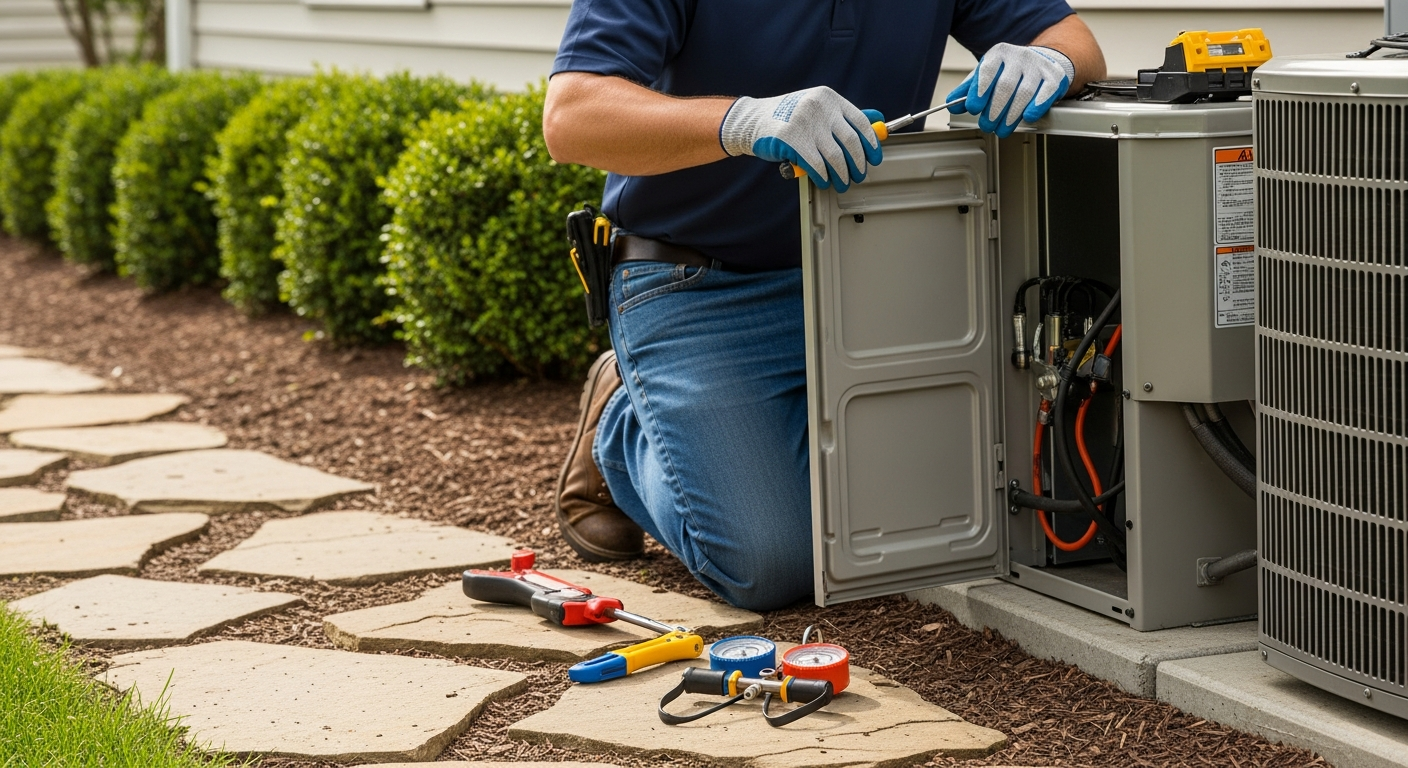
Daikin HVAC Equipment: A Homeowner’s Decision Guide
Daikin is a global HVAC manufacturer known for building its own compressors and pioneering inverter technology that adjusts output to match demand, cutting energy use and improving comfort. For homeowners, this means choosing a reliable system that can pay for itself through lower utility bills over its 15–20 year lifespan. This guide breaks down the current Daikin lineup, what you’ll actually pay (editorial estimate: $6,000–$13,000 installed), and how to pick the right model for your home. We’ll focus on real-world decision points you can act on today—no technical jargon, just practical steps.
Quick Answer: Is Daikin Right for You?
Daikin suits most single-family homes, especially if you value quiet operation, consistent temperatures, and long-term energy savings. Their inverter-based systems excel in climates with long cooling or heating seasons. If you have high utility bills, uneven room temperatures, or an aging 10+ year system, a Daikin upgrade often makes financial sense. The most popular choice for moderate climates is the Daikin Fit—a side-discharge unit that’s easy to retrofit and hits a sweet spot between efficiency and upfront cost. In extreme heat or cold, consider their premium DX20VC series. Entry-level DX14 models offer a lower initial price but may cost more to run over time.
Daikin Product Line Comparison
| Model Series | Efficiency (SEER2) | Compressor Type | Best For | Installed Price Range* |
|---|---|---|---|---|
| DX14 (Entry) | 14–15 | Single-stage | Budget-focused replacement, small homes | $6,000–$9,000 |
| DX17V (Mid) | 17–18 | Variable-speed swing | Humidity control, moderate climates | $8,000–$11,000 |
| Fit (Mid-Premium) | 17–19 | Inverter-driven variable | Tight spaces, retrofits, balanced performance | $9,000–$13,000 |
| DX20VC (Premium) | 19–24 | Inverter-driven variable | Extreme climates, noise-sensitive areas, maximum savings | $11,000–$16,000 |
*Editorial estimate for full system replacement (condenser, air handler/coil, labor, basic ductwork adaption). Actual cost varies by region, home size, and installation complexity. Use our HVAC cost estimator for a personalized range.
Safety Boundaries: What You Can Check vs. Pro-Only Work
Homeowner-Safe Checks
- Change or clean air filters every 1–3 months (dirty filters reduce efficiency).
- Clear debris, leaves, and at least 2 feet of space around the outdoor unit.
- Check that supply and return vents are unblocked by furniture or rugs.
- Verify thermostat settings and battery status – sometimes a blank screen is just dead batteries.
- Monitor for unusual noises or ice on the outdoor unit; these indicate a need for pro diagnosis.
Pro-Only Work (Do Not Attempt DIY)
- Refrigerant handling, leak repair, or recharging – requires EPA certification.
- Electrical component replacement (capacitors, contactors, control boards) – risk of shock or equipment damage.
- Compressor or motor work.
- Gas furnace combustion adjustments or gas line work.
- Any repair that requires opening the sealed refrigerant circuit.
Attempting these can void warranties, create safety hazards, and often leads to more expensive repairs. If you need a pro, find a vetted HVAC contractor near you.
Use Our Free Tools to Decide
Before you call a contractor, run these calculators to build a baseline. They’ll help you spot overpriced quotes or mismatched sizing.
- HVAC Cost Estimator: See a price range for your ZIP code.
- BTU Calculator: Avoid oversizing – right-sizing matters more than brand.
- Repair or Replace Calculator: Crunch the numbers on an aging unit.
- Rebate Finder: Claim utility or tax incentives for high-efficiency Daikin models.
Decision Rules: Which Daikin Model Fits Your Home?
Use these rules of thumb to narrow your choice. If you’re still unsure, get quotes from two different contractors for the recommended series and compare.
Rule 1: Minimum efficiency by climate
If you live where summers are hot & humid (e.g., Southeast) or winters are severe (e.g., Midwest), choose at least a 17 SEER2 inverter unit. In mild climates, a 14–15 SEER2 single-stage may suffice, but inverter models still offer better comfort.
Rule 2: Home age and duct condition
If your home is pre-2000 and ducts may be leaky, pair a new Daikin system with duct sealing or replacement – a high-efficiency unit can’t overcome bad ducts. The Fit’s slim design sometimes simplifies duct connections in tight attics.
Rule 3: Noise sensitivity
If the outdoor unit sits near a bedroom or patio, prioritize the Fit or DX20VC (sound levels as low as 45 dB). Single-stage units can hit 70+ dB. Check your local noise ordinances if placing near property lines.
Rule 4: Coastal corrosion
Within 10 miles of saltwater, insist on Daikin’s Blue Fin Protection (standard on many models) and consider the Fit or DX20VC, which have better anti-corrosion treatments. Verify with the contractor that the outdoor coil is coated.
Rule 5: Budget vs. 10-year cost
If you plan to stay longer than 5 years, spending an extra $1,000–$2,000 on an inverter model often pays back through lower electric bills. Use our cost estimator to model 10-year savings.
Contractor Checklist: 8 Questions to Ask Before Signing
Installation quality determines 70% of system performance. Always get at least three written quotes and ask these questions. Document answers in your contract.
- “Will you perform a Manual J load calculation?” – Essential for right-sizing. If they estimate based on square footage alone, walk away.
- “Is the equipment AHRI-matched and eligible for rebates?” – Ask for the AHRI reference number to verify efficiency ratings and tax credit eligibility.
- “What’s your warranty on labor, and how long do you guarantee the installation?” – Daikin provides 12-year parts if registered, but contractor labor warranties vary. Aim for at least 2 years.
- “Do you pull permits and handle inspections?” – Required in most jurisdictions. If they suggest skipping, that’s a red flag.
- “Will you check and adjust refrigerant charge using superheat/subcooling, or just pressures?” – Variable-speed systems require precise charging; a gauge-only approach can cripple efficiency.
- “How do you handle ductwork transitions and sealing?” – Ask about mastic sealing and duct leakage testing, especially for older homes.
- “Can you provide local references for the same model series, preferably from the last 12 months?” – Follow up with references about noise, comfort, and warranty follow-through.
- “What payment terms and schedule do you require?” – Never pay 100% upfront. A typical schedule: 10–30% deposit, balance after successful start-up and inspection.
For more guidance on vetting companies, use our contractor comparison tool.
Local Market Considerations
Hot & Dry (e.g., Southwest)
Focus on high SEER2 (cooling efficiency) and inverter modulation to handle a wide range of cooling loads. The Daikin Fit with a properly sized air handler is a popular choice here. Check for local utility rebates for smart thermostats like the Daikin One+.
Hot & Humid (e.g., Southeast, Gulf Coast)
Prioritize variable-speed air handlers and dedicated dehumidification modes. The DX17V and DX20VC offer excellent humidity control. Ensure the contractor sets the airflow correctly—oversized systems cool too fast without removing moisture.
Cold Climate (e.g., Northeast, Midwest)
Look at Daikin’s heat pump models with extended heating ranges. In areas where temperatures drop below -15°F, consider a dual-fuel system (heat pump with gas furnace backup) or a premium inverter heat pump with low-temp capability. Ask for HSPF2 ratings and cold-climate performance data.
Coastal
Corrosion protection is critical. Verify the outdoor coil has Daikin’s Blue Fin coating. Consider coastal-specific models or the Fit, which often has a sealed electrical compartment. Budget for periodic coil cleaning to remove salt buildup.
Older Homes
Ductwork upgrades are often needed. A high-efficiency Daikin unit on leaky ducts can waste 20–30% of energy. Request a duct leakage test before installation and budget $500–$2,000 for sealing or replacement. The Fit’s side-discharge design may require less invasive ductwork changes.
How We Form Estimates and Recommendations
All price ranges are editorial estimates based on aggregated data from HVAC contractors across multiple U.S. regions, adjusted for typical Daikin equipment costs, labor rates, and ancillary work. We factor in system size (2–5 tons), 14–24 SEER2 efficiency, and standard installation complexity. These are not guaranteed quotes. Actual costs vary by local labor markets, season, home layout, permits, and specific equipment combinations. Recommendations are grounded in manufacturer performance data, long-term reliability surveys, and feedback from HVAC professionals. We update this guide quarterly. Always verify current rebates with the Rebate Finder and obtain written quotes for your specific situation.
FAQs
How much does a Daikin HVAC system cost installed?
For a full system replacement, expect an editorial estimate range of $6,000 to $13,000. Entry-level models fall on the lower end; premium inverter systems with high SEER2 ratings and additional features can reach $16,000 or more in high-cost areas. Get a personalized range with our cost estimator.
Is Daikin’s inverter technology worth the extra cost?
In most cases, yes. Inverter systems run at variable speeds, typically cutting electricity use by 20–40% compared to single-stage units of similar age. The premium (often $1,000–$2,000) is usually recovered within 3–7 years, depending on climate and utility rates. Plus, you get better humidity control and quieter operation.
How long does a Daikin system last?
With proper maintenance (annual pro check-ups, regular filter changes), a Daikin system can last 15–20 years. Coastal installations may see slightly shorter lifespans unless corrosion-protection measures are taken. Register the equipment to secure the 12-year parts warranty; without registration, coverage often drops to 5 years.
Can Daikin heat pumps handle very cold winters?
Yes, Daikin’s inverter heat pumps can operate efficiently down to -15°F or lower, depending on the model. But in areas with frequent sub-zero temperatures, a dual-fuel setup (adding a gas furnace) may be more comfortable and cost-effective. Check the HSPF2 rating and cold-weather performance charts from the contractor.
What’s the difference between Daikin Fit and a traditional AC/heat pump?
The Fit uses a side-discharge design, making it about half the footprint of a vertical unit. It’s inverter-driven, so it’s much quieter and adjusts output continuously. It often requires less invasive outdoor pad work and can be installed in tighter spaces, which makes it ideal for retrofits where space is an issue.
Related articles
Explore related maintenance, equipment, and hiring questions.

Nest Learning Thermostat (4th gen) vs ecobee Premium
Both models offer remote room sensors. Compare the exact generation, wiring compatibility, controls, and installed quote before choosing.

MERV 11 vs MERV 13: check filtration and equipment compatibility
Compare particle filtration, verify the filter your equipment supports, and use a buying checklist without assuming a universal health or energy saving.

How to check an HVAC contractor before hiring
Use a documented shortlist: business identity, applicable credentials, job experience, a written scope, and a clear handover.