Evaporative Cooler vs Air Conditioner
Evaporative cooler vs air conditioner: Which is right for your climate and budget? Get the data-driven decision guide with cost breakdowns, humidity thresholds, and pro hiring tips.
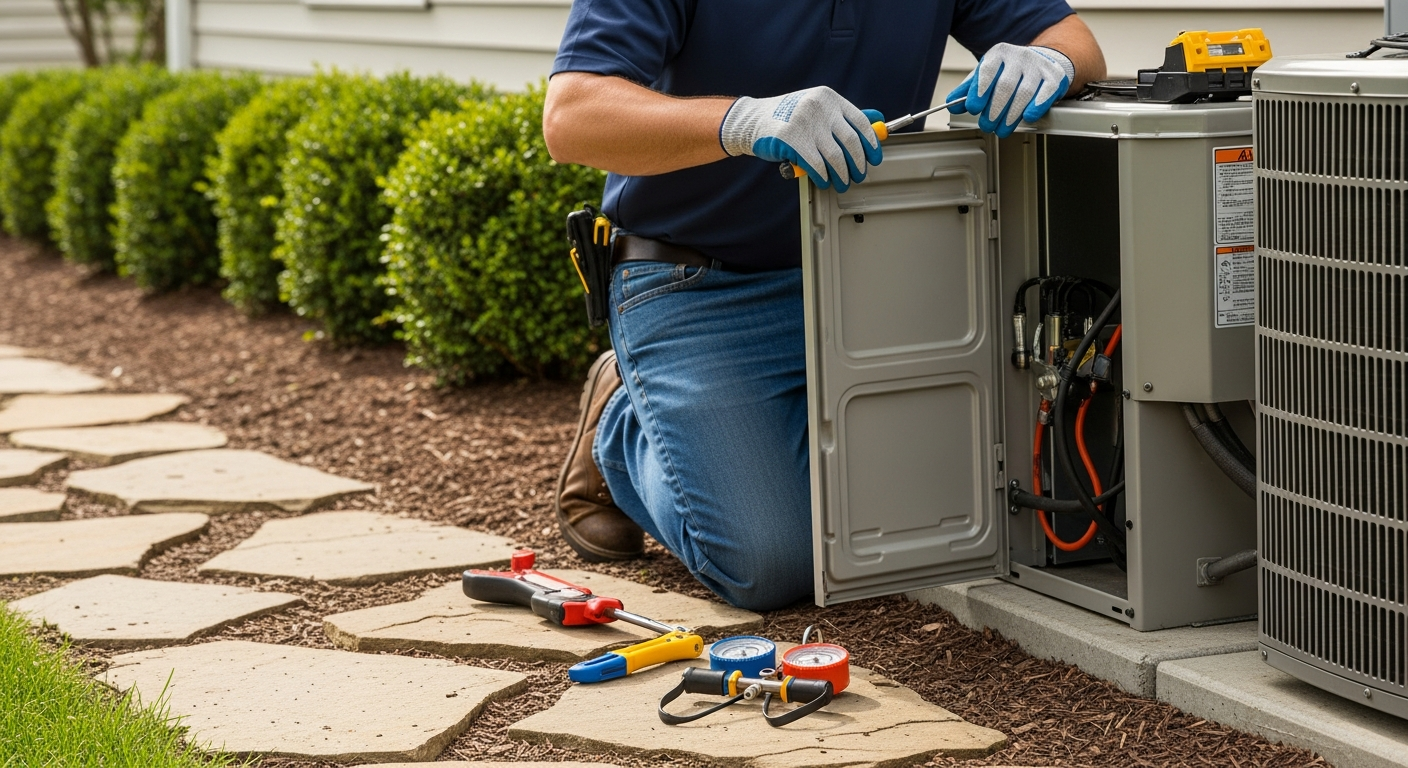
Quick Answer: Which Cooling System Should You Choose?
Your location’s humidity is the #1 factor. In dry climates (average summer relative humidity below 40%), an evaporative cooler can slash cooling costs by up to 75% compared to central AC. In humid climates (above 50%), only a traditional air conditioner can maintain comfort and control moisture. Not sure? Use our HVAC cost estimator and the decision rules below to find your best cooling solution.
How They Work – At a Glance
Evaporative Cooler (Swamp Cooler)
Draws outdoor air through water-saturated pads. Evaporation cools the air, which is then blown into your home. Requires open windows to exhaust moist air. Works only in low-humidity environments; performance drops sharply above 50% relative humidity.
Central Air Conditioner
Uses a closed-loop refrigeration cycle with refrigerant, compressor, and coils to remove heat and moisture from indoor air. Delivers consistent cooling regardless of outdoor humidity. Recirculates indoor air and requires a sealed, insulated home.
Cost Comparison Table
| Factor | Evaporative Cooler | Central Air Conditioner |
|---|---|---|
| Equipment + Install (Whole-Home) | $1,200 – $4,000 | $3,500 – $8,000+ |
| Annual Operating Cost (Cooling Season) | $50 – $150 (water + electricity) | $300 – $800 (electricity) |
| Maintenance (Annual) | $80 – $150 (pad replacement, winterizing) | $150 – $300 (tune-up, filter changes) |
| Lifespan | 10 – 15 years (pads every 1–2 years) | 12 – 18 years (with regular upkeep) |
| Climate Fit | Arid regions only | All climates |
| Indoor Air Quality | Fresh outdoor air; adds humidity | Recirculates indoor air; dehumidifies |
Editorial estimates; actual costs vary by region, system size, and installation complexity. Get personalized pricing with our cost estimator tool.
Decision Rules: Evaporative Cooler or AC?
Answer these questions to narrow your options:
- Summer humidity: Is the average afternoon relative humidity below 40%? If yes, consider evaporative. Above 50%? Go with AC. Check local climate data.
- Water availability: Evaporative units use 3–10 gallons per hour of operation. In drought-prone areas, factor in water costs and restrictions.
- Indoor air quality needs: If anyone in the home has allergies or asthma, AC’s filtration and dehumidification may be worth the extra cost. Evaporative coolers can introduce pollen and increase indoor humidity.
- Budget priority: Lower upfront and operating costs? Evaporative wins if your climate allows. Long-term home value and precise comfort? AC is the standard.
Still torn? Use our repair or replace calculator to see if upgrading your current system makes financial sense.
Safety Boundaries: What Homeowners Can and Cannot Do
Safe Homeowner Checks & Maintenance
- Inspect and replace evaporative cooler pads (power off and unit unplugged).
- Clean debris from outdoor condenser coils (guide).
- Change AC air filters monthly (step-by-step).
- Keep area around outdoor unit clear of plants and obstructions.
- Verify that vents are open and unblocked.
Professional-Only Work – Do Not Attempt
- Refrigerant handling, leak repair, or charging.
- Electrical component replacement (capacitors, contactors, wiring).
- Compressor or motor repair.
- Modifying water supply or gas lines.
- Accessing sealed refrigeration or combustion systems.
For any of the above, hire a licensed HVAC contractor. Use our contractor search to find vetted professionals in your area.
Tools & Calculators to Guide Your Decision
- Cost Estimator: Get a personalized installation or repair estimate.
- BTU Calculator: Properly size your cooling equipment to avoid inefficiency.
- Repair vs Replace: See if it’s time to replace your aging system.
- Quote Checker: Compare contractor bids to avoid overpaying.
- Rebate Finder: Find local utility incentives for high-efficiency ACs.
Local Climate Considerations
Hot-Dry (Southwest, parts of Mountain West): Evaporative coolers thrive. Pair with a backup portable AC for monsoon or heat-wave days. Humid (Southeast, Mid-Atlantic, coastal): Central AC is mandatory. Consider a ductless mini-split if you lack ductwork. Coastal or older homes: Salt air and outdated electrical may require corrosion-resistant AC units and panel upgrades. Always get a load calculation (BTU calculator) for accurate sizing.
Contractor Checklist: 10 Questions to Ask Before You Hire
- Are you licensed and insured for HVAC work in my state?
- What size unit do you recommend, and how did you calculate it? (Insist on Manual J.)
- Do you pull necessary permits and schedule inspections?
- What is the full scope of work – includes electrical, ductwork, or plumbing modifications?
- Can you provide local references for similar installations?
- What is the warranty on equipment and labor?
- Do you offer a maintenance plan, and what does it cover?
- How will you handle water supply and drainage for an evaporative cooler?
- What is your projected timeline, and how will you protect my home during work?
- May I see a detailed, line-item estimate before signing?
Always get 3 competitive bids and run them through our quote checker. For emergency repairs, visit Emergency HVAC.
Methodology: How We Form Our Estimates & Recommendations
This guide is built from HVACDatabase’s editorial research, aligning with industry standards (ASHRAE, AHRI), and aggregated real-world project data. Cost ranges reflect national averages, adjusted for regional labor rates and equipment efficiency tiers. The decision rules prioritize safety, long-term value, and energy efficiency. Always verify with a local contractor, as site conditions can change everything.
Frequently Asked Questions
Can I switch from an evaporative cooler to central AC later?
Yes, but it’s a major project. You’ll likely need new ductwork (evaporative systems use large, short ducts), a sealed home envelope, and possibly a larger electrical panel. Budget $5,000–$12,000 depending on home size.
How often do I need to replace evaporative pads?
Annually in heavy use; every two years in lighter use. Hard water shortens pad life. Inspect monthly and clean with a mild solution to prevent mold.
Will an evaporative cooler work during a rainstorm or high humidity?
No. Its effectiveness drops to near zero when outdoor humidity exceeds 60%. Many users switch to a portable AC or open windows for ventilation on muggy days.
Does AC really dehumidify well enough for a basement?
Central AC removes 2–4 pints of water per hour in typical operation. For chronically damp basements, you may still need a dedicated dehumidifier. Have a pro check your condensate drain (cleaning guide).
Are there any evaporative coolers that work in humid climates?
No. Two-stage or indirect evaporative coolers can slightly extend the humidity range, but they still fail above 50% outdoor humidity. Stick with AC in muggy zones.
Related articles
Explore related maintenance, equipment, and hiring questions.

Nest Learning Thermostat (4th gen) vs ecobee Premium
Both models offer remote room sensors. Compare the exact generation, wiring compatibility, controls, and installed quote before choosing.

MERV 11 vs MERV 13: check filtration and equipment compatibility
Compare particle filtration, verify the filter your equipment supports, and use a buying checklist without assuming a universal health or energy saving.

How to check an HVAC contractor before hiring
Use a documented shortlist: business identity, applicable credentials, job experience, a written scope, and a clear handover.