Federal and State HVAC Rebate Programs
A practical guide to claiming federal tax credits and state/utility rebates for energy-efficient HVAC. Includes eligibility tables, checklists, and links to our rebate finder.
Clear Recommendation
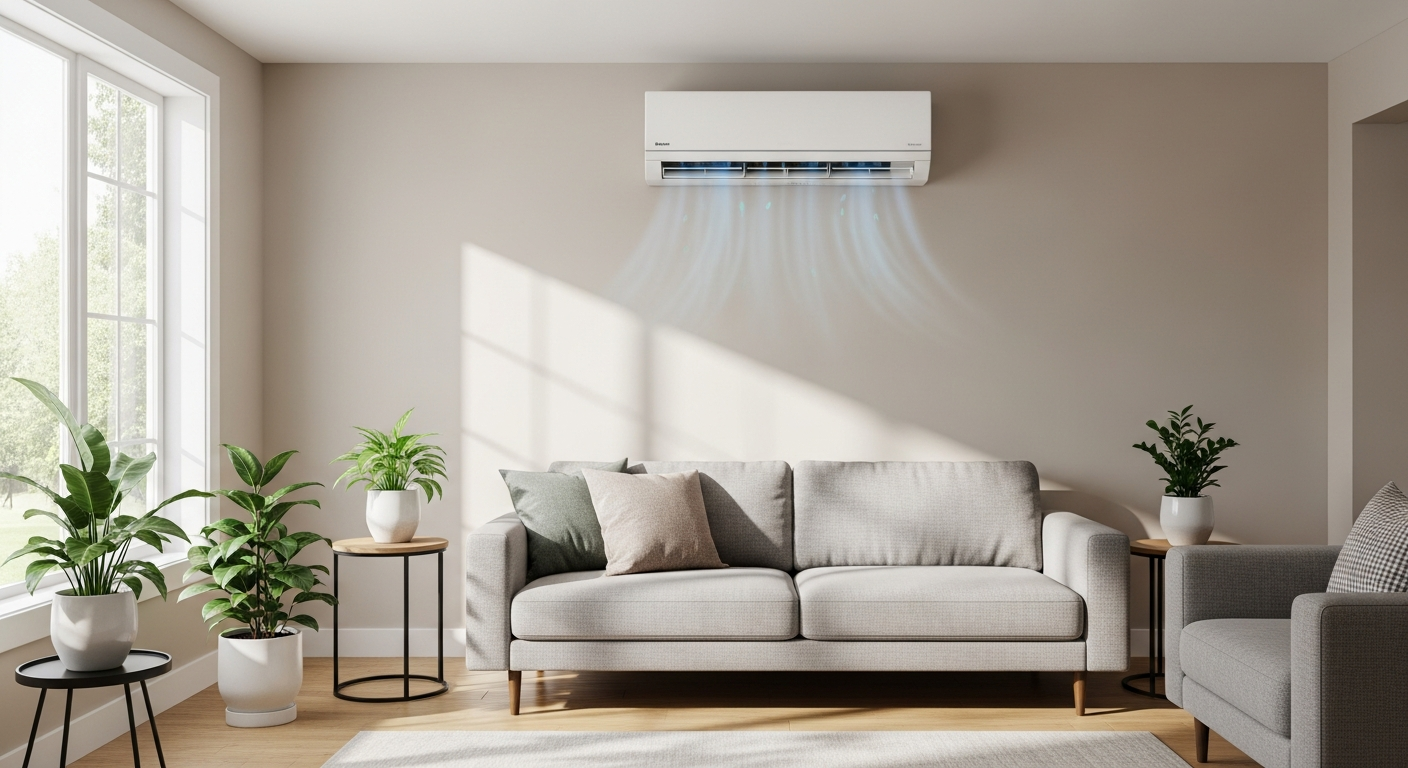
For most homeowners, a high-efficiency heat pump offers the best rebate value and long-term energy savings. In very cold climates, consider a dual-fuel system. Always verify local incentives before buying.
What Matters Most
- Federal tax credits cover up to 30% of costs, capped at $2,000 for heat pumps.
- State and utility rebates can add thousands in instant savings.
- Efficiency thresholds are strict—check SEER2, HSPF2, or AFUE ratings before purchase.
- Hire a licensed contractor and keep all documentation for claims.
- Combine incentives with home weatherization for maximum return.
Strengths
- Heat pumps provide heating and cooling in one unit, reducing fuel reliance.
- Tax credits are available for multiple years, allowing phased upgrades.
- Immediate rebates lower the upfront cost barrier.
- High efficiency leads to lower monthly bills and increased comfort.
Weaknesses
- In extremely cold areas without backup, some heat pumps may struggle (though cold-climate models have improved).
- Rebate availability varies by state and utility funding, leading to uncertainty.
- High-efficiency equipment often costs more upfront, even after incentives.
- Paperwork can be complex, requiring tax filing adjustments.
Decision Summary: Which HVAC Upgrade Path Saves More?
| Scenario | Usually do | Why |
|---|---|---|
| You live in a moderate climate, current system >10 years old | Replace with ENERGY STAR heat pump | Maximizes federal credit ($2,000) and qualifies for most state rebates; lower operating cost. |
| You have an older furnace and AC, and natural gas is cheap | Install a high-AFUE gas furnace and efficient AC | Lower upfront cost with simpler installation, but rebates are smaller ($600 each). |
| Your ductwork is leaky or non-existent | Consider ductless mini-split heat pump | Avoids costly ductwork, high efficiency, and full credit eligibility. |
| You rent or plan to move soon | Prioritize smart thermostat and minor weatherization | Low investment, but still some utility rebates. |
Quick Answer: How to Save on Your HVAC Upgrade
You can slash HVAC costs by stacking federal tax credits, state rebates, and utility incentives. The average homeowner saves $2,000–$8,000 on a qualifying system. Key steps:
- Use our Rebate Finder to see local offers.
- Choose equipment meeting minimum SEER2/HSPF2 thresholds (see table below).
- Hire a licensed pro and keep receipts. Credits reduce taxes; rebates give cash back. Act soon—some programs have limited funds or phase-out dates.
Do You Qualify? Federal Tax Credit Eligibility & Decision Rules
To claim the full credit, your new system must meet or exceed these 2024–2032 requirements. State and utility rebates often align but may have stricter thresholds—always verify with our Rebate Finder.
| Equipment Type | Minimum Efficiency Requirement | Maximum Federal Credit | Key Notes |
|---|---|---|---|
| Ducted Heat Pump | SEER2 ≥ 15.2, HSPF2 ≥ 8.1 | $2,000 | Must meet CEE highest tier; covers split systems and packaged units |
| Ductless Mini-Split Heat Pump | SEER2 ≥ 16, HSPF2 ≥ 9.5 | $2,000 | Ideal for homes without existing ductwork |
| Central Air Conditioner | SEER2 ≥ 16 | $600 | ENERGY STAR Most Efficient designation required |
| Gas Furnace | AFUE ≥ 97% | $600 | Only for high-efficiency models; limited to 30% of cost |
| Heat Pump Water Heater | UEF ≥ 3.5 | $2,000 | Replaces electric resistance water heater; credit shared with heat pump |
Decision Rules: If your heating load is over 40,000 BTU/hr and you live in a cold climate (below 5°F design temperature), pair a heat pump with a gas furnace (dual-fuel) to maximize rebates and comfort. For cooling-dominant regions, prioritize SEER2 over HSPF2. Check our BTU Calculator to size your system correctly.
Safety Boundaries: What You Can (and Cannot) Do Yourself
While claiming rebates is paperwork, installing HVAC equipment involves high-voltage electricity, refrigerant, and combustion gases. As a homeowner, you can:
- Compare quotes and verify contractor licenses using our contractor comparison tool.
- Verify equipment model numbers against approved lists from the manufacturer’s AHRI certificate.
- Fill out rebate forms and attach required documentation.
Never attempt:
- Installing or repairing refrigerant lines (requires EPA certification).
- Connecting gas lines or modifying combustion vents.
- Replacing capacitors, contactors, compressors, or control boards.
- Modifying electrical panels or running high-voltage wiring.
Always hire a licensed, insured professional for installation. Your safety and warranty coverage depend on it.
Use Our Free Tools to Maximize Your Savings
Take the guesswork out of rebate hunting:
- Rebate Finder – Enter your ZIP to see all federal, state, and utility incentives you qualify for.
- HVAC Cost Estimator – Compare installed prices before and after incentives.
- Energy Savings Calculator – See how much a high-efficiency system could cut your monthly bills.
- Repair or Replace Calculator – Not sure if you need a new system? This tool helps you decide.
Contractor Checklist: 7 Questions Before You Sign
- Licensing & Insurance: "Are you licensed, bonded, and insured in this state? May I see proof?"
- Rebate Eligibility: "Will this exact model number qualify for the federal tax credit and all local rebates? Please put that in writing."
- Paperwork Handling: "Do you file the utility rebate on my behalf, or do I submit it?"
- Load Calculation: "Can you provide a Manual J load calculation to properly size the equipment? (Required for most rebates.)"
- Warranties: "What are the equipment and labor warranties? Do they meet rebate program requirements?"
- Experience: "How many of these specific units have you installed in the past year? Can I speak with a recent customer?"
- Total Price Breakdown: "Please itemize equipment, labor, permits, and any disposal fees. Will the rebate be deducted upfront?"
Local Market Considerations
Your location shapes which incentives are best and what equipment makes sense.
Hot & Dry (Southwest)
Prioritize high-SEER2 air conditioners or heat pumps with enhanced dehumidification. Some Arizona utilities offer extra rebates for solar-ready heat pumps. Find a Phoenix AC contractor familiar with local rebates.
Cold & Snowy (Northeast, Midwest)
Cold-climate heat pumps (rated to -15°F) now qualify for full credits. In older homes, pair with air sealing and insulation. A dual-fuel system (heat pump + high-efficiency gas furnace) can provide backup and still earn partial credits. Check our Chicago heating contractor list for pros who understand cold-weather performance.
Hot & Humid (Southeast, Gulf Coast)
Variable-speed systems dramatically improve humidity control. Look for rebates tied to ENERGY STAR HVAC with integrated dehumidification. Get a home energy audit before upgrading—duct leakage is common.
Coastal (Salt Air Exposure)
Salt corrosion shortens coil life. Choose equipment with coastal warranties (e.g., factory-applied anti-corrosion coatings). Some rebates require corrosion-resistant models; check with local utilities.
Older Homes (Pre-1980)
Many older homes need electrical panel upgrades or duct sealing before a new HVAC can be installed. Programs often bundle weatherization incentives. Use our Cost Estimator to budget for any necessary prep work.
Methodology: How We Calculate Savings Estimates
Our cost ranges and savings projections are editorial estimates based on national average installation prices, manufacturer rebate data, and public utility filings. Actual rebate amounts vary by ZIP code, equipment model, household income (for some state programs), and program fund availability. We update this guide quarterly or when major policy changes occur. Always confirm current details with your contractor and official program websites before purchase.
Frequently Asked Questions
Can I combine federal tax credits with state rebates and utility incentives?
Yes, in most cases. Federal credits are applied to your income tax, while state and utility rebates are cash paid directly. You can often stack them, but some state programs may reduce the eligible cost for the federal credit. Generally, the full installed cost qualifies for the credit, even if a rebate reduced your out-of-pocket expense. Consult a tax professional, but stacking is the norm.
What if my contractor isn’t familiar with rebates?
Choose a contractor who regularly participates in efficiency programs. Ask them to provide the AHRI certificate for your equipment to prove eligibility. If they can’t, use our contractor search to find a vetted pro in your area who knows the rebate landscape.
Do renters qualify for HVAC rebates?
Typically, no, because the property owner must install the system. However, renters can sometimes receive rebates for smart thermostats or minor weatherization. Talk to your landlord about available incentives—they may be willing to upgrade if you share the savings.
How long do rebates and credits last?
Federal credits (25C) are in effect through December 31, 2032, with no sign of early expiration. State and utility rebates vary: some are ongoing annual programs, while others have limited funding that runs out quickly. We recommend checking our Rebate Finder monthly for real-time availability.
I installed an efficient system last year. Can I still claim the credit?
Yes, for installations placed in service after 2021, you can claim the federal credit on your current or amended tax return. You’ll need the manufacturer’s certification statement and your itemized invoice. Keep these for your records in case of audit. The credit is retroactive to 2022 installations.
Related articles
Connect this page to adjacent guides so readers keep moving deeper into the topic cluster.

How Utility Demand Response Programs Use Smart Thermostats
Enrolling your smart thermostat in a demand response program can earn you up to $150/year while keeping you comfortable. Learn if it's right for your home and how to maximize benefits.
Heating Industry Trends to Watch
Smart thermostats and heat pumps headline heating industry changes. But which trends deliver real savings? Use our decision guide, cost ranges, and contractor checklist to plan your upgrade.

How Gas Bans Are Affecting Heating Choices
Gas bans in new construction and retrofit codes are pushing homeowners toward electric heat pumps. Understand your options, costs, and available incentives before you replace your furnace.