Gas Furnace vs Electric Furnace Cost Comparison
Compare installation costs, energy rates, and long-term savings for gas and electric furnaces. See which option fits your budget with our interactive tools and decision rules.
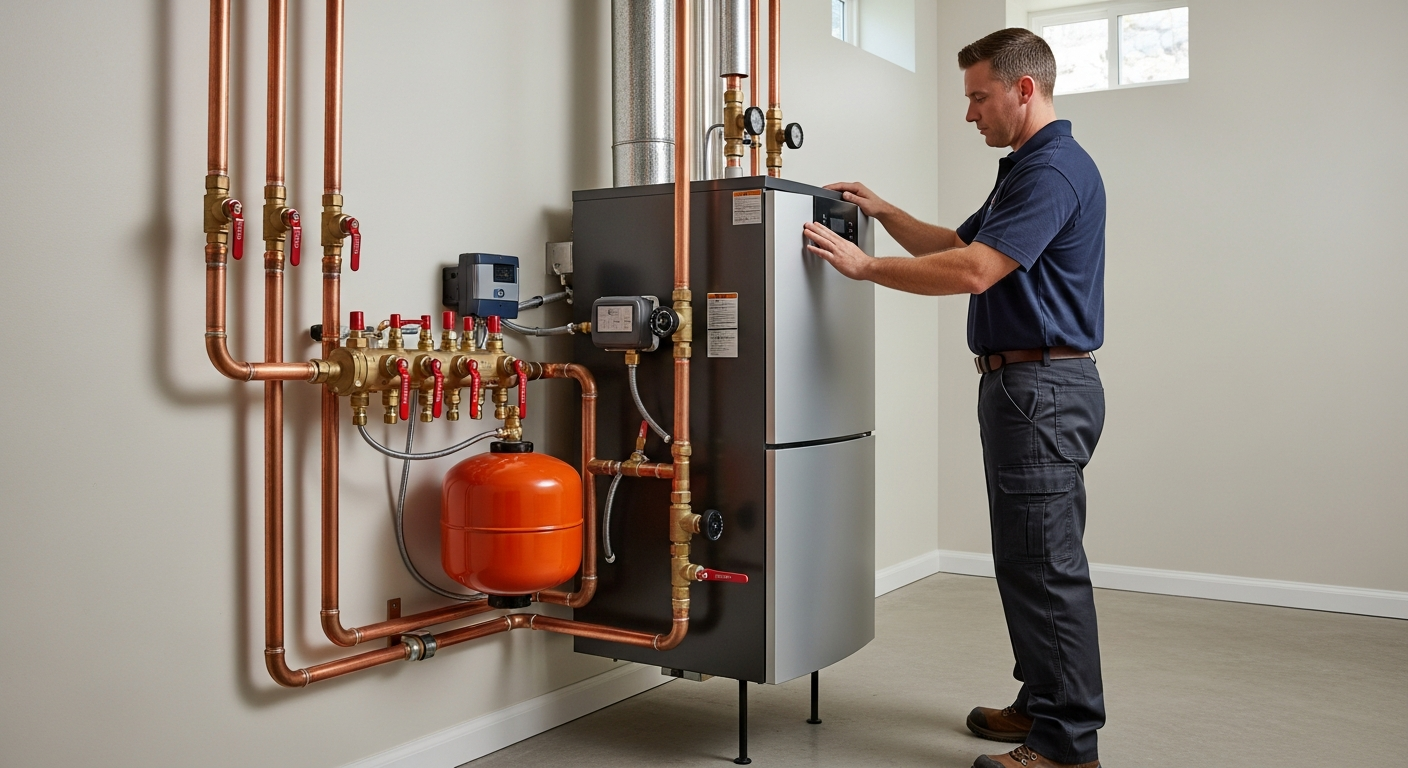
Gas is the long-term saver in cold climates; electric wins in mild regions and homes without a gas line
For most cold-weather homes with natural gas access, the lower monthly utility bills of a gas furnace recoup the higher install cost within 3–5 years. Electric furnaces are a practical choice in climates where heating demand is low or gas infrastructure is absent.
What Matters Most
- Upfront cost: electric furnaces are $1,500–$4,000 installed; gas systems can cost $3,500–$8,000+ before gas line work.
- Operating cost: gas is usually 50–70% cheaper per BTU, saving hundreds yearly in cold climates.
- Lifespan: electric often lasts 5–10 years longer, but gas maintenance costs more.
- Safety: electric has no combustion risk, but gas requires annual inspections and CO detectors.
- Decision trigger: Use our calculator if your heating season exceeds 3 months or January temps drop below 35°F—gas likely wins.
Strengths
- Gas furnaces provide fast, high-temperature heat ideal for drafty homes.
- Electric furnaces are simpler and have no venting constraints; they can be installed in closets or crawl spaces.
- Electric pairs well with residential solar panels for near-zero operating cost.
- Gas can still operate during a power outage if you have a backup generator (blower needed).
- High-efficiency gas units (95%+ AFUE) qualify for utility rebates—check our <a href="/us/tools/rebate-finder">rebate finder</a>.
Weaknesses
- Electric resistance heat is the most expensive heating method per BTU in most of North America.
- Gas furnaces require a safe exhaust path; improper venting can cause carbon monoxide buildup.
- Adding a gas line where none exists can cost $3,000–$6,000+ and may not be feasible in some locales.
- Gas prices are subject to market volatility; electricity rates are often more stable but steadily rising.
- Electric furnaces may require a panel upgrade ($1,500–$3,000) if your home’s service is insufficient.
Decision summary: which furnace fits your situation?
| Scenario | Usually do | Why |
|---|---|---|
| Cold winters, natural gas already on property | High-efficiency gas furnace | Lowest lifetime cost; payback in 3–5 years. |
| Mild climate, heating needed <2 months | Electric furnace or heat pump | Minimal annual savings from gas; avoid gas line expense. |
| All-electric home with solar panels | Electric furnace | Use free solar energy for heating; gas conversion cost not justified. |
| Worried about carbon monoxide or combustion safety | Electric furnace | Eliminates on-site combustion risk entirely. |
| Older home, no existing gas line, tight budget | Electric furnace or ductless mini-split | Avoids $3,000–$6,000+ gas line installation. |
If you’re replacing your furnace or building a new home, the choice between a gas and an electric furnace can feel like a financial riddle. Upfront, electric furnaces often win: they’re simpler and cheaper to install. But in most cold-weather regions, a gas furnace pays you back through lower monthly bills—often hundreds of dollars a year. This 5-minute guide breaks down every cost layer, from equipment to energy rates to maintenance, so you can decide based on your own home and climate.
Quick Answer: Which Furnace Is Cheaper Overall?
If you already have a natural gas line and live where winters are cold (temperatures regularly below freezing), a gas furnace is almost always the lower lifetime cost. Electric furnaces win in mild climates where heating demand is low, or if your home lacks a gas connection and adding one would cost thousands. Use our HVAC cost estimator to model local rates.
Cost Comparison at a Glance
| Cost Factor | Electric Furnace | Gas Furnace |
|---|---|---|
| Equipment + Installation | $1,500 – $4,000 | $3,500 – $8,000+ (add $1,500–$5,000+ if gas line must be run) |
| Average Annual Operating Cost* | $1,200 – $2,500 | $500 – $1,200 |
| Annual Maintenance | $50 – $100 (filter changes) | $100 – $200 (pro tune-up) |
| Typical Lifespan | 20 – 30 years | 15 – 20 years |
| Total 15-Year Est. Cost Range | $19,500 – $41,500 | $11,000 – $26,000 |
| *For a 2,000 sq. ft. home in a mixed climate. Operating costs depend heavily on local utility rates and insulation. Use our BTU calculator to size your furnace accurately. | ||
Upfront Installation Costs
Electric furnaces are simpler machines: heating elements, a blower, and controls. No gas piping, burners, heat exchangers, or flue venting required. This keeps equipment prices lower and installation straightforward—often a half-day job. Gas furnaces require a dedicated gas line, combustion air intake, and proper exhaust venting. If your home already has a gas line to the appliance location, installation adds only moderate labor. But if you need a new line run from the street, costs can skyrocket and may involve permits, trenching, and meter work. In that scenario, you might also explore hydronic heating cost guides or ductless heat pumps.
Monthly Operating Costs: The Real Decider
For most homes, natural gas is far cheaper per unit of heat than electricity. In the U.S., 1 million BTUs (93.5 therms) of natural gas costs roughly $10–$15; the same heat from electricity (293 kWh at $0.14/kWh) costs about $41. Even with electric’s perfect efficiency, the cost per BTU still favors gas almost everywhere except areas with extremely cheap electricity or very high gas rates. To run your own numbers, check your utility bill and compare:
- Cost per 100,000 BTU: Electric: (Electricity rate per kWh) × 29.3. Gas: (Gas rate per therm) ÷ (AFUE). For example, at $0.14/kWh electric vs. $1.20/therm gas with 95% AFUE: electric $4.10 vs. gas $1.26.
If your heating season is short (e.g., South Florida), the annual dollar difference may be small enough that the lower upfront cost of electric wins.
Maintenance and Lifespan
Electric furnaces have fewer parts: replace the air filter regularly and they can run for 20–30 years with minimal attention. Gas furnaces need annual professional inspections to check for cracks in the heat exchanger, proper venting, and igniter/sensor function. A typical gas furnace tune-up costs $100–$200 per visit; skipping it risks carbon monoxide leaks or midwinter breakdowns. For homeowners worried about surprise repair bills, comparing a repair-or-replace calculator can clarify whether an older unit is worth fixing.
Efficiency Ratings
Electric furnaces are 100% efficient at the point of use—every watt becomes heat. However, generating and transmitting that electricity is only about 35–40% efficient from the power plant. Gas furnaces are rated by AFUE: standard 80%, high-efficiency 90–98%. In a modern home, a 95% AFUE gas furnace wastes only 5% of its fuel; the rest heats your home. Pairing a high-efficiency unit with proper insulation (see our troubleshooting guide for other performance checks) maximizes savings.
Safety Boundaries: What Homeowners Can Do — and When to Call a Pro
Safe homeowner checks:
- Replace or clean air filters monthly during heavy use.
- Test your thermostat and ensure registers aren’t blocked.
- Listen for unusual screeching or banging—shut down and call for service.
- If you have a gas furnace, test carbon monoxide detectors monthly and keep vents clear of snow or debris.
Professional-only work:
- Any gas line connection, leak check, or valve replacement.
- Inspecting or replacing the heat exchanger, burners, or flue vent.
- Work on heat strips, high-voltage wiring, capacitors, or control boards.
- Adding refrigerant (not applicable to furnaces, but remember for heat pumps).
- If you smell gas or suspect a carbon monoxide leak, evacuate immediately and call the fire department or your gas utility.
For reputable local service, find Chicago heating repair pros or search by your zip code.
Use Our Tools to Pinpoint Your Cost
- HVAC Cost Estimator: Input your home size and region for personalized installation ranges.
- BTU Calculator: Avoid oversizing—proper sizing avoids cycling and wasted energy.
- Repair or Replace Calculator: For existing furnaces, see if a new unit beats another repair.
- Rebate Finder: Check for local utility incentives on high-efficiency gas or electric systems.
Decision Rules: Concrete Lines in the Sand
- You have natural gas available and your average January temperature is below 35°F: Choose a high-efficiency gas furnace. The payback on the higher upfront cost is typically 3–5 years.
- No gas line and home is all-electric with solar panels: Stick with electric—you’re already capitalizing on low electricity costs, and adding gas infrastructure is expensive.
- You’re in a climate with less than two months of regular heating (e.g., coastal SoCal): Electric furnace or even a heat pump often makes more sense; the annual operating gap is small.
- You’re replacing an old electric furnace but gas is available: Run a detailed comparison with our tool. If gas line install costs under $3,000, it usually pays off in <7 years.
- Your home has persistent carbon monoxide concerns or you have respiratory issues: Electric eliminates combustion risk; pair with HEPA filtration for indoor air quality.
Contractor Checklist: Questions to Ask Before You Sign
- “Are you licensed and insured for furnace installation in my city?”
- “Will you perform a Manual J load calculation to confirm sizing?”
- “Do you pull permits, and is the cost included in the quote?”
- “What warranties cover labor and parts, and for how long?”
- “Can you provide three references from similar installations in my neighborhood?”
- “For a gas furnace, will you inspect the existing gas line and venting, and include any needed updates in the quote?”
- “What is your policy if the unit doesn’t perform to spec after install?”
Compare up to three quotes from vetted local contractors to avoid overpaying.
Local Climate and Home Factors
Cold Climates (Northern Tier, Mountains)
Gas is the hands-down winner. Electric resistance heat can cost $2,000+ more per year in a poorly insulated home. Always pair a high-efficiency gas furnace with attic insulation upgrades—see our furnace troubleshooting guide for efficiency-boosting steps.
Mild Climates (Southeast, Coastal Pacific)
Electric often wins on upfront cost and simplicity. If humidity is a concern, note that gas furnaces can make indoor air feel drier; electric heat doesn’t add moisture, but whole-home dehumidifiers can be integrated.
Coastal and Corrosive Environments
Salt air accelerates metal corrosion. Electric furnaces, with fewer exposed metal parts, can outlast gas units by a wider margin. Choose stainless-steel heat exchangers if going gas.
Older Homes Without Ductwork
Adding ducts can cost $5,000–$15,000+. In these cases, a ductless mini-split system might offer better value than either central furnace. Consult our radiant floor heating or cost guides for alternatives.
Regions with Frequent Power Outages
A gas furnace still needs electricity to run the blower and controls. A backup generator or battery is required. Electric furnaces are helpless during blackouts unless backed up.
Methodology: How We Estimate Costs
Cost ranges are editorial estimates based on national average labor and equipment data from industry sources including the U.S. Energy Information Administration and major manufacturer specs. Installation ranges assume a typical single-family home with existing ductwork and electrical panel capacity. Gas line extension costs are additional. Local permit fees, seasonal demand, and supply chain variations can shift actual quotes. Always get multiple in-person estimates for your specific home.
Frequently Asked Questions
Is a gas furnace always cheaper to run than electric?
Not always. In areas with extremely low electric rates (below $0.08/kWh) or very high natural gas prices, electric can equal or beat gas on operating cost. Use our comparison formula above with your utility rates.
How much does it cost to add a gas line for a new furnace?
Running a gas line from the street to your furnace area typically costs $1,500–$5,000+, depending on trenching distance, meter upgrades, and local permit fees. Some utility companies offer rebates or free connections.
Can I switch from an electric furnace to a gas furnace?
Yes, if natural gas service is available at your property. You’ll need a gas line install, venting, and potentially a flue liner. Total conversion costs range from $3,500 to $8,000+. Our cost estimator can provide a starting point.
Do electric furnaces have dangerous emissions?
No. Electric furnaces produce zero on-site emissions and require no combustion. They are considered safer in terms of indoor air quality, though they still depend on fossil fuel-burning power plants in most regions.
How long does each type of furnace last?
Electric furnaces: 20–30 years with minimal maintenance. Gas furnaces: 15–20 years with annual tune-ups. Both depend on proper sizing and installation—an oversized unit fails sooner.
Ready to get real quotes? Start with our HVAC cost estimator or find emergency repair if your current furnace has failed.
Related articles
Connect this page to adjacent guides so readers keep moving deeper into the topic cluster.
Cost to Install Multiple Smart Thermostats
Get a clear cost breakdown for installing 2–4+ smart thermostats. Includes equipment, labor, zoning upgrades, and how to save with utility rebates. Practical checks and contractor questions inside.
Duct Booster Fan Installation Cost
Uneven room temps? Duct booster fan installation costs: register fans $30–$100 DIY, inline fans $500–$800+ with pro. Learn when a booster works and when you need a bigger fix.
Makeup Air Unit Installation Cost Guide
Expect to pay $1,500–$4,500 for a pro-installed makeup air unit. Discover passive vs. tempered options, code triggers, and money-saving decision rules.