How Climate Change Is Affecting AC Demand
Rising heat means your AC works harder. Learn how to cut energy bills, avoid breakdowns, and size your next system for today’s climate reality.
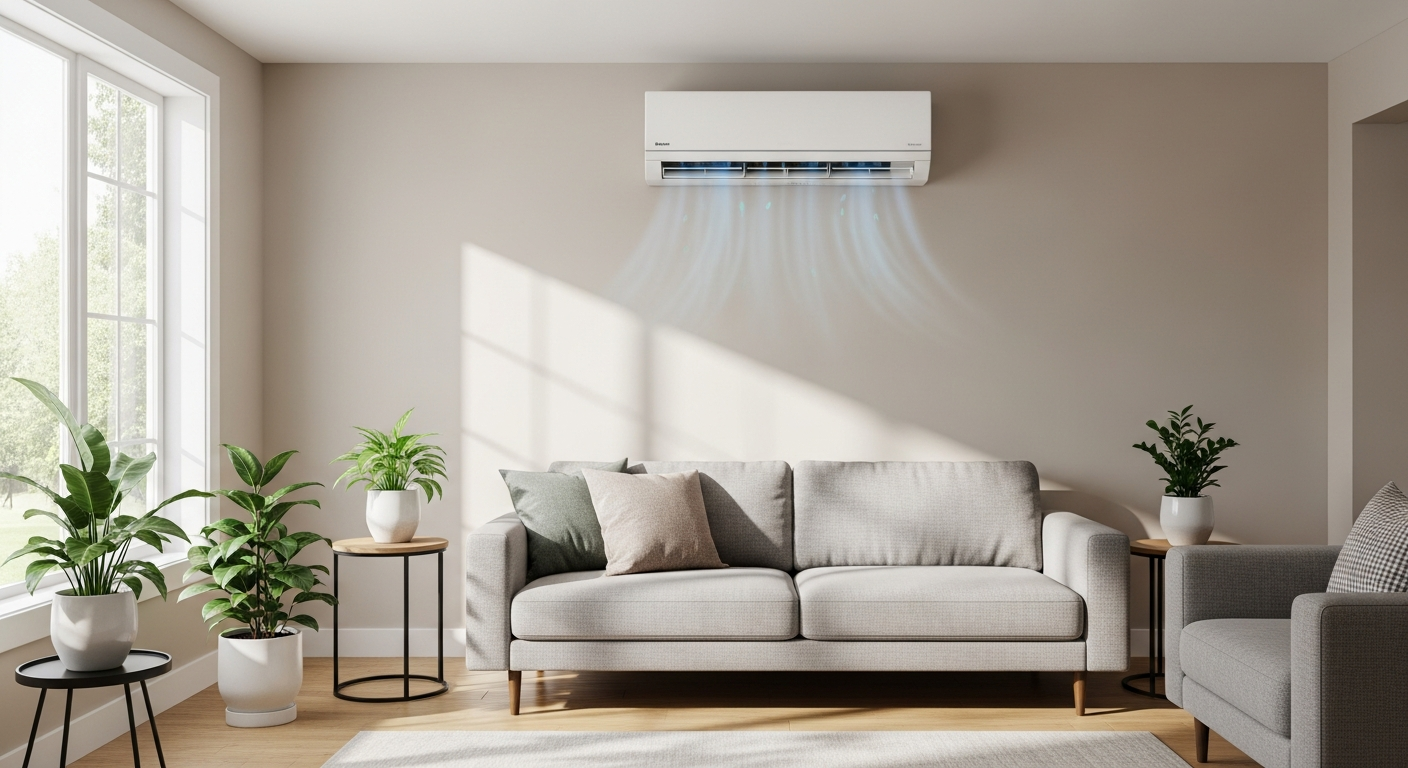
Proactive upgrades and right-sizing are essential as heatwaves intensify
Homeowners should treat AC systems as critical infrastructure: invest in proper sizing, modern efficiency, and preventive maintenance rather than waiting for failure.
What Matters Most
- Older AC units likely undersized for today's heat; manual J recalculation is key.
- High SEER2 (≥16) and smart controls cut cooling costs by 20–40%.
- Annual maintenance prevents 80% of mid-summer breakdowns.
- Hard start kits, sealing, and window films are low-cost climate adaptations.
- Get three bids, check for Manual J and load calculations before buying a new system.
Strengths
- Combines climate data with practical HVAC decisions
- Clear cost and efficiency boundaries for replacement timing
- Integrates interactive calculators for personalized estimates
- Safety-first approach with explicit task divisions
Weaknesses
- Cost ranges are editorial estimates; actual prices vary by region
- Climate projections may shift, altering recommended system sizes
- Requires professional calculation for exact sizing
Decision summary
| Scenario | Usually do | Why |
|---|---|---|
| Minor issue | Check safe basics | This avoids paying for a simple settings or filter problem. |
| Major issue | Get a written quote | Scope and warranty matter more than the headline price. |
Quick Answer: Adapting Your AC to a Hotter Climate
Climate change means longer, hotter summers. To keep your home comfortable without breaking the bank, take these steps: get a professional load calculation to verify sizing, upgrade to at least SEER2 16 when replacing, seal air leaks and improve insulation, schedule annual maintenance, and consider a smart thermostat plus a hard start kit for older units. These actions cut energy bills and slash breakdown risk.
Why Your AC Is Working Harder (and What to Do)
As global temperatures rise, your home’s cooling load—the amount of heat energy that must be removed—increases. Heatwaves now last longer, and nighttime temperatures stay higher, so your system gets little rest. This constant strain leads to higher energy consumption, premature component wear, and a greater chance of failure.
What you can do today:
- Seal leaks: Add weatherstripping around doors and caulk windows to keep conditioned air in. Check our summer prep guide for a checklist.
- Block sun: Install reflective window films, solar screens, or blackout curtains on south- and west-facing windows. Even low-cost solutions reduce heat gain noticeably.
- Insulate: Ensure your attic has at least the DOE recommended R-value for your region. This directly cuts cooling load.
- Monitor humidity: If indoor humidity stays above 60%, your AC is either oversized or struggling. Check condensate drain for clogs; see how to clean the drain pan.
System Sizing in a Warming World
Many systems installed a decade ago are now undersized for today’s peak temperatures. Signs of an undersized unit:
- AC runs nonstop on hot days (above 95°F) but can't hold 78°F
- Rooms farthest from the air handler stay warm
- Electric bills spike well above expected seasonal averages
If your home has many south-facing windows, the cooling load can be 10–20% higher than a standard model. Use our BTU calculator to get a rough idea, but always have a professional perform a Manual J load calculation before replacing equipment. Right-sizing prevents short-cycling and humidity problems.
| Situation | Action | Editorial Cost Guidance |
|---|---|---|
| Unit <8 years old, minor repair (capacitor, contactor) | Repair and consider hard start kit | Repair: $150–$650 |
| Unit 8–12 years, compressor or coil failure | Compare repair vs. high-efficiency replacement | Repair: $1,500–$4,000+; Replacement: $4,000–$12,000+ |
| Unit >12 years, SEER <13, major repair needed | Replace with SEER2 ≥16 | Replacement often yields 20–40% cooling cost savings |
| System short-cycles, humidity >60% | Check sizing; replace with variable-speed | Variable-speed units: $600–$1,500 premium over single-stage |
Maintenance That Matters
In a hotter climate, neglected maintenance escalates quickly. Safe homeowner tasks:
- Replace or clean air filters every 30–90 days (filter replacement guide)
- Keep outdoor condenser unit clear of debris, grass clippings, and vegetation; gently rinse fins with a garden hose (low pressure) when cool (coil cleaning tips)
- Check condensate drain for clogs; use a wet/dry vac to clear if needed
- Listen for unusual noises and note any ice on refrigerant lines (shut off system and call a pro)
Safety Boundaries: Leave These to a Licensed Pro
- Refrigerant handling: Adding or removing refrigerant, locating leaks, or measuring superheat/subcooling requires EPA certification and special tools. Improper charging damages the compressor and violates environmental regulations.
- Electrical components: Capacitors, contactors, circuit boards, and compressor wiring carry lethal voltage even when the unit is off. No DIY replacement.
- Gas furnace integration: If your AC shares a blower with a gas furnace, any combustion safety checks (heat exchanger, flue) are pro-only.
Smart Upgrades to Beat the Heat
Climate-resilient cooling doesn’t always mean a full replacement. Consider these add-ons:
- Hard start kit: Helps older compressors overcome high heat pressure when starting, reducing light flicker and tripped breakers. Typical cost: $150–$350 installed. See cost estimator for local pricing.
- Smart thermostat: Learns your schedule and can pre-cool during off-peak hours. Some utilities offer rebates; check rebate finder.
- Variable-speed systems: When replacing, a variable-speed compressor modulates output to match load exactly, improving humidity control and efficiency. Adds $600–$1,500 upfront but cuts bills by 20–40%.
- Solar integration: If you’re going solar, pairing with a high-efficiency AC or heat pump can zero out cooling energy costs. Learn more in solar AC explained.
Tools to Personalize Your Decision
Plug your numbers into these interactive calculators:
- HVAC Cost Estimator – See installed price ranges for your zip.
- Repair or Replace Calculator – Weigh long-term costs.
- BTU Calculator – Rough sizing based on square footage and climate.
- Rebate Finder – Discover local utility incentives for efficient equipment.
- System Age Decoder – Find your unit’s manufacture date from the serial number.
Decision Rules: Concrete Thresholds for Action
Use these benchmarks to decide next steps:
- Replace if: AC is over 12 years old and faces a repair exceeding $1,500, or has a SEER below 13. Older units struggle in extended heat.
- Resize if: System runs >12 hours/day on a 95°F day without reaching setpoint of 78°F, or if some rooms are consistently warmer than others by more than 4°F.
- Upgrade if: You’re spending more than $300/month on cooling during peak summer, and your unit’s SEER is below 15. A SEER2 16 unit can halve that bill.
- Perform a hard start or electrical check if: Lights dim when AC kicks on, or breakers trip regularly in hot weather.
Contractor Checklist for a Climate-Ready Installation
Before hiring, ask these questions:
- Will you perform a Manual J load calculation? Demand it—rule of thumb sizing (e.g., 500 sq ft per ton) often fails in extreme heat. A proper calculation accounts for window orientation, insulation, and local climate data.
- What SEER2 rating do you recommend, and why? In hot climates, a minimum of SEER2 16 often pays back within 3–5 years.
- How do you size for future climate trends? Some contractors add a small buffer (0.5–1.0 ton) if trends show rising degree days.
- Can you assess my ductwork for leaks and insulation? Leaky ducts sap 20–30% of cooling. A duct test (duct blaster) is ideal.
- What warranty and maintenance plan do you offer? Look for 10-year parts, 1-year labor, and an annual service plan.
- Are you licensed, insured, and familiar with local rebate programs? Verify at our contractor directory or your state board.
Local Climate Considerations
- Hot-dry (e.g., Phoenix): Evaporative coolers should be swapped for refrigerated AC as humidity spikes. Right-sizing critical; oversizing wastes energy. See Phoenix AC contractors.
- Hot-humid (e.g., Houston): Dehumidification matters as much as temperature. Prioritize two-stage or variable-speed units to manage latent load. A dedicated dehumidifier may be cost-effective.
- Coastal (e.g., Miami): Salt corrosion demands annual coil cleaning and protective coatings. Select units with coastal warranties.
- Cold climates (e.g., Chicago): If your AC is part of a central system with a furnace, ensure the furnace’s blower and heat exchanger are compatible with the new cooling coil. See Chicago heating contractors.
- Older homes: Insulation and air sealing often yield bigger comfort gains than a new AC alone. Prioritize envelope improvements before sizing a new system.
Methodology: How We Form Estimates and Recommendations
Our editorial cost ranges are based on nationwide service data, regional labor rates, equipment surveys, and inflation trends as of 2025. They are not guaranteed prices. Actual costs depend on system size, brand, region, season, access difficulty, permits, warranty scope, and whether ductwork or electrical upgrades are needed. Always get three itemized bids. Recommendations follow ACCA Manual J/S/D protocols and ENERGY STAR guidelines. We prioritize safety and longevity over lowest upfront cost.
Frequently Asked Questions
Why is my AC running constantly but not cooling to the set temperature?
Likely undersized for the current cooling load, or low on refrigerant. If outdoor temps are above 95°F and the unit is over 10 years old, it may not be able to keep up. First, check/change your filter and clear the outdoor coil. Then have a pro measure superheat/subcooling to rule out a refrigerant leak. If the system is sized correctly, it should cycle off eventually on all but extreme days.
How much can a higher SEER2 unit save in a hotter climate?
Upgrading from a SEER 10 unit to SEER2 16 can cut cooling energy use by 30–40%. For a typical 2,000 sq ft home with a summer bill of $300/month, that’s $90–$120 savings monthly. The payback period is usually 3–7 years depending on local electricity rates and usage.
Is it worth adding a hard start kit to an older AC?
Yes, especially if you notice lights dimming when the compressor kicks on. A hard start kit reduces electrical strain, helps in high outdoor temperatures, and can extend compressor life. At $150–$350 installed, it’s a low-risk investment for units over 7 years old.
What’s the best way to reduce humidity without lowering the temperature?
A variable-speed AC with a dehumidification mode is ideal. If replacing isn’t an option, use a standalone dehumidifier in problem areas like basements. Also ensure your AC’s fan speed is set correctly; a pro can lower it slightly to increase moisture removal. Running bathroom exhaust fans during showers helps too.
Should I wait for my old AC to fail before replacing?
No—proactive replacement gives you time to research, avoid emergency pricing (often 20–30% higher), and capture early-season rebates. A planned upgrade also ensures correct sizing without the rush. Use our repair or replace calculator to weigh the long-term costs.
Related articles
Connect this page to adjacent guides so readers keep moving deeper into the topic cluster.

How Utility Demand Response Programs Use Smart Thermostats
Enrolling your smart thermostat in a demand response program can earn you up to $150/year while keeping you comfortable. Learn if it's right for your home and how to maximize benefits.
Heating Industry Trends to Watch
Smart thermostats and heat pumps headline heating industry changes. But which trends deliver real savings? Use our decision guide, cost ranges, and contractor checklist to plan your upgrade.

How Gas Bans Are Affecting Heating Choices
Gas bans in new construction and retrofit codes are pushing homeowners toward electric heat pumps. Understand your options, costs, and available incentives before you replace your furnace.