How Often Should You Change Your HVAC Filter
Most homes need an HVAC filter change every 30–90 days. Use our decision rules and filter finder to nail the right schedule for your air quality and budget.
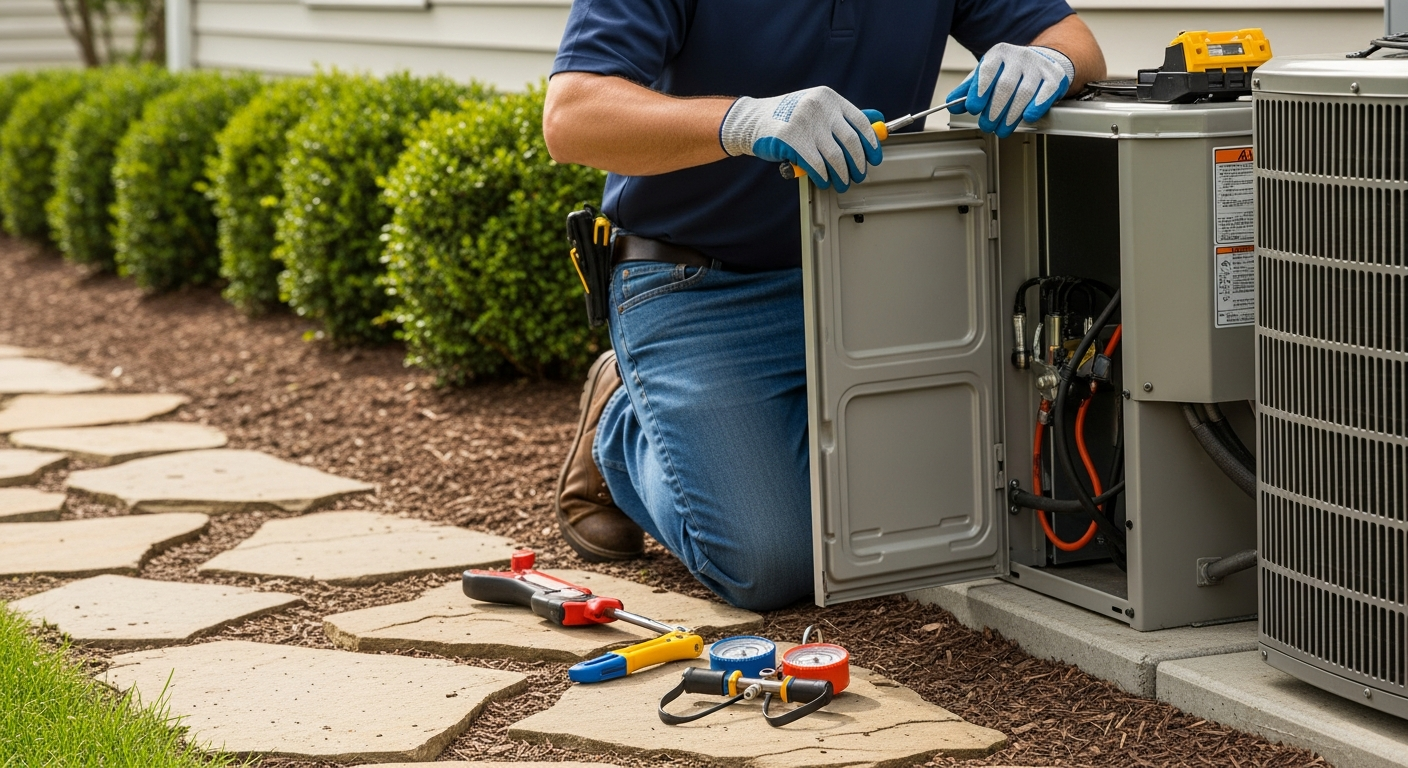
Stick to a schedule based on your filter thickness and household—don’t rely on a calendar alone
Change 1-inch filters every 30–90 days depending on pets, people, and dust. Upgrade to 4-inch media for longer life and better air.
What Matters Most
- 1-inch filters need changing every 1–3 months; 4-inch filters every 6–12 months.
- Use visual checks and the tissue test instead of waiting for a date.
- Invest in a media cabinet for lower maintenance and consistent airflow.
- Never run your system without a filter.
- Ask pros to measure static pressure during maintenance visits.
Strengths
- Prevents expensive blower/compressor failures.
- Lowers energy bills immediately with a clean filter.
- Scalable advice for any home type.
- DIY-friendly core task with clear safety boundaries.
Weaknesses
- Thicker filters require an initial $200–$600 cabinet installation.
- High-MERV filters can restrict airflow if the system isn’t compatible.
- Calendar schedules fail during seasonal runtime swings; manual checks needed.
- Neglecting filter changes can void manufacturer warranties.
1-inch vs. 4-inch Filter: Which Should You Choose?
| Scenario | Usually do | Why |
|---|---|---|
| Tight budget, simple setup | Use 1-inch disposable pleated (MERV 8) | Low upfront cost ($10–$20 per filter); replace every 30–90 days. |
| Wants maximum air quality and less frequent changes | Install a 4-inch media cabinet (MERV 11) | Longer filter life, better flow, and captures more fine particles. Cabinet cost: $200–$600 installed. |
| Allergy household, compatible system | Move to MERV 13 in a 4-inch filter | Captures smoke and bacteria; requires professional static pressure test first. |
An HVAC filter that’s past its prime costs you money and dirty air. But the “every 90 days” rule is too generic. A home with two shedding dogs and a dusty renovation may need a swap every three weeks, while a single-person condo with a 5-inch media filter can go 12 months. This guide gives you a straightforward schedule, cost-smart decision rules, and tools so you can stop guessing.
Quick Answer: How Often Should You Change Your HVAC Filter?
For most homes, change a 1-inch pleated filter every 30–90 days. Upgrade to a 4-inch media filter and you can stretch to 6–12 months. But the real answer depends on your specific mix of pets, people, pollen, and runtime. Use the table below to lock in your interval. Need the exact filter size? Try our Filter Finder tool.
| Scenario | Filter Type (thickness) | Change Interval |
|---|---|---|
| Vacation home, single occupant, no pets | 1–2 inches | 6–12 months |
| Suburban home, 1–2 people, no pets | 1 inch | 90 days |
| 2+ occupants, or 1 dog/cat | 1 inch | 60 days |
| Multiple pets or allergy sufferer | 1 inch | 30–45 days |
| Home renovation or high outdoor dust | 1 inch | Every 2–3 weeks |
| Above scenarios but with 4–5 inch media filter | 4–5 inches | Double the above intervals (max 12 months) |
Factors That Really Control Filter Life
Filter Type & MERV Rating
- Thicker filters (4–5 inches) have up to 3x the surface area of 1-inch pleats, so they last longer and maintain better airflow.
- MERV 8–11 is the sweet spot for most homes; MERV 13+ can clog faster and may require professional verification that your system can handle the pressure drop.
- Cheap fiberglass filters (MERV 1–4) capture only large debris and protect the coil but do little for indoor air quality.
Household & Lifestyle Triggers
- Pets: One medium dog adds dander and hair that can halve the life of a 1-inch filter. Heavy shedders or multiple pets push changes to every 30 days.
- Occupants: Each person contributes skin cells, dust, and activity particles. More than three people? Assume shorter intervals.
- Cooking & cleaning: Frying, searing, and sweeping release fine particulates that load filters quickly.
- Smoking or fireplace: These double the particle load; change monthly.
Seasonal Runtime & Outdoor Environment
- Peak summer/winter: Systems run 8–16 hours a day, so check filters every 30 days.
- Spring/fall: Lighter runtime may stretch intervals, but pollen season can clog filters even with low runtime. Check visually after high-pollen weeks.
- Near construction sites, farmland, or busy roads: Dust and soot shorten intervals dramatically.
Decision Rules: When to Change Now
Instead of a calendar date, use these thresholds:
- Visual check: Hold filter up to a light. If you can barely see through it or it looks gray/brown, change it.
- Airflow test: Place a tissue near a supply vent with the system running. Weak flapping? Filter may be clogged.
- Energy bill watch: A 15%+ spike over the same month last year, with similar weather and rates, often points to a dirty filter.
- Dust sensors: Many smart thermostats show runtime or remind you. If runtime hours jump without a heat/cold wave, suspect the filter.
- Allergy symptoms: If indoor sneezing or itchy eyes increase, the filter isn’t capturing enough.
Safety Boundaries: What Homeowners Can Do vs. Pro-Only Tasks
Safe Homeowner Checks and Maintenance
- Locate the filter slot (typically behind a return grille or at the air handler/furnace).
- Shut off the system before removing the filter.
- Visually inspect the filter and replace with the correct size (arrows point toward the unit).
- Wipe down the filter cabinet with a damp cloth.
- Set a phone reminder based on your personal schedule.
- Upgrade to a thicker media cabinet if desired (a contractor installs the cabinet; you then swap the filter).
Pro-Only Tasks (Do Not DIY)
- Refrigerant or coil issues: Ice on the copper lines or coil indicates refrigerant problems or restricted airflow beyond a dirty filter. Call a licensed tech.
- Blower motor or control board: If you hear grinding, screeching, or no blower operation, professional diagnosis is needed (safety and electrical hazard).
- Duct cleaning or modification: While you can use a shop vacuum on return boots, full duct cleaning, sealing, or resizing requires specialized equipment and knowledge.
- Electrical components: Capacitors, contactors, and high-voltage connections are not safe for DIY.
- Gas or combustion: Never bypass or adjust gas pressure, burners, or flues.
Tools & Calculators to Nail Your Filter Schedule
HVACDatabase offers free tools to help you make data-driven decisions:
- Filter Finder: Enter your system details to get the exact filter size and compatible MERV ratings.
- HVAC Cost Estimator: Compare prices for maintenance plans, filter upgrades, and a full system replacement if neglecting filters led to bigger issues.
- Repair or Replace Calculator: If your system is struggling despite a new filter, see if it’s time to replace.
- BTU Calculator: Proper sizing reduces short-cycling, which can load up filters faster.
Contractor Checklist: What to Ask Before You Pay for Filter-Related Services
If you hire professional maintenance or upgrade to a media cabinet, ask these questions:
- “Will you measure static pressure?” — A proper maintenance visit checks pressure to catch duct or airflow issues. Typical visit: $80–$250.
- “What MERV rating do you recommend for my system?” — The answer should consider your motor type (PSC vs. ECM) and ductwork. MERV 8–11 is usually safe.
- “Do you offer an annual maintenance plan?” — Plans often run $150–$500/year and include filter changes, inspections, and priority service.
- “Can you check for duct leaks and sealing needs?” — Leaky ducts pull in attic/crawlspace dust and shorten filter life. Duct testing may add $100–$350.
- “Are you licensed, insured, and can you provide a written estimate?” — Always verify credentials and get a detailed quote before work starts.
Need a vetted pro? Search HVACDatabase contractors and read verified reviews.
Local Considerations: How Climate and Home Type Change Filter Needs
Hot & Humid Climates (Southeast, Gulf Coast, Texas)
ACs run nearly continuously in summer, so check filters every 30 days. High humidity can cause damp filters that harbor mold; use a MERV 8–11 with antimicrobial properties. Consider a vacation schedule if you’re away.
Cold Climates (Midwest, Northeast, Rockies)
Winter heating with a furnace or heat pump adds dust from cleaner-burned air. Excessively dry air keeps dust suspended longer; a whole-house humidifier can help but add maintenance. Watch for ice on heat pump outdoor coils; a dirty filter reduces airflow and can cause freezing.
Coastal & Sandy Environments
Salt and sand accelerate filter loading and can damage the coil. Use a higher MERV (11–13) and inspect monthly. Consider a corrosion-resistant cabinet if near the ocean.
Older Homes & Historic Buildings
Leaky ducts and natural drafts bring in more particulates. Often benefit from a blower-door test and duct sealing. Budget-friendly 1-inch filters may need changing every 30 days until sealing is done.
Methodology: How We Calculate Filter Change Intervals & Costs
Our editorial team combines manufacturer guidelines (from Carrier, Trane, Lennox, etc.), ASHRAE Standard 52.2, and field experience from hundreds of HVAC professionals in the HVACDatabase network. Cost ranges are editorial estimates based on contractor surveys conducted in 20 U.S. metros in 2024–2025. Actual prices vary by region, system size, labor rates, and urgency. We update estimates quarterly. No one pays to be listed; our recommendations are independent.
Frequently Asked Questions
1. Can I wash and reuse my HVAC filter?
Only if it’s explicitly labeled as washable/reusable. Most pleated filters are disposable. Washing can damage the fibers and reduce effectiveness. Reusable filters (often electrostatic) need monthly washing and thorough drying; they typically cost $30–$80 upfront.
2. What MERV rating should I choose?
For most homes, MERV 8 is the minimum for decent air quality without starving airflow. MERV 11 balances fine-particle capture with system compatibility. MERV 13 is for households with severe allergies or asthma, but you must verify that your system’s static pressure can handle it—something a pro can check during a $100–$300 diagnostic.
3. What happens if I don’t change the filter?
A clogged filter kills efficiency (15%+ higher energy bills), overheats the heat exchanger (furnaces can crack), and freezes the evaporator coil (AC). Long-term, you risk a $1,500–$4,000+ compressor or motor failure.
4. How do I know when my filter is actually clogged?
Use the “light test” and “tissue test” mentioned in Decision Rules above. Also, many pleated filters come with a change-indicator sticker that changes color based on pressure drop. But visual inspection remains the most reliable.
5. Should I turn off my HVAC system before changing the filter?
Yes. Always switch the thermostat to “off” to stop the blower. This prevents dust from being sucked into the coil while the filter is out and ensures safety.
Related articles
Connect this page to adjacent guides so readers keep moving deeper into the topic cluster.

Tips for Choosing a Smart Thermostat for a Heat Pump
Learn which smart thermostat features prevent expensive auxiliary heat mistakes, how to verify compatibility, and when to call a pro.

Understanding C Wire Adapters for Smart Thermostats
Missing the C wire for your smart thermostat? C wire adapters solve power issues without pulling new wiring. Compare types, costs, and installation options.

Best Smart Thermostats for Multi Zone Homes
Discover which smart thermostats deliver accurate zoning, remote sensors, and energy savings for homes with multiple HVAC zones. Our guide helps you pick the right model and avoid costly compatibility mistakes.