How the R-22 Refrigerant Phase Out Affects You
R-22 refrigerant is now scarce and expensive. Compare repair costs with new high-efficiency options and use our calculator to see if replacement saves you money.
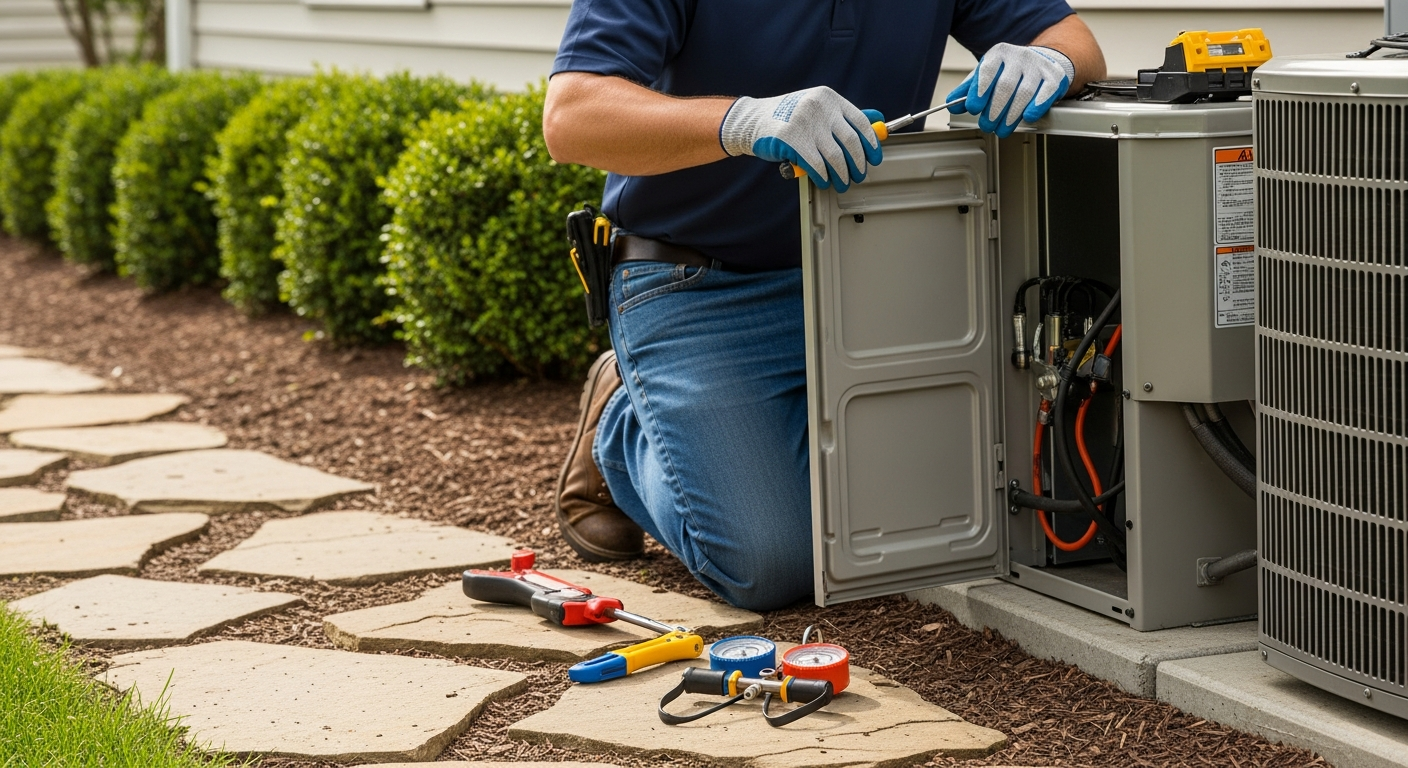
R-22 Phase-Out: What Homeowners Must Do Now
A 20-year-old central AC using R-22 refrigerant is now a financial time bomb. Since the U.S. banned new R-22 production in 2020, refrigerant costs have skyrocketed—a single recharge now averages $500–$1,200+, often more than half the price of a new high-efficiency unit. If your system is low on charge or leaking, you face a stark choice: pour money into an outdated machine or invest in a modern, efficient replacement. This guide gives you clear cost comparisons, decision rules, and a contractor vetting checklist to avoid overpaying.
Quick Answer
For most homeowners with an R-22 AC over 12 years old, replacement with a new energy-efficient model usually makes more financial sense than repeated repairs. If a single repair costs 50% or more of a new system, or your system is leaking refrigerant, replace it. Use our Repair-or-Replace Calculator to see the payback.
Comparing R-22 Repair Costs vs. Replacement
| Scenario | Typical Cost Range | Notes |
|---|---|---|
| R-22 refrigerant top-off (minor leak) | $300–$800+ | Cost varies with amount needed; doesn't fix the leak. |
| Leak search & repair + recharge | $800–$2,500 | Often requires evacuation, repair, vacuum, and refill. |
| Compressor replacement (R-22) | $1,800–$3,500 | May not be justified on a unit over 10 years old. |
| Full new high-efficiency AC (2–3 ton) | $4,000–$8,000 installed | Qualifies for local utility rebates; uses R-410A or R-32. |
Editorial estimates: national averages for standard single-family systems; actual quotes vary.
Safety Boundaries: What You Can (and Cannot) Do Yourself
Safe homeowner maintenance:
- Replace or clean air filters monthly during heavy use—learn how.
- Clean outdoor condenser coils with water and coil cleaner—step-by-step guide.
- Clear debris, leaves, and overgrown vegetation from the outdoor unit.
- Check the condensate drain for clogs and clean the drain pan—instructions.
- Ensure thermostat settings are correct and batteries fresh.
- Visually inspect ductwork for obvious disconnects or damage.
Never attempt these—EPA certification required:
- Handling, adding, or removing refrigerant.
- Cutting into sealed refrigerant lines.
- Replacing the compressor, capacitor, contactor, or control board.
- Testing or repairing high‑voltage electrical components.
- Gas furnace or combustion adjustments.
If your system needs any of the above, use our contractor search to find a licensed professional.
When to Repair vs. Replace: Decision Rules
Use this step-by-step logic, or run the numbers with our Repair-or-Replace Calculator and System Age Decoder.
- Age: If your R-22 unit is over 12 years old, replacement is almost always better. New systems last 15–20 years and cut energy bills 20–40%.
- Repair Cost: If any repair estimate exceeds 50% of a new system quote, replace. Example: $2,000 repair vs. $4,500 new AC → replace.
- Leak Severity: A refrigerant leak means the system will fail again. Patching and refilling often costs $800–$2,500 with no guarantee. Replace if leak is in an inaccessible coil or multiple leaks.
- Compressor Failure: Replacing an R-22 compressor rarely makes sense; new unit prices are competitive.
- Other Factors: Noisy operation, poor cooling, high bills, and pending local rebates all tip the scale toward replacement.
Use Our Free Calculators
- Repair-or-Replace Calculator — input your costs and see the long‑term outcome.
- HVAC Cost Estimator — get a personalized new system price range.
- Rebate Finder — discover local utility incentives.
- System Age Decoder — confirm your unit’s manufacture date from the serial number.
Contractor Vetting Checklist
Before approving any R-22 or replacement work, ask these questions:
- “Are you EPA‑certified to handle R-22?”
- “Do you carry reclaimed R-22, and what is your price per pound?”
- “Will you provide a written breakdown of repair costs vs. a full replacement quote?”
- “Does the replacement quote include a matched indoor coil and proper sizing (Manual J load calculation)?”
- “What warranties come with the new system—parts, labor, and compressor?”
- “Which rebates or tax credits can I claim, and will you handle the paperwork?”
- “Can you share references from recent R-22 replacements in our area?”
- “Do you offer financing or payment plans?”
Compare at least three quotes using our Contractor Comparison tool.
Local Market Considerations
Climate and home age dramatically influence your decision:
- Hot climates (Phoenix, Las Vegas, Dallas): AC runs 6–8 months/year. Efficiency gain delivers fastest payback. Replace early before summer rush.
- Humid climates (Houston, Miami, Atlanta): Look for variable‑speed units that dehumidify better. Match with a correctly sized coil.
- Cold climates (Chicago, Minneapolis): If you need heating, consider a dual‑fuel system or heat pump with backup. R-22 furnace? Same refrigerant phase‑out doesn’t affect the furnace, but an aging AC still matters.
- Coastal areas: Salt air corrodes coils faster. Choose a unit with corrosion‑resistant fin coating.
- Older homes: May lack 200‑amp electrical service; upgrade costs can add $1,500–$3,000. Get an electrical assessment first.
- Use our contractor directory to find local pros who know your area’s requirements.
Frequently Asked Questions
- Can I still buy R-22 refrigerant?
- No new R-22 is manufactured or imported into the United States. Only reclaimed or recycled supplies are legally available. Prices have more than tripled since 2020 and continue to rise.
- Is it safe to keep using my R-22 air conditioner?
- If the system is not leaking and functions correctly, it is safe to operate. However, efficiency is lower than modern units, and when a leak does occur, the repair cost often makes replacement the better choice.
- How much can I save by replacing my old R-22 AC?
- Switching to a new ENERGY STAR® unit typically reduces cooling costs by 20–40%, or $200–$600 per year depending on climate. Combined with utility rebates, payback often falls within 3–7 years.
- Do I have to replace my indoor air handler too?
- Yes, when converting to a modern refrigerant like R-410A or R-32, the indoor coil must be matched. Using a mismatched coil drastically reduces efficiency and can lead to early failure. A complete system replacement is standard.
- Will my old R-22 unit fail soon?
- Most AC units last 10–15 years. After 12 years, the risk of compressor or coil failure increases sharply. If your system is over 10 years old and requiring frequent repairs, consider proactive replacement to avoid emergency breakdowns.
Related articles
Explore related maintenance, equipment, and hiring questions.

Nest Learning Thermostat (4th gen) vs ecobee Premium
Both models offer remote room sensors. Compare the exact generation, wiring compatibility, controls, and installed quote before choosing.

MERV 11 vs MERV 13: check filtration and equipment compatibility
Compare particle filtration, verify the filter your equipment supports, and use a buying checklist without assuming a universal health or energy saving.

How to check an HVAC contractor before hiring
Use a documented shortlist: business identity, applicable credentials, job experience, a written scope, and a clear handover.