HVAC Cost Guide for Home Additions
Plan your home addition HVAC with confidence. Compare costs for extending ducts, mini-splits, and full system upgrades. Includes a decision tree and contractor checklist to avoid costly mistakes.
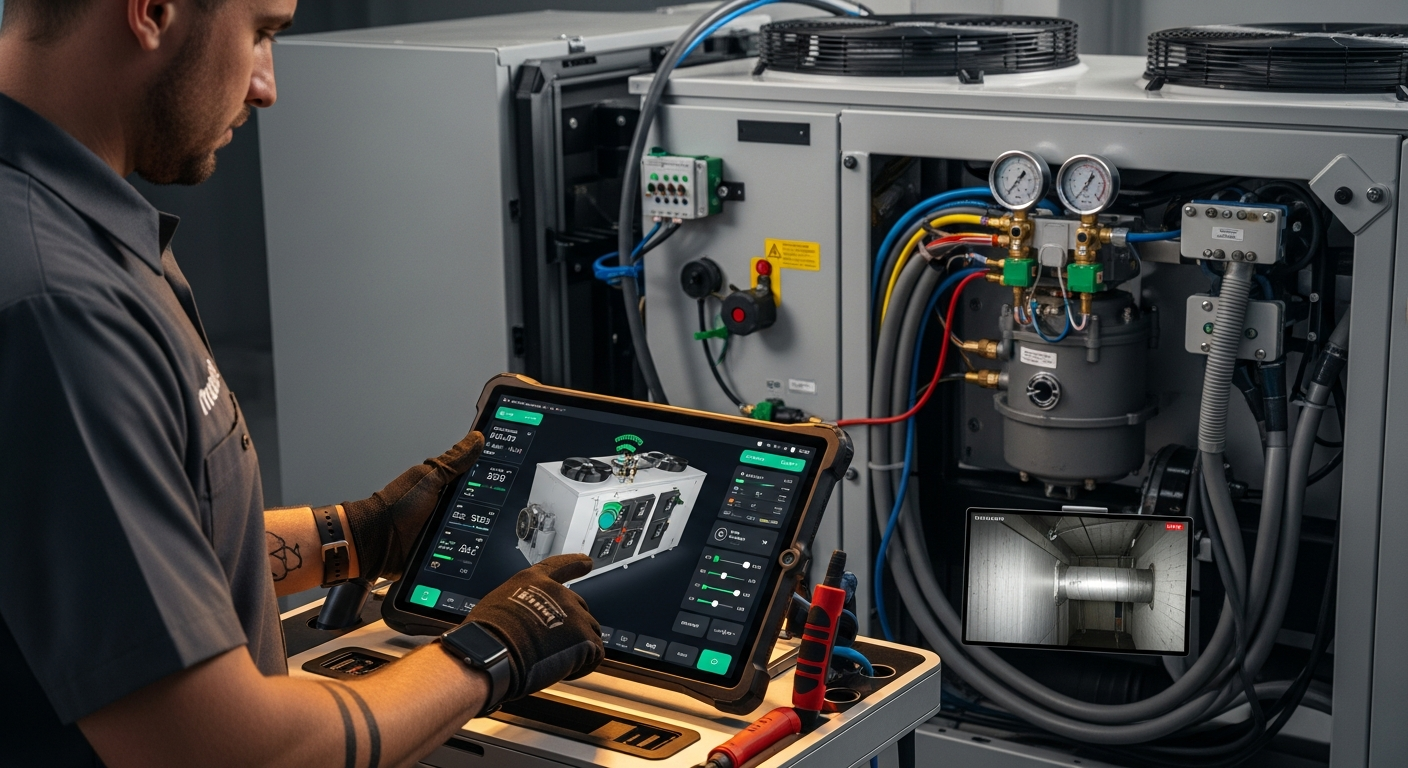
Your home addition needs heat and air—here’s how to plan it without regrets
Adding a new room is exciting, but it presents a hidden challenge: how to keep that space comfortable year-round. Without a proper HVAC plan, your addition can become a drafty box in winter or a stifling greenhouse in summer. The wrong choice can strain your existing equipment, inflate bills, and leave you uncomfortable. This guide walks you through the three main options, with a decision tree, cost breakdown, and contractor checklist. Use our tools to estimate your specific numbers before talking to contractors.
Quick Answer: Three HVAC Paths for Home Additions
Here’s the 30-second version:
- Extend existing ductwork ($2,000–$5,000) – Best for small, attached rooms if your system is under 10 years old and has spare capacity.
- Ductless mini-split ($3,000–$7,000) – Ideal for sunrooms, garages, guest suites, or any space needing independent temperature control.
- Full system upgrade ($8,000–$16,000) – Required when your HVAC is 12+ years old, undersized, or failing; sized for the new total square footage.
Get a rough estimate with our HVAC cost calculator before you call a contractor.
Option Comparison at a Glance
| Option | Typical Cost Range | Best For | Key Considerations |
|---|---|---|---|
| Extend Ducts | $2,000–$5,000 | Small rooms (<300 sq ft) attached to existing ducted system | Needs spare capacity; Manual J required; may require zone dampers |
| Ductless Mini-Split | $3,000–$7,000 | Sunrooms, attached garages, ADUs, rooms far from main system | No duct loss; independent control; quiet operation; may need electrical upgrade |
| Full System Replacement | $8,000–$16,000 | Old equipment (12+ years), undersized, or failing systems | Correct sizing critical; includes new unit, possibly duct modifications; long-term efficiency |
Safety Boundaries: What You Can Safely Do vs. Pro-Only Work
Homeowner Checks (No Tools Required)
- Inspect visible duct seams for gaps or disconnected sections in unfinished spaces.
- Check air filter condition; a dirty filter in the main system reduces airflow to the addition.
- Confirm thermostat settings and existing room temperatures for baseline comfort.
- Clear any debris or storage around supply and return vents.
Call a Licensed Pro For
- Manual J load calculation and duct sizing.
- Gas line extensions or combustion appliance adjustments.
- Refrigerant line installation or charging—per EPA regulations.
- Electrical wiring for new circuits or panel upgrades.
- Penetrating fire-rated walls or modifying structural framing.
Never attempt to add refrigerant, extend gas piping, or modify circuit breakers yourself. Use HVACDatabase’s contractor search to find licensed, insured professionals near you.
How to Decide: A Step-by-Step Decision Tree
Use these concrete thresholds to narrow your options before calling a contractor.
- System age: If your existing HVAC is less than 8 years old, extending is likely viable (skip to step 2). If 8–12 years, evaluate repair history; if it has needed major repairs, consider replacement. If over 12 years, plan for a full system replacement—especially if you want a warranty and long-term efficiency.
- Room size and use: For additions under 300 square feet and connected to the main home, duct extension is usually practical. For larger or detached spaces, or rooms with high solar gains (sunrooms), a ductless mini-split gives better zone control and efficiency.
- Capacity check: A contractor can run a Manual J load calculation (typical cost $150–$300) to determine if your current unit has spare capacity. If not, you risk overheating/overcooling the entire house.
- Budget: If you have under $5,000, duct extension is the only option—but only if your system can handle it. With $5,000–$8,000, a high-efficiency mini-split is within reach. Above $8,000, consider the full upgrade for better whole-home comfort and efficiency.
- Future plans: If you anticipate more additions, a fully replaced, larger system may be smarter now than multiple mini-splits later.
Still unsure? Use our Repair or Replace calculator to see if upgrading makes financial sense.
Contractor Hiring Checklist: Questions to Ask Before Signing
Download this mental checklist for every bid.
Click to expand the 7 essential questions
- Will you perform a Manual J load calculation and share the report? Verbal guesses are red flags.
- Can you provide proof of license, insurance, and workers’ compensation?
- Is a permit included in your quote, and will you handle the inspection? Mechanical permits are required for most HVAC work; avoiding them can void home insurance.
- What warranty do you offer on labor and equipment? Compare manufacturer warranties (often 5–10 years) and contractor labor warranties (1–2 years minimum).
- How will you address duct leakage in the existing system? Leaky ducts can lose up to 30% of conditioned air; ask about duct sealing (Aeroseal or mastic).
- Do you have examples of similar home addition projects and references?
- What is the payment schedule? Never pay 100% upfront. A typical schedule: 10% at contract signing, 30% at start, 30% at rough-in, 30% upon completion and passing inspection.
Compare multiple bids with our Quote Checker tool to spot unusually low or high estimates.
Local Climate Considerations
Your location changes what’s important in an HVAC addition.
- Hot, humid climates (Southeast, Gulf Coast): Avoid oversized air conditioners. They short‑cycle, failing to dehumidify. Choose a variable‑speed unit (mini-split or communicating system) for steady dehumidification. Consider a dedicated dehumidifier for shoulder seasons.
- Cold climates (Midwest, Northeast, Mountain West): Heat pumps need to be rated for low temperatures (check HSPF). In sub‑zero areas, a gas furnace backup ensures reliable heat. Insulate ducts heavily if passing through unconditioned attics.
- Coastal areas: Salt air corrodes condenser coils quickly. Request coastal‑rated units with epoxy‑coated fins or use a corrosion‑resistant mini‑split.
- Older homes (pre‑1970): Electrical panels may need upgrading (add $1,500–$3,000). Ductwork often needs significant modification or sealing. Get a home energy audit first; improved insulation may reduce the required HVAC size.
How We Determine Cost Ranges and Recommendations
The cost figures in this guide are editorial estimates based on aggregated pricing data from HVAC contractors, home service platforms, and regional labor/material rates as of 2025. Actual costs vary by:
- System size (tons/BTUs) and brand
- Local labor rates and permit fees
- Access difficulty (crawl space, attic, slab)
- Additional electrical or ductwork modifications
- Warranty and efficiency level
All recommendations prioritize safety, building code compliance, and long-term value. We update estimates annually and cross‑reference with our HVAC Cost Estimator and BTU Calculator for consistency. Always obtain multiple quotes and verify local codes with your city’s building department.
Frequently Asked Questions
Can I just add a window AC unit to my new room?
Window units are inexpensive ($150–$600) but they’re temporary and inefficient. They block windows, create security risks, and don’t provide heating. For permanent, comfortable living space, a dedicated HVAC solution is strongly recommended, especially for resale value.
Do I need a permit to extend my ductwork?
Most municipalities require a mechanical permit for any new duct installation or modification. A permit ensures the work meets safety and efficiency codes. Unpermitted work can cause insurance claim denials and issues when selling the home.
How long does installation take?
Duct extensions typically take 1–2 days. Mini‑split installation for a single head unit usually finishes in one day. A full system replacement may take 2–5 days, depending on ductwork modifications and equipment complexity.
Will a mini-split increase my home’s resale value?
Yes. Energy‑efficient, zoned HVAC is a selling point. Mini‑splits offer individual room control and lower operating costs, which appeal to buyers. However, visual aesthetics (wall‑mounted head units) may be a minor drawback compared to central systems.
How do I know if my current system has enough capacity?
The only reliable method is a Manual J load calculation performed by a certified HVAC designer or technician. They’ll factor in your home’s insulation, windows, orientation, and existing ductwork. Use our BTU calculator for a rough starting point, but final sizing must be professional.
Related articles
Explore related maintenance, equipment, and hiring questions.

Nest Learning Thermostat (4th gen) vs ecobee Premium
Both models offer remote room sensors. Compare the exact generation, wiring compatibility, controls, and installed quote before choosing.

MERV 11 vs MERV 13: check filtration and equipment compatibility
Compare particle filtration, verify the filter your equipment supports, and use a buying checklist without assuming a universal health or energy saving.

How to check an HVAC contractor before hiring
Use a documented shortlist: business identity, applicable credentials, job experience, a written scope, and a clear handover.