HVAC Installation Cost in Tampa
Get clear Tampa HVAC installation cost estimates, smart decision tools, a contractor checklist, and energy-saving rebate info—so you invest wisely in a system built for Florida’s heat and humidity.
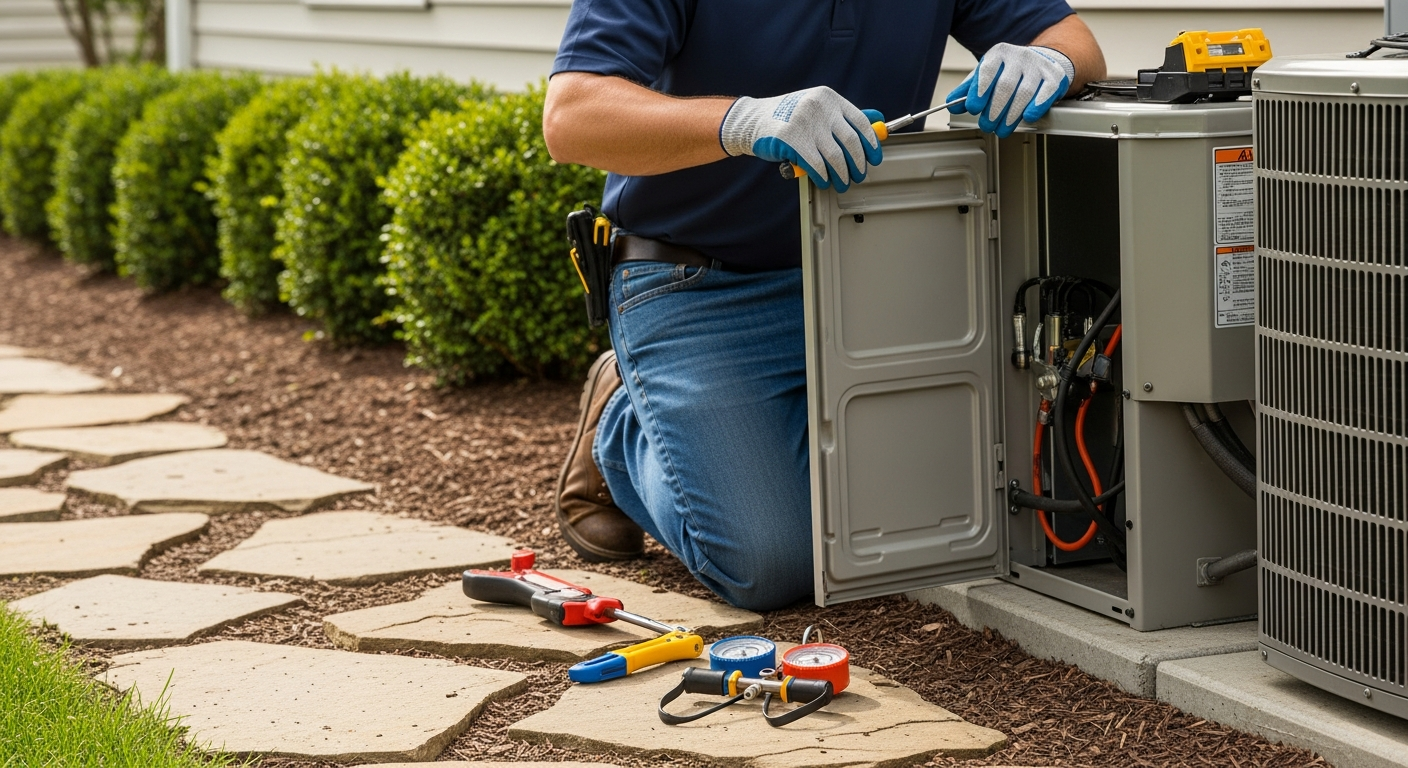
Quick Answer: Tampa HVAC Installation Costs
In Tampa, a full HVAC replacement typically lands between $6,000 and $12,000 for standard equipment. High-efficiency heat pumps, multi-zone ductless systems, or major ductwork repairs can push the total to $15,000+. Below is a breakdown by system type.
| System Type | Typical Installed Cost Range | Best For |
|---|---|---|
| Central Air Conditioner (AC only) | $5,000 – $9,000 | Homes with existing ductwork and a separate furnace/air handler. |
| Air-Source Heat Pump | $7,000 – $13,000 | Year-round heating/cooling; highest efficiency in Florida’s mild winters. |
| Ductless Mini-Split (per zone) | $3,000 – $5,000 per zone | Older homes without ducts, room additions, or targeted comfort. |
| Geothermal Heat Pump | $15,000 – $30,000+ | Large properties with land for ground loop; extreme efficiency but high upfront cost. |
Editorial note: These ranges reflect Tampa-area pricing and include equipment, labor, and basic materials. They are not guaranteed quotes.
Key Factors That Drive Your Tampa HVAC Quote
System Size and Capacity
An undersized unit will run constantly and never reach set temperature; an oversized one short-cycles, failing to dehumidify and causing mold risk. Insist on a Manual J load calculation before accepting any bid. Our BTU Calculator gives a rough starting point, but a pro must do the final sizing.
SEER2 Efficiency Ratings
The South’s minimum is 14.3 SEER2 for ACs and 15.2 SEER2 for heat pumps. In Tampa’s long cooling season, jumping to 16–18 SEER2 can trim utility bills by 20–30%. Use our Cost Estimator to see payback scenarios.
Installation Complexity
Factors like ductwork leaks, electrical panel upgrades, or moving the air handler add $500–$3,000+. If your home is older or coastal, budget for duct inspection and possible replacement.
Labor and Permits
Skilled labor runs $75–$150 per hour. Permits (City of Tampa or Hillsborough County) add $100–$400 but ensure code compliance and third-party inspection. Compare vetted contractors who include permits in their quotes.
What’s Safe to Check Yourself (and What’s Not)
Homeowner-safe tasks:
- Change air filters monthly during high-use seasons.
- Keep outdoor unit clear of leaves, debris, and at least 2 feet of clearance.
- Check thermostat batteries and settings.
- Inspect visible duct connections for gaps or damage (use mastic tape as a temporary seal—never duct tape).
- Listen for unusual noises and note any ice on the coils.
Pro-only work (never attempt due to safety and legal risks):
- Refrigerant handling, charging, or leak repair (EPA 608 certification required).
- Electrical wiring, capacitor, contactor, or control board replacement.
- Gas line connections or combustion component servicing.
- Compressor or coil replacement.
- Duct sealing that requires access to plenums or air handler.
If you need emergency help, find a licensed pro now.
Use Our Free Tools to Nail Your Decision
Before you call contractors, arm yourself with data:
- HVAC Cost Estimator – Get a personalized range based on your home’s specs.
- Quote Checker – Upload your bids and see line-by-line if they’re fair.
- Repair or Replace Calculator – Crunch the numbers on fixing vs. buying new.
- Rebate Finder – Discover Tampa utility rebates (TECO, Duke Energy) and federal tax credits.
- BTU Calculator – Rough-size your needs before a pro’s Manual J.
Repair or Replace? Use This Decision Tree
Ask yourself these questions. If you answer “yes” to two or more, replacement is likely the smarter long-term play:
- Is the system over 10 years old?
- Does the repair estimate exceed $1,500 (or 50% of a new unit’s cost)?
- Is your current SEER2 below 14?
- Have you called for service more than twice in the last year?
- Does your unit use outdated R-22 refrigerant (phased out in 2020)?
For an objective verdict, try our Repair or Replace Calculator.
Contractor Vetting Checklist: 8 Questions to Ask
Never sign until you get solid answers to these:
- Are you licensed and insured in Florida? (Verify at MyFloridaLicense.com)
- Will you pull Tampa/Hillsborough County permits and schedule the inspection?
- Can you provide a Manual J load calculation in writing before the contract?
- What’s the labor warranty period, and what does it cover?
- Do you offer a written, line-item estimate with equipment model numbers and scope of work?
- Can you handle all utility rebate paperwork?
- What brands do you install, and why? (Beware of single-brand pushers.)
- How will you address ductwork issues? Get a duct inspection included.
Use our Contractor Comparison tool to evaluate bids side by side.
Tampa-Specific Factors That Affect Your Bill
- Humidity Control: A variable-speed air handler with a dehumidification setting is worth every penny. It prevents that sticky feeling even when the AC isn’t running full blast.
- Coastal Corrosion: Homes within 2–3 miles of Tampa Bay or the Gulf should opt for units with coastal-approved coatings (e.g., WeatherShield). Salt air eats standard outdoor coils.
- Aging Ductwork: Many Tampa homes built before 1990 have leaky, uninsulated ducts. Replacing or sealing them can reclaim 20–30% lost efficiency. Ask your contractor to test static pressure.
- Rebate Goldmine: TECO and Duke Energy Florida frequently offer $300–$800 rebates for qualifying high-efficiency equipment. Check what’s available now.
How We Estimate These Costs
Our editorial ranges are based on a mix of:
- Aggregated quotes from Tampa-area contractors in our network and public databases.
- National cost data (RSMeans, HomeAdvisor surveys) adjusted for Florida’s market.
- Feedback from local building officials and trade associations.
They are estimates, not guarantees. Actual pricing varies by season, site conditions, equipment availability, and contractor business model. Always get multiple written quotes. For a tailored number, use our Cost Estimator.
Tampa HVAC Installation FAQs
What’s the average cost to install a new AC in Tampa?
Most homeowners spend $6,000 to $12,000 for a complete system. High-efficiency heat pumps or ductwork replacement can push the total to $15,000 or more. These are editorial estimates—get multiple quotes for your specific home.
How long does a typical installation take?
A straightforward swap-out of an existing system usually takes 1–2 days. If ductwork, electrical panel, or major modifications are needed, plan on 3–5 days.
Do I need a permit to replace my HVAC in Tampa?
Yes. Mechanical permits are required in Tampa and unincorporated Hillsborough County. A reputable contractor will pull the permit and coordinate the inspection. This ensures your safety and code compliance. Find a contractor who follows the rules.
How can I save money on a new HVAC system?
Combine these strategies: get 3+ quotes (use our tool), schedule work in spring or fall, choose a system that qualifies for TECO or Duke Energy rebates, and lock in federal tax credits (up to $2,000 for heat pumps). Even a 16 SEER2 upgrade often pays for itself in 5–7 years.
What size HVAC do I need for my Tampa home?
Size is not a guess—it’s a science. A Manual J load calculation uses your home’s square footage, insulation, window orientation, and more. Never trust a contractor who sizes by “rule of thumb.” Start with our BTU Calculator, then demand a Manual J.
Related articles
Explore related maintenance, equipment, and hiring questions.

Nest Learning Thermostat (4th gen) vs ecobee Premium
Both models offer remote room sensors. Compare the exact generation, wiring compatibility, controls, and installed quote before choosing.

MERV 11 vs MERV 13: check filtration and equipment compatibility
Compare particle filtration, verify the filter your equipment supports, and use a buying checklist without assuming a universal health or energy saving.

How to check an HVAC contractor before hiring
Use a documented shortlist: business identity, applicable credentials, job experience, a written scope, and a clear handover.