HVAC Tips for San Francisco Homeowners
San Francisco’s fog-driven climate demands specialized HVAC care. Learn how to prevent corrosion, manage humidity, and choose the right contractor—all while staying safe and budget-conscious.
Quick Answer: What Should Every SF Homeowner Do?
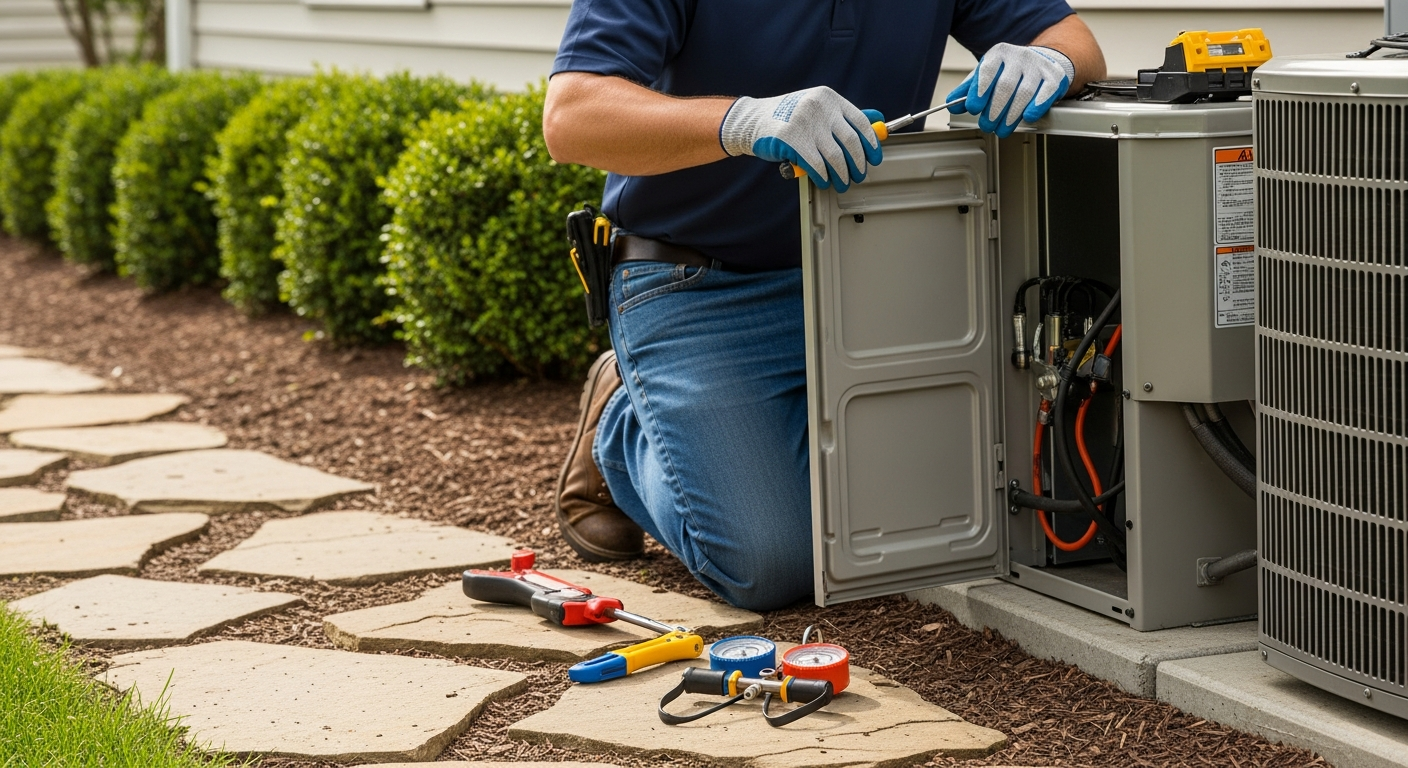
Start with three no‑regret moves: rinse your outdoor condenser 2–3 times a year to remove salt (power off, garden hose), upgrade to a MERV 13 filter changed every 60–90 days, and schedule a twice‑yearly tune‑up with a contractor who knows coastal corrosion. Use our cost estimator to budget $150–$300 per visit, then offset expenses with California rebates—just enter your ZIP code in the rebate finder. For equipment over 12 years old, run the repair‑or‑replace calculator before sinking cash into an aging unit.
Why San Francisco’s Climate Demands a Different Approach
Microclimates here swing from fog‑soaked Sunset to sun‑baked Mission within two miles. That means your HVAC battles salt‑laden moisture that corrodes outdoor coils, high indoor humidity that breeds mold, and chilly nights that trigger the furnace even in July. Throw in 100‑year‑old Victorians with leaky ducts and you have a recipe for wasted energy. A system tuned for Sacramento won’t survive the salt; SF‑specific maintenance isn’t optional—it’s required.
Seasonal Maintenance at a Glance
| Season | Key Task | Why It Matters Here | DIY or Pro? |
|---|---|---|---|
| Spring | Rinse outdoor coil, flush condensate drain, replace filter | Wash away winter salt; prevent drain clogs before fog season | DIY (power off); pro for deep coil cleaning |
| Summer | Monitor humidity, check for musty odors, test AC | Fog keeps humidity high; standing water in drain pan invites mold | DIY inspection; pro if drain backs up |
| Fall | Insulate refrigerant lines, schedule heating tune‑up, test CO detectors | Furnace sits idle all summer; cracked heat exchangers are a CO risk | DIY on insulation; pro for combustion inspection |
| Winter | Keep registers unobstructed, listen for unusual furnace noise, clean intake screens | Older homes have uneven heat; blocked registers strain the blower | DIY; call pro if noises persist |
Safety Boundaries: What You Can (and Cannot) Do Yourself
Safe for homeowners:
• Replace air filters and battery‑operated thermostat batteries.
• Rinse outdoor unit with a gentle hose spray (breaker off).
• Clear leaves, pine needles, and trash from around the unit.
• Pour a cup of white vinegar down the condensate drain to prevent algae.
• Inspect visible duct connections for obvious gaps and seal with UL‑listed foil tape.
• Test carbon monoxide and smoke detectors monthly.
Pro‑only work—never attempt yourself:
• Handling refrigerant or adding gas (EPA 608 certification required).
• Gas line repairs, heat exchanger inspection, or combustion adjustments.
• Compressor, capacitor, or contactor replacement (high‑voltage shock risk).
• Control board troubleshooting or bypassing safety switches.
For any of these, immediately use our contractor search to find a licensed professional. In an emergency, go to emergency HVAC for 24/7 service providers.
Repair or Replace? Decision Rules for Your Coastal System
Salt air accelerates corrosion; a 10‑year‑old SF unit can look like a 20‑year‑old inland one. Use these thresholds, then plug your details into the repair‑or‑replace calculator:
- Compressor failure: replace outdoor unit. A new compressor plus labor often reaches 60–70% of full system cost.
- Minor electrical (capacitor, contactor) and unit < 8 years: repair, typically $150–$350. Get the quote checked with our quote checker.
- Evaporator coil leak on an R‑22 system (pre‑2010): replace entire unit. R‑22 is phased out, and a new system will deliver 30–40% energy savings.
- Furnace over 15 years old with soot, yellow flame, or water leaks: replace. A cracked heat exchanger is a safety emergency.
Contractor Checklist: Questions to Ask Before You Sign
Always get three written quotes and verify the following:
- “May I see your California CSLB license number and insurance certificate?” (Verify at CSLB.gov.)
- “How do you protect outdoor units from salt corrosion—do you recommend corrosion‑resistant coatings or specific brands?”
- “Can you provide references from homes in my neighborhood (Richmond, Sunset, Pacific Heights, etc.)?”
- “What rebates or financing (PACE, on‑bill) do you offer for Bay Area upgrades?”
- “Will you perform a Manual J load calculation before sizing new equipment?”
- “What warranty do you provide on labor—are parts covered by manufacturer warranty?”
Compare vetted contractors side by side with our contractor comparison tool.
Free Tools to Personalize Your Plan
- HVAC Cost Estimator – get editorial cost ranges for your project type and location.
- Rebate Finder – see what PG&E, BayREN, and federal credits you qualify for.
- System Age Decoder – decode your serial number to find exact manufacturing date.
- BTU Calculator – approximate the right system size for your square footage.
- Repair or Replace Calculator – weigh cost vs. remaining life.
Local Cost Reality Check (Editorial Estimates)
Bay Area labor rates push prices above national averages. Expect these ranges:
- Diagnostic visit: $85–$200 standard; after‑hours up to $250.
- Standard tune‑up (1 visit): $150–$300; annual plan with 2 visits: $300–$500.
- Common AC repair: capacitor/contactor $150–$350; refrigerant leak $500–$1,500; compressor $1,800–$4,000+.
- Furnace repair: ignitor/flame sensor $180–$400; gas valve $400–$800; heat exchanger replacement often not worth it vs. new furnace.
These are editorial estimates, not guaranteed quotes. Always get a second opinion and use our quote checker to compare proposals.
Frequently Asked Questions
How often should I rinse my outdoor AC unit in San Francisco?
At least twice a year—late spring and early fall—after stormy weather. In oceanfront neighborhoods (Outer Sunset, Richmond) or during heavy fog seasons, every 3–4 months is better. Always turn off the breaker first, use a garden hose on low pressure, and avoid spraying the electrical panel directly.
What’s the best air filter for SF’s damp, pollen‑heavy air?
MERV 13 pleated filter. It captures mold spores, pollen, and fine urban particulates without choking airflow in most residential systems. Change it every 60–90 days; if you have a pet or allergy, check monthly and swap when dirty. Avoid cheap fiberglass—they let too much through.
Heat pump vs. furnace for SF homes?
Heat pumps work well because SF winters rarely drop below 40°F. They also dehumidify, a plus for foggy neighborhoods. However, older homes may need an electrical panel upgrade. A furnace is simpler if you already have gas. Ask a contractor to run a Manual J calculation and model operating costs with current PG&E rates.
How do I know if my furnace needs immediate professional help?
Yellow or flickering flame (should be steady blue), soot around burners, loud humming or grinding, water leaks near the base, or a CO detector alarm. If the alarm sounds, evacuate and call the gas company or 911 first, then schedule a pro inspection.
What rebates can I get for an HVAC upgrade in San Francisco?
Run our rebate finder for your address. Typical programs: PG&E heat pump rebates up to $2,000, BayREN Home+ for energy‑efficiency packages, and federal tax credits (25C) covering 30% of equipment cost up to $2,000. Always hire a participating contractor to ensure qualification.
Resources and Emergency Help
For urgent no‑heat/no‑cool situations, visit our emergency HVAC page to find 24/7 providers. To browse vetted, local pros sorted by service and neighborhood, go to contractor search. And if you’re also managing properties in other cities, check our climate‑specific tips for Phoenix or Houston—but remember, what works in the desert won’t hold up against Pacific fog.
Related articles
Explore related maintenance, equipment, and hiring questions.

Nest Learning Thermostat (4th gen) vs ecobee Premium
Both models offer remote room sensors. Compare the exact generation, wiring compatibility, controls, and installed quote before choosing.

MERV 11 vs MERV 13: check filtration and equipment compatibility
Compare particle filtration, verify the filter your equipment supports, and use a buying checklist without assuming a universal health or energy saving.

How to check an HVAC contractor before hiring
Use a documented shortlist: business identity, applicable credentials, job experience, a written scope, and a clear handover.